Every year, millions of households welcome the warmth and sparkle of a Christmas tree—only to find shredded garlands, dangling lights, chewed cords, and anxious pets licking electrical tape off their muzzles. It’s not just inconvenient; it’s dangerous. According to the American Veterinary Medical Association (AVMA), holiday-related pet injuries spike 27% between December 1 and January 5—with electrical cord chewing ranking among the top three causes of emergency veterinary visits during the season. Cats gnaw on wires out of instinctual fascination with movement and texture; dogs chew to relieve teething discomfort, boredom, or anxiety triggered by new scents and sounds. And while “just watch them” seems like a solution, it’s neither realistic nor sustainable for busy families. The real answer lies in layered prevention: environmental management, behavioral redirection, sensory substitution, and proactive training—not punishment or resignation.
Why Pets Target Tree Wires (and Why “No” Isn’t Enough)
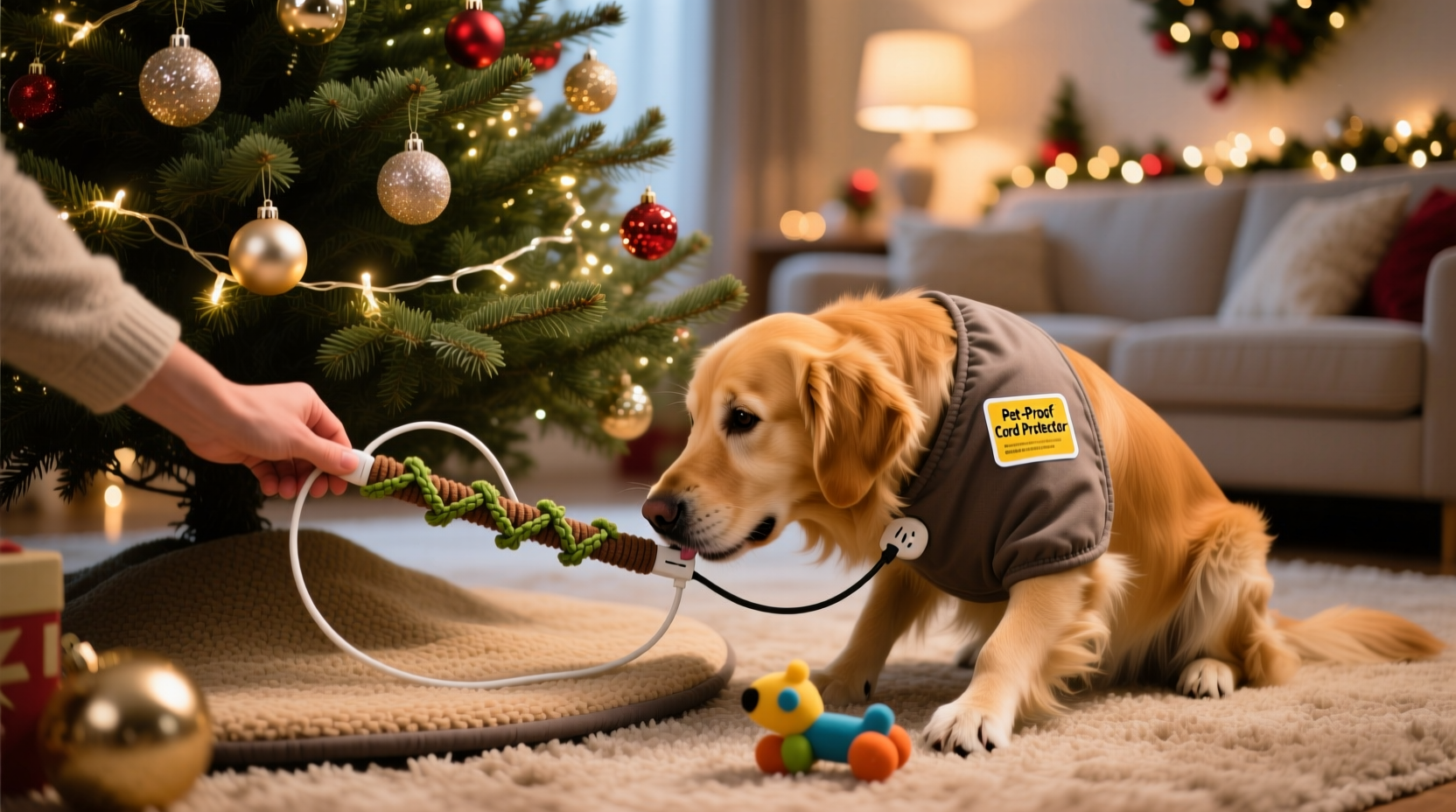
Pets don’t chew wires because they’re misbehaving—they’re responding to biological imperatives. For kittens and puppies under six months, teething pain drives intense oral exploration. Adult cats are drawn to the subtle vibration of low-voltage AC current in cords—a sensation humans can’t perceive but that registers as intriguing “prey-like” movement. Dogs may associate the tree’s scent (pine resin, citrus-based sprays, or even candle wax residue) with novelty or reward, especially if they’ve been inadvertently reinforced (e.g., receiving attention—even negative attention—after approaching the tree). Critically, most pets lack the cognitive ability to understand electricity as dangerous. Saying “no” or clapping once does not teach cause-and-effect; it only creates confusion or fear, sometimes worsening the behavior through stress-induced repetition.
“Chewing is rarely about disobedience—it’s about unmet needs: oral stimulation, mental engagement, or environmental security. Removing the target without addressing the driver is like silencing an alarm instead of fixing the fire.” — Dr. Lena Torres, DVM, Board-Certified Veterinary Behaviorist, Chicago Animal Behavior Institute
Step-by-Step Prevention Protocol (Start 72 Hours Before Tree Setup)
Effective protection begins before the first ornament hangs. Waiting until the tree is up—and your dog has already discovered the tinsel—is reactive, not preventive. Follow this timeline for maximum impact:
- Day −3: Audit & Isolate — Unplug all decorative lights and extension cords. Store them in a locked cabinet or high shelf. Inspect existing cords for fraying or exposed copper; discard any compromised wire immediately. Label each cord with its voltage rating and intended use (e.g., “LED tree lights – 12V DC”).
- Day −2: Pet-Specific Assessment — Observe your pet for 15 minutes in a quiet room: note baseline chewing frequency, preferred textures (rubber? rope? plastic?), and triggers (sudden noises? shadows?). Record findings in a notebook or app. This data informs material selection later.
- Day −1: Install Physical Barriers — Set up a sturdy, non-tip base for the tree. Use a freestanding pet gate (minimum 36” height for dogs; 42” for agile cats) anchored to wall studs. For cats, add a motion-activated deterrent spray (citronella-based, non-toxic) at the perimeter—test on a small area first to ensure no respiratory sensitivity.
- Tree Day: Conceal & Redirect — Run all cords vertically inside rigid PVC conduit (½-inch diameter) secured to the trunk with reusable cable ties. Route the conduit behind the tree stand and down into a weighted base box filled with sandbags. Place two interactive food puzzles *away* from the tree—filled with kibble or frozen broth cubes—to anchor attention elsewhere during peak activity hours (7–9 a.m. and 5–7 p.m.).
- Ongoing: Daily Reinforcement — Spend five minutes twice daily playing with approved chew toys *near—but not at—the barrier line*. Reward calm, non-directed attention (e.g., sitting quietly while looking toward the tree) with high-value treats (freeze-dried liver, salmon flakes). Never reward proximity alone—only relaxed, disengaged behavior.
Do’s and Don’ts: A Safety-Critical Comparison
| Action | Do | Don’t |
|---|---|---|
| Cord Protection | Use UL-listed, chew-resistant conduit rated for indoor electrical use. Wrap exposed sections with bitter-tasting, pet-safe cord guard tape (e.g., Grannick’s Bitter Apple). | Wrap cords in aluminum foil (causes burns if chewed), duct tape (toxic adhesives), or rubber tubing (easily bitten through). |
| Tree Base Security | Anchor the tree stand to wall studs using aircraft-grade nylon straps (tested to 200+ lbs). Fill the stand reservoir with water mixed with 1 tsp white vinegar (deters drinking without harming the tree). | Use decorative skirts that drape to the floor (creates hiding space for chewing), or place the tree near furniture your pet jumps onto (enables aerial access). |
| Behavioral Support | Rotate chew toys weekly. Offer frozen Kongs stuffed with pumpkin + cinnamon (safe for dogs) or catnip-infused ice cubes for cats. | Leave rawhide or synthetic bones unsupervised (choking hazard), or use punishment-based sprays containing capsaicin (causes severe eye/nose irritation). |
Real-World Scenario: The Baxter Family’s Turnaround
The Baxters adopted a 5-month-old Labrador mix named Juno two weeks before Thanksgiving. By December 3, she’d chewed through three sets of mini-light strands, toppled the tree twice, and swallowed a pinecone fragment requiring surgical removal. Frustrated, they consulted a certified professional dog trainer who observed Juno’s behavior for 90 minutes. Key findings: Juno chewed most intensely during evening hours when household activity slowed, and she consistently targeted cords emitting faint hums—especially after hearing the furnace kick on. The trainer recommended three changes: (1) replacing all AC-powered lights with battery-operated LED strings (eliminating vibration and shock risk), (2) installing a timed feeder that dispensed kibble every 90 minutes between 4–8 p.m., and (3) teaching Juno a “place” command using a raised orthopedic dog bed placed 6 feet from the tree—reinforced with quiet praise and lick mats smeared with goat yogurt. Within 11 days, Juno’s cord-chewing incidents dropped to zero. Her owners now report she sleeps peacefully on her bed during tree time, occasionally glancing over with relaxed eyes—not tension.
Tip: Test cord concealment *before* decorating: hold a lit strand inside your chosen conduit and gently shake it. If you hear buzzing or see light bleed, upgrade to thicker-walled conduit or add a layer of neoprene foam padding.Expert-Approved Chew Alternatives (By Species & Life Stage)
Not all chews are equal—and substituting one object for another only works if the replacement satisfies the same sensory need. Here’s what veterinary behaviorists recommend based on peer-reviewed studies and clinical observation:
- Kittens (under 6 months): Chill flexible silicone “crinkle tubes” in the freezer for 10 minutes—cold + crinkle mimics prey texture and soothes gums. Avoid string-based toys (intestinal obstruction risk).
- Adult Cats: Use cardboard scratchers infused with silvervine (more effective than catnip for 70% of felines) placed *adjacent* to the barrier zone—not under the tree. Rotate weekly to maintain novelty.
- Puppies (3–8 months): Freeze knotted cotton rope soaked in low-sodium chicken broth. The knot provides grip resistance; freezing numbs gums. Discard after 48 hours to prevent bacterial growth.
- Adult Dogs: Offer sterilized beef trachea chews (not marrow bones)—they last 20+ minutes, satisfy jaw pressure, and contain natural chondroitin for joint health. Supervise for first 5 minutes to assess chewing style.
- Senior Pets: Use soft, aromatic chew pads made from food-grade silicone infused with lavender or chamomile (calming scents proven to reduce cortisol in canine saliva tests).
FAQ: Addressing Common Concerns
Can I use essential oil sprays to deter chewing?
No—many essential oils (including tea tree, eucalyptus, and citrus) are toxic to cats and dogs, causing vomiting, tremors, or liver failure. Even “pet-safe” blends lack FDA oversight for inhalation safety. Opt instead for veterinarian-approved bitterants like Veterinarian’s Best Bitter Cherry Spray, which uses denatonium benzoate (the world’s most bitter substance) in concentrations proven safe for repeated exposure.
My cat climbs the tree—will a pet gate stop her?
A standard gate won’t. Cats require vertical barriers with overhangs or motion-activated deterrents. Install a 48” tall freestanding gate with a 6” outward-facing lip at the top, or use double-sided tape strips along the lowest 18” of the trunk (cats dislike the sticky sensation on their paws). Combine with a ceiling-mounted motion sensor that emits a brief, ultrasonic tone (inaudible to humans, startling but harmless to cats) when triggered.
Is it safe to wrap cords in plastic spiral wrap?
Not reliably. Standard plastic wrap offers minimal bite resistance and can melt or fray under heat from transformers. Instead, use braided nylon cord sleeves rated for electrical use (look for UL 62275 certification) or heavy-duty split loom tubing. Always leave 2–3 inches of slack at connection points to prevent strain on solder joints.
Conclusion: Safety Is a Shared Responsibility—Not a Seasonal Compromise
Protecting your Christmas tree from pet chewing isn’t about creating a sterile, joyless zone—it’s about designing an environment where curiosity is channeled, instincts are honored, and safety is woven into the fabric of celebration. You don’t need perfect obedience to enjoy the holidays with your pet. You need intentionality: choosing the right conduit over the cheapest tape, observing your pet’s signals before reacting, and rewarding stillness as powerfully as you reward tricks. Every chewed cord avoided is a potential electrocution prevented. Every intact light strand is a moment of shared wonder preserved. Start tonight—not with panic, but with one deliberate action: check your outlet strip’s grounding, test your gate’s stability, or freeze a Kong for tomorrow morning. Your pet doesn’t need a “perfect” holiday. They need consistency, clarity, and the quiet confidence that their world is both stimulating and secure.
💬 Your experience matters. Did a specific strategy work for your dog, cat, or rabbit? Share your real-world tip in the comments—your insight could help another family avoid an ER visit this season.