
Every year, millions of households pull out their Christmas lights only to face the same frustrating ritual: untangling a chaotic knot of wires that seems to form on its own. What should be a joyful part of holiday decorating turns into a time-consuming chore. The good news? You don’t need expensive storage reels or specialty organizers. With a few common household items and a bit of smart technique, you can keep your lights neatly coiled and tangle-free for years to come.
The root of the problem lies in how lights are stored. When strands are haphazardly tossed into boxes or bags, even slight movement during storage causes loops to shift, twist, and lock into knots. But by introducing structure and stability during storage, you can dramatically reduce—or even eliminate—tangles. This guide walks you through practical, proven methods using items you likely already have at home.
Why Christmas lights tangle—and how to stop it
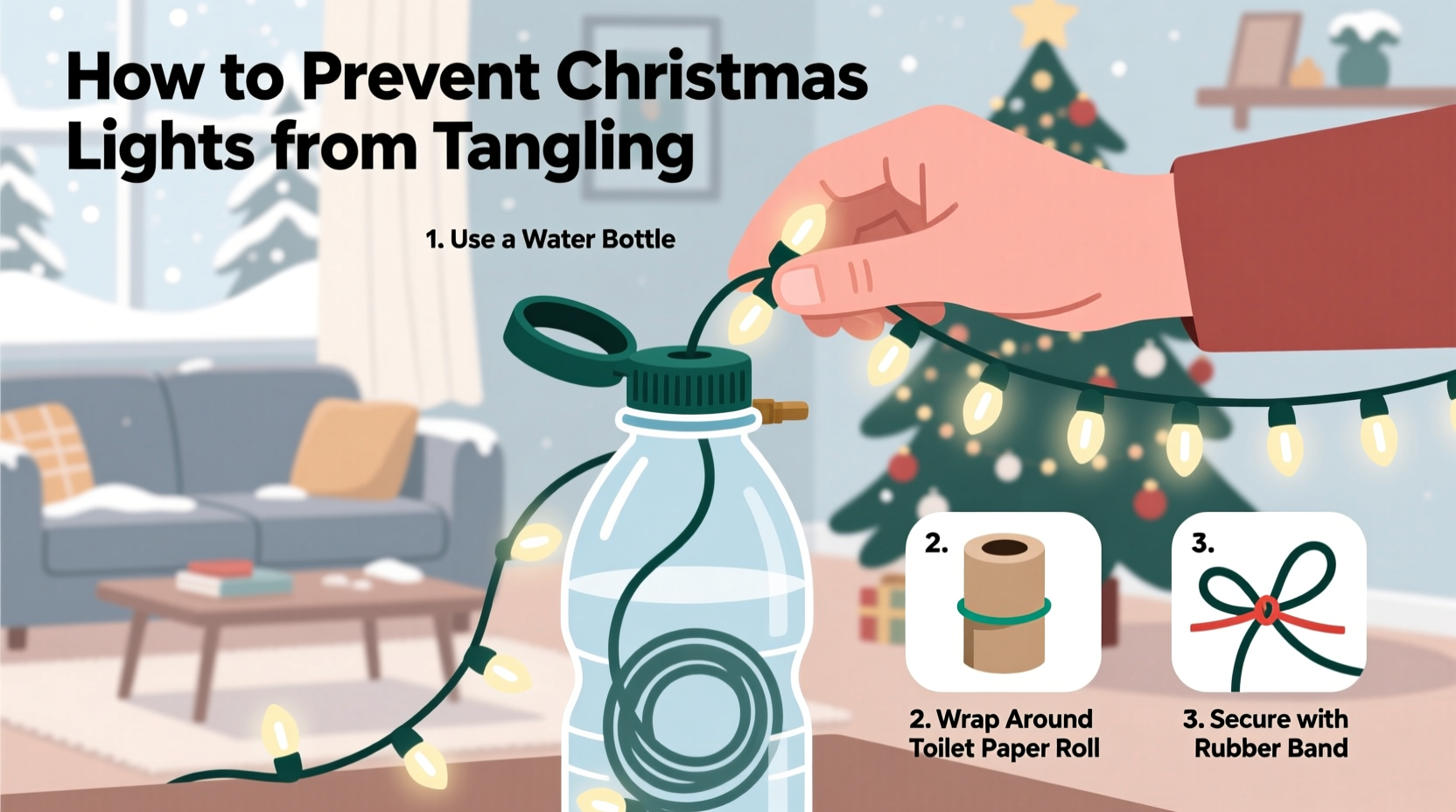
Lights tangle due to movement, compression, and lack of organization. When multiple strands are bundled together without separation, they rub against each other. Over time, this friction creates twists and snags. Even a single loose end can loop around another strand and tighten when pressure is applied.
Prevention starts with understanding two key principles: controlled winding and physical separation. Controlled winding means wrapping the lights in a consistent direction and tension, avoiding overhand loops that encourage twisting. Physical separation ensures that each strand has its own space and isn't influenced by the motion of others.
Most people assume that buying plastic light-reels is the only solution, but these can be costly and take up more space than necessary. Instead, everyday household objects like toilet paper rolls, coat hangers, and cardboard boxes can serve as excellent, low-cost alternatives.
Tip: Always unplug lights before storing them. Not only is it safer, but it also helps you inspect for damaged bulbs or exposed wires.Step-by-step: How to wrap and store lights using household items
The method you use to coil your lights matters just as much as what you store them on. Follow this timeline to ensure clean, tangle-resistant storage every season.
- Test each strand – Plug in the lights before packing away to check for flickering or dead sections. Replace faulty bulbs now to save time next year.
- Unplug and straighten – Lay the strand flat on the floor or table. Gently work out any small tangles by hand.
- Choose your storage base – Pick one of the household items listed below based on availability and convenience.
- Wrap with control – Use an underhand coil (also called “over-the-thumb” method) to maintain consistent tension and avoid twists.
- Secure the ends – Use a rubber band, twist tie, or tape to fasten the last loop and prevent unwinding.
- Label if needed – If you have different colors or lengths, label each coil with masking tape and a marker.
- Store upright and separated – Place coils in a box with dividers or stack them carefully to minimize shifting.
This process takes only a few extra minutes after the holidays but saves significant time and frustration later. Consistency across seasons builds a reliable system—your future self will thank you.
Household items that work best for light storage
You don’t need to buy specialized gear. The following items are effective, widely available, and often free:
- Toilet paper or paper towel tubes: Ideal for short to medium strands. Slide the light through the center and wrap around the tube. The rigid core prevents collapsing and keeps loops aligned.
- Cardboard squares or pizza boxes: Cut a rectangle about 6x6 inches and punch two holes near the edge. Thread the end of the light through one hole, wrap the strand around the edges, and secure the plug in the second hole.
- Coat hangers: Straighten a wire hanger slightly and use it as a spool. Wrap lights around the long section, then hang in a closet or garage. Keeps lights off the floor and avoids box clutter.
- Plastic lids (from coffee cans or containers): Staple or tape one end of the light to the lid, then wrap around the rim. Secure the final loop with a clip or rubber band.
- Shoebox with dividers: Create individual compartments using cardboard strips or old toilet paper rolls glued in place. Each compartment holds one strand, preventing contact between lights.
Each option provides structural support and minimizes movement. The goal is not perfection but consistency—whatever method you choose, repeat it the same way every year.
| Household Item | Best For | Pros | Cons |
|---|---|---|---|
| Toilet paper tube | Mini lights (up to 50 bulbs) | Free, compact, easy to find | Falls apart if overloaded; not durable long-term |
| Cardboard square | All light types | Customizable size, sturdy when thick | Can warp in humid storage areas |
| Coat hanger | Longer strands, C7/C9 bulbs | Hanging storage saves space | Sharp edges may damage wire coating |
| Plastic lid | Medium-duty strings | Water-resistant, reusable | Limited surface area |
| Shoebox with dividers | Multiple short strands | Organized, protects from dust | Takes up shelf space |
Real-world example: A family’s transformation from chaos to calm
The Reynolds family in Portland, Oregon, used to spend nearly three hours every December untangling their holiday lights. They had six strands of various lengths—some from the 1990s—that were always thrown into a single plastic bin. By mid-decorating season, two strands were unusable due to broken sockets caused by excessive pulling.
In January, they decided to try a new system. Using empty toilet paper rolls and rubber bands, they wrapped each strand individually. They labeled each roll with colored tape indicating where the lights would go—red for porch, green for tree, etc. The rolls were then placed upright in a shoebox with cardboard dividers made from cereal boxes.
The next year, setup took less than 20 minutes. Not a single strand was tangled. Over the next five years, they added more strands but stuck to the same method. Their oldest lights, once brittle and frustrating, remain functional because they’re no longer stressed by aggressive unknotting.
“It changed our whole holiday rhythm,” said Sarah Reynolds. “We used to dread taking out the decorations. Now it’s actually fun again.”
“We underestimate how much mechanical stress affects electrical cords. Every sharp tug or twist weakens internal wiring. Proper coiling doesn’t just prevent tangles—it extends the life of your lights.” — Marcus Tran, Electrical Safety Technician at Holiday Lighting Institute
Checklist: Tangle-proof your lights this season
Follow this actionable checklist to ensure your lights stay neat and usable for years:
- ✅ Test all strands before storage
- ✅ Choose a household item to act as a spool or frame
- ✅ Use the underhand coil method (wrap over your thumb, not around fingers)
- ✅ Maintain even tension—don’t pull too tight or leave too loose
- ✅ Secure the end with a rubber band, zip tie, or tape
- ✅ Store coils upright or separated to prevent contact
- ✅ Label strands by location or color for faster setup next year
- ✅ Keep storage container in a dry, cool place (avoid attics or damp basements)
Completing this checklist adds less than 10 minutes per strand but pays off in saved time and reduced frustration. Think of it as preventive maintenance for your holiday joy.
Frequently asked questions
Can I use bread clips to secure my light strands?
Yes, bread clips work surprisingly well. After coiling the lights around a tube or cardboard base, slide a bread clip over the last loop to hold it in place. They’re flexible, reusable, and designed to grip securely without damaging wires.
Is there a difference between LED and incandescent lights when it comes to tangling?
Not in terms of tangling mechanics—but yes in handling. LED strands are often lighter and more flexible, which can make them seem less prone to kinking. However, their thinner insulation means they’re more vulnerable to damage from rough handling. Gentle, structured coiling is even more important for LEDs to preserve longevity.
What if I don’t have any household items—can I still prevent tangles?
Absolutely. Even without tools, the key is mindful coiling. Use the “hand-to-hand” method: hold one end in your left hand, then use your right hand to make large, open loops over your left hand. Transfer each loop back to your left hand in a stacked pile. Once complete, gently squeeze the bundle and secure with a soft cloth strip or shoelace. Avoid wrapping around your hand tightly, as this creates overhand twists.
Final thoughts: Small habits, big seasonal rewards
Preventing Christmas light tangles isn’t about having the perfect tool—it’s about developing a repeatable habit. The most effective solutions leverage what you already own. Whether it’s a toilet paper roll, a bent hanger, or a repurposed lid, the object itself matters less than the consistency of your method.
Think beyond convenience. Proper storage protects your investment, reduces waste, and preserves safety. Frayed wires from repeated tugging can become fire hazards. Clean, organized strands mean fewer replacements, less clutter, and more time enjoying the season.
The holiday season should be about warmth, connection, and celebration—not wrestling with stubborn knots. By spending a few deliberate minutes after New Year’s Day, you gift your future self a smoother, brighter December.
💬 Ready to transform your holiday prep? Try one of these methods this year and share your favorite tip in the comments. Let’s help others keep their lights bright and tangle-free!








