A cluttered closet doesn’t just make mornings stressful—it often reflects a deeper issue: too many clothes that don’t work together. The capsule wardrobe method offers a sustainable solution by streamlining your wardrobe into a curated collection of high-quality, versatile pieces. Originating in the 1970s with London boutique owner Susie Faux, the concept gained widespread popularity through designer Donna Karan’s “seven easy pieces” philosophy. Today, it’s embraced by minimalists, sustainability advocates, and busy professionals alike.
At its core, a capsule wardrobe consists of around 30–40 interchangeable clothing items—excluding undergarments and workout wear—that can be mixed and matched to create dozens of outfits. These are carefully selected based on fit, function, color coordination, and personal style. The result? Less decision fatigue, more confidence in your daily look, and a closet that feels intentional rather than overwhelming.
Step 1: Define Your Lifestyle and Dressing Needs
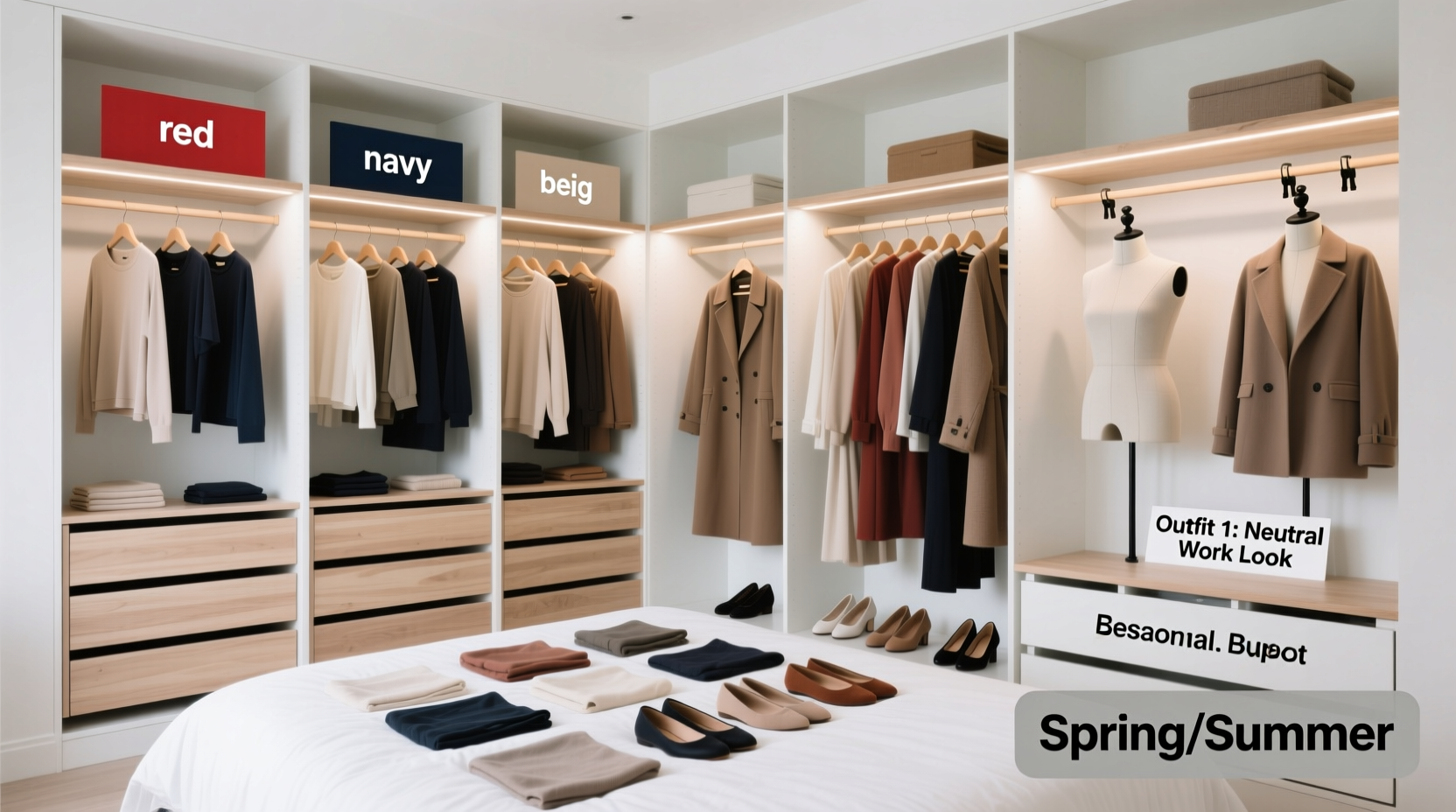
Before removing a single item from your closet, clarify how you actually live day to day. A capsule wardrobe isn't about arbitrary limits—it's about alignment between your clothing and your life.
Ask yourself:
- How many days per week do I work? Is my workplace formal, business casual, or remote?
- Do I attend social events regularly? What kind of occasions (casual dinners, weddings, travel)?
- What activities occupy my free time (yoga, hiking, errands)?
- Are there seasonal shifts in weather or routine I need to plan for?
This assessment shapes the foundation of your capsule. For example, someone working from home three days a week might prioritize comfort and versatility, while an attorney may need multiple tailored blazers and dress shirts.
Tip: Take photos of your outfits over one week to identify patterns in what you actually wear versus what you own.Step 2: Empty and Audit Your Current Wardrobe
Remove every piece of clothing from your closet and lay them out where you can see everything clearly—on your bed or floor works well. This visual inventory is critical.
Sort each item into one of four categories:
- Keep: Fits well, makes you feel confident, worn in the past year.
- Maybe: Undecided due to fit, trendiness, or sentimental value.
- Donate/Sell: In good condition but no longer suits your lifestyle or body.
- Discard: Stained, damaged, or beyond repair.
Be ruthless. If you haven’t worn something in 12 months—and it didn’t serve a specific occasion like a wedding or vacation—it likely doesn’t belong in your capsule.
Pay attention to fabric quality. Natural fibers like cotton, wool, silk, and linen tend to last longer and drape better than synthetics. Well-made garments hold their shape and color after repeated washes.
Step 3: Choose a Color Palette That Works Together
One of the most powerful aspects of a capsule wardrobe is cohesion. Every top should pair effortlessly with every bottom. Achieving this requires a unified color scheme.
Start with neutrals as your base: black, navy, gray, beige, white, or denim blue. These anchor your wardrobe and provide endless mixing options. Then add 2–3 accent colors that complement your skin tone and existing pieces. For instance, burgundy and olive green pair beautifully with charcoal and cream.
Avoid trendy colors unless they genuinely suit you. Neon pink might have been everywhere last summer, but if it clashes with your complexion or doesn’t match anything else, skip it.
| Wardrobe Type | Neutral Base Colors | Accent Colors (Max 3) |
|---|---|---|
| Professional | Navy, Gray, White, Beige | Burgundy, Teal, Mustard |
| Casual/Remote Work | Denim, Black, Cream, Olive | Rust, Coral, Lavender |
| Warm Climate | White, Sand, Navy, Light Gray | Turquoise, Coral, Sage Green |
| Cool Climate | Charcoal, Black, Camel, Denim | Berry, Forest Green, Ochre |
“Color harmony reduces mental load. When everything matches, getting dressed becomes automatic.” — Sarah Johnson, Sustainable Style Consultant
Step 4: Build Your Capsule Around Core Pieces
Your capsule should revolve around foundational items—those you wear frequently and build outfits around. Think of these as the pillars of your wardrobe.
Essential core pieces include:
- 2–3 pairs of well-fitting jeans or trousers
- 1–2 tailored blazers or structured jackets
- 5–7 tops (mix of tees, blouses, button-downs)
- 1 little black dress or go-to dress (if applicable)
- 1 cardigan or sweater (season-dependent)
- 1 coat or outerwear piece
- Comfortable walking shoes and one dressier pair
From there, add complementary items that increase outfit variety without clutter. A striped long-sleeve tee, a patterned scarf, or a textured knit can elevate simple combinations.
The goal is not perfection but practicality. You’re aiming for at least 15 distinct outfits from 30–40 total items. Use a notebook or app to sketch potential pairings and test real-life combinations before finalizing.
Tip: Try the “rule of three”: each new item should pair with at least three existing pieces in your capsule.Step 5: Organize Your Closet for Visibility and Access
Even the best-curated wardrobe fails if it’s disorganized. How you store your clothes impacts how often you wear them.
Follow these organization principles:
- Hang only what needs hanging: Blazers, dresses, and delicate fabrics. Avoid overcrowding hangers.
- Fold knits and tees: Prevent stretching by storing sweaters and cotton shirts on shelves or in drawers.
- Use consistent hangers: Wooden or velvet non-slip hangers create uniformity and save space.
- Group by category and color: Arrange tops, bottoms, dresses, etc., in order from light to dark.
- Store off-season items separately: Rotate twice a year to keep current clothes visible and accessible.
Label bins or baskets for accessories like belts, scarves, and socks. Keep shoes on a rack or in clear boxes so you can see them at a glance.
Visibility equals usability. If a shirt is buried behind five others, you’re less likely to wear it—even if it’s perfect for the day.
Mini Case Study: Transforming Emma’s Overcrowded Closet
Emma, a 34-year-old marketing manager, had over 120 tops alone in her closet. She spent 20 minutes every morning deciding what to wear and still felt underdressed at meetings.
After auditing her wardrobe, she kept only 38 pieces: 6 tops, 4 bottoms, 2 dresses, 2 jackets, and 3 pairs of shoes—all in shades of navy, gray, white, and rust. She added two silk blouses and a tailored trench to bridge professional and weekend looks.
Within a week, her morning routine dropped to five minutes. More importantly, she received compliments on her “put-together” appearance. By eliminating distractions, she elevated her everyday style.
Seasonal Rotation and Maintenance
A capsule wardrobe isn’t static. It evolves with the seasons. Plan to refresh yours every 3–6 months depending on climate.
To transition smoothly:
- Store off-season clothes in breathable cotton bags or vacuum-sealed containers (avoid plastic).
- Add 5–7 seasonal items (e.g., lightweight linen pants for summer, wool coat for winter).
- Reassess fit and wearability before reintroducing stored pieces.
- Replace worn-out staples proactively—not reactively.
Maintain your capsule by scheduling quarterly reviews. Ask: Have I worn everything? Are any items causing friction (wrinkling, discomfort)? Does my lifestyle still align with this collection?
“A capsule wardrobe isn’t about having less for the sake of minimalism. It’s about having exactly what you need to move through your life with ease.” — Laura Bennett, Author of *Style by Season*
Checklist: Building Your First Capsule Wardrobe
- ☐ Assess your weekly routine and dressing requirements
- ☐ Empty your closet and sort items into Keep, Maybe, Donate, Discard
- ☐ Define a cohesive color palette (3–4 neutrals + 2–3 accents)
- ☐ Select 5–7 core pieces that reflect your lifestyle
- ☐ Add complementary items to reach 30–40 total clothing items
- ☐ Test at least 10 outfit combinations for versatility
- ☐ Organize your closet by category and color
- ☐ Store off-season clothing out of sight
- ☐ Schedule a review every 3 months
Frequently Asked Questions
Can I have more than one capsule wardrobe?
Yes. Many people maintain separate capsules for work, weekends, or travel. Others rotate seasonal capsules—spring/summer and fall/winter—each containing 30–40 items. The key is keeping each one self-contained and fully functional.
What if I love fashion trends? Won’t a capsule make me look boring?
Not at all. Trends can be incorporated through accessories—scarves, jewelry, shoes—or one statement piece per season. A capsule doesn’t mean monotony; it means intentionality. You can still experiment, but within a framework that supports your overall style.
How do I handle special events like weddings or vacations?
Keep 1–2 versatile special-occasion items in your capsule (e.g., a wrap dress or blazer). For extended trips, pack a small travel capsule of 10–15 mix-and-match pieces. These don’t need to live in your main closet full-time.
Conclusion: Start Simple, Stay Consistent
Organizing your closet using the capsule wardrobe method isn’t a one-time project—it’s the beginning of a more mindful relationship with your clothing. You’ll spend less time choosing outfits, reduce laundry loads, and likely shop more intentionally moving forward.
The process takes effort upfront, but the payoff is lasting: a streamlined wardrobe that serves you, not the other way around. Begin with a single category—like tops or workwear—and expand from there. Perfection isn’t the goal; progress is.
💬 Ready to simplify your style? Start today by pulling out just your tops and sorting them by color and frequency of wear. Share your first step in the comments below!








