
Decorating for the holidays should bring joy, not damage to your home. For homeowners with stucco exteriors, hanging Christmas lights can be a daunting task. Traditional methods like nails or staples risk cracking the brittle finish and leaving behind permanent blemishes that compromise both aesthetics and weather resistance. Fortunately, there are several reliable, non-invasive techniques to secure festive lighting safely—without drilling, hammering, or harming the textured surface.
Stucco is a durable exterior coating made of cement, sand, and lime, often applied in multiple layers. While strong, it’s prone to cracking under pressure or improper fastening. Once damaged, repairs can be costly and may never perfectly match the original texture. The good news? With the right tools and approach, you can achieve a professional-looking light display while preserving your home’s integrity.
Why traditional mounting methods harm stucco
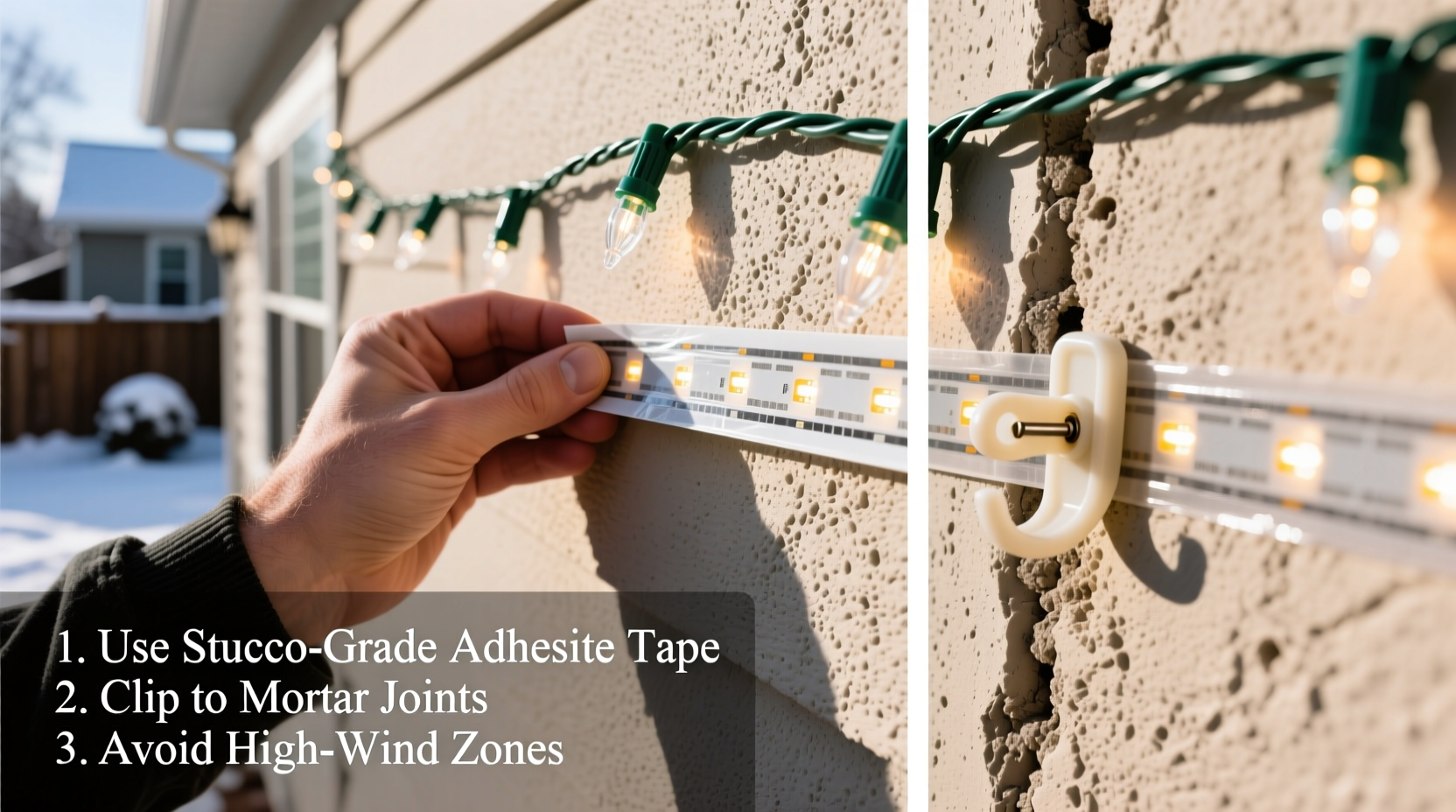
Nailing or screwing into stucco might seem like the quickest way to hang lights, but it comes with long-term consequences. Stucco lacks flexibility. When a nail is driven in, even slightly off-angle, it can create microfractures that spread over time. These cracks allow moisture to penetrate, leading to mold, wood rot behind the wall, or freeze-thaw damage in colder climates.
Additionally, removing nails after the season ends often pulls chunks of stucco with them. Patching these spots is tricky—color matching and texture replication require skill, and DIY repairs frequently stand out. Even plastic clips designed for gutters or siding don’t adhere well to rough stucco surfaces and may fall during wind or rain.
“Homeowners often underestimate how much seasonal decorations impact exterior maintenance. One holiday season with improper lighting installation can lead to years of repair costs.” — Daniel Reeves, Licensed Building Inspector and Home Preservation Consultant
Safe and effective alternatives for hanging lights
The key to damage-free Christmas lighting on stucco lies in distributing weight evenly and avoiding direct penetration. Several products and techniques have proven successful across different climates and home styles.
1. Adhesive-backed hooks and clips
Heavy-duty adhesive hooks, such as those from brands like Command™ or Gorilla, are engineered to bond securely to textured surfaces without residue when removed properly. Look for outdoor-rated versions with a minimum weight capacity of 2–3 pounds per hook.
Tip: Clean the stucco surface with rubbing alcohol before applying any adhesive product. This removes dust, oils, and residues that could weaken the bond.Use J-shaped clips or gutter mounts that attach to the hook. Space them every 12 to 18 inches along the desired light path. Press each hook firmly for at least 30 seconds after placement and wait 24 hours before hanging lights to ensure full adhesion.
2. Magnetic hangers (for metal surfaces)
If your home has metal soffits, fascia, or downspouts near the stucco area, magnetic hangers offer a clever workaround. Strong neodymium magnets can hold lightweight LED strands securely. Pair one magnet on the backside of a metal surface with another on the front, sandwiching the material and attaching the light strand to the outer magnet.
This method works best in combination with other techniques—using magnets where possible and adhesive clips elsewhere. Avoid placing magnets directly on painted stucco, as they won’t adhere and may scratch the surface if dragged.
3. Rope-and-hook systems
A more advanced but highly effective solution involves installing taut nylon cords or ropes between anchor points (like trees, posts, or eaves) and draping lights along them. Use removable eye hooks on adjacent structures—not on the stucco itself—to support the line.
Once the rope is secured, use twist ties, zip ties, or reusable silicone fasteners to attach the light strands. This keeps all tension off the stucco and allows for complex designs like arches or zigzags. At season’s end, simply unhook the rope and store it for next year.
Step-by-step guide: Installing lights using adhesive clips
This timeline outlines a proven process used by professional decorators to install holiday lighting on stucco homes safely and efficiently.
- Day 1 – Plan Layout: Walk around your house and sketch where you want lights installed. Focus on architectural features like windows, doors, rooflines, and columns. Measure distances to estimate how many strings you’ll need.
- Day 1 – Gather Supplies: Purchase outdoor-rated LED lights, adhesive hooks/clips, rubbing alcohol, lint-free cloth, ladder, gloves, and a level.
- Day 2 – Clean Surfaces: Wipe each attachment point with alcohol and let dry completely. Dirt, pollen, and grime reduce adhesive effectiveness.
- Day 2 – Apply Hooks: Peel backing and press each hook firmly onto the stucco. Hold for 30 seconds. Use a level to align hooks horizontally, especially along straight edges.
- Day 3 – Wait Before Loading: Let adhesives cure for 24 hours. This step is critical—rushing leads to failure.
- Day 4 – Hang Lights: Starting from the power source, plug in each strand briefly to test functionality. Then clip bulbs into place, ensuring even spacing and no sagging.
- Day 5 – Final Check: Inspect all connections, secure loose ends, and verify timers or smart controls work correctly.
Comparison of mounting methods: Pros, cons, and ideal use cases
| Method | Pros | Cons | Best For |
|---|---|---|---|
| Adhesive Hooks | No damage, easy removal, widely available | Requires clean surface; limited load capacity | Windows, door frames, flat stucco sections |
| Magnetic Hangers | Strong hold, reusable, zero surface contact | Only works on ferrous metals | Metal gutters, downspouts, soffits |
| Rope & Line System | Supports heavy loads, creative layouts | Requires secondary anchor points | Large displays, multi-story setups |
| Suction Cups | Reusable, no residue | Poor adhesion on textured stucco | Smooth transitions or glass-adjacent areas |
| Nails/Staples | Inexpensive, immediate hold | Causes permanent damage, risk of leaks | Not recommended |
Real-world example: A homeowner’s successful stucco-friendly display
Sarah M., a homeowner in Tempe, Arizona, wanted to decorate her 1970s Spanish-style stucco home for her family’s first Christmas in their new house. Concerned about damaging the historic exterior, she researched non-invasive options and settled on a hybrid approach.
She used outdoor Command™ clips along window trims and horizontal bands, spacing them every 15 inches. For the high roofline, she ran a braided nylon cord between two palm trees flanking the driveway, then attached mini LED lights with silicone-covered wire connectors. The entire setup took two weekends, cost under $120, and received rave reviews from neighbors.
In January, she removed everything cleanly—no marks, no patching needed. “I was shocked how sturdy it felt,” she said. “Even after a windstorm, nothing came loose. Next year, I’m adding icicle lights using the same rope system.”
Essential checklist for a damage-free holiday display
- ✔ Choose LED lights (lighter weight, lower heat output)
- ✔ Select outdoor-rated adhesive hooks with strong shear strength
- ✔ Clean stucco surface thoroughly before application
- ✔ Allow 24-hour curing time before loading lights
- ✔ Test all light strands before installation
- ✔ Use a level to align clips for a polished look
- ✔ Avoid overlapping clips or overloading single anchors
- ✔ Remove lights and accessories promptly after the season
- ✔ Store components in labeled bins for reuse next year
Frequently asked questions
Will adhesive hooks damage painted stucco when removed?
When used correctly and removed according to manufacturer instructions—usually by slowly stretching the release strip—adhesive hooks should not damage paint. However, older or poorly adhered paint may lift slightly. Test one hook in an inconspicuous area first.
Can I reuse adhesive hooks next year?
Most manufacturers do not recommend reusing adhesive hooks once removed. The bonding agent degrades after initial use. However, some models offer replacement adhesive strips, allowing you to keep the plastic hardware and just replace the sticky pad.
What if it rains or snows after I install the lights?
High-quality outdoor adhesives are water-resistant and designed to withstand precipitation. In fact, many are rated for temperatures from -20°F to 125°F. Just ensure the surface was dry during installation and avoid submerging connections. Use covered outlets and GFCI-protected circuits for safety.
Final thoughts: Celebrate beautifully, preserve thoughtfully
Holiday lighting doesn’t have to come at the expense of your home’s condition. With careful planning and the right tools, you can create a dazzling display that respects your stucco exterior and lasts for seasons to come. The small investment in quality adhesive products or alternative mounting systems pays off in avoided repair bills and lasting curb appeal.
More importantly, you set a precedent for mindful home care—showing that tradition and preservation can coexist. Whether you’re decorating for family, faith, or festive spirit, doing so responsibly enhances the meaning behind the lights.
💬 Have a stucco-friendly decorating tip or photo to share? Join the conversation—your experience could help another homeowner celebrate safely this season!