Christmas trees are more than festive centerpieces—they’re personal narratives in evergreen form. For millions of anime fans, seasonal decor is an opportunity to express identity, nostalgia, and aesthetic values—not just fandom enthusiasm. Yet many hesitate, fearing that anime-inspired trees will veer into cluttered, juvenile, or culturally tone-deaf territory. The truth is, thoughtful integration is not only possible—it’s deeply rewarding. When grounded in design principles like color harmony, visual hierarchy, and narrative cohesion, anime-themed trees become elegant, emotionally resonant installations. This guide draws on interior styling best practices, Japanese seasonal aesthetics (like *wabi-sabi* and *kirei*), and decades of fan-led holiday traditions to show how to honor beloved characters while honoring the spirit—and sophistication—of Christmas.
1. Start with Theme, Not Characters: Choose a Narrative Anchor
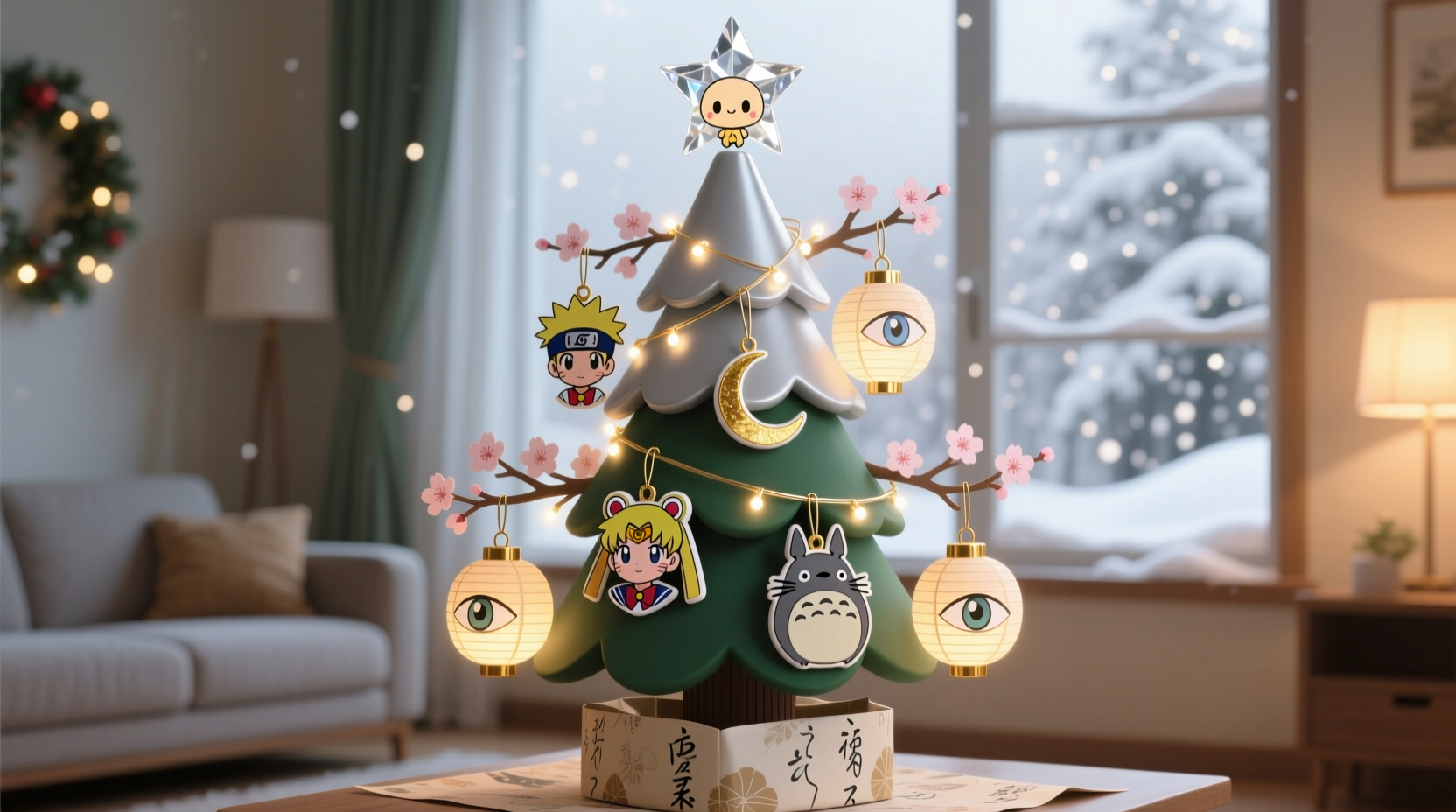
Jumping straight to “Which characters?” invites chaos. Instead, begin with a unifying theme that bridges anime storytelling and Yuletide tradition. Consider these three proven thematic anchors:
- Seasonal Resonance: Select series intrinsically tied to winter, solstice, or renewal—My Neighbor Totoro’s snowy bus stop scene, Clannad: After Story’s poignant December arc, or Spirited Away’s bathhouse during the “winter cleansing” festival. These offer natural emotional and visual alignment with Christmas themes of hope, stillness, and quiet magic.
- Color Philosophy: Let a series’ dominant palette drive your entire scheme—not its characters. Haikyuu!!’s high-contrast navy-and-white evokes classic Scandinavian minimalism; Barakamon’s warm ochres and muted greens mirror earthy, handmade holiday palettes; Violet Evergarden’s soft lavenders and dove grays align seamlessly with contemporary “quiet luxury” Christmas trends.
- Symbolic Motif: Focus on recurring, non-character symbols: the red string of fate from Fruits Basket, origami cranes from 5 Centimeters Per Second, or the cherry blossom motif reimagined as frosted glass ornaments. These carry emotional weight without relying on figurative representation.
2. Curate Ornaments with Intention: Quality Over Quantity
Tasteful anime integration hinges on restraint. A tree overloaded with character-shaped baubles reads as novelty rather than artistry. Prioritize craftsmanship, material integrity, and subtle references. Here’s how professionals approach curation:
| Type | Recommended Approach | What to Avoid |
|---|---|---|
| Character Ornaments | Limit to 3–5 total. Use only hand-painted ceramic, etched glass, or matte-finish wood. Place them asymmetrically at eye level—not clustered—and ensure each has breathing room (minimum 6 inches between). | Plastic mass-produced figures, glitter-heavy decals, or anything with visible branding/logos (e.g., “© Shonen Jump”). |
| Symbolic Ornaments | Custom laser-cut wood shapes (e.g., Totoro’s umbrella silhouette, Naruto’s spiral motif as a snowflake), hand-stitched fabric stars with embroidered kanji for “peace” or “joy,” or blown-glass orbs containing suspended dried sakura petals. | Generic “anime-style” clipart printed on cheap acrylic, or symbols stripped of context (e.g., a lone Sharingan eye without surrounding Uchiha fan motifs). |
| Textural Elements | Woven bamboo garlands (echoing Princess Mononoke’s forest spirits), hand-dyed indigo ribbon (nodding to Rurouni Kenshin’s Edo-era textiles), or felted wool ornaments shaped like steamed buns (Food Wars!) in natural wool tones—not cartoonish pink or yellow. | Anything synthetic-smelling, overly shiny, or visually “loud” (e.g., neon LED-lit shuriken). |
Remember: The tree itself remains the star. Ornaments should enhance—not compete with—its natural texture, branch structure, and light play. As Tokyo-based interior stylist Kenji Tanaka notes in his book Wabi-Sabi Holidays: “In Japanese seasonal design, objects don’t shout. They whisper meaning through material, placement, and silence between forms.”
“The most powerful anime-inspired decor doesn’t depict characters—it evokes their emotional world. A single, perfectly placed origami crane on a bare branch says more than twenty plastic figurines.” — Kenji Tanaka, Interior Stylist & Author of Wabi-Sabi Holidays
3. Build a Cohesive Color Palette Using Anime Art Direction
Most anime studios employ rigorous color scripting—deliberate palettes assigned to scenes, seasons, or emotional arcs. Borrow these intentionally:
- March Comes in Like a Lion uses desaturated blues, greys, and parchment tones during winter episodes—ideal for a subdued, contemplative tree with matte mercury glass balls, raw linen bows, and dried eucalyptus.
- Yuri!!! on ICE employs bold cobalt and gold accents against clean white backdrops—translate this into deep navy velvet ribbons, antique-gold wire-wrapped pinecones, and white frosted branches.
- K-On!’s spring palette (mint, coral, butter yellow) can be winterized: swap coral for terracotta, butter yellow for aged parchment, and mint for sage—then pair with cinnamon sticks, dried orange slices, and woven straw stars.
Avoid palette collisions. If your anime reference uses high saturation, mute it by 30% for holiday application. Conversely, if your series leans monochrome (Death Note, Ghost in the Shell), introduce warmth through texture—rough-hewn wood beads, nubby wool tassels, or beeswax-coated twine—rather than adding clashing colors.
4. Step-by-Step Tree Styling Timeline
Follow this 72-hour timeline for balanced, stress-free execution:
- Day 1, Morning (1 hour): Research & Sketch. Identify your anchor theme and color script. Sketch a simple tree diagram with zones: top third (lightest elements), middle third (focal ornaments), bottom third (textural weight). Mark where symbolic pieces will go—not characters.
- Day 1, Evening (30 mins): Prep Materials. Wash and dry all fabric elements. Polish glass/metal ornaments. Test lighting (warm white LEDs only—no colored bulbs unless part of your curated palette, e.g., amber for Golden Kamuy’s Hokkaido setting).
- Day 2, Morning (2 hours): Base Layer. String lights evenly (start at base, spiral upward). Add garland last—never first. Use natural materials: dried citrus slices + cinnamon sticks, or hand-rolled washi paper chains in your palette’s neutral tone.
- Day 2, Afternoon (1.5 hours): Ornament Placement. Begin at the top with your most meaningful symbolic piece (e.g., a ceramic snowflake for Your Name). Work downward in triangular clusters of 3 or 5—never rows. Hang character ornaments only after all symbolic/textural pieces are secured.
- Day 3, Morning (45 mins): Refinement & Negative Space. Step back every 15 minutes. Remove any ornament that feels “busy” or draws attention away from the tree’s form. Ensure at least 40% of branch surface remains visible—this is where elegance lives.
5. Real Example: The “Kiki’s Delivery Service” Winter Tree
When graphic designer Mika Sato decorated her Tokyo apartment tree for Christmas 2023, she avoided Jiji figurines and broomstick replicas entirely. Instead, she built around Kiki’s core themes: independence, quiet growth, and gentle magic. Her process:
- Palette: Soft charcoal (for Kiki’s dress), oatmeal (her apron), and sky blue (the coastal town’s winter light)—all rendered in matte ceramic, undyed wool, and hand-blown glass.
- Ornaments: Hand-thrown ceramic birds (not cats), each glazed with subtle feather textures; miniature delivery baskets woven from willow, lined with moss; and glass orbs containing tiny, suspended ink sketches of wind currents—referencing Kiki’s flight paths.
- Finishing Touch: A single, real black cat hair (from her own pet) sealed inside a clear resin pendant—hung low on the trunk as a private, tactile homage.
The result? Guests consistently described it as “calm,” “intimate,” and “unmistakably Kiki”—without recognizing a single literal reference. “People didn’t see anime,” Mika explains. “They felt the story’s heart—and that’s what made it sacred.”
6. Cultural Respect Checklist
Anime originates from specific cultural contexts. Tasteful integration requires mindfulness beyond aesthetics. Follow this checklist:
- ✅ Research symbolism: Avoid using sacred Shinto motifs (e.g., *shimenawa* ropes, *torii* gates) as decorative props without understanding their ritual significance.
- ✅ Prioritize licensed or original artwork: Never print fan-made NSFW or meme-style art on ornaments—even if “tasteful.” Support official merch or commission artists directly.
- ✅ Honor linguistic integrity: If using Japanese text (e.g., “メリークリスマス”), verify romanization and spacing with a native speaker. Never use kanji out of context (e.g., “愛” for “love” on a romantic tree is fine; “死” for “death” is inappropriate).
- ✅ Acknowledge origins: In social posts or verbal explanations, credit the series, studio, and cultural roots—not just “anime” as a monolith.
- ✅ Balance representation: If celebrating a series with diverse characters (e.g., Blue Period), ensure your tree reflects that range—not just the protagonist.
7. FAQ
Can I mix multiple anime series on one tree?
Yes—but only if they share a coherent visual language or thematic thread. For example, pairing My Hero Academia (vibrant heroics) with Bocchi the Rock! (nervous energy) creates dissonance. Better pair My Hero Academia with Black Clover (both feature bold primary palettes and themes of perseverance), then unify them with shared metallic accents and dynamic, angular ornament shapes.
Are anime-themed tree toppers acceptable?
Topper choices demand extra care. Avoid character busts or oversized heads. Instead, opt for abstract interpretations: a ceramic crescent moon with subtle star-shaped indentations (nodding to Sailor Moon), a minimalist origami crane perched atop a brass ring (for 5 Centimeters Per Second), or a hand-blown glass sphere reflecting the room’s light (evoking Neon Genesis Evangelion’s introspective depth). The topper should invite contemplation—not identification.
How do I explain my themed tree to non-fans without sounding defensive?
Lead with universal values: “This tree celebrates resilience—I used Erased’s color palette because its quiet blues and greys remind me of hope returning after hardship.” Or: “I love how Barakamon finds beauty in small, handmade things, so I focused on textures I made myself.” Center emotion and craft—not fandom credentials.
Conclusion
A tasteful anime-themed Christmas tree isn’t about proving your devotion to a series. It’s about translating what moves you—whether it’s the courage in a quiet moment, the warmth of found family, or the poetry of seasonal change—into a physical space that breathes with intention. It asks you to look deeper than logos and catchphrases, to honor both the artistry of the medium and the timelessness of the season. You don’t need rare collectibles or perfect symmetry. You need clarity of purpose, respect for craft, and the confidence to let negative space speak as loudly as ornamentation. Your tree becomes a quiet testament: that joy, nostalgia, and reverence can coexist beautifully—if you let them breathe.
💬 Your turn: Share how you’ve honored a meaningful story in your holiday space—whether anime, literature, or personal history. What feeling did you choose to embody? We’d love to learn from your intentionality.