Vodka is often called “odorless, colorless, and tasteless”—a description that’s more marketing myth than sensory truth. In reality, even the most neutral vodkas carry subtle differences in mouthfeel, viscosity, ethanol burn, and trace congeners shaped by water source, distillation method, filtration, and post-distillation handling. Yet price tags rarely correlate with objective preference. A $30 bottle may outperform a $60 one in a properly conducted blind test—and vice versa. Hosting such a test isn’t about proving “cheap is better” or “expensive is worth it.” It’s about cutting through branding, expectation bias, and social signaling to discover what your palate truly responds to. This guide walks you through every logistical, sensory, and psychological detail required for a rigorous, repeatable, and genuinely revealing blind vodka tasting.
Why Blind Testing Matters—And Why Most Fail at It
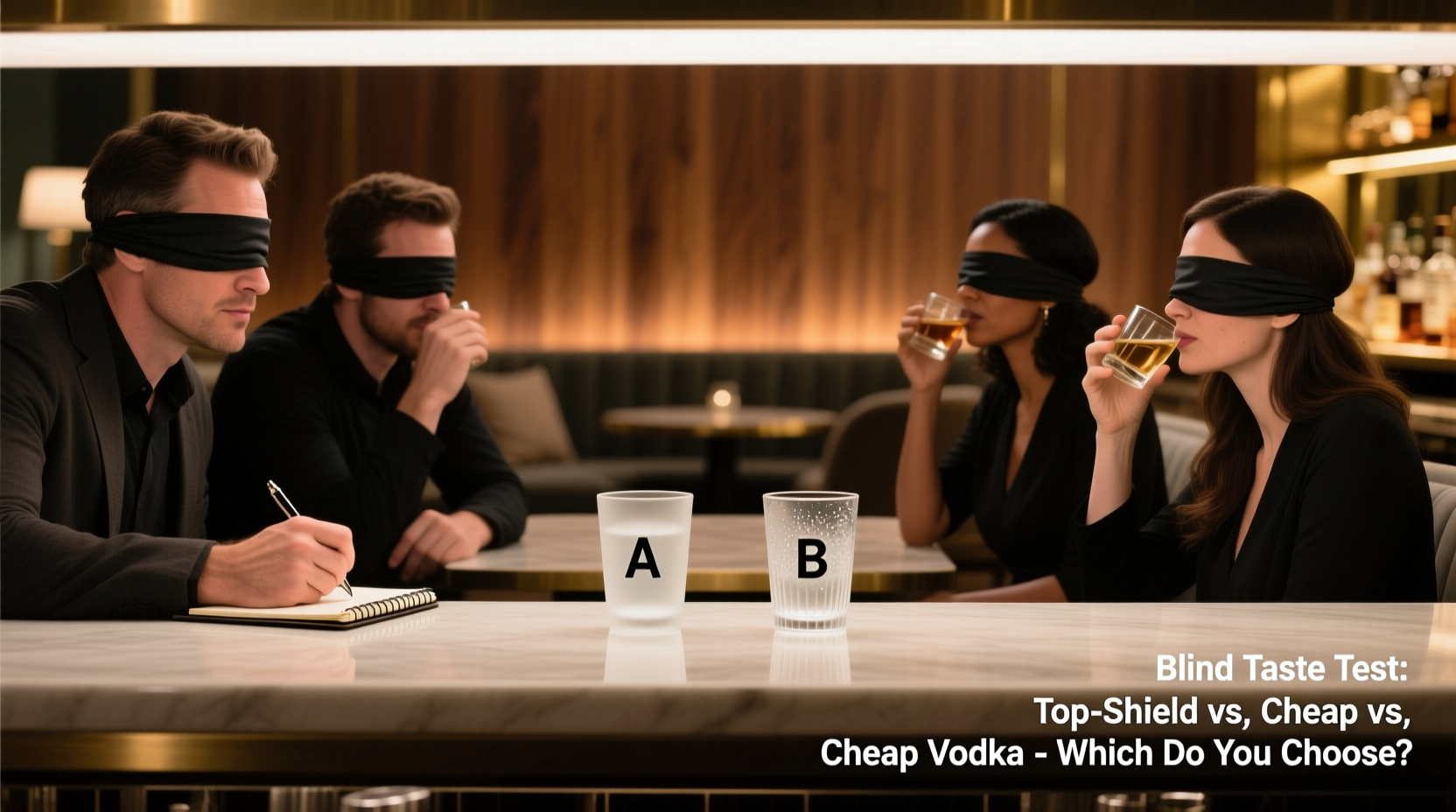
Expectancy bias is the single greatest obstacle to honest sensory evaluation. When tasters know they’re drinking Grey Goose or Belvedere, their brains activate reward pathways before the liquid even touches the tongue. fMRI studies show that labeled premium spirits trigger heightened activity in the medial prefrontal cortex—the region associated with value attribution and pleasure anticipation—even when the actual sample is identical to a cheaper counterpart. Conversely, seeing a budget label can prime disappointment, amplifying perceived harshness or thinness. A landmark 2017 study published in Food Quality and Preference found that 68% of participants rated the same vodka as “smoother” and “more complex” when told it cost $52 versus $14—despite identical samples served in identical glasses.
Most informal “vodka showdowns” fail because they ignore critical controls: inconsistent serving temperatures, unstandardized glassware, visible bottle labels, sequential tasting order (which introduces fatigue and contrast effects), and lack of palate cleansers. Without structure, the results reflect group psychology—not sensory reality.
Tip: Serve all vodkas at precisely 8–10°C (46–50°F). Warmer temperatures increase ethanol volatility and burn; colder temps suppress aroma and mute texture. Use a calibrated fridge or ice-water bath with thermometer verification.Step-by-Step: Building a Scientifically Sound Blind Test
- Select 4–6 vodkas across price tiers: Include two budget options ($10–$18), two mid-tier ($20–$35), and two top-shelf ($40+). Prioritize diversity in production method—e.g., column-distilled wheat (Tito’s), quadruple-distilled rye (Belvedere), charcoal-filtered corn (Smirnoff), and ultra-filtration (Ketel One). Avoid flavored or infused vodkas.
- Decant and anonymize: Pour equal volumes (30 mL) into identical, unmarked 60 mL tasting glasses. Assign randomized three-letter codes (e.g., “ZRX,” “KLM”) using a sealed draw system. Record the code-to-brand mapping in a locked document—only one person (the “test coordinator”) should hold this key until after scoring.
- Control environment: Conduct in a neutral space—no strong odors, loud music, or visual distractions. Provide plain crackers, unsalted almonds, and room-temperature spring water (not tap, which varies in mineral content).
- Standardize tasting order: Use a Latin square design to rotate presentation sequence across participants, preventing order bias. For four vodkas (A, B, C, D), one participant tastes A→B→C→D, another B→C→D→A, etc.
- Use a structured scoring sheet: Rate each sample on five anchored dimensions: Initial aroma intensity (1–5), Perceived smoothness (1 = harsh/burning, 5 = velvety), Body/viscosity (1 = watery, 5 = oily), Finish length (seconds), and Overall preference (1–10). No open-ended notes during tasting—these introduce subjective interpretation.
What to Look For—Beyond “Smoothness”
“Smooth” is the most overused—and least informative—descriptor in vodka evaluation. It conflates multiple independent sensory phenomena. Train yourself to isolate these elements:
- Alcohol integration: Does ethanol present as a sharp, stinging front-of-palate heat—or does it unfold gradually, then recede cleanly? Poor integration signals incomplete rectification or rushed filtration.
- Water quality signature: High-mineral water (e.g., from limestone aquifers) imparts subtle salinity or chalkiness; soft glacial water yields crisp neutrality. Try tasting the base water used by each brand (if publicly documented) side-by-side with still spring water.
- Filtration artifacts: Over-charcoal filtration can strip too much, yielding a hollow, “empty” profile. Under-filtration leaves grainy, yeasty, or sulfurous notes—often detectable on the finish.
- Texture paradox: Some vodkas feel thick yet burn intensely (e.g., high-ABV uncut batches); others feel light but coat the tongue luxuriously (e.g., wheat vodkas with natural glycerol byproducts). Viscosity ≠ smoothness.
| Sensory Dimension | What It Reveals | Common Misinterpretations |
|---|---|---|
| Aroma intensity | Indicates residual congeners or volatile esters; higher isn’t “better”—it signals less rectification | Assuming “no smell” = purity (some desirable esters are aromatic) |
| Mid-palate oiliness | Suggests grain-derived lipids or glycerol; correlates with mouth-coating and perceived richness | Mistaking oiliness for “impurity” or “heaviness” |
| Finish bitterness | Often from copper still contact or botanical carryover; not inherently negative (adds complexity) | Labeling all bitterness as “harshness” or “fault” |
| Saline/mineral lift | Reflects water source; enhances drinkability and balances ethanol | Confusing minerality with “saltiness” or “brininess” |
Real-World Case Study: The Brooklyn Bartenders’ Collective Tasting
In March 2023, 12 professional bartenders in Williamsburg hosted a double-blind vodka test featuring six bottles: Smirnoff No. 21 ($14), Deep Eddy Lemon ($16), Hangar 1 Straight ($28), Ketel One Botanical Grapefruit & Rose ($32), Belvedere Intense Rye ($48), and Stolichnaya Elit ($52). All were served at 9°C in ISO tasting glasses, with mandatory 60-second palate reset between samples.
Results defied expectations: Smirnoff ranked highest for “smoothness” (avg. 4.7/5) and “finish length” (12.3 sec), while Belvedere Intense Rye scored lowest for “overall preference” (6.1/10)—cited for “aggressive rye spice and lingering ethanol burn.” Notably, Ketel One Botanical received polarized scores: half praised its floral lift, half rejected its residual sweetness as “un-vodka-like.” Crucially, when the codes were revealed, three participants admitted they’d have rated Smirnoff lower had they seen the label—confirming expectancy bias in real time.
The takeaway wasn’t that “cheap wins.” It was that production intent matters more than price: Smirnoff’s triple-column distillation targets neutrality; Belvedere Intense embraces bold rye character; Ketel One Botanical prioritizes aromatic diffusion over traditional vodka austerity. Context defines quality.
Expert Insight: The Distiller’s Perspective
“The idea that ‘more distillation = better vodka’ is outdated. Modern continuous columns achieve near-absolute ethanol purity in one pass. What separates vodkas is water, filtration philosophy, and how much character the brand chooses to retain—not how many times it’s been boiled. A $12 vodka made with glacial water and slow charcoal filtration can outperform a $60 one rushed through stainless steel without rest. Taste it blind, and you’ll hear the water speak.” — Lena Petrova, Master Distiller at Spirit Works Distillery (California)
Do’s and Don’ts Checklist
- ✅ DO use distilled or reverse-osmosis water to rinse glasses between tastings (tap minerals alter perception)
- ✅ DO limit sessions to 4–5 vodkas max—palate fatigue skews later scores significantly
- ✅ DO include a “control” sample: pure 40% ABV ethanol diluted in your tap water vs. in filtered water. This reveals your baseline sensitivity to alcohol burn.
- ❌ DON’T serve vodkas straight from freezer (-18°C). Extreme cold anesthetizes receptors and masks texture.
- ❌ DON’T allow conversation about brands or prices during the tasting. Even phrases like “this one’s familiar” cue bias.
- ❌ DON’T use stemmed wine glasses. Their wide bowls volatilize ethanol excessively. ISO tasting glasses or small, straight-sided tumblers are ideal.
Frequently Asked Questions
Can I use vodka from the same brand but different price points (e.g., Smirnoff Red vs. Smirnoff White)?
Yes—but be aware that line extensions often share base spirit and differ only in filtration or finishing. You’re testing process variation, not raw material divergence. For maximum contrast, prioritize vodkas from distinct grain sources (wheat, rye, corn, potato, grapes) and distillation traditions (Polish pot still, Russian column, American craft batch).
Why not just taste them in cocktails instead of neat?
Cocktails mask critical variables. Citric acid in lime juice amplifies ethanol burn; sugar suppresses bitterness; dilution alters viscosity perception. Neat tasting isolates the spirit’s intrinsic properties. Once you understand the base profiles, you can predict cocktail performance—e.g., a high-viscosity, low-burn vodka excels in a vodka martini; a bright, saline vodka shines in a bloody mary.
How many people do I need for statistically meaningful results?
For informal learning: 5–8 tasters provides rich qualitative insight. For publishable conclusions: 25+ trained panelists using ASTM E1810-17 sensory standards. But remember—your goal isn’t statistical significance. It’s calibration: training your own palate to detect what matters to you, not what marketers claim matters.
Conclusion: Taste With Curiosity, Not Conviction
Hosting a blind vodka taste test isn’t about declaring winners or validating price tags. It’s a quiet act of sensory sovereignty—reclaiming your palate from decades of branding, prestige signaling, and inherited assumptions. You may discover that the $12 vodka you’ve overlooked for years delivers exactly the clean, crisp neutrality you crave in a martini. Or you might find that the $50 bottle’s subtle rye warmth and mineral finish transforms a simple vodka soda into something layered and memorable. Neither outcome is “right” or “wrong.” Both are data points in your personal flavor atlas.
What matters is the rigor of your method: the anonymity, the temperature control, the silence between sips, the refusal to let a label shape your first impression. That discipline doesn’t just improve vodka tasting—it rewires how you experience all spirits, all food, all sensory input. So gather your glasses, chill your samples, assign your codes, and taste without names. Then, and only then, look at the labels—and ask yourself: did my tongue agree with the tag?
💬 Try it this weekend—and share your anonymous results, surprises, and biggest takeaways in the comments. What shocked your palate? Which $12 bottle stole the show? Let’s build a real-world database of blind truth.