In modern homes and offices, extension cords are often essential—powering everything from entertainment systems to workstations. But exposed cords create visual clutter, pose tripping dangers, and can be a hazard in high-traffic areas. Many people consider hiding them under carpet for a cleaner look, but doing so incorrectly can lead to serious consequences like fire hazards, cord damage, or overheating. The good news is that with the right approach, you can conceal extension cords safely and effectively. This guide provides practical, code-compliant strategies to manage cords under carpet without compromising safety.
Why Hiding Cords Under Carpet Is Risky—And When It’s Acceptable
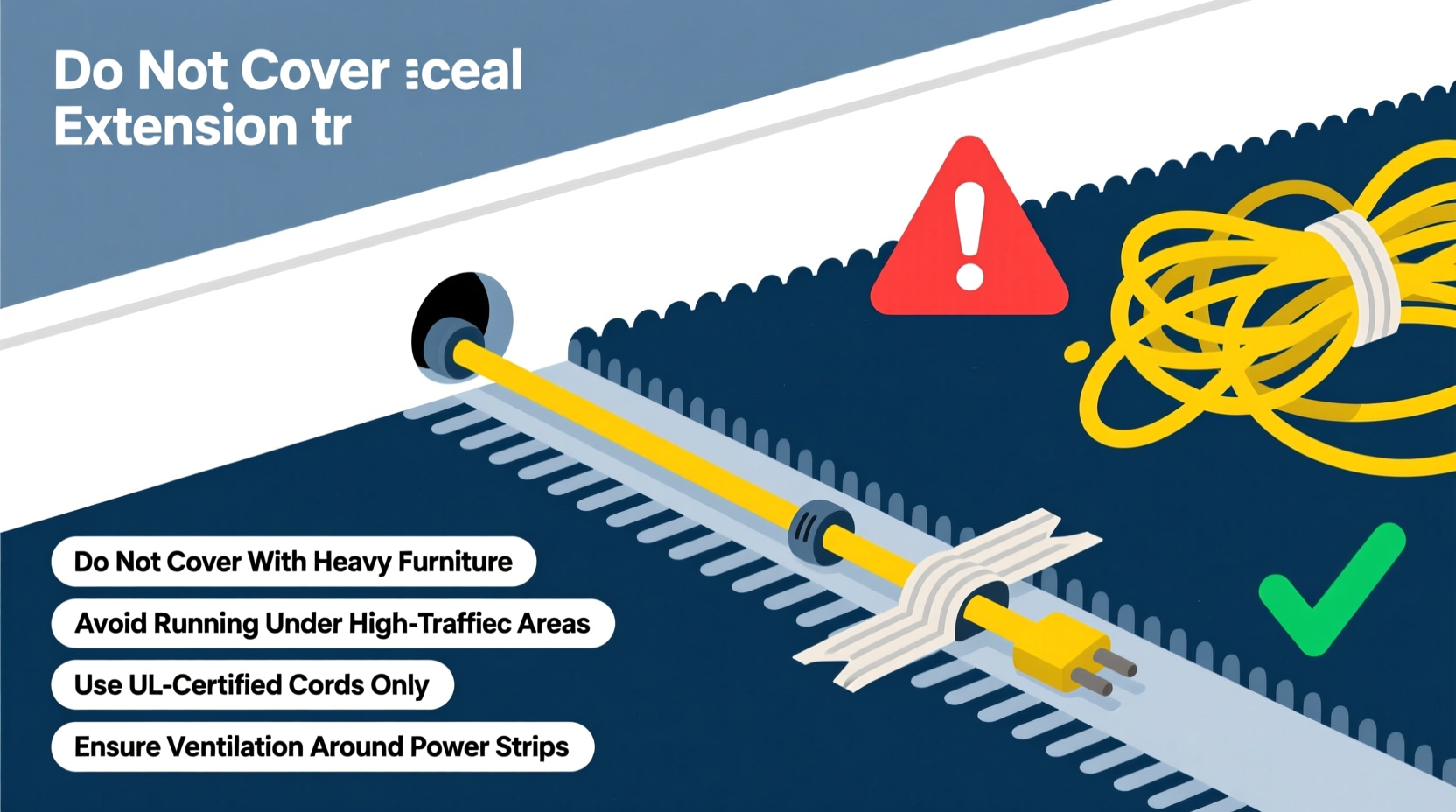
At first glance, tucking an extension cord beneath a rug seems like a simple fix. However, standard electrical codes and fire safety experts generally discourage this practice. Why? Because carpets trap heat, restrict airflow, and make it difficult to inspect cords for wear or damage. Over time, a cord buried under fabric can overheat—especially if it's powering high-wattage devices—increasing the risk of insulation breakdown, short circuits, or even fire.
The National Electrical Code (NEC) does not explicitly ban placing cords under rugs, but it does require that electrical installations avoid conditions that could lead to overheating or mechanical damage. Extension cords are considered temporary solutions and should not be used as permanent wiring substitutes. That said, there are limited scenarios where low-voltage or properly rated cords can be managed under flooring materials—if done with extreme caution and the correct tools.
“Any cord hidden under carpet becomes invisible to inspection. If it degrades or overheats, you won’t know until it’s too late.” — James Leland, Certified Electrician and Safety Inspector
Safe Alternatives: How to Conceal Cords Without Burying Them
The safest way to “hide” an extension cord isn’t to bury it, but to route it intelligently using protective and aesthetic solutions. These alternatives eliminate tripping hazards while allowing ventilation and access for inspection.
Use Flat Cord Protectors or Cable Ramps
Flat rubber or plastic cable covers are designed to protect cords across walkways. They lie flush on the floor and allow foot traffic and rolling chairs to pass safely. These come in various widths and colors to blend with your decor.
- Ideal for doorways, hallways, or living room transitions.
- Allow air circulation around the cord.
- Easy to remove for inspection or repositioning.
Install Baseboard or Wall-Mounted Raceways
Raceways are hollow channels that attach to baseboards or walls, concealing cords along the perimeter of a room. Available in paintable white or textured finishes, they offer a semi-permanent solution that keeps cords off the floor entirely.
Tip: Choose raceways with removable lids for easy access during maintenance or upgrades.Route Cords Behind Furniture or Along Edges
Strategically arranging furniture can naturally shield cords from view. For example, running a cord behind a sofa or entertainment center keeps it out of foot traffic zones. Use adhesive clips or cord sleeves to keep wires neat and prevent snagging.
Step-by-Step Guide: How to Temporarily Hide a Cord Under Carpet (With Caution)
If you absolutely must place a cord under carpet—such as in a rental where wall modifications aren't allowed—follow these steps to minimize risk. This method is only recommended for low-power devices (e.g., lamps, phone chargers, or small electronics), never for space heaters, refrigerators, or other high-draw appliances.
- Assess the cord’s load: Check the wattage of the device being powered. Ensure the total draw is less than 50% of the cord’s maximum rating.
- Choose a flat, low-profile cord: Use a slim, braided, or flat-style extension cord designed for under-rug use. Avoid coiled or thick industrial cords.
- Select a low-traffic area: Only run the cord under carpet in spaces with minimal walking, such as beside a bed or behind a desk.
- Use a cord cover or channel: Install a rigid, ventilated conduit under the carpet edge to protect the wire from compression and friction.
- Lift the carpet slightly: At entry and exit points, gently lift the carpet edge and insert the cord into a floor-level grommet or carpet seal strip to prevent fraying.
- Inspect weekly: Lift the carpet every 7–10 days to check for warmth, discoloration, or abrasion on the cord.
- Never cover with heavy furniture: Avoid placing sofas, bookcases, or ottomans over the cord location.
Do’s and Don’ts of Managing Extension Cords Near Flooring
| Do | Don’t |
|---|---|
| Use flat cable protectors in walkways | Run standard round cords under carpet |
| Inspect cords monthly for damage | Cover cords with heavy rugs or furniture |
| Use UL-listed, low-voltage cords for under-rug use | Plug high-wattage devices into hidden cords |
| Route cords along baseboards with raceways | Nail or staple cords to floors or walls |
| Unplug when not in use for extended periods | Leave cords hidden and unattended for months |
Checklist: Safe Cord Management Under or Near Carpet
Before installing any cord near or under carpet, go through this checklist to ensure safety and compliance:
- ☐ Confirm the device draws less than 500 watts (for low-risk setups)
- ☐ Use a flat, flexible, UL-certified cord rated for under-floor use
- ☐ Avoid looping or bending the cord sharply under the carpet
- ☐ Ensure the cord exits and enters the carpet smoothly—no pinching
- ☐ Install cord ramps or edge protectors at doorway transitions
- ☐ Schedule bi-weekly inspections for heat, odor, or damage
- ☐ Keep a fire extinguisher accessible nearby
- ☐ Consider switching to a permanent outlet or power strip on the wall
Real Example: A Home Office Setup Gone Wrong (And How It Was Fixed)
Sarah, a remote worker in Chicago, needed to power her desk setup in a corner of her living room far from outlets. She ran a 14-gauge extension cord under the area rug to reach her computer, monitor, and lamp. Within three weeks, she noticed a faint burning smell near her feet. Upon lifting the rug, she found the cord had melted slightly where it bent under the coffee table leg. The carpet had trapped heat, and constant chair movement had worn down the insulation.
She replaced the setup with a white baseboard raceway running from the nearest outlet to her desk. Inside, she installed a low-profile power strip. The cord was now visible but tidy and completely safe. She also invested in a surge protector with overload protection. Since then, no heat issues have occurred, and her workspace looks more professional.
Tip: If you smell burning plastic or feel warmth near a cord, unplug immediately and inspect for damage.When to Upgrade to Permanent Solutions
Hiding cords under carpet should always be a temporary workaround—not a long-term fix. If you find yourself relying on extension cords frequently, it may be time to consider permanent electrical upgrades:
- Install new outlets: An electrician can add outlets closer to your devices, eliminating the need for cords altogether.
- Use floor outlets: In rooms with carpet or hardwood, recessed floor outlets provide power exactly where you need it.
- Upgrade circuit capacity: Older homes may lack sufficient circuits. Adding dedicated lines prevents overloading.
While these options involve higher upfront costs, they improve both safety and property value. According to the National Fire Protection Association (NFPA), nearly 3,300 home fires per year are caused by extension cords—most due to misuse like covering them with rugs or overloading.
Frequently Asked Questions
Can I use any extension cord under a carpet?
No. Standard extension cords are not designed for under-carpet use. Only flat, low-profile, UL-listed cords specifically rated for such applications should be considered—and even then, only temporarily and with caution.
What kind of cord is safe to run under carpet?
Look for cords labeled “low voltage,” “flat design,” or “under-rug rated.” These are typically used for LED lighting, charging stations, or decorative electronics drawing minimal power. Always verify the manufacturer’s guidelines.
Are there legal or insurance implications for hiding cords under carpet?
Yes. If a fire occurs due to improper cord use and it’s determined that the cord was concealed under carpet in violation of safety standards, your homeowner’s insurance may deny the claim. Additionally, landlords may consider this a lease violation.
Expert Recommendations for Long-Term Safety
Electrical safety professionals consistently emphasize prevention over convenience. Here’s what top experts advise:
- Never treat extension cords as permanent wiring. They lack the durability and insulation of built-in wiring.
- Avoid daisy-chaining cords. Connecting multiple cords increases resistance and heat buildup.
- Use GFCI outlets or surge protectors. These cut power during overloads or short circuits.
- Label cords clearly. Prevent accidental disconnection or misuse by others.
“The safest cord is one that’s visible, ventilated, and inspected regularly. Out of sight should never mean out of mind.” — National Fire Protection Association (NFPA) Safety Bulletin
Conclusion: Prioritize Safety Over Aesthetics
While the desire for a clean, cord-free floor is understandable, safety must come first. Hiding extension cords under carpet introduces real risks that far outweigh the benefits of a tidy appearance. Instead, invest in smart, visible solutions like raceways, cable ramps, or professional electrical upgrades. These not only protect your home and family but also enhance the overall look of your space without cutting corners.
Take action today: inspect your current cord setups, replace any hidden or damaged wires, and plan a safer routing strategy. Your attention to detail now could prevent a disaster later.
💬 Have a clever cord-hiding solution that’s both safe and stylish? Share your experience in the comments and help others maintain a hazard-free home!








