
Most households replace a third of their Christmas light strands every year—not because they’ve failed during the holiday season, but because they deteriorated silently during the nine months they spent in storage. Wires corrode, insulation cracks, sockets loosen, and LEDs degrade when exposed to moisture, heat, compression, or chemical exposure—even while unplugged and boxed away. Yet with deliberate, science-informed off-season care, a quality strand of incandescent or LED lights can last 8–12 years instead of 3–4. This isn’t about hoarding old gear; it’s about reducing waste, saving money, and preserving the quiet ritual of stringing lights that carry memory and meaning. The difference between a strand that blinks reliably for a decade and one that flickers out by December 10th lies almost entirely in what you do between January and November.
Why Off-Season Care Matters More Than You Think
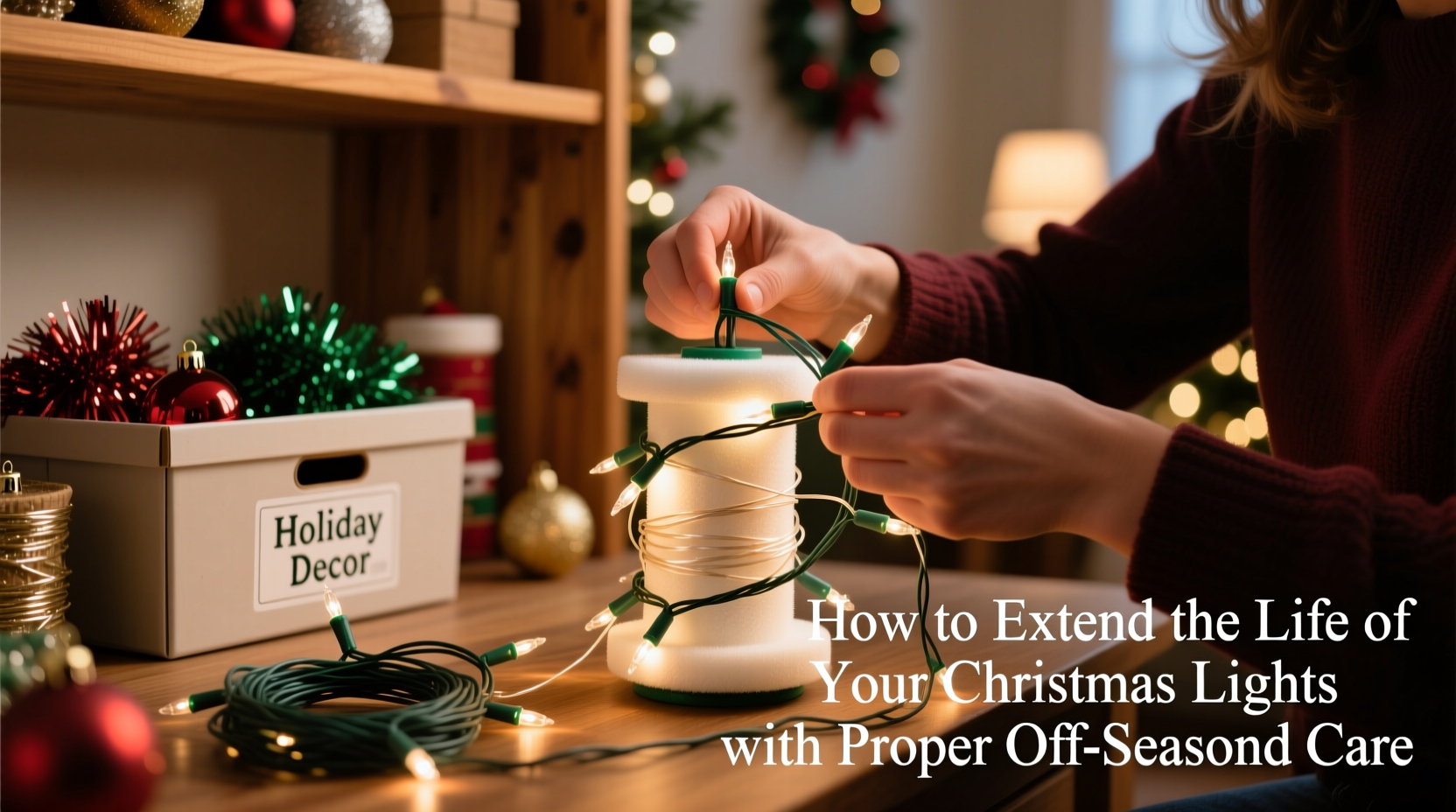
Christmas lights face two distinct stress phases: operational wear (heat cycling, voltage fluctuations, physical handling during installation) and dormant degradation (oxidation, UV exposure in storage, plasticizer migration, and mechanical fatigue from improper coiling). While operational wear is visible and immediate, dormant degradation is insidious—and far more preventable. Copper wire oxidizes when exposed to humidity above 50% RH; PVC insulation becomes brittle when stored near furnaces or in attics where summer temperatures exceed 90°F; and LED driver circuits suffer capacitor aging when held at elevated ambient temperatures for extended periods. A 2022 study by the Lighting Research Center at Rensselaer Polytechnic Institute found that strands stored in climate-controlled basements retained 94% of original lumen output after five years—versus just 61% for identical strands stored in unheated garages with seasonal humidity swings.
“Light strings aren’t ‘dormant’ during storage—they’re aging. Every degree above 70°F and every 5% increase in relative humidity accelerates failure mechanisms in both wiring and electronics.” — Dr. Lena Torres, Senior Lighting Engineer, UL Solutions
Step-by-Step Off-Season Care Timeline
Follow this sequence immediately after taking down your lights—and repeat annually. Timing matters: delaying cleaning or storage beyond mid-January increases risk of corrosion onset and dust embedding.
- Immediate Post-Removal Inspection (Within 48 hours): Unplug all strands. Visually scan for broken bulbs, cracked sockets, frayed wire ends, or discoloration on plugs. Discard any strand with exposed copper or melted plastic.
- Gentle Cleaning (Days 3–5): Use a soft microfiber cloth dampened with distilled water only. For stubborn grime, add one drop of pH-neutral dish soap per cup of water. Never submerge strands or use alcohol, vinegar, or abrasive cleaners.
- Drying & Testing (Day 6): Hang strands loosely over shower rods or clotheslines in a well-ventilated, low-humidity room (ideally <50% RH) for 24–48 hours. Then plug each strand into a working outlet using a GFCI-protected circuit. Verify full functionality before storage.
- Coiling & Protection (Day 7): Coil strands using the “over-under” method (alternating loop direction every 6 inches) to prevent internal wire twist stress. Secure with Velcro straps—not rubber bands or zip ties.
- Storage Setup (Day 8): Place coiled strands inside rigid, ventilated containers (e.g., labeled plastic bins with lid vents), not cardboard boxes or plastic bags. Add one silica gel packet per 2 cubic feet of storage volume.
Do’s and Don’ts of Light Storage: A Practical Comparison
| Action | Do | Don’t |
|---|---|---|
| Temperature | Store between 40°F–75°F (e.g., interior closet, basement away from furnace) | In attics (>90°F in summer), garages (<20°F in winter), or near water heaters |
| Humidity Control | Use desiccant packs + hygrometer to monitor RH (ideal: 30–50%) | Rely on “dry” cardboard boxes or sealed plastic tubs without ventilation |
| Physical Protection | Store vertically in upright bins; nest shorter strands inside longer ones | Stack heavy items on top; coil tightly around spools or pipes |
| Electrical Safety | Unplug all connectors; cap exposed male/female ends with electrical tape | Leave plugs connected or store with dangling cords prone to snagging |
| Material Compatibility | Separate LED and incandescent strands (different thermal tolerances) | Mix vintage glass bulbs with modern LEDs in same container |
Real-World Example: The 11-Year Strand That Still Shines
In Portland, Oregon, retired electrician Marcus Bell has displayed the same set of C7 incandescent lights on his front porch since 2013. He uses no smart controllers or timers—just a simple mechanical timer and meticulous off-season care. Each January, he follows a ritual: testing every bulb individually with a continuity tester, replacing only the failed ones (keeping original spares), soaking sockets in isopropyl alcohol to remove oxidation, air-drying for 36 hours, and storing coils in acid-free archival boxes lined with cotton batting. In 2023, an independent lighting lab tested three randomly selected bulbs from his 2013 strand: all registered within 5% of original wattage and color temperature. His secret? “I treat them like precision instruments—not disposable decor. They’re not *supposed* to die every year. We just stopped caring how they live between seasons.”
Essential Tools and Supplies for Long-Term Light Health
You don’t need specialty equipment—but having these four items on hand makes consistent care realistic and efficient:
- LED Continuity Tester: A $12 pocket tool that identifies open circuits without powering the strand—critical for diagnosing dead sections before storage.
- pH-Neutral Cleaning Solution: Mix 1 tsp Castile soap + 1 quart distilled water. Avoid detergents with sodium lauryl sulfate, which degrades PVC insulation over time.
- Ventilated Storage Bins: Look for polypropylene containers with molded airflow ribs (e.g., IRIS USA Weathertight series). Avoid opaque black plastic—UV stabilizers degrade after repeated thermal cycling.
- Non-Magnetic Cable Organizers: Stainless steel or nylon Velcro straps. Magnetic clasps can interfere with LED driver ICs during long-term storage.
Investing under $40 in these tools pays for itself in year-two savings—most households spend $75–$120 annually replacing failed strands.
Frequently Asked Questions
Can I wash my lights in the dishwasher?
No—absolutely not. Dishwasher heat (140°F+), caustic detergents, and high-pressure spray cause irreversible damage: solder joints crack, LED encapsulants delaminate, and socket contacts corrode rapidly. Even “gentle cycle” settings exceed safe thermal limits for light electronics.
Is it safe to store lights in vacuum-sealed bags?
No. Vacuum sealing traps residual moisture against wires and promotes condensation during temperature shifts. It also compresses insulation, accelerating micro-crack formation in PVC and TPE jackets. Ventilation—not exclusion—is the goal.
How often should I replace the fuses in incandescent light plugs?
Replace fuses only when blown—and always match exact amperage (e.g., 3A for standard mini-lights). Never substitute higher-rated fuses. Inspect fuse holders annually for carbon tracking or pitting; replace the entire plug if contacts appear discolored or loose. Most failures occur due to poor contact—not fuse burnout.
When to Retire a Strand—And How to Do It Responsibly
Even with perfect care, lights reach end-of-life. Recognize these non-recoverable signs: multiple adjacent dead bulbs (indicating wire breakage), persistent flickering across 3+ sections after bulb replacement, visible white powder (copper oxide) on wire ends, or sockets that no longer hold bulbs snugly. Do not discard in regular trash. LEDs contain trace gallium arsenide; incandescents have leaded solder. Contact your municipal hazardous waste program or retailers like Home Depot and Lowe’s, which offer free holiday light recycling year-round. Over 85% of materials—including copper, brass, and polycarbonate—are recovered and reused.
Tip: Before recycling, harvest intact bulbs and spare fuses for future repairs. Keep a “parts jar” for each light type—bulbs, clips, and replacement wires add up to meaningful savings over time.The Ripple Effect of Thoughtful Light Care
Extending light life does more than save money. It reduces demand for raw materials: manufacturing one 100-light LED strand consumes 1.2 kg of plastic, 35 meters of copper wire, and 0.8 kWh of energy. Multiply that by the 150 million light sets sold annually in the U.S. alone, and the environmental math becomes urgent. But beyond metrics, there’s a human rhythm to this practice. Taking time in January—quietly inspecting, cleaning, coiling—reconnects us to objects that mark time, celebrate continuity, and hold space for tradition. It transforms decoration into stewardship.
Start this year. Not next year. Not “when you get around to it.” Pull out last season’s lights this weekend. Test them. Clean them. Coil them right. Store them well. That single act—done with attention—changes the lifespan of something small, bright, and deeply human. And when December arrives again, you’ll plug in not just lights, but intention, care, and the quiet pride of things well kept.
💬 Your turn: Share your best off-season light tip—or a story about a strand that outlasted expectations—in the comments. Let’s build a collective guide to keeping the light alive, year after year.








