
Decorating a staircase with Christmas lights can instantly elevate your holiday ambiance, casting a warm glow that welcomes guests and delights family members. However, staircases present unique safety challenges: uneven steps, high foot traffic, and proximity to railings and walls increase the risk of tripping, overheating, or electrical faults. When done incorrectly, festive lighting becomes more than just inconvenient—it can be dangerous.
The key is not to avoid decorating altogether but to approach it with care, planning, and the right tools. With proper techniques, you can achieve a stunning visual effect while maintaining full compliance with safety standards. This guide walks through every critical step—from selecting safe materials to securing wires and managing power sources—so your staircase shines brightly without compromising well-being.
Choose the Right Lights for Stair Safety
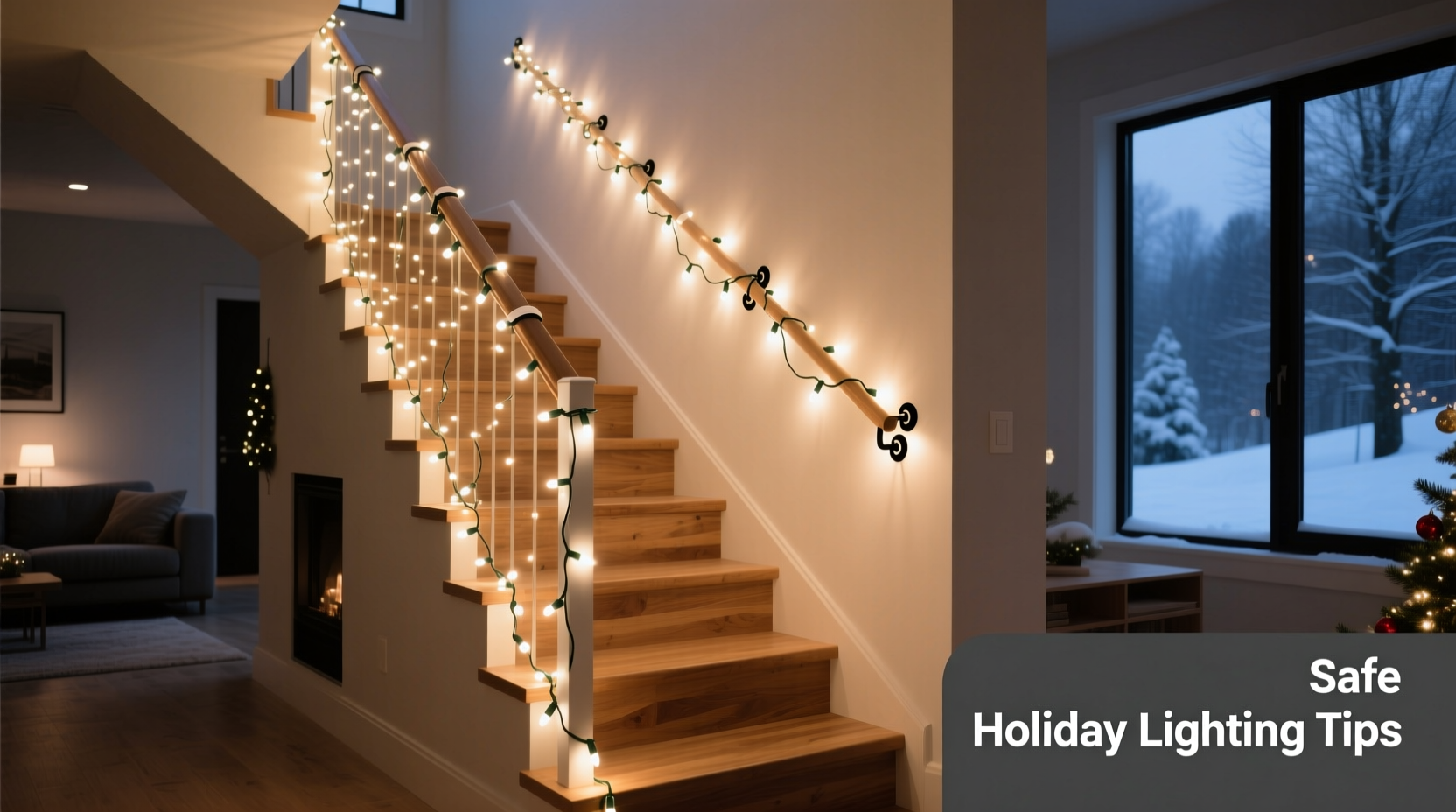
Not all Christmas lights are created equal, especially when used on staircases. The type of light string you choose directly impacts both safety and durability. Opting for low-heat, energy-efficient options reduces fire risk and minimizes strain on circuits.
LED lights are the clear winner for staircase decoration. They consume up to 90% less energy than incandescent bulbs, generate minimal heat, and last significantly longer. Because they remain cool to the touch, even after hours of use, they’re safer around handrails, carpeted steps, and curious children or pets.
Tip: Always check for certification labels like UL (Underwriters Laboratories) or ETL when purchasing lights—these indicate the product has passed rigorous safety testing.Avoid older incandescent strands, particularly if they’ll be in contact with fabric or wood surfaces. Their higher operating temperature increases the chance of material degradation over time. Also, inspect each strand before use: discard any with frayed wires, cracked sockets, or loose bulbs.
Secure Lighting Without Creating Trip Hazards
One of the most common dangers in staircase lighting is improper wire management. Loose cords draped across steps create serious tripping risks, especially in low-light conditions. Even a small misstep on stairs can lead to injury. The solution lies in strategic placement and secure fastening methods.
Never lay light strings directly across treads unless they are fully embedded or covered by a non-slip tread guard designed for such use. Instead, route lights along the handrail or banister where they enhance visibility rather than obstruct movement.
“Improperly secured holiday lighting accounts for nearly 15% of home decoration-related injuries during December.” — National Fire Protection Association (NFPA)
Use adhesive-backed clips specifically made for Christmas lights—often called “mini clothespin” or “goose-neck” clips. These attach cleanly to wood, metal, or painted surfaces without damaging finishes. Space them evenly along the underside of the handrail so the lights follow the curve of the staircase smoothly.
If your staircase lacks a continuous railing, consider installing temporary support lines using clear fishing line anchored at safe points. Never nail or staple wires into steps or risers; this damages structural components and creates sharp protrusions.
Step-by-Step Guide: Installing Safe Staircase Lights
Follow this detailed sequence to install Christmas lights on your staircase efficiently and safely:
- Measure the staircase length: Use a flexible tape measure along the handrail’s path to determine total linear feet. Add 10–15% extra for natural sag and connections.
- Select LED light strings of consistent length: Choose pre-lit sections that match your measurements to minimize splicing. If extension is needed, use only UL-rated connectors.
- Dry-fit the layout: Drape the lights loosely in place (without plugging in) to test spacing and alignment. Adjust as needed before final installation.
- Clean and prepare mounting surfaces: Wipe down handrails and posts with a dry cloth to ensure adhesives bond properly.
- Install mounting clips every 6–8 inches: Position clips beneath the rail so the bulb portion faces outward. Press firmly for at least 30 seconds to activate adhesive.
- Thread lights into clips: Begin at the top or bottom, gently placing each bulb socket into the clip. Avoid pulling or stretching the cord.
- Route power cord safely: Run the main plug along baseboards or under rugs (only if approved for floor use), never across walking paths.
- Test the circuit: Plug in temporarily to confirm all bulbs work and there are no flickering sections.
- Secure excess cord: Coil unused lengths neatly behind baseboard trim or inside an outlet cover box, ensuring ventilation.
- Monitor during initial use: Leave lights on for two hours while checking for warmth, flickering, or unusual smells.
Safety Checklist Before Turning On the Lights
Before energizing your display, run through this essential safety checklist:
- All light strings are UL-listed and undamaged
- No exposed wires or broken sockets visible
- Wiring does not cross any step tread
- Clips are securely attached and holding wires firmly
- Extension cords (if used) are outdoor-rated and grounded (3-prong)
- Total wattage stays below 80% of circuit capacity
- Power source is near an accessible outlet, not stretched
- GFCI (Ground Fault Circuit Interrupter) protection is active on the circuit
- Children and pets cannot reach or chew cords
- A fire extinguisher is nearby and operational
Do’s and Don’ts: Best Practices Compared
| Do’s | Don’ts |
|---|---|
| Use LED lights rated for indoor use | Use old incandescent sets with cracked insulation |
| Attach lights with adhesive clips under the handrail | Nail or staple wires into wooden steps or posts |
| Plug into a GFCI-protected outlet | Overload outlets with multiple high-wattage strings |
| Turn off lights when leaving home or sleeping | Leave lights unattended for more than 12 consecutive hours |
| Inspect connections daily for looseness or heat | Place cords under heavy furniture or rugs not rated for covering |
Real Example: A Family’s Close Call—and How They Fixed It
The Thompson family in Portland, Oregon, decorated their spiral staircase for the first time last holiday season. Excited to impress guests, they wrapped incandescent lights tightly around the central pole and draped cords down several steps. Within three days, their youngest child tripped on a loose wire, falling two steps before catching themselves on the rail.
Alarmed, they consulted a local electrician who also happened to volunteer with a holiday safety initiative. He pointed out multiple hazards: overloaded circuits, lack of GFCI protection, and excessive heat buildup near the wooden spindle. Together, they redesigned the setup using LED rope lights mounted internally along the balustrade, eliminating all floor-level wiring.
After reinstallation, the staircase looked even better—cleaner and more elegant—but now posed zero tripping risk. The family reported feeling much more relaxed enjoying evening gatherings knowing their display met professional safety standards.
Managing Power Load and Electrical Safety
Overloading circuits is one of the leading causes of holiday electrical fires. Most residential circuits handle 15–20 amps, yet many people chain together dozens of light strings without calculating cumulative draw.
To calculate load: multiply the number of strings by their wattage per set. For example, ten 4-watt LED strings consume 40 watts total—well within safe limits. But ten 40-watt incandescent sets draw 400 watts, which could overload a shared kitchen or hallway circuit already powering other devices.
Always plug major decorations into dedicated circuits if possible. Use a power strip with built-in surge protection and individual switches so you can turn off lights remotely. Never daisy-chain more than three standard light strings unless the manufacturer explicitly allows it.
Tip: Set lights on a timer to operate only during evening hours (e.g., 5 PM to 11 PM), reducing energy use and minimizing exposure time.Frequently Asked Questions
Can I use outdoor lights indoors on my staircase?
Yes, outdoor-rated lights can be used indoors—they're often more durable and better insulated. Just ensure they’re plugged into a properly rated outlet and not exposed to unnecessary moisture unless intended.
How do I remove sticky residue from clips after the holidays?
Use a small amount of rubbing alcohol on a soft cloth to gently wipe away adhesive residue. Test on a hidden area first to avoid finish damage. Avoid harsh solvents like acetone on painted or stained wood.
Is it safe to leave Christmas lights on overnight?
It's not recommended. While modern LED systems are low-risk, no electrical system is completely immune to fault. Unplug lights before bedtime or use a programmable timer to shut them off automatically.
Final Recommendations for a Safer Holiday Display
A beautifully lit staircase enhances your home’s festive spirit, but only if it doesn't compromise safety. Prioritize LED lighting, secure all wiring away from walking surfaces, and respect electrical limits. Daily checks during peak usage help catch early signs of wear or overheating.
Remember, elegance doesn’t require excess. A single, well-placed strand following the natural curve of your banister often makes a stronger visual impact than cluttered layers of blinking bulbs. Thoughtful design paired with cautious execution ensures your family enjoys the season worry-free.
“The safest holiday displays aren’t the brightest—they’re the ones planned with foresight and respect for electrical safety.” — James Liao, Residential Electrical Inspector, NFPA Contributor
Take Action Today
Don’t wait until the night before guests arrive to assess your staircase lighting. Review your current plan against the guidelines above, make necessary upgrades, and document your installation process for future years. Small investments in safety now prevent accidents later.
💬 Have a staircase lighting success story or safety tip? Share your experience in the comments—your insight could help another homeowner celebrate safely this season.








