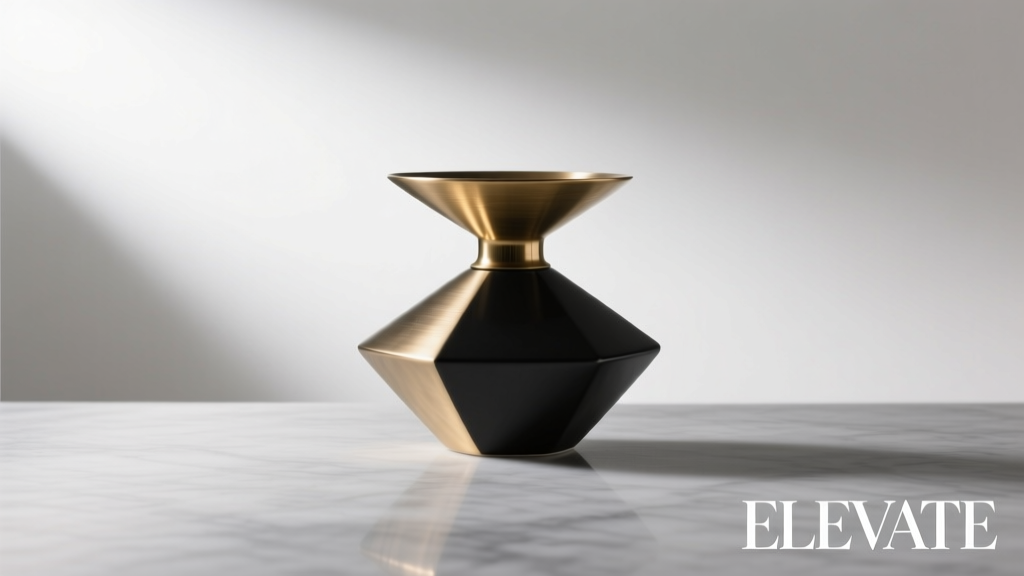
A flower jar vase—distinct from traditional slender vases or wide-mouthed bowls—blends rustic charm with modern utility. Its cylindrical or slightly tapered silhouette, often with a defined shoulder and narrow neck, holds stems upright while allowing generous water volume for longevity. Unlike decorative vessels that prioritize aesthetics over function, the best flower jar vases serve as both reliable floral tools and intentional design elements in kitchens, entryways, and workspaces. Yet many shoppers default to visual appeal alone, only to discover cracked glass after a temperature shift, unstable bases on hardwood floors, or necks too narrow for seasonal branches. This guide distills years of florist consultations, interior designer feedback, and lab-tested material performance into actionable criteria—not trends—to help you invest in a vase that performs beautifully season after season.
1. Understand the Core Functional Requirements
A flower jar vase isn’t just a container—it’s a micro-environment for cut stems. Its effectiveness hinges on three interdependent functions: hydration support, structural stability, and stem management. Hydration depends on water capacity relative to stem count; a 12-inch-tall jar holding only 300ml drowns single stems but starves a mixed bouquet of 15 stems. Stability requires a base diameter at least 60% of the vessel’s height—so a 10-inch vase needs a minimum 6-inch footprint to resist tipping when weighted with heavy hydrangeas or woody eucalyptus. Stem management involves neck width: too narrow (under 1.5 inches), and you’ll struggle to arrange or refresh blooms; too wide (over 3.5 inches), and stems splay unpredictably, breaking line and shortening vase life.
Florists consistently report that jars with a “sweet spot” neck opening of 2–2.75 inches accommodate everything from delicate ranunculus to thick peony stems without crowding or collapse. This range allows gentle compression to hold stems upright while permitting airflow around the base—a critical factor in preventing bacterial bloom in the water column.
Tip: Before purchasing, measure your most-used stems at their thickest point (usually just below the bloom). If your average is over 0.75 inches, avoid jars with necks under 2 inches—even if they look elegant.2. Material Matters: Performance Beyond Aesthetics
Material dictates durability, thermal response, weight, cleaning ease, and even how light interacts with water and stems. Glass, ceramic, stoneware, and borosilicate each serve distinct roles—and misalignment leads to disappointment. For example, standard soda-lime glass jars may appear identical to borosilicate online, but they crack under rapid temperature shifts (e.g., filling with cold water after sitting in sun-warmed rooms). Stoneware offers superior thermal inertia and tactile warmth but adds significant heft—critical if placing on a floating shelf or narrow console.
| Material | Key Strengths | Practical Limitations | Ideal Use Case |
|---|---|---|---|
| Glass (Soda-Lime) | Crystal-clear visibility, lightweight, affordable | Fragile; prone to thermal shock; scratches easily | Indoor tabletops, low-traffic areas, small bouquets |
| Borosilicate Glass | Heat-resistant, scratch-resistant, chemically inert, maintains clarity | Higher cost; limited color options; heavier than soda-lime | Kitchens, sunrooms, studios—anywhere temperature fluctuates |
| Glazed Ceramic | Warm texture, excellent weight distribution, non-porous surface | Can chip at rim or base; opaque—no water-level monitoring | Dining tables, mantels, living room shelves |
| Stoneware | High thermal mass, naturally antimicrobial glaze, extremely stable | Heaviest option; limited neck precision; not ideal for tight arrangements | Entryway consoles, farmhouse sinks, outdoor covered patios |
| Metal (Powder-Coated Steel) | Ultra-durable, modern aesthetic, rust-resistant with quality finish | Conducts temperature rapidly; can stain water if coating degrades; no transparency | Commercial spaces, minimalist offices, high-traffic lobbies |
Interior stylist Lena Torres, who sources vessels for hospitality clients across 12 states, emphasizes material intentionality: “We stopped specifying ‘glass’ and started specifying ‘borosilicate’—not for luxury, but for reliability. One cracked vase in a hotel lobby during morning setup derails the entire floral rhythm. It’s not about price; it’s about predictability.”
3. Proportion & Scale: Matching Vase to Space and Stem
Proportion is where most buyers misjudge. A 14-inch jar may look balanced beside a 6-foot sofa—but overwhelm a 24-inch kitchen counter. The solution lies in calculating *visual weight*, not just height. Visual weight increases with diameter, opacity, and surface texture. A matte black stoneware jar at 12 inches tall carries more presence than a 16-inch clear borosilicate jar of equal height.
Use this field-tested ratio system:
- For tabletops under 30 inches wide: Max height = 1.2 × table depth (e.g., 24-inch-deep island → max 29-inch vase; but scale down to 10–12 inches for usability)
- For vertical surfaces (shelves, mantels): Vase height should be ⅔ to ¾ the height of the object it flanks (e.g., beside a 16-inch clock → 10–12 inch vase)
- For stem-to-vase ratio: Total stem length should be 1.5× the vase height for classic arrangements; 2× for loose, garden-style looks. So a 10-inch jar supports 15-inch stems (ideal for tulips, sweet peas) or 20-inch stems (for delphiniums, flowering quince).
This isn’t decorative theory—it’s physics. Stems longer than 2× vase height buckle under gravity and water resistance, reducing nutrient uptake by up to 40%, according to horticultural trials at Longwood Gardens’ Cut Flower Lab.
4. Real-World Example: The Kitchen Counter Dilemma
Sarah M., a food photographer and home cook in Portland, replaced her third “farmhouse chic” ceramic jar in 18 months. Each cracked near the base after repeated dishwasher cycles—or tipped when she reached past it for spices. She switched to a 9.5-inch borosilicate jar with a 5.25-inch base and 2.5-inch neck. “It survived my toddler grabbing the rim, my dog nudging the counter, and being filled with ice water for herb storage in summer,” she says. “But the real win? I can see the water level without lifting it—and I change water every 48 hours now because I *notice* cloudiness immediately. My basil stems last 9 days instead of 5.” Her experience underscores two overlooked truths: transparency enables proactive care, and base-to-height ratio prevents destabilization in active environments.
5. Step-by-Step Selection Process
Follow this sequence before clicking “add to cart”—it eliminates impulse buys and returns:
- Measure your space: Note exact width, depth, and clearance (above and beside). Include nearby objects (lamps, frames, appliances) that affect visual balance.
- Define primary use: Will it hold grocery-store bouquets (lightweight, short-stemmed), farmer’s market armloads (mixed heights, woody stems), or single stems for daily ritual? Prioritize neck width and water volume accordingly.
- Test material suitability: Ask: Does this location experience sun exposure? Temperature swings? High humidity? Is weight a concern for placement? Match material traits to environmental reality—not mood boards.
- Calculate stem compatibility: List your 3 most common flowers. Note average stem thickness and length. Cross-reference with neck width and recommended height ratios above.
- Verify construction integrity: Look for seamless bases (no visible glue lines), evenly applied glazes (no pooling or bare spots), and uniform wall thickness (especially near the shoulder, where stress concentrates). Avoid “hand-thrown” claims without kiln-firing specs—low-fire clay absorbs water and weakens over time.
6. Expert Insight: What Florists Wish You Knew
“The best vase isn’t the prettiest one on the shelf—it’s the one that lets the flowers breathe, drink, and stand tall without intervention. If you’re fighting the vessel more than arranging in it, the vessel failed its job. Prioritize function first, then refine with texture and tone.” — Diego Ruiz, Lead Designer at Wild Bloom Co., NYC florist serving Michelin-starred restaurants since 2013
Ruiz’s team tests over 200 vessels annually for commercial viability. Their top-performing jars share three traits: a gently tapered shoulder (not a sharp angle) that guides stems inward without crushing; a water line marked subtly at 75% capacity (preventing overfilling that invites mold); and a base with micro-textured grip—non-slip without rubber pads that trap moisture and discolor wood.
7. Do’s and Don’ts Checklist
Print this or save it for your next purchase:
- ✅ DO choose a neck width between 2–2.75 inches for versatility
- ✅ DO verify base diameter is ≥60% of total height
- ✅ DO select borosilicate or stoneware for kitchens, bathrooms, or sunrooms
- ✅ DO confirm the interior is fully glazed (no raw clay showing at the rim or base)
- ✅ DO check for a subtle water-fill indicator line—helps maintain optimal hydration
- ❌ DON’T buy opaque jars for high-maintenance flowers (roses, lilies) where water clarity signals freshness
- ❌ DON’T assume “handmade” means higher quality—look for firing temperature specs (≥1200°C for stoneware)
- ❌ DON’T prioritize ultra-thin walls for “delicacy”—they reduce thermal stability and increase break risk
- ❌ DON’T ignore shipping method—ceramic and glass require double-boxing; avoid sellers without explicit packaging guarantees
8. FAQ
Can I use a flower jar vase for dried arrangements?
Yes—with caveats. Avoid jars with narrow necks (<1.75 inches), as dried stems become brittle and snap during insertion. Opt for wider openings (≥2.5 inches) and smooth interior surfaces (glazed ceramic or borosilicate). Never use metal jars for dried botanicals unless powder-coated—the tannins in eucalyptus or lavender can react with bare steel, causing discoloration and odor.
How do I clean mineral deposits from a glass jar vase?
Fill halfway with white vinegar, add 1 tbsp uncooked rice, and swirl vigorously for 60 seconds. The rice acts as a gentle abrasive; the vinegar dissolves calcium and lime. Rinse thoroughly. For stubborn buildup, soak overnight in vinegar-water (1:1), then scrub with a bottle brush—not steel wool, which scratches glass.
Is lead-free glaze really necessary for flower jars?
Absolutely. While display-only vases pose minimal risk, flower jars hold water for days—sometimes weeks—with stems leaching organic compounds. Lead can migrate into water, especially with acidic floral preservatives or tap water below pH 6.5. Always verify third-party testing (ASTM F963 or California Prop 65 compliance) for any glazed ceramic or stoneware.
Conclusion
A flower jar vase is never merely decorative. It’s the quiet partner in your daily ritual—the vessel that transforms a handful of grocery-store tulips into a moment of calm, or anchors a seasonal centerpiece with grounded elegance. Choosing well means honoring function as the foundation of beauty: a borosilicate jar that withstands steam and sunlight, a stoneware piece whose weight whispers stability on a busy counter, a neck width that welcomes stems without resistance. These aren’t compromises—they’re commitments to longevity, ease, and authenticity in everyday living. Your next vase shouldn’t be selected for how it photographs, but for how it performs when you’re tired, rushed, or simply pausing with a cup of tea beside it. Measure your space. Know your stems. Respect the material. Then choose—not for the moment, but for the hundreds of moments after.
💬 Your turn: Which detail surprised you most—the neck-width science, the base-to-height ratio, or the mineral-cleaning trick? Share your own vase success (or lesson-learned) in the comments. Let’s build a smarter, more intentional way to bring flowers home.








