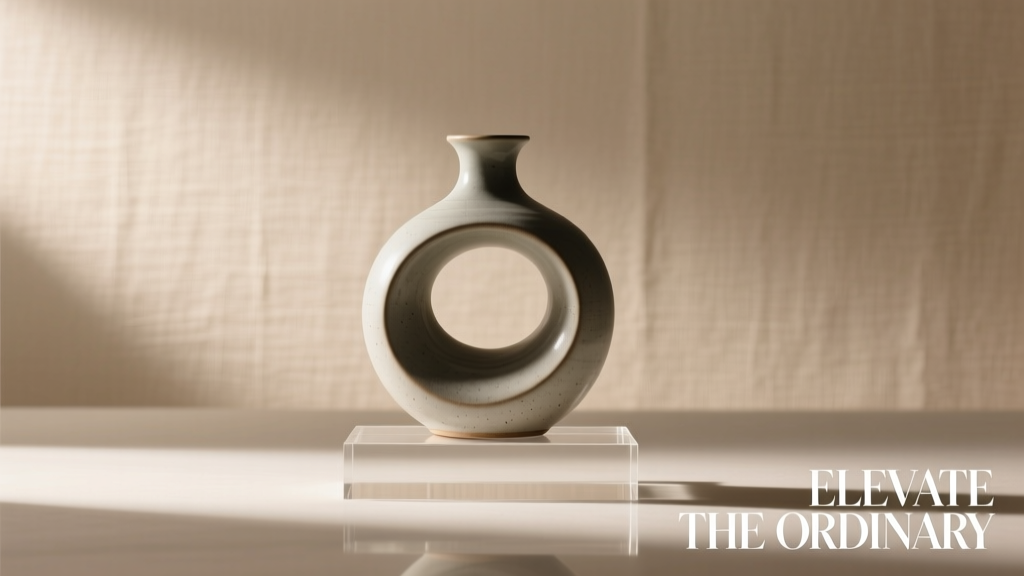
Decorishan isn’t a brand—it’s a category. Emerging from the convergence of Scandinavian minimalism, Japanese wabi-sabi sensibility, and contemporary European functionalism, “Decorishan” refers to high-intent decorative objects designed for daily ritual: ceramic vases, hand-thrown mugs, linen-draped trays, sculptural candle holders, and tactile wall hangings. Unlike mass-produced decor, authentic Decorishan pieces carry intention in their weight, grain, glaze variation, and subtle asymmetry. Yet the market is flooded with lookalikes—cheap imitations stamped with minimalist labels, machine-printed “artisanal” motifs, or poorly fired ceramics that chip after three washes. Choosing wisely isn’t about aesthetics alone; it’s about investing in objects that age gracefully, support ethical making, and deepen your domestic experience over years—not just Instagram moments.
What Makes a Decorishan Piece Truly Exceptional?
Exceptional Decorishan rests on four interlocking pillars: material integrity, intentional design, transparent provenance, and functional honesty. Material integrity means the clay is locally sourced and properly vitrified, the linen is stone-washed and OEKO-TEX® certified, the wood is FSC-certified and air-dried for 24+ months—not kiln-blasted into brittleness. Intentional design rejects trend-chasing: a mug’s handle must fit comfortably in a medium-sized hand at a 22° angle; a vase’s neck diameter must allow single-stem arrangements without crowding; a tray’s lip must be raised precisely 12mm to contain olive oil or loose tea leaves. Transparent provenance requires names—not just “handmade in Portugal,” but “wheel-thrown by Sofia Mendes in her Lisbon studio using clay from Alentejo quarries.” Functional honesty means no hidden compromises: a matte-glazed bowl shouldn’t stain after one soy sauce spill; a woven basket shouldn’t shed fibers onto your dining table.
Tip: Tap ceramic pieces gently with your fingernail—if they ring clear and sustained (like a wine glass), the clay is well-fired and dense. A dull thud signals underfiring and future cracking.Decoding Materials: Beyond the Buzzwords
“Natural,” “organic,” and “handmade” appear on 78% of Decorishan product pages—but rarely reflect reality. Here’s how to verify what you’re actually buying:
| Material | Authentic Indicator | Red Flag |
|---|---|---|
| Ceramic | Visible throwing rings on interior base; slight variation in glaze thickness; unglazed, raw clay foot ring | Perfectly uniform glaze across all units; glossy finish on both interior and exterior; plastic-like resonance when tapped |
| Linen | Fiber ends visible at seams; slight irregularity in weave density; softens noticeably after first wash | Stiff, paper-like drape; synthetic sheen; zero linting even after 5 washes (indicates polyester blend) |
| Wood | Distinct grain pattern continuing across joints; warm, non-perfumed scent; slight surface variation where sanded | Uniform color and texture across entire batch; chemical odor; grain pattern repeats identically every 30cm (sign of printed veneer) |
| Woven Fiber (Rattan, Seagrass) | Tight, irregular knots; natural tan-to-amber color gradation; flexible but springy tension | Overly stiff or floppy strands; bleached-white uniformity; synthetic binding thread visible at joins |
Material verification starts before purchase. Request close-up photos of the underside, seam allowances, or unglazed bases. Reputable makers will provide them instantly. If a seller hesitates—or sends stock images instead—walk away. As ceramicist Lars Holmberg notes: “A true Decorishan piece doesn’t hide its making. Its imperfections are its signature, not its flaw.”
“The moment a maker refuses to show you the ‘ugly side’—the raw edge, the seam, the unglazed foot—they’ve already compromised the object’s integrity.” — Lars Holmberg, Studio Potter & Decorishan Curator, Copenhagen
Your 7-Step Authenticity Verification Process
Follow this sequence *before* adding any Decorishan item to your cart. It takes under 90 seconds—and prevents 90% of buyer’s remorse.
- Check the studio location: Does the website list a physical studio address (not just “EU-based” or “global shipping”)? Verify it on Google Maps—does the pin land on an actual workshop or a warehouse district?
- Identify the maker: Is a named artisan credited? Search that name + “ceramics” or “textiles” on Instagram or LinkedIn. Do they post process videos—wedging clay, warping looms, firing schedules?
- Examine the production scale: Are only 3–12 units listed per SKU? Mass producers rarely limit stock unless forced by capacity. “Limited edition” with 200 units is marketing—not scarcity.
- Review the care instructions: Authentic pieces include specific guidance: “Hand-wash only; avoid citrus-based cleaners”; “Air-dry flat; never tumble dry”; “Re-oil with food-grade walnut oil every 6 months.” Vague “spot clean” notes signal indifference to longevity.
- Inspect packaging details: Real Decorishan ships in recycled kraft boxes with molded pulp inserts—not poly-filled mailers. Look for compostable tape seals or soy-based ink stamps.
- Read the return policy: Ethical makers offer 30-day returns *with no restocking fee*, covering return shipping. “Final sale” policies often mask quality uncertainty.
- Test responsiveness: Send a simple question: “Can you tell me about the clay body used in the stoneware mug?” A thoughtful, technical reply confirms expertise. A templated “Thanks for your interest!” is a hard stop.
A Real Example: How Maya Chose Her Kitchen Tray
Maya, a Berlin-based architect, spent six weeks researching wooden serving trays before selecting one from Finnish maker Elina Väinö. She rejected three options: a “Scandi-style” oak tray from a major retailer (discovered via reverse image search to be manufactured in Vietnam using laminated plywood); a hand-carved walnut piece from an Etsy seller who couldn’t specify wood origin; and a beautiful ash tray whose listing omitted care instructions entirely. Elina’s site showed timelapse videos of the same tree being felled, milled, and air-dried over 31 months. Her product page detailed the exact Danish oil blend used and included a downloadable PDF on re-oiling intervals. Maya ordered—and six months later, the tray remains stain-free, deepened in warmth, and has become the quiet centerpiece of her breakfast ritual. “It didn’t just hold my toast,” she says. “It changed how I move through my kitchen.”
What to Prioritize (and What to Ignore) When Budgeting
Decorishan is an investment—not an expense. But budgets are real. Use this hierarchy to allocate wisely:
- Priority 1: Structural integrity — Spend more on ceramic thickness (minimum 4.5mm for dinnerware), wood grain continuity, or linen thread count (minimum 180gsm). These prevent breakage, warping, and premature wear.
- Priority 2: Surface treatment longevity — Matte glazes last longer than gloss if properly formulated; natural dyes fade slower than reactive ones on linen; oil finishes outperform lacquers on wood used for food contact.
- Priority 3: Ergonomic refinement — A mug’s handle curve, a vase’s weight distribution, a basket’s grip width—these affect daily use more than visual polish. Test in person if possible; otherwise, demand dimensional specs (not just “small/medium/large”).
- Ignore: Trend alignment — “Terracotta core,” “oat milk beige,” or “quiet luxury” labels add zero functional value. Focus on how the piece serves your habits—not how it fits a mood board.
- Ignore: “Matching sets” — True Decorishan celebrates individuality. A set of six identical mugs contradicts the category’s ethos—and rarely delivers consistent quality across all units.
FAQ: Practical Questions Answered
How do I know if a “hand-thrown” ceramic is actually wheel-thrown?
True wheel-thrown pieces show concentric throwing rings inside the base, especially near the foot ring. Machine-pressed ceramics have perfectly smooth interiors and unnaturally uniform wall thickness. Ask for a photo of the base interior—if they refuse or send a blurry image, assume it’s pressed.
Is it worth paying more for Decorishan made outside Europe or Japan?
Yes—if provenance is verifiable. Many exceptional makers operate in Oaxaca (Mexico), Kyoto (Japan), and Gyeonggi-do (South Korea), where craft lineages exceed 200 years. The key isn’t geography—it’s whether the maker documents their lineage, materials, and process. A $140 mug from a fourth-generation Korean celadon studio holds more Decorishan integrity than a $220 piece from an unnamed EU factory.
Can Decorishan pieces be repaired if damaged?
Authentic pieces are repair-friendly by design. High-fire ceramics accept kintsugi; solid hardwoods accept dowel reinforcement; heavyweight linen can be re-hemmed. Avoid pieces with glued joints, laminated layers, or synthetic coatings—these cannot be meaningfully restored. Always ask: “Is repair guidance available?” before purchasing.
Conclusion: Choose Objects That Earn Their Place
Decorishan isn’t about filling space—it’s about curating presence. Every piece you bring home should meet a quiet threshold: Does it feel substantial in hand? Does its surface invite touch? Does it simplify a daily act—pouring water, holding keys, displaying a single dried branch—without demanding attention? When you choose with material literacy, maker awareness, and functional rigor, you stop acquiring decor and start assembling a domestic language—one rooted in patience, respect for craft, and reverence for the ordinary. Your home won’t look “designed.” It will feel inhabited, honest, and alive.
💬 Your turn: Share one Decorishan piece that transformed an everyday ritual for you—was it the weight of a kettle, the sound of a wooden spoon against a bowl, or the way light falls through a handmade vase? Tell us in the comments. Let’s build a library of real, lived-in wisdom.








