Home bartending has evolved from a pandemic-era hobby into a lasting lifestyle ritual—complete with curated glassware, hand-selected spirits, and thoughtful presentation. But one essential tool often overlooked in the aesthetic equation is the apron. Too many enthusiasts settle for either a flimsy novelty piece that frays after three cocktails or a heavy-duty industrial model that looks like it belongs behind a commercial espresso machine—not draped over a walnut bar cart. The truth is: a great bartender’s apron must be both expressive and engineered. It should reflect personality without sacrificing performance; elevate your setup without compromising coverage, mobility, or cleanability. This isn’t about choosing between style and function—it’s about selecting an apron where those two qualities are inseparable.
Why “Just Any Apron” Doesn’t Work Behind a Home Bar
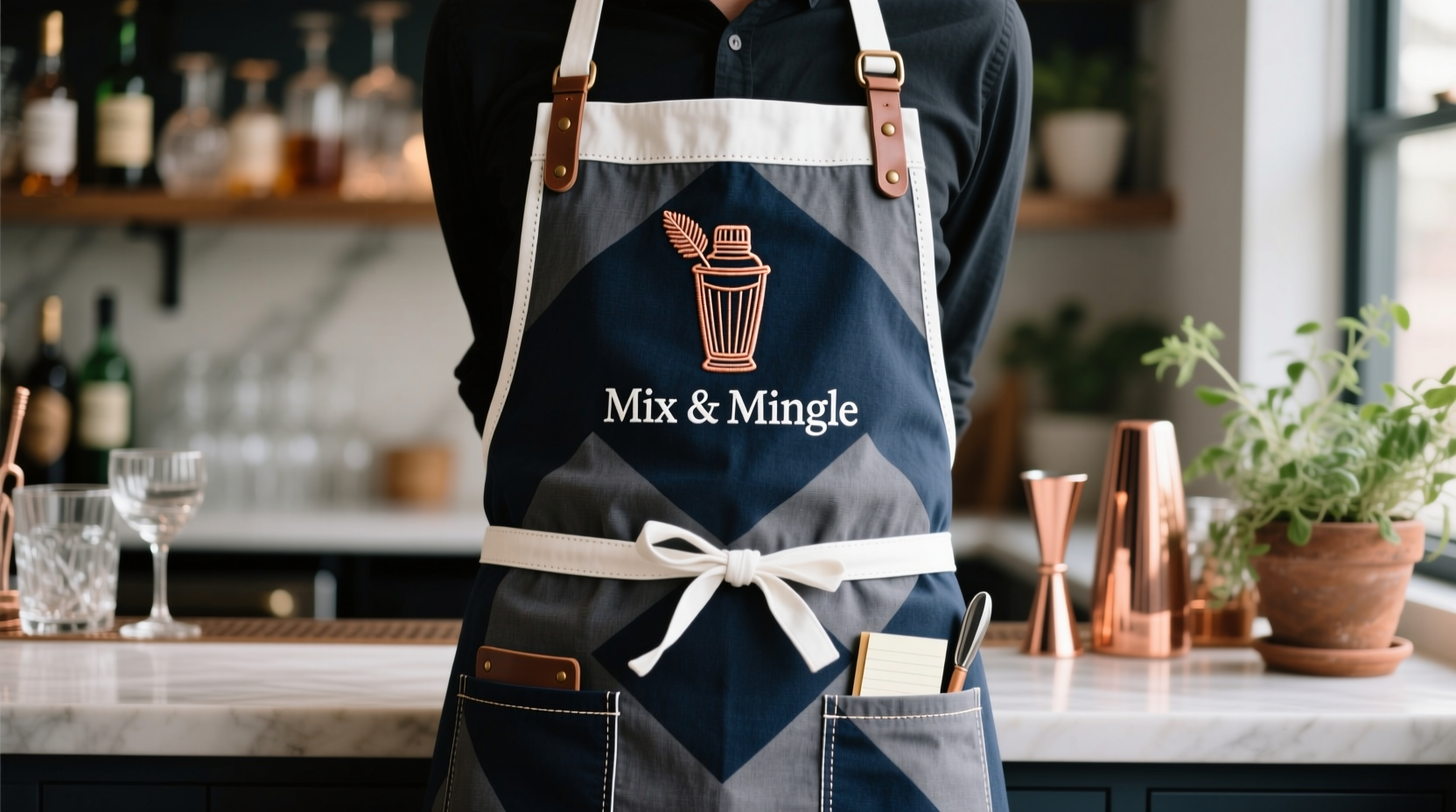
Unlike kitchen aprons, which guard against flour, grease, and steam, bartender aprons face a distinct set of hazards: alcohol-based splashes (which evaporate quickly but leave residue), sticky syrups, citrus oils that degrade fabrics, carbonated fizz that seeps through seams, and repeated contact with sharp bottle edges or shaker tins. A cotton chef apron may look charming, but its open weave absorbs citrus juice and bitters like a sponge—and once stained, it rarely recovers. Conversely, a vinyl-coated apron may repel liquid, but it traps heat, lacks drape, and creases awkwardly over the hips during service. The ideal home bartender apron bridges this gap: it breathes enough to stay comfortable during a 90-minute cocktail session, resists penetration from common bar liquids, and drapes cleanly over varied body types—without looking like PPE.
Tip: Test fabric resistance before buying: drip a small amount of simple syrup and lemon juice onto a swatch. If it beads up and wipes away cleanly after 30 seconds, the material has adequate surface tension for bar use.Five Non-Negotiable Features Every Stylish Bartender Apron Must Have
Style begins with intention—not ornamentation. A truly stylish apron earns its visual appeal through intelligent design choices, not just color or embroidery. These five features separate well-considered pieces from decorative afterthoughts:
- Full-front coverage with tapered waistline: Extends at least 5 inches below the hip bone and narrows gently at the waist to follow natural contours—not boxy or overly generous. This prevents bunching while allowing full range of motion when shaking or stirring.
- Reinforced double-stitched seams at stress points: Especially along the waistband, strap anchors, and pocket openings. Single-stitch seams fail under the weight of jiggers, strainers, and citrus peelers.
- Strap system that distributes weight evenly: Cross-back straps reduce shoulder fatigue; side-tie options should include internal loops or belt loops to prevent slippage. Avoid single-loop neck straps—they dig in and limit head movement during garnish work.
- Pockets designed for bar tools—not general storage: One deep, angled lower pocket (for shakers or julep cups), one vertical mid-chest pocket (for bar spoons or channel knives), and one secure zippered or flap-covered pocket (for phone or cash). No oversized cargo pockets that sag or collect spilled sugar.
- Surface treatment that resists staining and cleans easily: Either tightly woven natural fibers with durable water-repellent (DWR) finish, or high-performance blends like polyester-cotton with stain-inhibiting nanocoating. Avoid untreated linen or unlined canvas—they’re beautiful until the first splash of Campari.
Material Deep Dive: What Works (and What Doesn’t)
Material choice determines longevity, comfort, and cleanability more than any other factor. Below is a comparison of common apron fabrics used in home bartending contexts—evaluated across four critical criteria: liquid resistance, breathability, wrinkle recovery, and aesthetic versatility.
| Material | Liquid Resistance | Breathability | Wrinkle Recovery | Style Versatility | Real-World Note |
|---|---|---|---|---|---|
| Heavyweight Cotton Twill (12–14 oz) | Moderate (with DWR finish) | High | Medium | Excellent — accepts dye, embroidery, and subtle texture | Best all-rounder for frequent use; softens beautifully with washes but requires ironing if worn visibly. |
| Organic Linen-Cotton Blend (65/35) | Low–Moderate | Very High | Poor | High — natural slub and drape suit minimalist or rustic bars | Charming but impractical for high-volume sessions; stains permanently from bitters or vermouth unless treated. |
| Polyester-Cotton Poplin (65/35) | High (with stain-resistant finish) | Medium | Excellent | Medium — limited dye depth, prone to synthetic sheen | Low-maintenance and durable, but can feel clammy during extended wear; best for warm climates or short-service events. |
| Waxed Canvas (cotton + paraffin blend) | Very High | Low | Excellent | Medium–High — rugged, heritage look; ages gracefully | Stiff initially; requires occasional re-waxing. Not ideal for humid environments or frequent laundering. |
| Tencel™-Cotton Blend | Moderate–High (naturally moisture-wicking) | Very High | Good | High — silky hand, rich color retention, eco-conscious appeal | Premium price point; excellent for sensitive skin and modern, refined bar aesthetics. |
For most home bartenders balancing aesthetics and practicality, heavyweight cotton twill remains the gold standard—especially when finished with a fluorine-free DWR treatment. It offers enough resistance to casual splashes while retaining the warmth, texture, and character of natural fiber. Tencel™ blends are rising fast among discerning hosts who prioritize sustainability and tactile elegance without sacrificing performance.
A Real-World Example: How Maya Transformed Her Bar Setup in One Apron Swap
Maya, a graphic designer and weekly cocktail host in Portland, spent two years rotating between three different aprons: a vintage-inspired denim piece (too stiff and prone to fading), a black polyester number (sweaty and staticky), and a linen apron gifted by a friend (lovely—but stained irreversibly after a Negroni tasting night). Frustrated, she researched textile specs instead of Instagram aesthetics. She chose a 13-oz indigo-dyed cotton twill apron with cross-back straps, a hidden interior phone pocket, and matte brass hardware. Within weeks, guests began asking where she got it—not because it shouted “look at me,” but because it looked intentional, lived-in, and quietly capable. More importantly, Maya stopped changing clothes mid-evening. She wiped down syrup drips with a damp cloth, hung it to air dry, and noticed no warping or seam stress—even after 47 uses. “It didn’t make me a better bartender,” she says, “but it removed one small friction point every time I poured a drink. That consistency made hosting feel effortless.”
Step-by-Step: How to Choose Your Apron in Under 15 Minutes
Follow this focused decision sequence to cut through marketing noise and land on your ideal apron—no guesswork required:
- Assess your bar posture: Stand as you normally would behind your bar—feet shoulder-width, slight bend at knees, hands resting where they’d hold a shaker. Note where your elbows fall, how far forward you lean, and whether your waistband rides up. This reveals whether you need longer drop, wider waist coverage, or cross-back support.
- Inventory your tools: Lay out your five most-used items (e.g., Boston shaker, Hawthorne strainer, jigger, citrus peeler, notebook). Measure their combined width and depth. This tells you minimum pocket dimensions—and whether you need angled or vertical orientation.
- Check your laundry habits: Do you machine-wash weekly? Hand-wash only? Air-dry exclusively? Match your routine to fabric care labels. If you never iron, skip high-wrinkle linens. If you hate reading care tags, lean toward polyester-cotton or pre-shrunk twills.
- Define your aesthetic non-negotiables: Is “timeless” more important than “trendy”? Does “warm neutrals only” rule out navy or charcoal? Are brass or matte black hardware finishes essential? Write down exactly two visual boundaries—then shop within them.
- Verify fit logistics before purchase: Check the brand’s size chart *against your actual measurements*, not standard clothing sizes. Measure your natural waist (not hips), torso length (from base of neck to waist), and chest width (across fullest part, relaxed). Compare to apron specs—not garment sizing.
“The best bartender aprons disappear during service—neither restricting nor distracting. They’re not accessories; they’re calibrated extensions of the craft.” — Javier Mendez, Beverage Director & Co-Founder, The Copper Still (Chicago)
Your Stylish Apron Checklist
Before adding to cart—or stitching your own—verify these essentials:
- ✅ Waistband sits securely at natural waistline (not hips) without slipping or digging
- ✅ Straps adjust smoothly and lock in place—no sliding or stretching during vigorous shaking
- ✅ Front panel covers fully from sternum to mid-thigh, with no gaps at sides or back
- ✅ Pockets have reinforced corners and lie flat when empty—no gapping or bulging
- ✅ Fabric feels substantial (minimum 11 oz/sq yd for cotton) and shows tight, even weave under light
- ✅ Care instructions align with your habits (e.g., “machine wash cold, hang dry” if you avoid dryers)
- ✅ Color or pattern remains consistent across seams and straps—no mismatched dye lots
FAQ: Practical Questions Answered
Can I wear a kitchen apron for bartending?
Yes—if it meets key functional criteria: full front coverage, durable fabric (12+ oz cotton twill or equivalent), and strategically placed pockets. However, most kitchen aprons lack bar-specific features like angled tool pockets or stain-resistant finishes. A dedicated bartender apron improves efficiency and reduces long-term wear-and-tear on clothing.
How often should I wash my bartender apron?
After every 2–3 uses if handling citrus-heavy or syrup-laden drinks (e.g., Daiquiris, Old Fashioneds); after every use if working with deeply pigmented ingredients like beetroot shrubs or hibiscus syrups. Always air-dry—tumble drying degrades DWR finishes and shrinks natural fibers. Spot-clean minor spills immediately with a microfiber cloth and distilled water.
Are leather aprons suitable for home bartending?
Rarely. While stylish and durable, leather lacks breathability, stiffens in cold environments, and reacts poorly to citrus oils and alcohol—leading to cracking, discoloration, and irreversible damage. Vegetable-tanned leathers fare slightly better but still require meticulous conditioning and aren’t practical for frequent, casual use. Reserve leather for display or very low-volume ceremonial service.
Conclusion: Style Is the Sum of Thoughtful Choices
A stylish apron for home bartending isn’t defined by bold prints or monogrammed initials—it’s revealed in the quiet confidence of a well-placed pocket, the ease of a cross-back strap that stays put during a dry shake, the clean wipe of a syrup spill from a tightly woven twill, and the way it complements your bar’s rhythm instead of interrupting it. It’s the difference between feeling like you’re playing dress-up and stepping into your role with grounded authenticity. Choosing wisely means honoring both your aesthetic instincts and your practical needs—not as competing priorities, but as interdependent parts of a considered ritual. Your bar is more than a place to mix drinks; it’s where hospitality begins. And the right apron is where that intention first takes physical form.
💬 Your turn: Share what feature mattered most in your apron decision—coverage, color, pocket layout, or something unexpected. Tag a fellow home bartender who deserves a better apron. Let’s raise the standard, one thoughtful choice at a time.