A themed tree is more than seasonal decor—it’s a narrative centerpiece, a conversation catalyst, and a deeply personal expression of identity. While traditional holiday trees lean on red-and-gold motifs or rustic charm, anime and gaming editions transform the tree into a dynamic gallery: a 3D storyboard where characters from *My Hero Academia* share branches with *The Legend of Zelda*’s Triforce ornaments, and pixel-art lights pulse in time with chiptune playlists. Done well, this isn’t novelty—it’s curation with intention. It requires planning beyond aesthetics: understanding scale, material durability, lighting safety, and narrative cohesion. This guide draws from real-world builds by hobbyist decorators, prop artists, and convention exhibitors—not theoretical concepts, but tested practices that survive December humidity, pet curiosity, and repeated assembly.
1. Define Your Theme with Narrative Precision (Not Just Aesthetic)
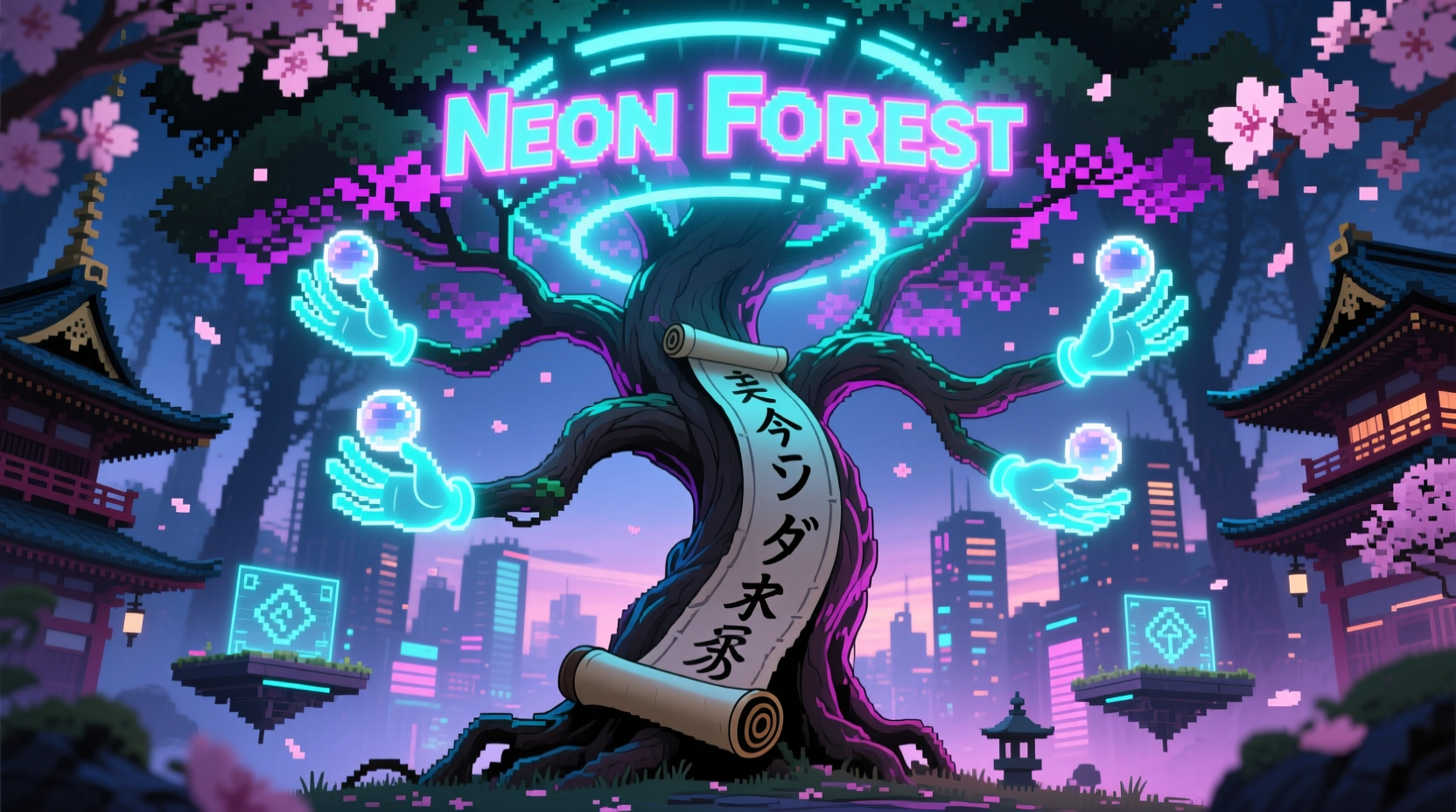
“Anime tree” or “gaming tree” are starting points—not destinations. Without narrative grounding, the result risks becoming a cluttered grab bag: a *Pokémon* plush dangling next to a *Cyberpunk 2077* neon sign and a *Final Fantasy VII* materia orb, with no visual hierarchy or emotional logic. Successful themed trees tell a story—or at least honor one. That means choosing a unifying lens: era (*90s shōnen boom*), franchise (*Studio Ghibli universe*), gameplay mechanic (*retro arcade cabinet aesthetic*), or even tone (*dark fantasy vs. lighthearted slice-of-life*).
Consider the difference between two approaches:
- Franchise-Centric Tree: Focuses exclusively on one IP—e.g., *NieR: Automata*. Ornaments feature YoRHa unit insignias, Pascal’s village motifs, and glitch-textured baubles. Lights mimic the game’s signature blue-white palette. The tree skirt replicates the desert sand of the Copied City. Every element reinforces worldbuilding.
- Era-Driven Tree: Celebrates a cultural moment—e.g., *Late 2000s Japanese Visual Novel Era*. Think *Clannad* and *Little Busters!* aesthetics: soft watercolor-style ornaments, pastel LED strings, origami cranes with handwritten “Someday…” messages, and a small, battery-powered “save point” light box at the base.
This distinction shapes every subsequent decision—from ornament size to power requirements. As Yuki Tanaka, Tokyo-based prop designer and creator of the annual “Otaku Yule” pop-up exhibition, explains:
“The strongest themed trees don’t shout ‘look at all these things I like.’ They whisper a single, resonant idea—like ‘hope in mechanical bodies’ or ‘nostalgia as tactile memory.’ If you can’t summarize your theme in six words, pause and refine before buying a single ornament.” — Yuki Tanaka, Prop Designer & Exhibition CuratorTip: Before purchasing anything, write your theme statement on sticky note: e.g., “A tree that feels like stepping into the quiet library of *The Witch’s House*—mysterious, analog, slightly dusty, full of hidden lore.” Keep it visible while shopping.
2. Strategic Sourcing: Where to Find Authentic, Safe, and Scalable Decor
Mass-market anime/gaming decor often sacrifices durability for speed: thin plastic, non-UV-resistant prints, and adhesive backs that fail after one season. Prioritize sources that balance authenticity with structural integrity.
| Source Type | Pros | Cons | Best For |
|---|---|---|---|
| Official Merchandise (Bandai Namco, Nintendo Store) | Color-accurate, licensed art; durable materials; consistent sizing | Higher cost; limited variety per release; may lack niche fandom depth | Core character ornaments, flagship franchise trees |
| Artist Collaborations (Etsy, Booth.pm, local doujin shops) | Unique designs; hand-finished details; custom scaling options; direct artist support | Varying quality control; longer lead times; shipping fragility | Niche fandoms, custom narratives, heirloom-quality pieces |
| DIY Kits & Printable Resources (Craftsy, Patreon creators) | Fully customizable; cost-efficient for bulk; allows exact color matching | Requires crafting skill/time; print quality depends on home printer | Background elements, thematic filler, personalized text ornaments |
| Repurposed Game Hardware (Discs, cartridges, controller parts) | Authentic texture; built-in nostalgia; conversation-starting uniqueness | Weight distribution challenges; electrical safety concerns with modified components | Base accents, trunk wraps, interactive elements (non-powered) |
Key safety considerations: Avoid ornaments with sharp metal hooks or brittle resin near children or pets. For lighting, use only UL/CE-certified LED strings rated for indoor use—never modify USB-powered fairy lights for AC mains. And never hang heavy items (like full-game cartridges) directly on thin branch tips; reinforce with floral wire or mini zip ties anchored to sturdier inner branches.
3. Structural Foundation: Choosing and Preparing the Tree
The tree itself is the silent framework—and the most overlooked element in themed builds. A poorly chosen base undermines even the most exquisite ornaments.
Real vs. Artificial: Real firs hold ornaments well but shed needles and require daily watering—risking damage to paper-based or fabric ornaments. High-end PVC or PE artificial trees offer superior branch density, flame-retardant materials, and consistent shape year after year. Look for “hinged branch” models with upward-sweeping tips—they create natural pockets for hanging layered ornaments without overcrowding.
Scale Matters: A 7.5-foot tree supports ~300 ornaments. A 4-foot tabletop version needs just 60–80—but each piece must be proportionally larger to read clearly. An 8mm *Demon Slayer* charm looks lost on a floor model but shines on a desk tree.
Prep Work Is Non-Negotiable:
- Rinse artificial branches with a damp microfiber cloth to remove factory dust (which dulls metallic finishes).
- Fluff branches outward—not just up—to create volume and negative space for ornament placement.
- Wrap the trunk with burlap, black velvet, or printed fabric (e.g., *Genshin Impact* map texture) to anchor the theme visually from the ground up.
- Line the stand with a waterproof mat—especially if using resin ornaments that may sweat condensation in heated rooms.
4. Layered Storytelling: The 5-Tier Ornament Strategy
Great themed trees avoid flatness by building visual depth across five distinct spatial layers. This mimics how games and anime use foreground, midground, and background to establish immersion.
Layer 1: Trunk & Base (The World Grounding)
Use textured wraps, miniature terrain (foam rock, moss), or scaled-down props: a tiny *Stardew Valley* greenhouse, a *Monster Hunter* campfire kit, or stacked *Mega Man* game cartridges as “logs.” This layer answers: *Where does this world exist?*
Layer 2: Inner Branch Structure (The Framework)
Hang lightweight, high-contrast pieces here: geometric shapes (Triforce, Sharingan), translucent acrylic cutouts, or engraved wood slices with franchise symbols. These define silhouette and act as visual anchors.
Layer 3: Mid-Branch Display (The Character Core)
The primary zone for character-focused ornaments: official figurines, enamel pins mounted on clear stems, or hand-painted ceramic pieces. Space them evenly—no clustering. This is where your theme’s protagonists live.
Layer 4: Outer Branch Accents (The Atmospheric Detail)
Add movement and texture: tinsel strands dyed to match a character’s hair (e.g., pink for *Sailor Moon*), fiber-optic “magic sparkles,” or tiny origami cranes folded from manga pages. These catch light and imply unseen forces at play.
Layer 5: Topper & Finishing Light (The Narrative Capstone)
Avoid generic stars. Choose a topper that completes the story: *Kirby* inhaling a rainbow, a *Dark Souls* Lordvessel replica, or a rotating *Neon Genesis Evangelion* Entry Plug. Pair with a programmable LED string that cycles through subtle palettes—e.g., shifting from warm amber (peaceful moments) to cool indigo (battle scenes).
5. Mini Case Study: The “Tales of Vesperia” Winter Solstice Tree
In 2022, Toronto-based educator and longtime *Tales* series fan Lena R. built a tree honoring the game’s central theme: “light persisting in frozen worlds.” She started not with ornaments—but with temperature. Her living room stayed at 18°C, so she chose cold-tolerant materials: frosted glass baubles, silver-dusted pinecones, and resin ornaments embedded with actual snowflake-shaped glitter.
Lena avoided character overload. Instead, she selected three symbolic figures: Estellise (representing warmth), Yuri Lowell (representing grounded resilience), and the Calamity Sphere (representing dormant threat). Each had a dedicated branch zone, connected by “frost veins”—thin white wires wrapped in iridescent thread running vertically along the trunk.
Her biggest innovation was sound integration: a discreet Bluetooth speaker inside the stand played a custom loop of the game’s winter themes—soft piano, distant wind chimes, and subtle ice-crack SFX—only audible within 3 meters. Visitors didn’t just see the theme; they felt its atmosphere.
The tree remained intact for 78 days—well beyond typical holiday timelines—because Lena prioritized material compatibility over trendiness. No paper, no glue-heavy assemblies, no heat-sensitive plastics. As she notes: “It wasn’t about owning the most merch. It was about asking: *What does ‘winter solstice’ feel like in this world—and how do I translate that into physical space?*”
6. Maintenance & Long-Term Care Checklist
Themed trees demand ongoing attention—not just during December. Follow this checklist to preserve detail, prevent damage, and ensure safe reuse:
- ✅ Before Storage: Photograph the full tree from four angles for reassembly reference.
- ✅ Cleaning: Wipe resin/glass ornaments with isopropyl alcohol (70%) on microfiber; brush dust from fabric pieces with a soft makeup brush.
- ✅ Storage: Use rigid, compartmentalized boxes—not plastic bags—to prevent scratching and tangling. Label each box by layer (e.g., “Layer 3 – Yuri/Lowells” or “Layer 4 – Frost Veins”).
- ✅ Light Inspection: Test all LED strings annually. Discard any with frayed wires, inconsistent dimming, or overheating connectors.
- ✅ Material Audit: Every 2 years, replace paper-based ornaments, faded vinyl decals, or brittle plastic charms—even if unused. UV exposure degrades them in storage.
7. FAQ
How do I safely incorporate electronics—like tiny screens or motion sensors—into my themed tree?
Only use battery-powered, low-voltage (≤5V) components certified for indoor decorative use. Never hardwire screens or microcontrollers to mains power. Mount them on stable, non-flammable bases (e.g., wood blocks) away from direct contact with branches or lights. Always disconnect before adjusting ornaments—and test motion triggers at minimum sensitivity to avoid accidental activation.
Can I mix anime and gaming themes without it looking chaotic?
Yes—if you unify them through a shared design language, not shared fandoms. Example: Use only monochrome line-art style across both *Attack on Titan* and *Celeste* ornaments; restrict colors to charcoal, cream, and one accent (e.g., blood-red); and apply identical matte finishes. The cohesion comes from execution—not origin.
What’s the most common mistake first-time builders make?
Overloading the lower third of the tree. Heavy ornaments pull branches downward, distorting the entire shape and hiding your carefully placed base elements. Reserve the bottom 24 inches for lightweight, wide-profile pieces (fabric banners, folded maps, large paper snowflakes) and keep weight concentrated in the middle and upper zones.
Conclusion
A themed tree rooted in anime or gaming culture isn’t decoration—it’s legacy-building. It’s the quiet pride of seeing your child recognize *Kiki’s Delivery Service*’s broomstick ornament and ask, “What’s her story?” It’s the way a *Cyberpunk 2077* street-sign topper sparks a 20-minute conversation about worldbuilding ethics. It’s craftsmanship that honors both the source material and your own creative voice. You don’t need rare collectibles or a craft studio. You need clarity of intent, respect for materials, and patience with process. Start small: choose one meaningful symbol, find one well-made representation, and place it with care. Build outward—not in volume, but in intention. Your tree won’t just shine in December. It will resonate, season after season, as proof that fandom, when treated with thoughtfulness, becomes timeless.
💬 Your turn—what’s the first story you’ll tell through your next themed tree? Share your theme concept, biggest challenge, or favorite discovery in the comments. Let’s grow this community of intentional creators—together.