The modern holiday season is no longer defined solely by twinkling lights and handcrafted ornaments. Today’s celebrations increasingly embrace sensory integration—where sight, sound, and even scent combine to create a deeper sense of atmosphere. One of the most innovative developments in seasonal décor is the integration of hidden speaker systems within Christmas trees. These discreet audio solutions don’t just play music—they transform the tree from a visual centerpiece into a dynamic, immersive experience. When done thoughtfully, synchronized sound elevates the emotional resonance of holiday spaces, making memories more vivid and gatherings more memorable.
The Evolution of Holiday Soundscapes
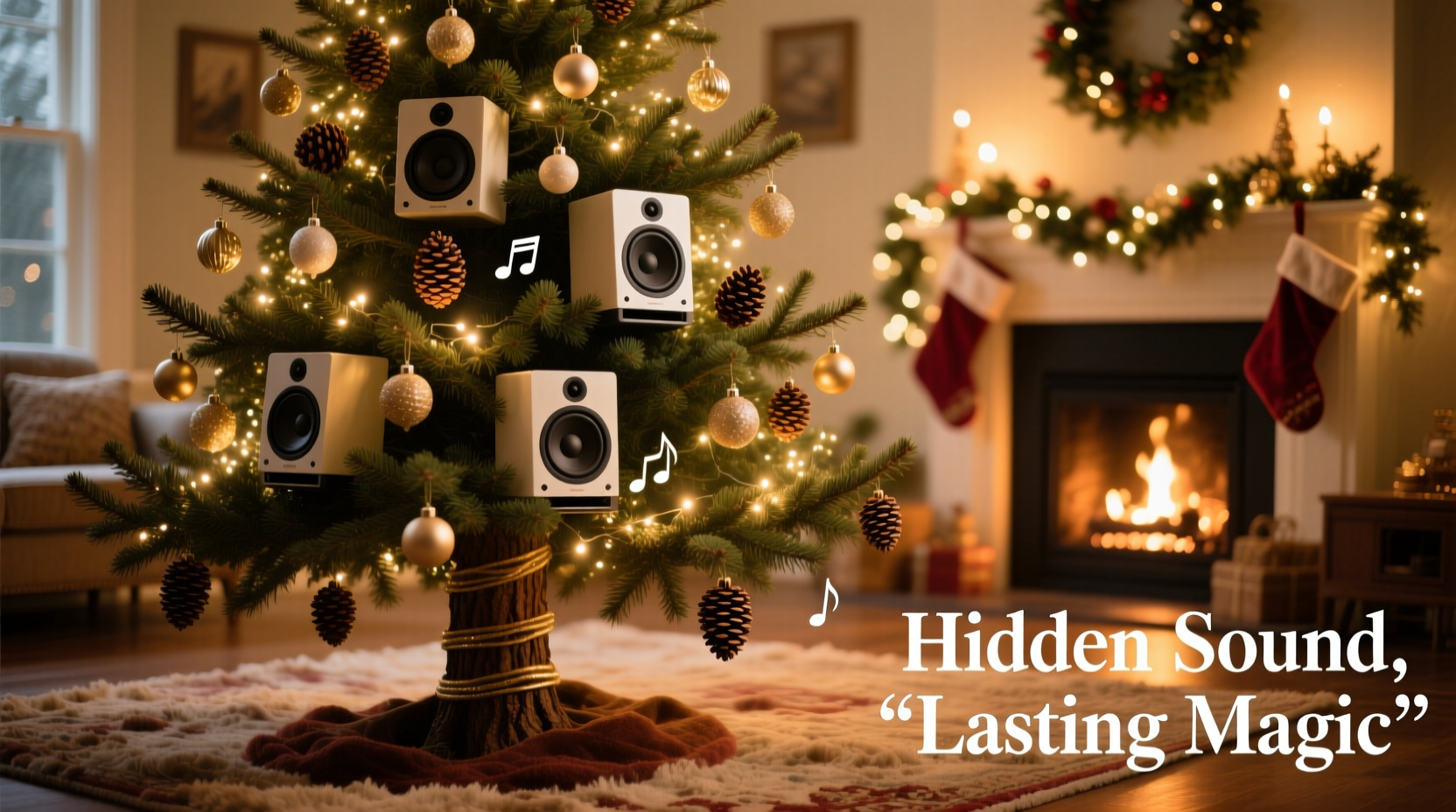
For decades, holiday music has played from standalone stereos, portable Bluetooth speakers, or smart home devices placed around living rooms. While functional, these setups often feel disconnected from the central symbol of the season: the Christmas tree. The mismatch between where the music originates and where attention is drawn—toward the tree—creates a subtle cognitive dissonance. Listeners hear carols but don’t feel them emanating from the heart of the celebration.
Hidden speaker systems solve this disconnect by embedding audio directly into the tree’s structure. Whether using slim drivers tucked beneath branches, resonant trunk-mounted transducers, or wireless modular pods disguised as ornaments, the result is an acoustic illusion: music appears to rise organically from within the tree itself. This spatial alignment enhances realism and emotional engagement, turning passive listening into active immersion.
“Sound that feels like it belongs in the space—rather than just filling it—can profoundly shape mood and memory. A tree that sings from within becomes part of the storytelling.” — Dr. Lena Pruitt, Acoustic Environment Designer
How Hidden Speakers Enhance Decor Immersion
The true value of hidden speaker systems lies not in volume or bass response, but in their ability to deepen sensory cohesion. When music emerges from the same focal point as light, texture, and ornamentation, the brain perceives a unified aesthetic experience. This phenomenon, known as multisensory integration, strengthens emotional recall and increases perceived ambiance quality.
Consider a scene where “Carol of the Bells” plays softly, its chimes echoing as if carried on pine-scented air rising from the tree. With well-placed micro-speakers, each note seems to shimmer through the branches, syncing rhythmically with gently pulsing LED lights. There’s no visible source—just the sensation that the tree itself is alive with song.
This level of immersion works especially well in environments aiming for elegance or minimalism. Traditional speakers disrupt clean lines; concealed systems preserve visual integrity while adding auditory richness. It’s a form of stealth technology—felt more than seen—that aligns perfectly with contemporary design principles valuing subtlety and intentionality.
Tip: For maximum immersion, pair your hidden speaker system with programmable lighting that responds dynamically to audio frequencies.Types of Hidden Speaker Systems for Christmas Trees
Not all concealed audio solutions are created equal. The best choice depends on tree size, room acoustics, and desired control features. Below is a comparison of common options available today.
| System Type | Best For | Pros | Cons |
|---|---|---|---|
| Invisible In-Branch Drivers | Large real or artificial trees (7+ ft) | Fully concealed, directional sound, high fidelity | Requires professional installation, higher cost |
| Sonic Ornament Pods | Medium to large trees, DIY setups | Easy setup, doubles as decoration, wireless | Limited bass, battery life varies |
| Trunk-Mounted Resonant Panels | Narrow or slim-profile trees | No wiring through branches, uses tree as soundboard | Sound can be diffuse, less precise directionality |
| Base-Integrated Subwoofer & Satellite Kits | All tree types needing full-range audio | Balanced output, strong low-end without distortion | Visible base unit unless concealed in stand |
| Bluetooth-Enabled Tree Stands | Rental trees, temporary installations | Plug-and-play, charges devices, easy storage | Mid-tier audio quality, limited customization |
Each option offers unique advantages, but the key to success lies in matching the system to your space. A small urban apartment may benefit most from sonic ornaments, while a grand foyer with a towering spruce might justify investing in custom in-branch drivers.
Step-by-Step Guide: Installing a Discreet Audio System in Your Tree
Adding hidden speakers doesn’t require technical expertise—if approached methodically. Follow this timeline to integrate audio seamlessly into your holiday setup.
- Assess Your Tree and Space (Day 1)
Measure height and branch density. Determine power access points and primary listening zones (e.g., seating area). - Select Your System (Day 2)
Based on size and needs, choose one of the five types listed above. Prioritize wireless models if running cables is impractical. - Test Components Before Assembly (Day 3)
Power on speakers outside the tree. Confirm Bluetooth pairing, volume control, and audio clarity with sample tracks. - Install During Tree Setup (Day 4)
If using in-branch drivers, position them at mid-to-upper levels, angled slightly downward. For resonant panels, attach securely to the trunk near the base. Avoid covering speaker grilles with tinsel or thick garlands. - Route Wires Strategically (Ongoing)
Use adhesive clips to guide cords along the trunk and inside the stand. Battery-powered units eliminate this step entirely. - Sync with Lighting (Day 5)
Use a smart hub or app to synchronize light patterns with music tempo. Many modern systems support Philips Hue or Apple HomeKit integration. - Final Sound Check (Day 6)
Play a variety of songs—from soft piano carols to upbeat classics—at different volumes. Adjust placement if sound feels uneven or too localized.
By following this sequence, you ensure both functionality and invisibility. The goal isn’t just to hide the tech—it’s to make the experience feel effortless and natural.
Real-World Example: A Family Living Room Transformation
The Thompson family in Portland, Oregon, had long struggled with holiday audio. Their previous setup involved a Bluetooth speaker on a side table, which often drowned out conversation when turned up and disappeared under gifts when turned down. Last year, they invested in a set of four sonic ornament pods—small, pinecone-shaped speakers that doubled as decorations.
They placed two near the top for treble-rich chimes, one in the middle for vocals, and one lower for warmth. Using a single app, they programmed morning playlists of gentle acoustic carols and evening sessions of classic Bing Crosby recordings. They also linked the system to color-shifting LEDs that pulsed subtly with the beat.
The difference was immediate. Guests remarked that the tree “felt alive,” and their young daughter began referring to it as “the singing tree.” Even after the holidays, they reused the pods in bookshelves and planters, proving the versatility of discreet audio beyond seasonal use.
Common Pitfalls and How to Avoid Them
Even well-intentioned integrations can go wrong without planning. Here are frequent mistakes and practical fixes:
- Overpowering the space: Loud music overwhelms conversation and diminishes elegance. Keep volume at ambient levels—just above whisper tone.
- Poor speaker placement: Placing all speakers at the bottom creates a “boomy” effect. Distribute them vertically for balanced dispersion.
- Ignoring power logistics: Running cords across floors creates tripping hazards. Use cord covers or opt for rechargeable units.
- Mismatched aesthetics: Glossy black speakers clash with rustic themes. Choose finishes that blend—matte wood tones, frosted white, or metallics matching your ornament palette.
- Forgetting playlist curation: Random shuffle modes can break mood. Create intentional sequences: slow jazz for dinner, traditional hymns for reflection, joyful pop for kids’ visits.
Checklist: Preparing Your Tree for Audio Integration
- ☐ Measure tree height and width
- ☐ Identify nearest power outlet or charging station
- ☐ Choose speaker type based on size and design goals
- ☐ Test all components before decorating
- ☐ Plan wire routes or confirm battery charge
- ☐ Select three themed playlists (relaxing, festive, nostalgic)
- ☐ Sync with smart lights if applicable
- ☐ Perform final sound balance check
Frequently Asked Questions
Can I use hidden speakers with a real Christmas tree?
Absolutely. Real trees work exceptionally well with discreet systems. Just avoid placing speakers directly against wet branches. Allow space for airflow, and remove units before disposing of the tree to prevent water damage or sap buildup.
Are these systems safe for homes with children or pets?
Yes, provided you use low-voltage, enclosed units. Most modern hidden speakers operate on 5–12 volts and generate minimal heat. Secure wiring away from reach, and avoid small detachable parts that could become choking hazards.
Will the speakers damage my tree’s appearance?
When installed correctly, no. The best systems are designed to disappear. Use clips instead of nails, and avoid puncturing bark on live trees. Many users report that once decorated, the speakers are completely undetectable.
Conclusion: Where Music Meets Memory
A Christmas tree with a hidden speaker system is more than a clever gimmick—it’s a thoughtful fusion of technology and tradition. By allowing music to emerge from the very core of holiday decor, we create environments that don’t just look festive but feel meaningful. The hum of a familiar carol rising through pine boughs can transport us instantly to childhood winters, shared dinners, quiet nights by the fire.
As home design evolves toward experiential richness, integrating sound into physical décor will become standard practice—not novelty. Starting with something as symbolic as the Christmas tree makes perfect sense. It’s already a vessel for memory; now, it can carry melody too.
💬 Have you tried audio-enhanced holiday decor? Share your experience, favorite playlists, or installation hacks in the comments—let’s build a smarter, more soulful season together.