As the 2025 gifting season approaches, understanding the IRS gift tax rules is more important than ever. With inflation adjustments influencing annual exclusion amounts and lifetime exemptions, strategic planning can help you transfer wealth efficiently—without triggering unnecessary tax liabilities. Whether you're helping a child buy a home, funding a grandchild’s education, or simply spreading holiday cheer, knowing how much you can give tax-free empowers smarter financial decisions.
The IRS adjusts key thresholds annually for inflation, and 2025 brings favorable updates that expand gifting opportunities. However, missteps can lead to complex reporting requirements or erode your estate tax exemption. This guide breaks down the 2025 gift tax limits, outlines practical strategies, and provides tools to help you navigate the season wisely.
Understanding the 2025 Gift Tax Exclusion Limits
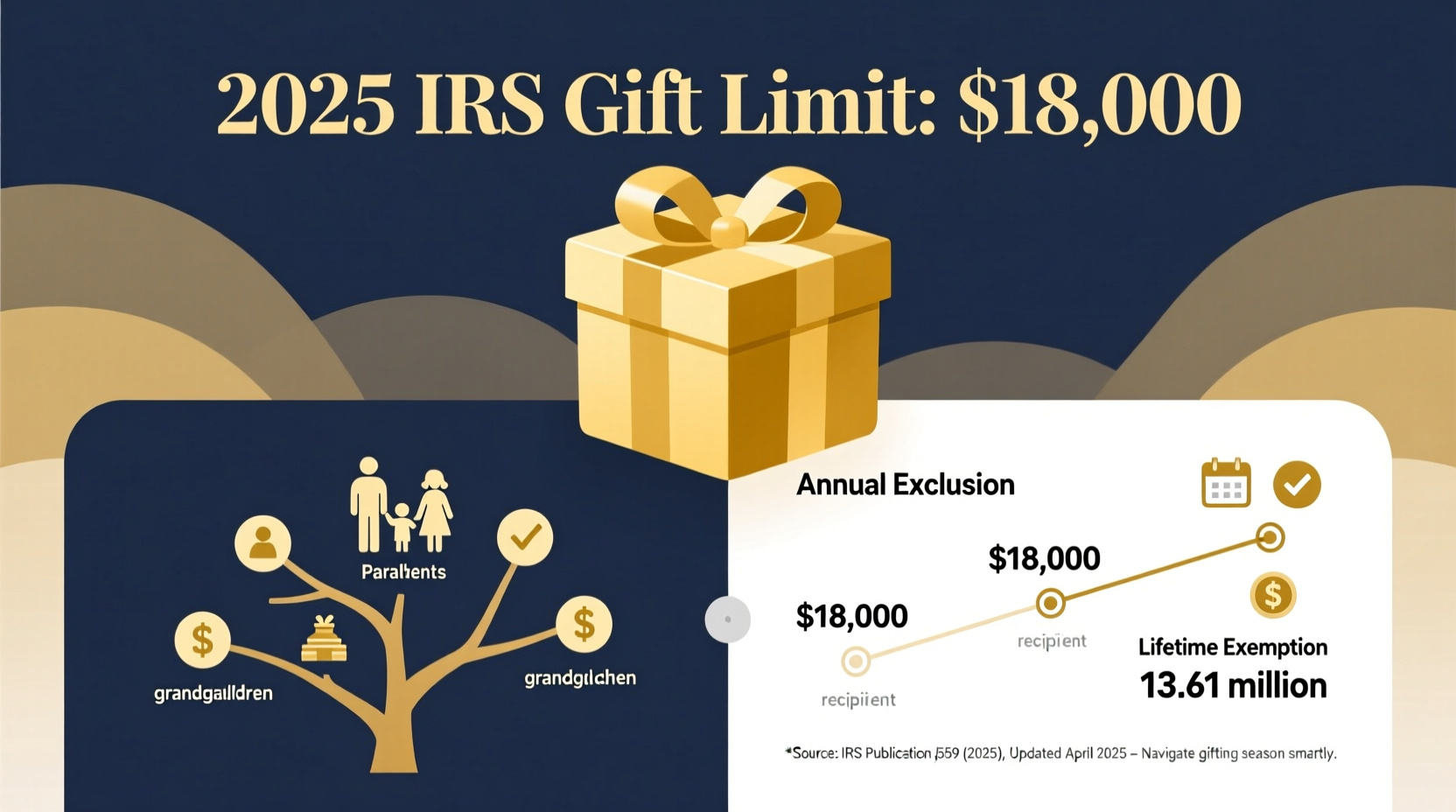
In 2025, the IRS increases the annual gift tax exclusion to $18,000 per recipient—an increase from $17,000 in 2024. This means you can give up to $18,000 in cash or assets to any individual each year without filing a gift tax return or using any portion of your lifetime exemption.
For married couples, this exclusion doubles to $36,000 per recipient when electing gift splitting. This allows spouses to jointly gift $36,000 to one person without tax consequences. These amounts apply per recipient, so if you have three children, you could gift up to $54,000 ($18,000 x 3) as an individual or $108,000 as a couple—all without tax implications.
It's critical to understand that these exclusions only apply to “present interest” gifts—those the recipient can use immediately. Gifts held in trust or deferred may not qualify unless structured properly.
Tip: Use the full annual exclusion each year—even if you don’t plan to exceed your lifetime exemption. It’s a tax-efficient way to reduce your taxable estate over time.Lifetime Gift and Estate Tax Exemption in 2025
Beyond the annual exclusion, the IRS allows a generous lifetime exemption—the total value of taxable gifts you can make before owing gift tax. In 2025, this exemption rises to $13.61 million per individual, up from $12.92 million in 2024.
This unified credit covers both lifetime gifts and estate transfers at death. If you give a $100,000 gift in 2025 and don’t qualify for an annual exclusion (e.g., it’s not a direct payment), $82,000 of that exceeds the $18,000 limit. That excess amount reduces your lifetime exemption but doesn’t trigger immediate tax—unless you’ve already used up your entire exemption.
The high exemption level benefits wealthy families transferring substantial assets. However, the current law is set to expire after 2025 under the sunset provisions of the Tax Cuts and Jobs Act. Unless Congress acts, the exemption is scheduled to revert to approximately $6 million (adjusted for inflation) in 2026. This makes 2025 a potentially pivotal year for large-scale gifting.
“The window for tax-free wealth transfer is wide open in 2025. Families with significant estates should consider accelerating gifts before potential legislative changes.” — Laura Simmons, CPA and Estate Planning Advisor
Smart Gifting Strategies for 2025
Navigating the gifting season isn't just about staying under limits—it's about maximizing impact while minimizing tax exposure. Consider these proven strategies:
1. Leverage the Annual Exclusion Fully
Many people underutilize their annual exclusion. If you have multiple family members—children, grandchildren, nieces, nephews—you can multiply your gifting power. For example, a grandparent with five grandchildren can gift $90,000 tax-free in 2025 ($18,000 x 5). A married couple can double that to $180,000.
2. Pay Medical and Educational Expenses Directly
Payments made directly to medical providers or educational institutions for someone else’s benefit are exempt from gift tax—regardless of amount. This includes tuition, surgery costs, therapy, and prescription drugs. The key is that the payment must go directly to the provider, not to the individual.
3. Use 529 College Savings Plans Strategically
You can front-load five years of annual exclusions into a 529 plan in a single year. In 2025, this means contributing up to $90,000 per donor ($18,000 x 5) without using your lifetime exemption. Married couples can contribute $180,000. Just be aware: if you make additional gifts to the same beneficiary during those five years, it could affect the treatment.
4. Gift Appreciated Assets
Gifting stocks or real estate that has appreciated in value can be more beneficial than giving cash—especially if the recipient is in a lower tax bracket. They inherit your cost basis but may pay little or no capital gains tax upon sale, depending on their income. This strategy also removes future appreciation from your estate.
Tip: Coordinate with a financial advisor before transferring appreciated assets to ensure alignment with estate and investment goals.Do’s and Don’ts of Gifting in 2025
| Do | Don’t |
|---|---|
| Use the full $18,000 annual exclusion per recipient | Forget to document large gifts between family members |
| Pay tuition or medical bills directly to institutions | Assume all gifts to spouses are automatically tax-free (non-citizen spouses have a lower limit) |
| Consider front-loading a 529 plan for education savings | Make large gifts without reviewing your overall estate plan |
| Review your gifting strategy with a tax professional | Ignore the upcoming 2026 exemption rollback if you’re near the limit |
Real-Life Example: The Johnson Family Gifting Plan
The Johnsons, a married couple in their late 60s, wanted to help their three adult children and four grandchildren while reducing their taxable estate. In 2025, they implemented a coordinated gifting strategy:
- Each child received $36,000 ($18,000 from each parent), totaling $108,000.
- Each grandchild received $36,000, totaling $144,000.
- They paid $28,000 in private school tuition directly to institutions—exempt from gift tax.
- They contributed $180,000 to 529 plans ($90,000 per parent) across the grandchildren, using five-year election.
By combining annual exclusions, direct payments, and 529 front-loading, the Johnsons transferred $432,000 in value without using any of their lifetime exemption or triggering gift tax. Their estate was reduced significantly, and they strengthened their family’s financial foundation—all within IRS guidelines.
Frequently Asked Questions
Do I need to file a gift tax return if I stay under $18,000?
No. If your gift to any one person is $18,000 or less in 2025 and qualifies as a present interest gift, you do not need to file IRS Form 709, United States Gift (and Generation-Skipping Transfer) Tax Return.
Can I give more than $18,000 to someone without paying tax?
Yes, but the excess amount will count against your $13.61 million lifetime exemption. You won’t owe gift tax until you exceed that limit, but you may need to file Form 709 to report the taxable gift.
What happens to the gift tax exemption after 2025?
Under current law, the high exemption amount is set to expire at the end of 2025. It is scheduled to revert to roughly $6 million (adjusted for inflation) in 2026. Congress may extend or modify this, but uncertainty makes 2025 a strategic year for large gifts.
Action Plan: How to Navigate Gifting Season in 2025
- Inventory recipients: List all individuals you plan to gift to—children, grandchildren, relatives, or friends.
- Calculate total exclusion capacity: Multiply $18,000 by the number of recipients (double if married and splitting gifts).
- Identify large payments: Determine if you’ll pay medical bills, tuition, or other exempt expenses directly.
- Explore 529 opportunities: Consider front-loading if saving for education.
- Document and file if needed: Keep records of all gifts. File Form 709 if you exceed the annual exclusion and want to apply it toward your lifetime exemption.
Final Thoughts: Make Your Gifts Count in 2025
The 2025 IRS gift tax limits offer a powerful opportunity to share wealth, support loved ones, and shape your legacy. With the annual exclusion rising to $18,000 and the lifetime exemption at $13.61 million, now is the time to act strategically. Whether you're making small, thoughtful gifts or planning major asset transfers, informed decisions today can lead to lasting financial benefits tomorrow.
💬 Ready to optimize your gifting strategy? Consult a tax professional or estate planner this season to ensure every dollar you give works as hard as your intentions.