As holiday decor trends evolve, the tree skirt has transitioned from a functional afterthought to a centerpiece of seasonal elegance. No longer just a cover for the tree stand, today’s tree skirts contribute significantly to the overall aesthetic and tactile experience beneath twinkling lights and hand-wrapped gifts. Among the most popular choices are faux fur and velvet — two materials often associated with opulence, warmth, and sophistication. But when placed side by side under a cascade of ornaments, which one truly delivers a more luxurious feel?
The answer isn’t simply about softness or appearance. It involves texture, durability, maintenance, visual harmony with ornaments, and how each material interacts with light and shadow. This article dives deep into both options, offering a comprehensive analysis that goes beyond surface-level appeal to help you make an informed, confident choice for your holiday display.
Texture and Tactile Experience: The First Impression of Luxury
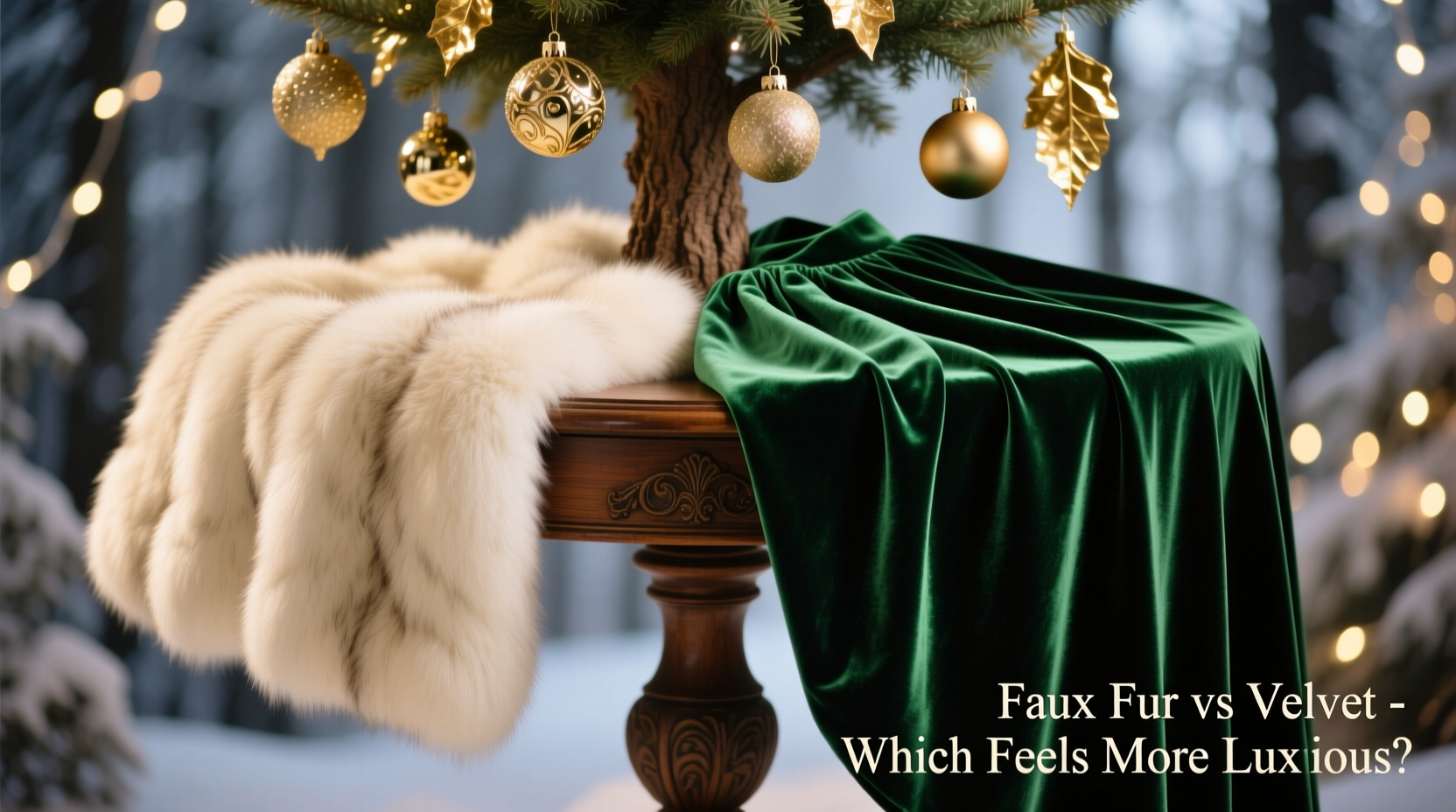
Luxury begins with touch. When guests gather around the tree, many will kneel or crouch to place presents, adjust decorations, or admire the details. In these moments, the sensation under their hands and knees becomes part of the experience. Faux fur and velvet deliver very different tactile impressions.
Faux fur offers a plush, cloud-like softness. High-quality versions mimic the density and loft of real animal fur, creating a warm, inviting base that feels indulgent to the touch. The fibers trap air, adding a slight springiness that enhances comfort. For homes with children or pets, this cushioned effect can be especially appealing during long gift-opening sessions.
Velvet, on the other hand, provides a smooth, dense nap with a cool-to-the-touch quality. Its richness lies in its uniformity — every inch feels consistent, silky, and refined. Unlike faux fur, which can vary in pile length and density, velvet maintains a sleek profile that resists shifting. The friction between velvet and ornaments (especially glass or metal) is minimal, reducing the risk of scratches or snagging.
Tip: Run your hand over sample swatches in natural light to assess not just softness but also how the material reflects or absorbs light — a key factor in perceived luxury.Visual Impact and Ornament Compatibility
The way a tree skirt interacts with ornaments determines how cohesive and elevated your display appears. Both materials influence the perception of ornament value and placement, but in distinct ways.
Faux fur tends to diffuse light, creating a soft glow around ornaments that sit close to the base. This works exceptionally well with vintage or matte-finish decorations, giving them a nostalgic, storybook charm. However, highly reflective or metallic ornaments may lose some of their brilliance against the textured background. The uneven surface can scatter light unpredictably, sometimes making smaller pieces harder to see.
Velvet excels at enhancing shine. Its tightly woven surface acts like a dark canvas, making gold, silver, crystal, and mirrored ornaments appear brighter by contrast. The depth of color in velvet — particularly in jewel tones like emerald, sapphire, or burgundy — adds drama and formality. This makes it ideal for modern, minimalist, or glam-themed trees where ornament clarity and precision matter.
“Velvet doesn’t compete with ornaments — it frames them. It’s the difference between a spotlight and ambient lighting.” — Clara Nguyen, Interior Stylist & Holiday Design Consultant
Material Comparison: Durability, Maintenance, and Longevity
Luxury isn’t just about initial impression; it’s also about endurance. A truly luxurious item should maintain its appeal over time, even with regular use. Here’s how faux fur and velvet compare across practical dimensions:
| Feature | Faux Fur Tree Skirt | Velvet Tree Skirt |
|---|---|---|
| Stain Resistance | Moderate — spills can penetrate deep into fibers; spot cleaning required immediately | High — tight weave resists liquid absorption; most spills wipe away easily |
| Pilling & Shedding | Common in lower grades; higher-end versions less prone but still possible | Rare if fabric is high-density; may crush under heavy pressure but recovers well |
| Dust & Lint Attraction | High — static-prone and traps debris easily | Low to moderate — smoother surface collects less airborne particles |
| Cleaning Method | Spot clean only; machine washing risks matting and fiber damage | Spot clean or professional dry clean; some blends allow gentle hand wash |
| Long-Term Shape Retention | May flatten over time; fluffing helps but doesn’t fully restore | Excellent — recovers well from compression; steam restores nap |
Faux fur requires more vigilant care. Pet hair, glitter, and spilled drinks become embedded quickly, demanding immediate attention. Velvet, while not indestructible, handles everyday wear with greater resilience. That said, both materials benefit from being stored flat or rolled — never folded sharply — to prevent permanent creasing.
Seasonal Versatility and Thematic Integration
A luxurious tree skirt should enhance, not dictate, your theme. Consider how each material adapts to different styles:
- Traditional Red & Gold Theme: Velvet in crimson pairs beautifully with gold-trimmed ornaments, evoking classic elegance. Faux fur in ivory or champagne offers a wintry alternative but may clash if the palette leans heavily toward bold reds.
- Winter Wonderland: Faux fur shines here — especially in white or silver-gray — mimicking snowdrifts beneath frosted branches. Velvet can work in icy blue or pearl tones, though it lacks the organic texture of snow.
- Modern Glam: Velvet in black, navy, or deep plum creates a dramatic backdrop for chrome, glass, or geometric ornaments. Faux fur can feel too rustic unless designed with ultra-fine, uniformly trimmed fibers.
- Rustic Farmhouse: Faux fur in neutral tones complements burlap ribbons, wooden stars, and linen stockings. Velvet may seem overly formal unless paired with distressed metals and earthy textures.
In terms of versatility, faux fur leans toward seasonal specificity — it reads as “holiday” first. Velvet, however, can double as a year-round decorative element in living rooms or bedrooms, increasing its value proposition beyond December.
Mini Case Study: Two Homes, Two Choices
In Portland, Oregon, interior designer Mia Tran styled a client’s mid-century modern living room with a minimalist aluminum tree and iridescent glass orbs. She chose a deep teal velvet tree skirt to anchor the look without overwhelming the space. “The velvet absorbed excess light rather than reflecting it,” she explained. “It kept the focus on the ornaments and prevented visual clutter.” Over three seasons, the skirt showed no signs of wear, even with two cats and frequent entertaining.
Meanwhile, in rural Vermont, a family with young children opted for a thick white faux fur tree skirt to complement their overstuffed, ornament-heavy evergreen. “It feels like sitting on a snowbank,” said homeowner Laura Chen. “The kids love burying their hands in it when they’re looking for presents.” After two years, the skirt began to mat near the front edge due to foot traffic, but a careful fluffing with a pet brush restored much of its original volume.
Both choices were appropriate for their contexts — one prioritizing refinement, the other coziness. Neither was objectively “better,” but each reflected the lifestyle and priorities of the household.
Care and Preservation Tips for Lasting Luxury
No matter which material you choose, proper care extends its lifespan and preserves its luxurious feel. Follow this step-by-step guide to maintain your tree skirt season after season:
- Before Storage: Gently remove all debris using a lint roller (for faux fur) or a microfiber cloth (for velvet). Pay attention to seams and folds where dust accumulates.
- Spot Clean Stains Immediately: Use a damp cloth with mild detergent. Blot — never rub — to avoid spreading stains or damaging fibers.
- Deodorize Naturally: Sprinkle baking soda lightly over the surface, let sit for 15 minutes, then vacuum with a brush attachment on low suction.
- Store Properly: Roll the skirt around a cardboard tube or fold loosely inside a breathable cotton bag. Avoid plastic bins, which trap moisture and encourage mildew.
- Refresh Before Use: For faux fur, use a wide-tooth comb to lift flattened fibers. For velvet, gently steam the surface to revive the nap and remove wrinkles.
FAQ: Common Questions About Faux Fur and Velvet Tree Skirts
Is faux fur ethical compared to real fur?
Yes, faux fur is entirely synthetic and does not involve animal harm. Modern versions are made from acrylic, modacrylic, or polyester blends designed to mimic real fur without the ethical concerns.
Can velvet tree skirts be machine washed?
Most cannot. Machine washing can crush the pile and cause irreversible damage. Always check the manufacturer’s label, but assume dry cleaning or spot cleaning only unless explicitly stated otherwise.
Which material hides pet hair better?
Contrary to intuition, velvet often hides pet hair better than faux fur. While both attract lint, faux fur traps hair deep within its fibers, making removal difficult. On velvet, hair sits on the surface and can be wiped away with a damp cloth or lint roller.
Final Verdict: Which Feels More Luxurious Under Ornaments?
Ultimately, the perception of luxury depends on context — both environmental and emotional. Faux fur delivers sensory indulgence: it feels warm, soft, and comforting, ideal for homes focused on coziness and tactile joy. It invites interaction, especially from children and pets, and enhances winter-themed displays.
Velvet, by contrast, offers refined elegance. It feels polished, deliberate, and visually sophisticated. It enhances the perceived value of ornaments through contrast and depth, making it the preferred choice for formal settings, photo shoots, and design-forward interiors.
If your priority is **tactile warmth and immersive holiday atmosphere**, faux fur wins. If you value **visual cohesion, ornament clarity, and long-term resilience**, velvet takes the lead.
For those who struggle to choose, consider rotating skirts annually based on theme — a velvet base for a chic, monochrome tree one year, followed by a sumptuous faux fur skirt for a nostalgic, family-centered celebration the next. This approach maximizes both luxury and flexibility.
Conclusion: Elevate Your Holiday Experience With Intentional Detail
The tree skirt is no longer a hidden necessity — it’s a statement piece. Whether you lean toward the enveloping softness of faux fur or the dignified sheen of velvet, your choice shapes how your tree is experienced, not just seen. By aligning material selection with your lifestyle, décor goals, and ornament collection, you create a foundation that feels genuinely luxurious — under every ornament, and beneath every moment shared around the tree.
💬 Have you switched from faux fur to velvet — or vice versa? Share your experience and help others find their perfect match!