Phorid flies, often mistaken for fruit flies or gnats, are small humpbacked insects that thrive in moist, decaying organic matter. While they don’t bite, their presence signals underlying sanitation or moisture issues—often pointing to plumbing leaks, sewage problems, or decomposing material hidden within walls or under floors. Left unaddressed, an infestation can persist and worsen. Eliminating phorid flies requires more than surface-level cleaning; it demands a targeted approach combining inspection, sanitation, exclusion, and, when necessary, professional intervention.
Understanding the Phorid Fly Lifecycle and Behavior
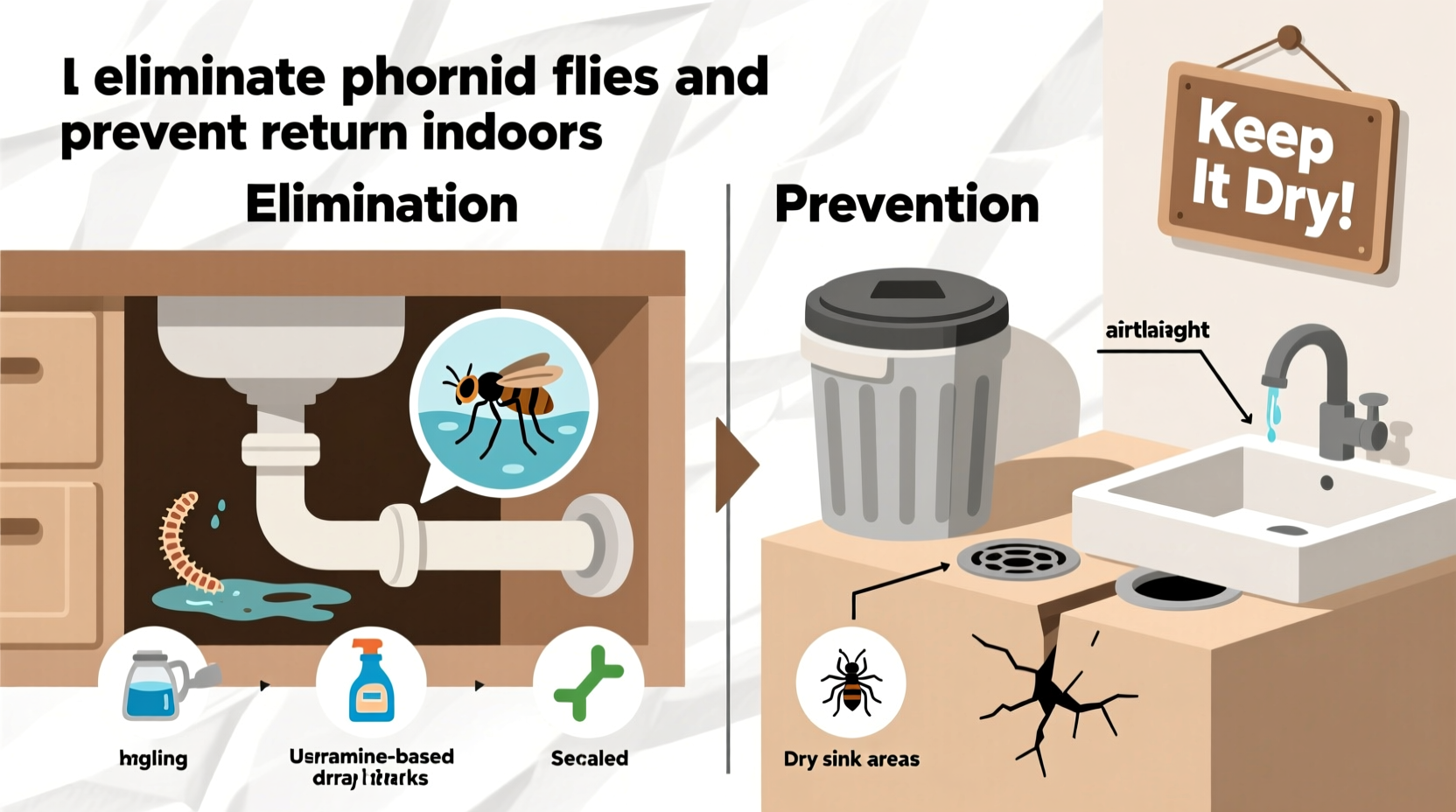
Phorid flies (family Phoridae) are typically 1/16 to 1/8 inch long, with a distinctive arched thorax that gives them a humpbacked appearance. They’re commonly found near drains, garbage disposals, floor traps, and areas with excess moisture. Unlike fruit flies, which breed in fermenting produce, phorid flies prefer environments rich in bacteria-laden sludge—such as sewer lines, septic tanks, or decomposing animal remains behind walls.
Their lifecycle is rapid: eggs hatch within 24 hours, larvae feed for 8–14 days, and adults emerge within two weeks. A single female can lay dozens of eggs, leading to exponential population growth if conditions remain favorable. Because they often originate from concealed sources, simply spraying adulticides rarely provides long-term relief.
“Phorid fly infestations are almost always a symptom of a deeper issue—typically moisture intrusion or compromised drainage systems.” — Dr. Laura Simmons, Urban Entomologist, University of Florida IFAS Extension
Step-by-Step Guide to Locating and Eliminating Breeding Sites
Effective control begins with identifying where the flies are breeding. Follow this structured process:
- Inspect all drain systems: Remove drain covers and check for gelatinous biofilm buildup. Run water slowly to observe if flies emerge—a telltale sign of drain infestation.
- Check floor traps and plumbing: In basements, utility rooms, or bathrooms not used frequently, floor drains can dry out, allowing sewer gases—and flies—to enter. Pour water down these drains weekly to maintain the trap seal.
- Examine garbage and compost areas: Even indoor compost bins or poorly sealed trash cans can support breeding if organic waste accumulates.
- Investigate wall voids and crawl spaces: If flies appear near baseboards or light fixtures, there may be a dead rodent or bird inside the structure. Use a borescope camera or consult a pest control specialist.
- Test for plumbing leaks: Moisture meters or thermal imaging can detect hidden leaks beneath sinks or behind walls—prime locations for larval development.
Sanitation and Drain Maintenance Protocols
Cleaning alone won’t solve a persistent phorid fly problem if biofilm remains entrenched in pipes. Standard household cleaners often fail to penetrate the slimy microbial layer where larvae develop. Instead, adopt a multi-phase cleaning strategy:
- Use enzymatic drain cleaners weekly to break down organic sludge without damaging pipes.
- For severe buildup, mechanically scrub drains with a bottle brush after applying a foaming biocide.
- Avoid pouring grease, food scraps, or coffee grounds down sinks—they accelerate biofilm formation.
- Flush floor drains with hot water and vinegar monthly to discourage bacterial growth.
| Method | Effectiveness | Frequency | Notes |
|---|---|---|---|
| Enzymatic cleaner | High (larvae prevention) | Weekly | Non-toxic, safe for septic systems |
| Bleach flush | Moderate (surface kill only) | Monthly | Does not remove biofilm; use cautiously |
| Mechanical scrubbing | Very High | As needed | Best for deep cleaning infested drains |
| Hot water flush | Low to Moderate | Bi-weekly | Preventative, not curative |
Exclusion and Environmental Controls
Once breeding sites are neutralized, focus shifts to preventing reinfestation. Phorid flies exploit tiny gaps and unsealed entries. A comprehensive exclusion plan includes:
- Sealing cracks around plumbing penetrations with silicone caulk.
- Installing fine mesh covers on floor drains in unused areas.
- Ensuring bathroom and kitchen exhaust fans vent outdoors—not into attics or walls.
- Fixing leaky faucets and under-sink pipe joints promptly.
- Using dehumidifiers in damp basements to reduce relative humidity below 50%.
Real-World Case Study: Resolving a Persistent Infestation in a Commercial Kitchen
A café in Austin, Texas, reported recurring phorid fly sightings despite daily cleaning. Staff had replaced trash bins, switched detergents, and used fly traps with no lasting success. An inspection revealed that the floor drain near the dishwasher was partially blocked and connected to a cracked sewer line beneath the foundation. Over time, wastewater had seeped into the subfloor, creating a concealed breeding ground.
The solution involved three phases: first, excavating and repairing the damaged pipe; second, removing contaminated soil and treating the area with a microbial digester; third, installing a new stainless-steel drain with a self-sealing trap. Within ten days of completing repairs, fly activity ceased entirely. The owner now conducts quarterly drain maintenance and keeps a log of plumbing inspections.
This case underscores a critical principle: visible flies are often just the tip of the problem. Lasting resolution requires uncovering and correcting the root cause.
When to Call a Professional Pest Control Service
DIY methods work well for minor, drain-related infestations. However, certain situations demand expert intervention:
- Fly activity persists after thorough cleaning and drain treatment.
- Flies emerge from wall outlets, ceiling fixtures, or expansion joints.
- There’s a foul odor accompanying the infestation, suggesting decay.
- The building has a history of plumbing failures or basement flooding.
Licensed pest management professionals can deploy tools such as smoke tests to detect sewer leaks, conduct microbial sampling, and apply targeted insect growth regulators (IGRs) that disrupt larval development without broad pesticide use.
Prevention Checklist for Homeowners and Facility Managers
To maintain a phorid fly-free environment, follow this actionable checklist:
- ✅ Inspect all drains monthly for slow flow or odor.
- ✅ Clean drains with enzymatic solution every 7–10 days in high-use areas.
- ✅ Keep floor drains filled with water or use trap primers in low-traffic zones.
- ✅ Seal gaps around pipes, vents, and utility lines.
- ✅ Fix plumbing leaks within 24 hours of detection.
- ✅ Store organic waste in sealed containers and dispose of regularly.
- ✅ Schedule annual plumbing inspections in older buildings.
- ✅ Monitor with non-toxic sticky traps near potential entry points.
Frequently Asked Questions
How do I tell phorid flies apart from fruit flies?
Phorid flies have a pronounced humped back and erratic, darting flight pattern. Fruit flies are more uniformly shaped, with red eyes and a tendency to hover around ripe fruit or wine. Phorid flies avoid light and are often seen scurrying across surfaces rather than flying.
Can phorid flies make you sick?
They are not known to transmit disease directly, but because they breed in sewage and decaying matter, they can carry bacteria like E. coli or Salmonella on their bodies. Their presence increases the risk of surface contamination in kitchens and healthcare settings.
Are store-bought fly traps effective against phorid flies?
Traps can reduce adult numbers but won’t stop an infestation at its source. They’re best used as monitoring tools or supplementary measures after eliminating breeding sites.
Conclusion: Take Action Before the Problem Escalates
Phorid flies are more than a nuisance—they’re indicators of hidden moisture, decay, or structural flaws. Addressing them effectively means going beyond sprays and traps to resolve the environmental conditions that allow them to thrive. With consistent sanitation, vigilant inspection, and timely repairs, indoor spaces can remain fly-free year-round. Don’t wait until the infestation spreads. Start today by checking your drains, sealing entry points, and documenting any signs of moisture damage. Your proactive efforts will protect both hygiene and structural integrity.
💬 Have you dealt with a stubborn phorid fly problem? Share your experience or questions in the comments—your insight could help others solve theirs.








