
After weeks of twinkling lights and festive gatherings, the holiday season comes to a close—and with it, the task of removing the Christmas tree. For city dwellers in densely populated urban areas, this can feel like a logistical challenge. Tossing a real tree into the regular trash is not only wasteful but also contributes to landfill methane emissions. Fortunately, there are increasingly accessible and environmentally responsible ways to dispose of your tree without driving hours to the countryside. From municipal recycling programs to creative upcycling projects, urban residents have more sustainable options than ever before.
Why Eco-Friendly Tree Disposal Matters
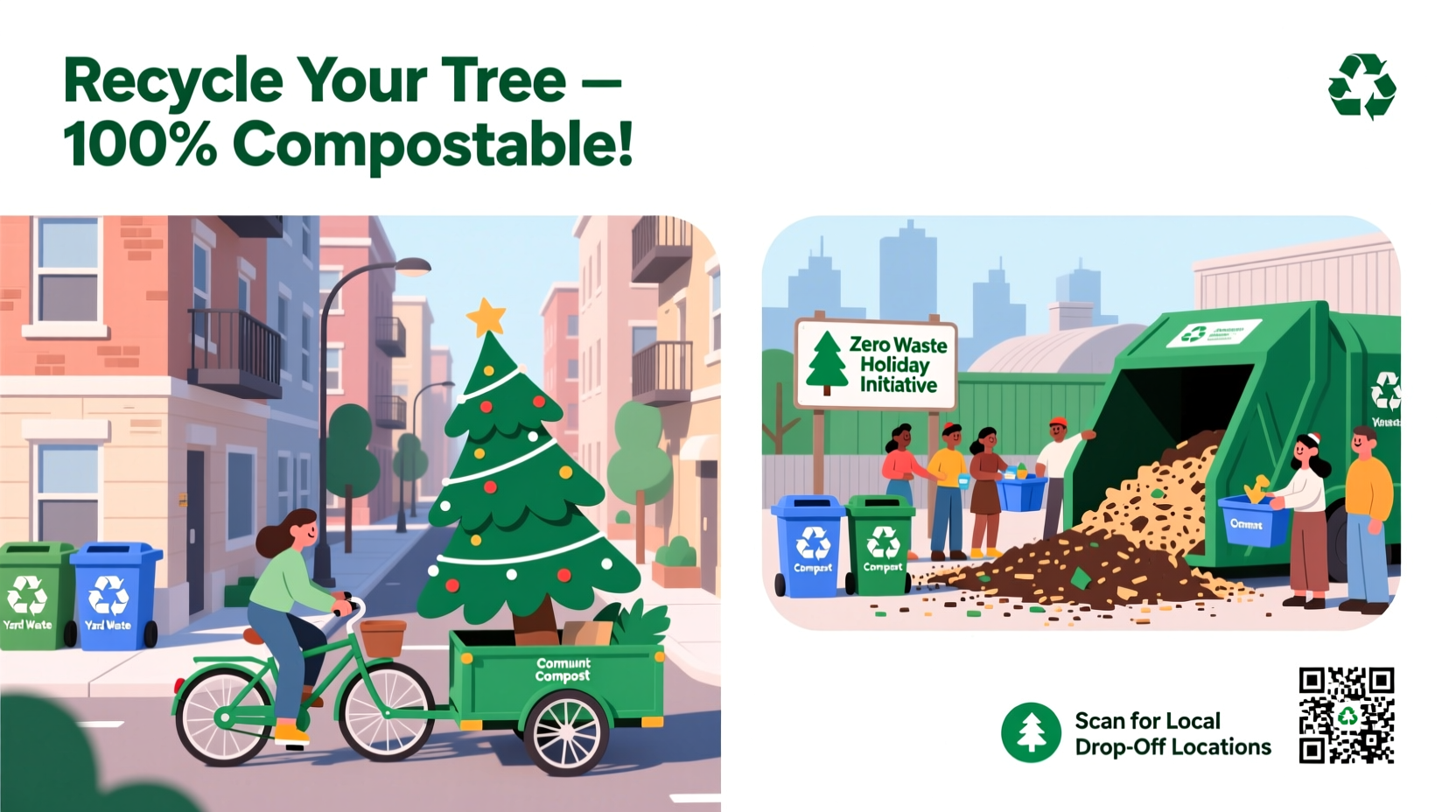
A single natural Christmas tree may seem small in the grand scheme of household waste, but collectively, millions of trees end up in landfills each January. Once buried, they decompose anaerobically—without oxygen—releasing methane, a greenhouse gas 25 times more potent than carbon dioxide over a 100-year period. In contrast, properly recycled trees are chipped into mulch, used for habitat restoration, or even transformed into erosion barriers along riverbanks.
Urban areas generate a disproportionate amount of seasonal waste, making responsible disposal especially critical. Municipalities across the U.S., Canada, and Western Europe have responded by expanding curbside pickup services and partnering with local parks departments to turn post-holiday greenery into community resources. The key is knowing what’s available in your neighborhood—and acting before the last light on the tree flickers out.
Tip: Remove all non-biodegradable materials—tinsel, ornaments, plastic stands, and lights—before placing your tree out for recycling. Even small traces can contaminate mulch batches.Municipal Curbside Pickup Programs
In many cities, the easiest and most accessible option is curbside tree collection. These programs typically run for two to four weeks in early January and are often coordinated through the local department of public works or sanitation bureau. Trees are collected on regular trash days or on designated dates, then transported to central processing facilities.
To participate, residents must prepare their trees according to specific guidelines. Most programs require:
- Trees to be free of tinsel, flocking, and stands
- Height limits (usually under 8 feet)
- No artificial trees
- Placement at the curb by a certain time (often 7 a.m.)
Cities like New York, Chicago, Toronto, and San Francisco offer robust systems that process hundreds of thousands of trees annually. In New York City alone, the Department of Sanitation collects over 200,000 trees each year, converting them into wood chips used in parks throughout the five boroughs.
“Urban tree recycling isn’t just about waste reduction—it’s an opportunity to close the loop locally. When we turn holiday trees into park mulch, we’re literally feeding the city’s green spaces.” — Dr. Lena Torres, Urban Sustainability Coordinator, Boston Parks Department
Drop-Off Recycling Events and Local Partnerships
For those outside curbside service zones or living in multi-unit buildings without direct street access, drop-off events are a reliable alternative. Many communities organize weekend “Tree Recycling Days” at fire stations, community centers, or public parks. These events often double as environmental education opportunities, featuring live mulching demonstrations, kids’ activities, and information booths from local conservation groups.
Some organizations go a step further by integrating social impact. For example, Boots & Barkley, a nonprofit in Denver, partners with animal shelters to collect trees and use the mulch in shelter outdoor play areas. Others, like Seattle’s Green Up Holiday Program, invite donations in exchange for drop-off—funds support urban reforestation efforts.
Check with your city’s official website or neighborhood association calendar for scheduled events. Many occur between January 2 and January 15, aligning with the traditional Epiphany end-of-season date.
Step-by-Step Guide to Locating a Drop-Off Site
- Visit your city’s sanitation or parks department website.
- Search for “Christmas tree recycling” or “holiday greenery disposal.”
- Review the list of authorized drop-off locations and accepted materials.
- Prepare your tree by removing all decorations and stands.
- Transport the tree during posted event hours—many sites close by midday on Sundays.
- Optionally, ask if you can take home a bag of mulch for your garden.
Alternative Uses: Repurposing Your Tree at Home
Before sending your tree off-site, consider whether parts of it can serve another purpose right in your own space. With a little creativity, even a dried-out evergreen can contribute to your local ecosystem or next year’s garden plans.
Create Garden Habitat or Compost Base
Small branches and needles make excellent additions to backyard compost piles. Needles are high in carbon (a “brown” material) and help balance nitrogen-rich food scraps. While they break down slowly, chopping them first accelerates decomposition.
Whole trees can be sectioned and laid at the edge of garden beds to create shelter for beneficial insects, frogs, and small mammals during winter. This mimics natural forest floor conditions and supports biodiversity in urban yards or shared green spaces.
D.I.Y. Bird Feeder or Planter Base
Hang pinecones coated in peanut butter and birdseed from sturdy branches. The structure acts as a temporary feeder until the tree is removed. Alternatively, place the tree in a corner of a balcony or patio and drape string lights or small planters over its limbs for a transitional winter display.
Firewood? Proceed with Caution.
While some people consider burning their tree, this is generally discouraged—especially in urban areas. Evergreens contain high levels of sap and resin, which can cause dangerous creosote buildup in chimneys. Additionally, indoor air pollution from burning treated or flocked trees poses health risks. If you do burn any part of the tree, ensure it’s completely dry, untreated, and done outdoors in a safe fire pit away from structures.
Tip: Store cut branches in a dry area for several months before using them as kindling. Never burn fresh evergreen wood indoors.City-Specific Case Study: How Portland Turned Trees into Trail Protection
In Portland, Oregon, the Bureau of Planning and Sustainability launched the “Trees to Trails” initiative in 2018. Each January, volunteers collect donated trees from curbsides and transport them to Forest Park—a 5,200-acre urban wilderness area vulnerable to trail erosion.
The trunks are staked across degraded footpaths to slow water runoff and trap soil. Over time, the logs decompose naturally, enriching the forest floor. Needles and smaller limbs are spread as ground cover to suppress weeds and retain moisture.
In its first five years, the program diverted over 45,000 trees from landfills and stabilized nearly 12 miles of hiking trails. Residents report feeling more connected to the lifecycle of their holiday traditions, knowing their tree continues to serve the environment long after the ornaments come down.
Portland’s success demonstrates how urban infrastructure can align with ecological goals—even during peak waste seasons. Other cities, including Minneapolis and Vancouver, have since adopted similar models, tailoring them to local geography and volunteer capacity.
Comparison Table: Urban Tree Disposal Options
| Method | Best For | Time Required | Environmental Impact | Notes |
|---|---|---|---|---|
| Curbside Pickup | Renters, busy professionals | Minimal (preparation only) | High – turns into mulch | Check local deadlines and prep rules |
| Drop-Off Event | Homeowners, families | 1–2 hours round trip | High – often includes community engagement | May offer free mulch in return |
| Backyard Repurposing | Gardeners, eco-enthusiasts | Variable (chopping, arranging) | Moderate to High – supports local ecology | Requires outdoor space and tools |
| Composting Facility | Residents near green bins | 30–60 minutes | Very High – industrial-scale processing | Call ahead—some charge fees for large items |
| Burning | Not recommended in cities | Low | Negative – air pollution risk | Avoid in urban areas; illegal in some municipalities |
Frequently Asked Questions
Can I leave my tree at the curb if it’s in a plastic bag?
No. Most recycling programs require trees to be completely bare and unbagged. Plastic bags contaminate organic waste streams and must be removed manually, increasing labor costs. Use biodegradable twine if you need to secure loose branches.
What should I do with an artificial tree?
Artificial trees are not recyclable through standard green waste programs. If still in good condition, donate to a thrift store, theater group, or community center. If damaged, disassemble metal parts (recyclable) from plastic foliage (landfill-bound). Consider investing in a longer-lasting model next time—high-quality artificial trees can last 10+ years.
Is flocked snow-effect tree safe to recycle?
Generally no. The chemical-based flocking (artificial snow) contains adhesives and pigments that inhibit decomposition and can leach toxins into mulch. These trees should be disposed of as regular waste unless your municipality has a special hazardous organics stream.
Checklist: Eco-Friendly Tree Disposal Action Plan
Follow these steps to ensure your tree ends its life cycle responsibly:
- 📅 Mark your calendar with local pickup or drop-off dates
- 🎄 Remove all ornaments, lights, tinsel, and stands
- 🚫 Confirm your tree is natural and unflocked
- 📍 Identify nearest drop-off location or verify curbside eligibility
- 🪓 Consider repurposing branches for garden use before disposal
- 🌱 Optionally, request mulch for personal landscaping needs
- 📢 Share disposal tips with neighbors to increase community participation
Looking Ahead: Building a Sustainable Holiday Habit
Eco-friendly tree disposal isn’t a one-time chore—it’s part of a broader shift toward mindful consumption in urban living. As cities continue to innovate in waste management, residents play a vital role by participating consistently and spreading awareness. The choices we make in January influence what companies offer in December. When demand grows for recyclable, compostable, and reusable holiday products, suppliers respond.
Some forward-thinking apartment complexes now include tree drop-off zones in their building courtyards. Co-ops host communal mulching days. Schools incorporate tree recycling into science curricula, teaching children about nutrient cycles and urban ecology. These small shifts add up to systemic change.
“We’ve seen a 40% increase in participation since we started providing bilingual flyers and partnering with tenant unions,” says Marisol Vega, Waste Reduction Manager for Los Angeles County. “When people understand where their tree goes, they’re more likely to do it right.”
Conclusion: Make Your Final Holiday Act a Green One
The end of the holiday season doesn’t have to mean the end of your tree’s usefulness. Whether through municipal recycling, community events, or backyard creativity, every natural tree can give back to the environment. In dense urban neighborhoods, where space and resources are limited, sustainable practices matter even more. By choosing an eco-friendly disposal method, you’re not just clearing space for everyday life—you’re contributing to healthier parks, cleaner air, and stronger local ecosystems.
💬 Ready to make a difference? Find your city’s tree recycling program today, share this guide with your building manager, or volunteer at a local drop-off event. Small actions, multiplied across thousands of households, create lasting urban change.








