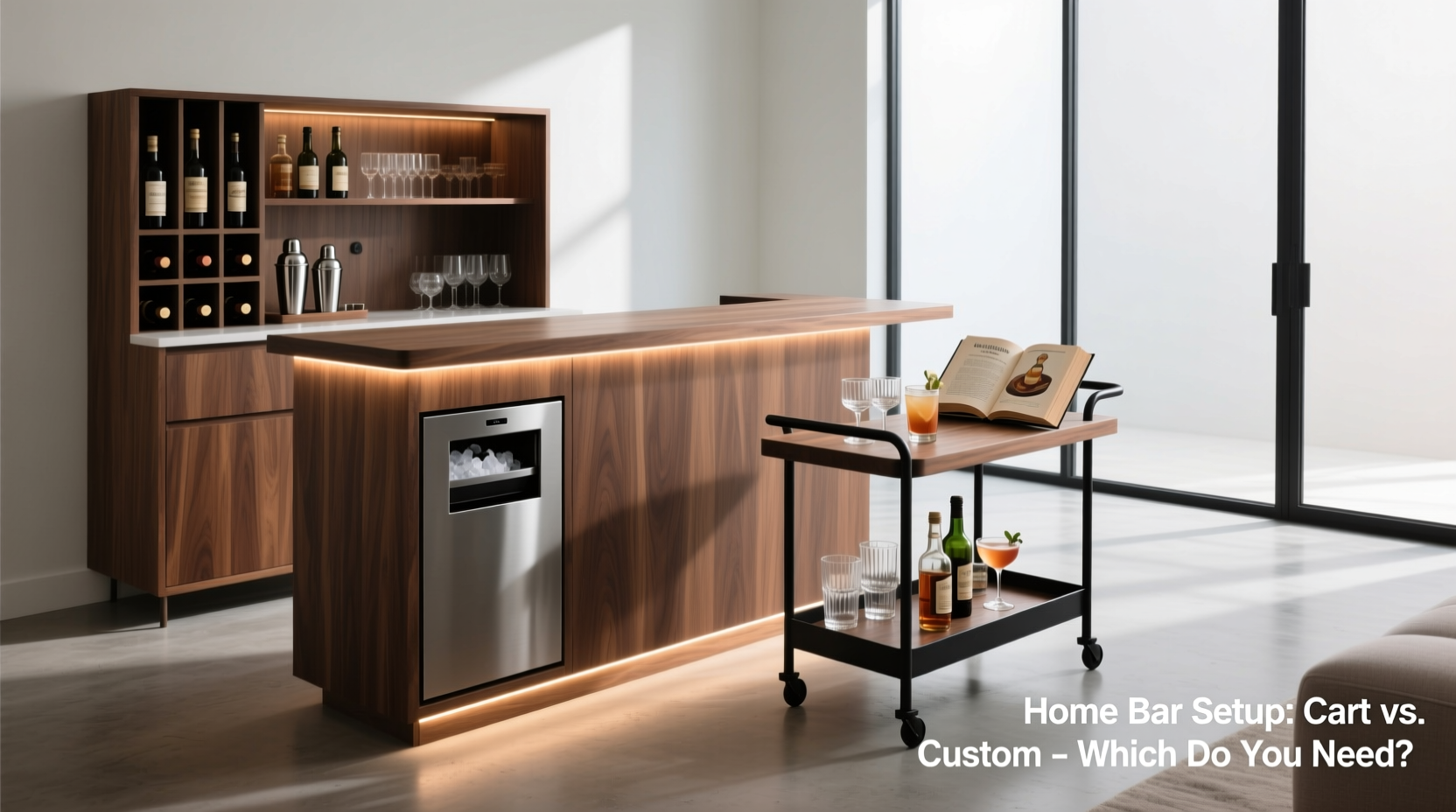
Home bars have evolved from aspirational status symbols into functional extensions of how we live, entertain, and unwind. Yet the question persists—not as a matter of luxury, but of intentionality: Is investing in a built-in, wall-mounted, or freestanding dedicated bar worth it—or does a well-curated bar cart deliver equal value with greater flexibility? The answer isn’t about square footage or aesthetics alone. It’s rooted in your actual usage patterns, household rhythm, storage constraints, and long-term vision for hospitality at home. A $3,500 walnut wet bar may look stunning in a magazine spread—but if it spends six months gathering dust while your cocktail shaker lives in a kitchen drawer, it’s not serving its purpose. This article cuts through the decor hype to examine what truly makes a bar *work*—not just look good.
How Your Entertaining Rhythm Determines Your Bar Type
Entertaining frequency matters more than guest count. Consider these three common patterns:
- The Weekly Host: Regularly serves 4–8 people at least once a week—often with themed nights (e.g., “Friday Negroni Hour,” Sunday brunch mimosas). Bottles are opened, garnishes prepped, and glassware rotated daily.
- The Occasional Gatherer: Hosts 2–4 times per year—birthdays, holidays, or small celebrations. Mixers stay sealed, spirits sit untouched for weeks, and tools are pulled from a cupboard only when needed.
- The Solo Ritualist: Values craft cocktails or evening wind-down drinks as part of personal routine—not social performance. Prep time is minimal; consistency, ease, and clean-up speed are non-negotiable.
For the Weekly Host, a dedicated bar delivers efficiency: integrated lighting highlights bottle labels, deep drawers organize jiggers and strainers, and a built-in sink eliminates constant trips to the kitchen. For the Occasional Gatherer, that same setup becomes a costly, space-consuming liability—especially in apartments or homes where square footage is premium. And for the Solo Ritualist, neither extreme fits perfectly: they need accessibility without clutter, elegance without excess.
Tip: Track your drink prep for two weeks—not just how often you mix drinks, but where you do it, how long it takes, and where tools end up afterward. That data reveals your true bar needs better than any Pinterest board.Dedicated Bars: Strengths, Limitations, and Hidden Costs
A dedicated bar—whether a custom-built unit, a repurposed hutch, or a high-end modular system—offers undeniable advantages. But those benefits come with trade-offs few consider before committing.
Structural permanence is both its greatest asset and biggest constraint. Once installed, it anchors your layout. That means careful planning around plumbing (for sinks), electrical (for under-cabinet lighting or refrigeration), and weight distribution (a full bar can exceed 400 lbs when stocked). More subtly, dedicated bars encourage accumulation: extra bitters, novelty glasses, back-bar décor. Without conscious curation, they become storage black holes—not functional spaces.
Real-world cost extends beyond purchase price. Installation labor averages $1,200–$3,800 depending on complexity. Countertop materials like quartz or marble add $200–$600 per linear foot. And maintenance? Wood finishes require quarterly conditioning; stainless steel demands frequent wiping to avoid water spots; glass backsplashes show every fingerprint.
“Most clients don’t regret their bar’s design—they regret underestimating how much their habits would change in 18 months. What felt essential during lockdown hosting rarely aligns with post-pandemic rhythms.” — Lena Torres, Residential Interior Designer & Hospitality Consultant
Bar Carts: Why Mobility Is a Strategic Advantage
A bar cart is often dismissed as “temporary” or “decorative”—but its mobility is precisely what makes it resilient across life stages. When you move apartments, host in the living room instead of the dining area, or convert a spare bedroom into a home office, the cart adapts instantly. No contractors. No drywall repair. No resale-value anxiety.
Modern bar carts go far beyond vintage brass frames. High-performance models feature locking casters, integrated bottle chillers, tiered shelving with anti-slip lining, and even magnetic tool docks. A well-designed cart holds everything needed for 12 standard cocktails: base spirits (vodka, gin, whiskey, rum), two liqueurs, three mixers, citrus, ice bucket, shaker, jigger, strainer, bar spoon, and six glasses—without spilling or toppling.
The psychological benefit is equally significant. Because carts require deliberate stocking and resetting, they enforce intentionality. You’re less likely to hoard obscure amaros if you must physically lift and place each bottle weekly. Clutter stays contained—not hidden behind cabinet doors.
Decision Framework: A Side-by-Side Comparison
Use this table to weigh core factors—not as abstract ideals, but as measurable realities in your space and schedule.
| Factor | Dedicated Bar | Bar Cart |
|---|---|---|
| Space Flexibility | Fixed footprint. Requires dedicated floor/wall space. Cannot relocate without renovation. | Moves freely. Fits in closets, hallways, or corners when not in use. Scales with apartment size. |
| Setup Time (Per Use) | Near-zero. Everything is always in place. Ideal for spontaneous gatherings. | 2–5 minutes to stock, arrange, and position. Encourages pre-planning. |
| Maintenance Burden | High. Dusting shelves, polishing surfaces, cleaning sinks, checking seals on refrigerated units. | Low. Wipe down weekly. Wheels cleaned quarterly. No plumbing or electrical upkeep. |
| Budget Range (Entry-Level) | $1,800–$4,500+ (including installation and countertop) | $120–$420 (premium carts with locking casters and tempered glass) |
| Lifespan Expectancy | 12–20 years with professional maintenance | 8–15 years (casters and hardware are replaceable; frame lasts decades) |
Your Personalized Setup Checklist
Before choosing, verify these five conditions match your reality:
- You know your “bar zone”: Measure the exact spot where you’ll place it—including clearance for opening cabinets or pulling out a cart. Note nearby power outlets and light switches.
- You’ve audited your current inventory: List every spirit, mixer, tool, and glass you actually use monthly—not what you own. Discard or donate unused items first.
- You’ve tested workflow: Time yourself making three different cocktails using only your current setup. Note bottlenecks (e.g., “I walk 14 feet to get ice,” “My jigger rolls off the counter”).
- You’ve evaluated cleanup tolerance: Can you commit to wiping surfaces nightly? Do you mind hand-washing delicate glassware? If not, a cart with dishwasher-safe components or a bar with a sink becomes essential.
- You’ve projected future needs: Are you planning renovations, moving within 2 years, or adding roommates? Dedicate only if stability is guaranteed.
Real-World Scenario: How One Couple Chose Right
Maya and David live in a 720-square-foot downtown loft. They host friends every other Friday but work remotely and rarely leave the apartment on weekends. Initially, they installed a sleek, floor-to-ceiling bar unit with LED-lit shelving and a mini-fridge. Within three months, they noticed two issues: First, the fridge’s compressor hum disrupted video calls. Second, guests consistently gravitated toward the couch—not the bar—making conversation awkward across 10 feet of open space.
They replaced it with a dual-tier, walnut-finish bar cart on silent-lock casters. They mounted a compact under-cabinet LED strip on the adjacent bookshelf for ambient lighting and added a small insulated ice bucket that fits snugly on the lower shelf. Total cost: $318. Setup time dropped from 20 minutes to 90 seconds. Most importantly, they now pull the cart directly between seating areas—creating an intimate, conversational hub rather than a distant display.
“We stopped designing for ‘how it looks in photos’ and started designing for ‘how it feels when we’re laughing over a shared drink,’” Maya says. “The cart doesn’t shout ‘bar.’ It invites.”
FAQ: Practical Questions Answered
Can a bar cart handle serious cocktail-making—or is it just for wine and beer?
A quality bar cart absolutely supports full cocktail service. Key enablers: a stable, non-slip surface (rubberized matting helps); tiered shelving to separate tools from bottles; and a dedicated lower shelf for ice, citrus, and garnishes. Avoid carts with narrow shelves or wobbly frames—those compromise safety and precision.
What if I want both options—a cart for flexibility and a dedicated space for storage?
This hybrid approach is increasingly popular—and highly effective. Use the cart for active service (spirits, tools, glassware) and reserve a pantry cabinet or under-stair nook for bulk storage: extra bottles, syrups, specialty bitters, and seasonal ingredients. Label bins clearly, and rotate stock monthly to prevent expiration. You gain flexibility without sacrificing capacity.
Do I need special flooring for a bar cart?
Yes—if your floors are hardwood, tile, or polished concrete. Choose carts with soft rubber or polyurethane casters (not hard plastic or metal). Test them by rolling slowly: no squeaking, no scratching, no “stick-slip” resistance. If your cart leaves marks, add felt pads under each caster or use a low-pile rug as a buffer.
Conclusion: Design for Life, Not Just Looks
A home bar isn’t about replicating a speakeasy—it’s about honoring your relationship with ritual, connection, and care. A dedicated bar earns its place when it streamlines joy, not complicates it. A bar cart proves its worth when it moves with your life, not against it. Neither option is inherently superior. What matters is alignment: Does your bar reflect how you *actually* live—not how you imagine you should?
Start small. Try a cart for three months—even if you think you “need” something permanent. Stock it deliberately. Use it weekly. Notice what works, what frustrates, and what gathers dust. Then decide—not from aspiration, but from evidence. Because the best bar isn’t the one that wins design awards. It’s the one where your favorite drink flows smoothly, your guests feel welcomed, and you never dread the cleanup.
💬 Your turn: Did you switch from cart to dedicated bar—or vice versa? What changed your mind? Share your experience in the comments—we’ll feature real-life insights in our next update.