
Solar-powered Christmas lights promise festive cheer without the hassle of extension cords or rising electricity bills. But as temperatures drop and daylight hours shrink, many homeowners wonder: do they actually work during the winter months? The answer isn’t a simple yes or no—it depends on several environmental and technical factors. From sunlight exposure to battery performance in cold weather, understanding how these systems operate in winter is key to ensuring your holiday display stays bright.
Modern solar lights have improved significantly in efficiency and durability. However, their performance hinges on more than just being labeled “outdoor” or “weather-resistant.” Real-world conditions like snow cover, cloud cover, and placement play critical roles. This article breaks down the science behind solar lighting in winter, evaluates common challenges, and provides actionable strategies to keep your lights glowing from Thanksgiving through New Year’s Day.
How Solar-Powered Christmas Lights Work
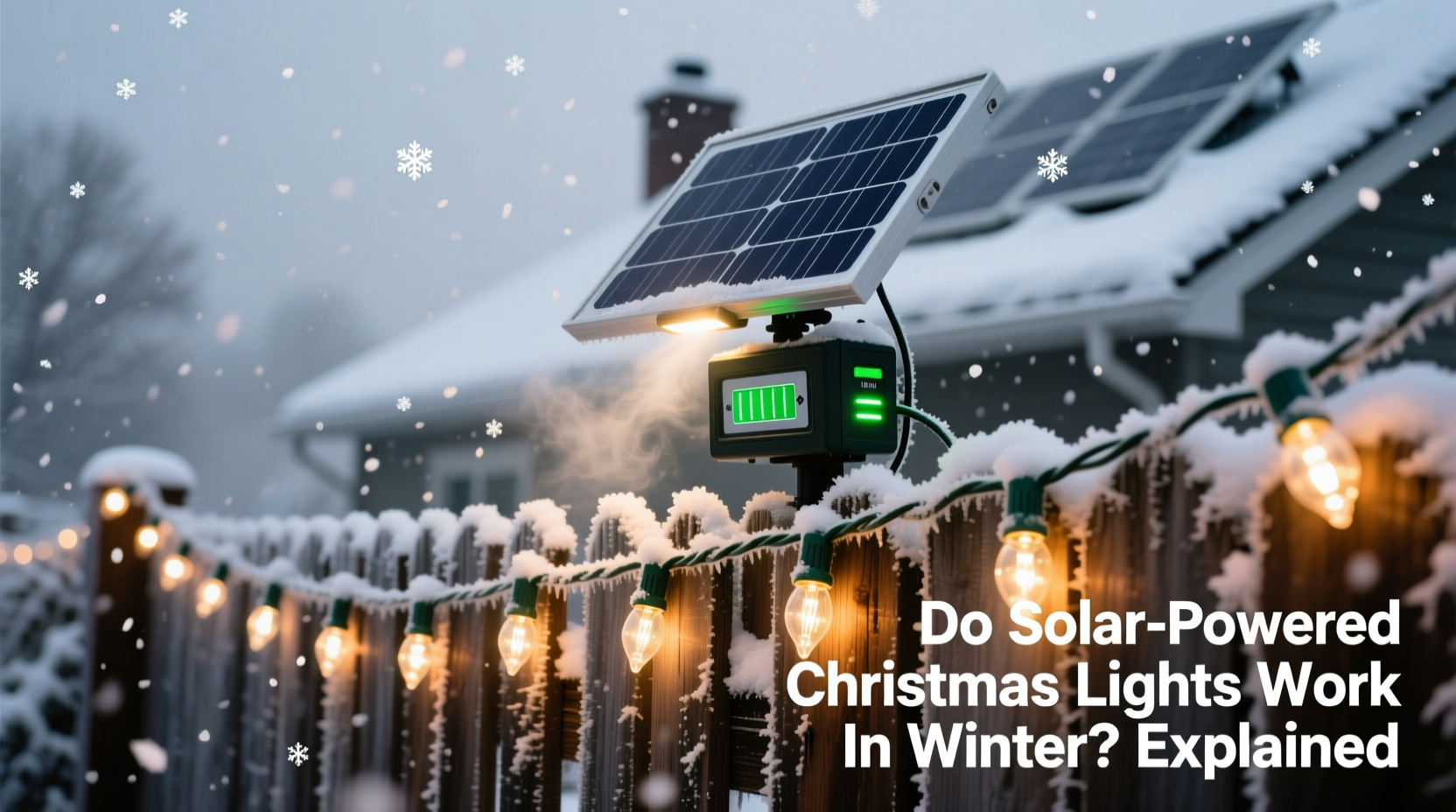
At their core, solar-powered Christmas lights convert sunlight into electrical energy using photovoltaic (PV) cells built into a small solar panel—usually attached to the light strand or mounted nearby. During daylight, the panel charges an internal rechargeable battery, typically nickel-metal hydride (NiMH) or lithium-ion. Once ambient light levels drop at dusk, a photoresistor triggers the lights to turn on, drawing power from the stored energy.
The cycle repeats daily: charge by day, illuminate by night. Most models are designed to run for 6–10 hours after a full charge, depending on brightness settings and battery capacity. Some higher-end versions include motion sensors or timer functions to conserve energy.
While the technology is straightforward, its effectiveness in winter depends heavily on whether the system receives enough sunlight to charge adequately—something that becomes increasingly difficult as days grow shorter and skies often remain overcast.
Tip: Position your solar panel where it receives direct sunlight between 10 a.m. and 3 p.m., when solar intensity is highest—even in winter.Winter Challenges for Solar Lights
Winter introduces several obstacles that can reduce or even halt the performance of solar-powered lights. These aren't necessarily flaws in the product—they're limitations of physics and climate. Understanding them helps set realistic expectations and informs better setup decisions.
Reduced Daylight Hours
In December, many regions experience fewer than 8 hours of daylight, with some northern areas getting only 6–7 hours. Since solar panels need time to generate and store energy, shorter days mean less charging time. If a string of lights requires 6 hours of sun but only gets 3 due to early sunset and late sunrise, it may not charge fully and will either dim quickly or fail to turn on.
Cold Temperatures and Battery Efficiency
Contrary to popular belief, solar panels actually perform slightly better in cold, sunny conditions—their voltage output increases as temperature drops. However, the batteries that store the energy suffer in low temperatures. NiMH and lithium-ion batteries lose capacity when exposed to freezing conditions. A battery rated at 100% capacity at 77°F (25°C) may deliver only 50–60% at 14°F (-10°C).
“Cold doesn’t kill the battery, but it temporarily reduces ion mobility inside, lowering usable capacity. Once warmed, performance usually returns.” — Dr. Alan Reyes, Renewable Energy Engineer
Snow and Ice Coverage
A dusting of snow can block up to 90% of sunlight from reaching the solar panel. Even a thin layer acts like a filter, drastically reducing charging efficiency. If the panel is mounted flat or under eaves where snow accumulates, it may go days without charging at all. Ice buildup is even more problematic because it’s harder to dislodge and reflects light rather than transmitting it.
Cloud Cover and Overcast Skies
Winter often brings prolonged periods of gray skies, especially in coastal or northern regions. While modern solar panels can still generate some power from diffuse sunlight, their output may be only 10–25% of what they produce under full sun. This means several consecutive cloudy days can deplete the battery faster than it recharges, leading to inconsistent lighting or complete shutdown.
Maximizing Performance in Cold Weather
You don’t have to abandon solar lights just because it’s winter. With smart planning and a few adjustments, you can maintain reliable operation throughout the season.
Optimize Panel Placement
The location of the solar panel is far more important than the placement of the lights themselves. Mount the panel in a south-facing position (in the Northern Hemisphere) where it will receive maximum sunlight. Avoid shaded areas under trees, roof overhangs, or behind decorations. Even partial shading on one corner of the panel can cut output by half.
Elevate the panel if possible—on a stake in the yard, a railing, or a window sill—to prevent snow accumulation and improve angle toward the sun.
Keep Panels Clean and Clear
Check the panel daily during snowy periods. Use a soft brush or gloved hand to gently remove snow. Avoid scraping with hard objects, which could scratch the surface. On icy days, let morning sun melt the ice naturally, or use lukewarm water (never hot) to speed the process.
Tip: Tilt the solar panel slightly so snow slides off more easily—similar to how rooftop solar arrays are installed.Use High-Capacity Models
Not all solar Christmas lights are created equal. Look for models with larger solar panels and high-capacity lithium-ion batteries. These store more energy and are better suited for low-light conditions. Some premium brands offer “winter mode,” which dims the lights automatically to extend runtime when charge is low.
Step-by-Step Guide: Preparing Your Solar Lights for Winter
Follow this timeline to ensure your solar lights perform reliably from early December through January.
- Week 1: Inspect Equipment – Check each strand for damaged wires, loose bulbs, or corroded connectors. Test the solar panel and battery by placing it in direct sun for 6+ hours and verifying it powers the lights at night.
- Week 2: Optimize Location – Identify the sunniest spot available. Use a solar calculator app or observe shadow patterns to confirm 4–6 hours of unobstructed sunlight.
- Week 3: Install and Angle Panel – Mount the solar panel at a 45–60 degree tilt facing true south. Secure it firmly against wind or falling snow.
- Week 4: Monitor Initial Performance – After installation, track how long the lights stay on each night. If they shut off before midnight, adjust placement or consider supplemental charging.
- Ongoing: Daily Maintenance – Remove snow promptly, wipe the panel clean, and check for ice buildup every few days. Replace weak batteries if possible.
Real-World Example: A Midwest Homeowner’s Experience
Karen M., a homeowner in Minneapolis, installed solar-powered icicle lights along her eaves in November. She initially placed the solar panel on a north-facing porch railing, assuming any daylight would suffice. By mid-December, the lights barely turned on for 30 minutes each night.
After reading about optimal solar angles, she moved the panel to a south-facing garden stake and tilted it upward. She also began brushing off snow each morning. The result? The same lights now run for 8 hours nightly, even during a week-long stretch of overcast skies.
Her adjustment didn’t require new equipment—just better placement and consistent maintenance. “I thought solar wouldn’t work here in winter,” she said. “But once I treated the panel like a mini solar farm, everything changed.”
Comparison Table: Solar vs. Plug-In Christmas Lights
| Feature | Solar-Powered Lights | Plug-In Electric Lights |
|---|---|---|
| Power Source | Sunlight via solar panel | Electrical outlet |
| Winter Reliability | Moderate to good with proper care | High (consistent power) |
| Installation Ease | Easy, but placement critical | Requires access to outlets/outdoor-rated extension cords |
| Operating Cost | $0 after purchase | Varies; adds to electricity bill |
| Environmental Impact | Low (renewable energy) | Higher (grid electricity, often fossil-fuel based) |
| Best For | Eco-conscious users, easy setups, moderate climates | Long displays, heavy snow areas, guaranteed brightness |
Tips for Success: Winter Solar Lighting Checklist
Use this checklist to ensure your solar Christmas lights perform well all season:
- ✅ Choose lights with large solar panels and lithium-ion batteries
- ✅ Install the panel in a south-facing, unshaded location
- ✅ Tilt the panel at 45–60 degrees to shed snow
- ✅ Clear snow and debris daily
- ✅ Test lights before decorating to confirm function
- ✅ Consider hybrid models that allow USB or AC charging backup
- ✅ Rotate strands weekly to give batteries rest and prolong life
Frequently Asked Questions
Can solar lights charge on cloudy winter days?
Yes, but at reduced efficiency. Modern panels can generate 10–25% of their rated power under overcast skies. While this may sustain low-brightness modes, multiple cloudy days in a row can drain the battery completely. Positioning the panel where it catches brief sunny breaks improves chances of recovery.
Do solar Christmas lights work in freezing temperatures?
They can work, but battery performance drops below freezing. Lithium-ion batteries are more resilient than NiMH in cold weather. To help, install the battery pack in a sheltered spot—like inside a covered lantern or under a porch—where temperatures fluctuate less.
What if my solar lights won’t turn on in winter?
First, check the solar panel for snow, dirt, or shade. Then verify the switch is set to “on” and the battery has had sufficient sunlight. Try moving the entire unit to a sunny indoor window for 6–8 hours to force a charge. If it still fails, the battery may be degraded and need replacement.
Conclusion: Shine Bright All Winter Long
Solar-powered Christmas lights can indeed work during the winter months—but success depends on preparation, placement, and maintenance. They’re not a “set and forget” solution in snowy or northern climates. However, with strategic installation and daily attention, they offer an eco-friendly, cost-effective way to light up the holidays.
As renewable technology advances, we’re seeing brighter LEDs, smarter charge management, and more durable batteries—all improving winter viability. Whether you're decorating a small balcony or wrapping trees in a backyard display, solar lights can be part of a sustainable holiday tradition.
💬 Have a tip for keeping solar lights working in winter? Share your experience in the comments—your insight could help others enjoy a greener, brighter holiday season!








