The glow of Christmas lights does more than illuminate a home—it shapes the emotional tone of the season. Whether strung across a tree, wrapped around railings, or outlining rooftops, holiday lighting plays a subtle but powerful role in how we experience warmth, nostalgia, joy, and celebration. A key decision in crafting that experience lies in a simple choice: clear or colored bulbs? While both types serve decorative purposes, they evoke distinctly different moods, influence spatial perception, and align with varying design philosophies. Understanding these differences allows homeowners, decorators, and event planners to intentionally shape the emotional landscape of their holiday spaces.
The Psychology of Light and Color in Holiday Settings
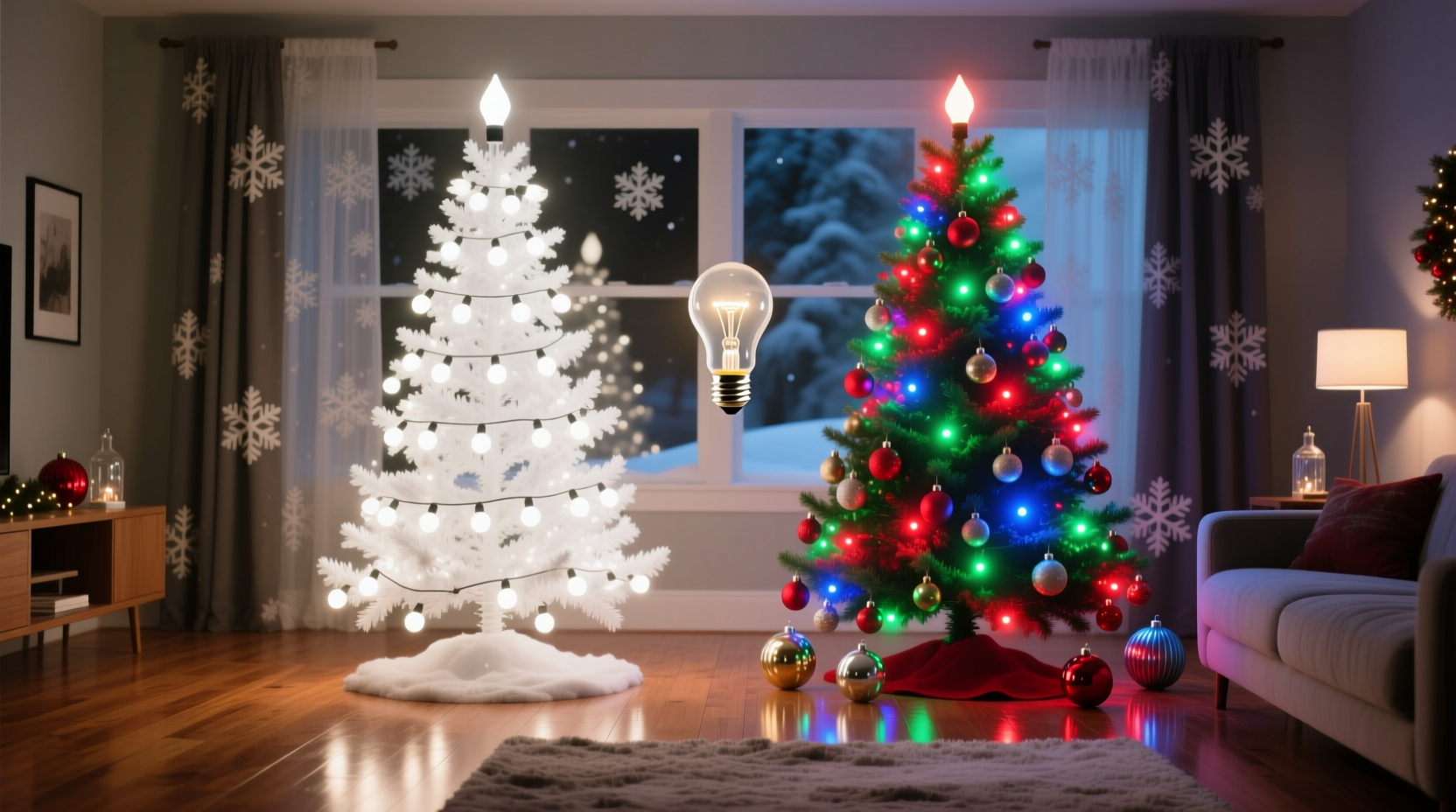
Lighting is not merely functional; it’s psychological. The human brain responds to color temperature, brightness, and hue on both conscious and subconscious levels. During winter months, when natural daylight is limited, artificial lighting becomes especially influential in regulating mood and circadian rhythms. This makes the selection of Christmas lights more than an aesthetic choice—it's an emotional one.
Clear bulbs emit a white or warm-white light, closely resembling candlelight or incandescent glows from early 20th-century holiday traditions. This spectrum tends to feel calming, elegant, and timeless. Warm white (around 2700K) promotes relaxation and intimacy, making it ideal for indoor living areas and outdoor porches where people gather. Cool white (5000K+) feels sharper and more alerting, often used in commercial displays for vibrancy but potentially jarring in residential settings if overused.
Colored bulbs, by contrast, activate different emotional responses based on color psychology:
- Red – evokes excitement, passion, and energy; commonly associated with Santa, gifts, and festive cheer.
- Green – symbolizes nature, renewal, and tranquility; complements evergreen trees and natural themes.
- Blue – conveys serenity, peace, and wintery stillness; often used in “icy” or “snowy” themed displays.
- Yellow/Amber – mimics candlelight or firelight, triggering feelings of comfort and nostalgia.
- Multicolored – stimulates playfulness, childlike wonder, and high-energy festivity.
A study published in the *Journal of Environmental Psychology* found that warm-toned lighting increases perceived coziness and social engagement in domestic environments. In contrast, saturated colors were linked to higher arousal and attention—but also potential visual fatigue when overused indoors.
“Lighting sets the emotional backdrop of any space. With holiday décor, the difference between clear and colored bulbs can shift a room from serene reflection to joyful celebration in an instant.” — Dr. Lena Torres, Environmental Psychologist, University of Colorado Boulder
Clear Bulbs: Elegance, Warmth, and Timelessness
Clear Christmas lights are often favored in traditional, minimalist, or upscale holiday designs. Their appeal lies in subtlety—they enhance rather than dominate. When used on a well-decorated tree, clear bulbs amplify ornaments, tinsel, and textured garlands without competing for attention.
Because they emit a continuous white spectrum, clear bulbs reflect off shiny surfaces beautifully, creating depth and dimension. On frosted glass ornaments or metallic accents, this results in a sparkling, jewel-like effect. Outdoors, warm-white clear lights give homes a welcoming, lantern-lit appearance, particularly effective on architectural features like columns, eaves, and shrubbery.
These bulbs are also preferred in settings aiming for a nostalgic or vintage feel. Many associate them with childhood memories of softly glowing trees before LED technology and multicolor saturation became widespread. Their restrained glow supports contemplative moments—reading under the tree, sipping cocoa, or quiet evening gatherings.
Tip: For maximum warmth, choose clear bulbs labeled \"warm white\" (2700K–3000K). Avoid cool white unless accenting modern, icy themes.Colored Bulbs: Energy, Playfulness, and Festive Boldness
Colored Christmas lights are synonymous with exuberance. They are the hallmark of lively neighborhoods where homes compete in brightness and cheer, often drawing crowds during holiday light tours. Each bulb acts as a standalone splash of emotion, collectively forming a dynamic, energetic environment.
Single-color displays—such as all-blue or all-red strands—can create a thematic atmosphere. Blue lights transform a yard into a winter wonderland, especially when paired with snow-simulating decorations. Red and green combinations lean into classic holiday symbolism, reinforcing cultural familiarity and tradition.
Multicolored strings, however, are unmatched in generating excitement. They are especially effective in family rooms, children’s bedrooms, or community events where stimulation and joy are priorities. Pediatric environments, such as children’s hospitals during the holidays, often use multicolored lighting to uplift spirits and distract from clinical surroundings.
Yet, there’s a trade-off. Colored bulbs can overwhelm small spaces or clash with existing décor. Poorly coordinated color schemes may appear chaotic rather than festive. Additionally, lower-quality colored LEDs sometimes emit uneven hues or flicker, undermining the intended effect.
Real Example: The Neighborhood Contrast
In suburban Denver, two adjacent homes illustrate the mood difference clearly. One uses warm-white clear lights exclusively—on the tree, roofline, and porch pillars. The result is a soft, inviting glow that neighbors describe as “peaceful” and “like stepping into a storybook.”
Across the street, another homeowner installs multicolored C9 bulbs in alternating red, green, blue, and white, synchronized to music. Cars slow down; children press against windows. The mood here is electric, celebratory, almost carnival-like. Both homes are admired, but for different reasons—one offers calm, the other exhilaration.
Comparative Guide: Clear vs Colored Bulbs
| Feature | Clear Bulbs | Colored Bulbs |
|---|---|---|
| Mood Created | Calm, elegant, nostalgic | Energetic, playful, vibrant |
| Best For | Indoor trees, formal décor, intimate spaces | Outdoor displays, family areas, kids’ rooms |
| Color Accuracy | High—enhances true ornament colors | Low—alters how objects appear |
| Visual Fatigue Risk | Low | Moderate to high (especially multicolor) |
| Energy Efficiency (LED) | High | High (same as clear) |
| Design Flexibility | High—works with most styles | Moderate—requires color coordination |
How to Choose Based on Space and Purpose
Selecting between clear and colored bulbs should begin with intention. Ask: What feeling do I want this space to convey?
- Assess the Room’s Function: Living rooms used for relaxing benefit from clear or amber-tinted lights. Playrooms or dining areas hosting lively dinners may thrive with colored accents.
- Consider Existing Décor: Modern, monochrome interiors often pair better with clear lights. Rustic cabins or eclectic spaces can handle bold color mixes.
- Think About Lighting Layers: Use clear bulbs as primary illumination and add colored lights as accents—e.g., colored mini-lights on a garland above a fireplace with clear lights on the tree.
- Test Before Committing: Plug in sample strands at dusk to see how they look in real conditions. Colors appear brighter outdoors at night than indoors.
- Plan for Longevity: Clear bulbs tend to remain stylish year after year. Trend-driven color schemes may feel dated faster.
Step-by-Step: Creating a Mood-Driven Lighting Plan
Follow this timeline to design a lighting scheme that matches your desired holiday mood:
- Week 1: Define Your Theme
Decide whether you’re going for cozy tradition, modern minimalism, whimsical fun, or wintry magic. This guides your bulb choice. - Week 2: Audit Your Spaces
Walk through each room and outdoor area. Note which spots need ambient light (clear bulbs) versus accent zones (colored). - Week 3: Purchase Samples
Buy one strand each of warm-white clear and your chosen color(s). Test them in different lighting conditions. - Week 4: Install Primary Lighting
Start with clear bulbs on trees, mantels, and main gathering areas. Ensure even spacing and no dark gaps. - Week 5: Add Colored Accents
Layer in colored lights on stair railings, window frames, or outdoor signs. Avoid overcrowding. - Week 6: Evaluate and Adjust
View your display at night. Is the mood balanced? Dim overly bright sections or add warm lights to cold corners.
Frequently Asked Questions
Can I mix clear and colored bulbs in the same display?
Yes, but with care. Combining both works best when one type dominates. For example, use clear bulbs on the tree and colored ones on exterior outlines. Avoid alternating clear and colored bulbs on the same strand, as this can create visual noise.
Do LED colored bulbs fade over time?
High-quality LEDs retain color for years, but cheaply made colored coatings may degrade after multiple seasons, especially outdoors. UV exposure accelerates fading. Store lights properly in cool, dry containers to extend life.
Which is better for outdoor use—clear or colored?
It depends on the desired effect. Clear bulbs offer a refined, elegant look suitable for traditional homes. Colored bulbs make a bolder statement, ideal for festive neighborhoods or family-centric yards. For curb appeal, many professionals recommend warm-white clear lights for sophistication, with colored elements used sparingly as highlights.
Conclusion: Light with Intention
The difference between clear and colored Christmas light bulbs isn’t just about appearance—it’s about atmosphere. Clear bulbs invite stillness, reflection, and timeless beauty, while colored lights spark joy, movement, and communal celebration. Neither is inherently better; the right choice depends on the mood you wish to create and the people who will experience it.
This holiday season, go beyond decoration. Use lighting as a tool to shape emotion, memory, and connection. Whether you opt for the gentle shimmer of warm-white clarity or the vibrant pulse of rainbow hues, let every bulb serve a purpose. Thoughtful lighting doesn’t just brighten a room—it warms the heart.
💬 What mood do your lights create? Share your setup, photos, or favorite bulb tips in the comments—help others light up the holidays with meaning!








