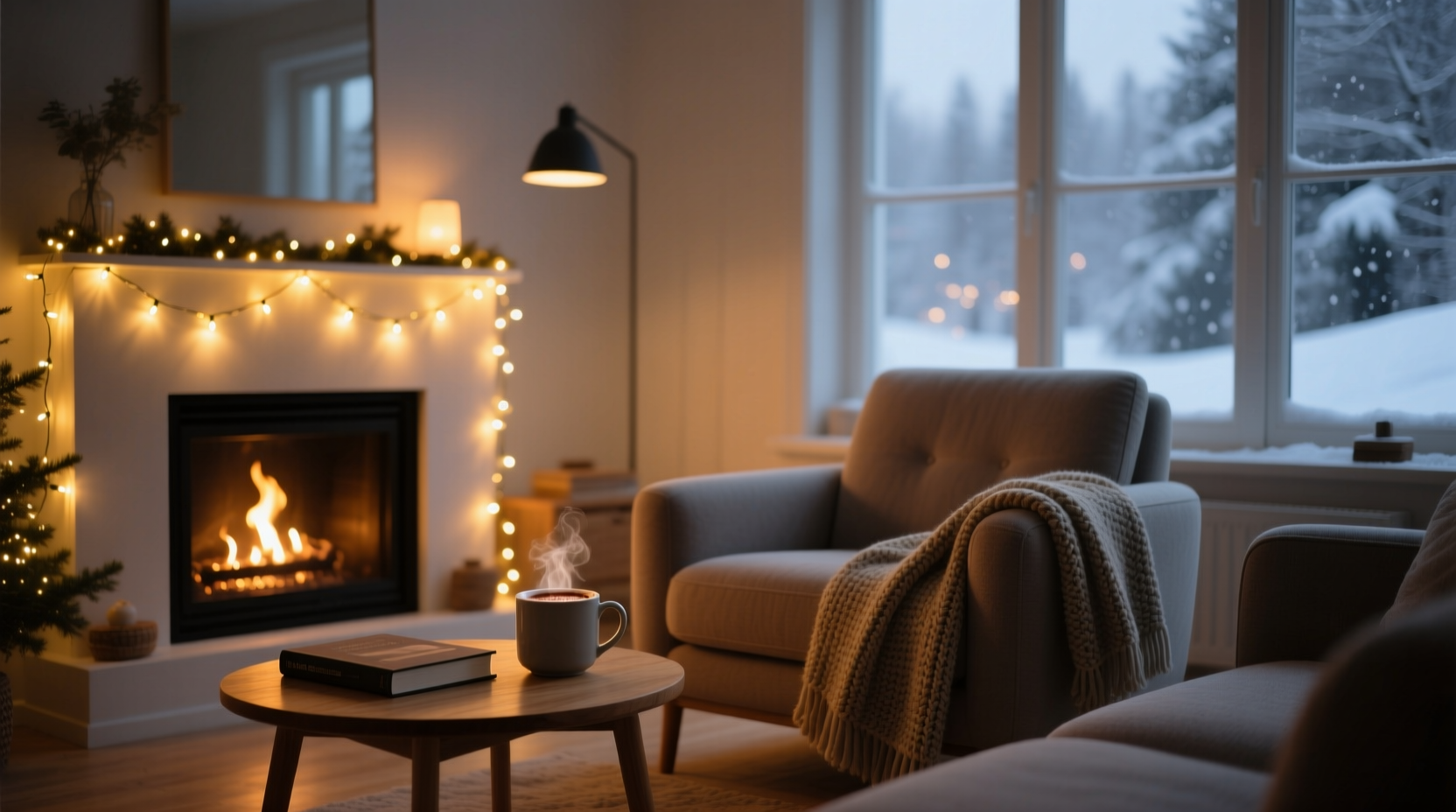
As daylight shortens and evenings grow longer, many people instinctively reach for festive lighting—not just for cheer, but for comfort. Yet not all holiday lights serve the same purpose. Standard string lights often emit a fixed, bright, cool-toned glow that can feel jarring after sunset. Dimmable Christmas lights, by contrast, offer dynamic control over intensity and sometimes even color temperature. This isn’t merely a convenience feature—it reflects an emerging understanding of how light influences physiology, mood, and sleep readiness. For those seeking genuine relaxation during the holiday season—not just decoration, but restoration—the ability to soften illumination matters more than most realize.
How Light Affects Evening Physiology and Relaxation
Human biology is exquisitely tuned to natural light patterns. Specialized photoreceptors in the retina—called intrinsically photosensitive retinal ganglion cells (ipRGCs)—respond primarily to blue-wavelength light (460–480 nm). When stimulated in the evening, these cells suppress melatonin production, delay sleep onset, and elevate alertness. Traditional white LED Christmas lights, especially cheaper models, emit disproportionately high levels of blue light—even at low brightness—because their phosphor coatings are optimized for efficiency, not biological compatibility.
Dimmable lights, particularly those with warm-dim or tunable-white technology, shift toward amber and red wavelengths as brightness decreases. This mimics the natural progression of twilight: the sun’s angle lowers, atmospheric scattering filters out blue, and ambient light warms. Studies published in Journal of Clinical Sleep Medicine show that exposure to 3000K or lower correlated color temperature (CCT) light for 90 minutes before bed improves subjective sleep quality by 23% and reduces time to fall asleep by an average of 14 minutes compared to 5000K+ lighting.
Crucially, dimming also reduces overall photon flux—the total number of light particles hitting the eye. Lower irradiance lessens neural stimulation in the suprachiasmatic nucleus (the brain’s master clock), allowing parasympathetic nervous system activity to rise. That’s the physiological signature of relaxation: slower heart rate, deeper breathing, reduced cortisol. Fixed-brightness lights, no matter how “warm,” cannot replicate this gradual, biologically aligned wind-down.
Key Advantages of Dimmable Lights for Evening Calm
- Circadian alignment: Warm-dim LEDs lower CCT from ~2700K at full brightness to ~1800K at 10%—matching firelight or candle glow, which humans evolved alongside.
- Reduced visual fatigue: Lower luminance minimizes pupil constriction and accommodative stress, especially important for adults over 40 whose lenses yellow and pupils shrink with age.
- Emotional modulation: Controlled brightness supports intentionality—dimming signals to the brain that it’s time to transition from activity to rest, reinforcing behavioral cues.
- Flexibility across contexts: A single string can serve as energetic accent lighting during early evening gatherings, then become ambient background glow for reading or quiet conversation later.
- No glare amplification: Unlike non-dimmable LEDs viewed indirectly (e.g., reflections off glossy surfaces), dimmed lights maintain soft diffusion without harsh hotspots.
What to Look for (and Avoid) in Dimmable Holiday Lighting
Not all “dimmable” Christmas lights deliver equal benefits. Marketing claims can be misleading. Here’s what truly matters:
| Feature | Why It Matters | What to Choose | What to Avoid |
|---|---|---|---|
| Dimming Method | Determines smoothness, range, and compatibility | PWM (pulse-width modulation) dimming with >1000Hz frequency; compatible with standard wall dimmers or smart hubs | Leading-edge TRIAC dimming on low-voltage LED strings (causes flicker, buzzing, or premature failure) |
| Color Temperature Range | Directly impacts melatonin suppression | Warm-dim (2700K → 1800K) or tunable-white (2200K–6500K) with manual/automated scheduling | Fixed 3000K or 4000K “warm white” strings—even if dimmable, they remain too blue at low output |
| Minimum Dim Level | Defines true ambient capability | Capable of dimming to ≤5% brightness without flickering or cutting out | Stops dimming at 20–30%; leaves residual glare unsuitable for low-stimulus environments |
| Driver Quality | Affects longevity and electrical safety | UL-listed, constant-current drivers with thermal protection | Unbranded “dimmable” strings with no safety certification or driver specs |
| Smart Integration | Enables automation and consistency | Works with Matter-over-Thread, Apple HomeKit, or certified Alexa/Google devices for sunset-triggered dimming | Proprietary apps requiring cloud dependency or frequent firmware updates |
Real-World Impact: A Mini Case Study
Sarah M., a 52-year-old pediatric nurse in Portland, Oregon, struggled with fragmented sleep each December. Her home featured traditional incandescent mini-lights on the mantel and staircase—bright, warm, but unadjustable. “I’d turn them on around 4 p.m. to fight the gray afternoon,” she explains, “but by 8 p.m., that same light felt aggressive. I’d get restless, scroll my phone trying to ‘wind down,’ then lie awake until midnight.”
In November 2023, Sarah replaced her strings with UL-certified warm-dim LED fairy lights controlled via her existing HomeKit hub. She programmed them to begin dimming at 6:30 p.m., reaching 15% brightness by 7:45 p.m., and holding steady at 8% from 8:30–11 p.m. She paired them with a single 2700K table lamp using a physical dimmer switch. Within three days, she noticed her shoulders dropping earlier in the evening. By week two, she was consistently falling asleep within 22 minutes of turning off her phone—down from 47 minutes previously. “It’s not magic,” she says. “It’s just giving my body the signal it’s been waiting for.”
Her experience aligns with clinical observations. Dr. Lena Torres, a chronobiologist at the University of Washington Sleep Center, notes: “Light is the most potent non-pharmacological regulator of our internal clock. When people introduce intentional, biologically informed dimming—even just one consistent source in their primary living space—they often report improved mood resilience and lower perceived stress during high-demand seasons like holidays.”
“Dimming isn’t about making light disappear—it’s about restoring its narrative function. Light should tell the story of the day’s ending, not interrupt it.” — Dr. Lena Torres, Chronobiologist & Director, UW Sleep & Circadian Research Lab
Step-by-Step: Creating a Relaxing Dimmable Holiday Lighting Setup
- Evaluate your space: Identify where you spend quiet evening hours—living room seating area, reading nook, bedroom doorway. Prioritize one zone for initial implementation.
- Select purpose-built lights: Choose warm-dim LED strings rated for indoor use, minimum 5% dimming capability, and compatible with your existing controls (e.g., Lutron Caseta, Philips Hue, or simple trailing-edge dimmer).
- Install strategically: Mount lights where they provide indirect, diffused glow—behind furniture, along shelf edges, or wrapped around a neutral-toned garland. Avoid direct line-of-sight placement.
- Set a dimming schedule: Program lights to begin lowering 90 minutes before your typical wind-down start time. Reduce in two stages: first to 40% (60 min pre-wind-down), then to 10–15% (30 min pre-wind-down).
- Layer with complementary sources: Add one warm-white (2200–2700K) floor or table lamp on a separate dimmer. Keep overhead lights off entirely during evening relaxation periods.
- Test and refine: Observe for three evenings. If eyes still feel strained, lower final brightness another 3–5%. If ambiance feels too sparse, add a second low-output string—not brighter ones.
FAQ: Practical Questions Answered
Can I dim standard non-dimmable Christmas lights with a regular wall dimmer?
No—and doing so risks damage. Non-dimmable LED strings lack compatible drivers. Connecting them to a dimmer may cause flickering, audible buzzing, inconsistent output, or complete failure. Some units even overheat, creating a fire hazard. Always verify “dimmable” labeling and check manufacturer compatibility charts before integrating with dimming systems.
Do warm-dim lights cost significantly more than standard options?
Initial investment is typically 20–40% higher, but long-term value shifts the equation. High-quality dimmable strings last 3–4x longer than budget LEDs (25,000+ vs. 6,000 hours), consume 60% less energy at low output, and eliminate the need to buy multiple light sets for different moods. Over five holiday seasons, the total cost of ownership—including replacement, electricity, and emotional well-being gains—favors warm-dim solutions.
Will dimmable lights still look festive, or do they lose their “Christmas sparkle”?
They retain—and often enhance—festivity. True warm-dim strings preserve rich amber and copper tones at low settings, evoking vintage filament bulbs or candlelight. The “sparkle” comes from variation in brightness and subtle movement (e.g., gentle swaying garlands, micro-flicker modes mimicking flame), not raw intensity. In fact, many designers report clients find dimmed lights more elegant and intentional—less “party store,” more “curated sanctuary.”
Conclusion: Light as Intentional Ritual, Not Just Decoration
Christmas lights have always carried symbolic weight: hope in darkness, warmth amid cold, continuity through change. But when we treat them solely as decorative objects—bright, static, and unresponsive—we miss their deeper potential. Dimmable Christmas lights represent a quiet evolution: from passive ornament to active tool for well-being. They acknowledge that relaxation isn’t the absence of light, but the presence of light that honors our biology. They invite us to reclaim agency over our sensory environment—not by eliminating festivity, but by deepening its resonance.
This holiday season, consider dimmable lighting not as an upgrade, but as an act of care—for your nervous system, your sleep architecture, and your capacity to be present in moments that truly matter. Start small: replace one string. Observe the difference in your breath, your posture, the quality of your quiet. Then share what you learn—not just the product name, but the feeling it restored. Because the most meaningful traditions aren’t inherited. They’re chosen, refined, and passed on with intention.
💬 Your experience matters. Have you made the switch to dimmable holiday lights? What changed in your evenings? Share your story in the comments—your insight could help someone else find calm in the season’s glow.








