In an age where memories are captured in gigabytes rather than on glossy paper, the debate between digital photo frames and printed photo albums remains surprisingly emotional. For some, flipping through a leather-bound album evokes nostalgia, warmth, and authenticity. For others, a sleek digital frame cycling through hundreds of high-resolution images offers convenience, versatility, and modern elegance. But amid this divide, one question persists: Are digital photo frames tacky?
The answer isn’t straightforward. It depends on context, design, usage, and personal taste. What was once seen as a novelty gadget—clunky, low-resolution, and garishly lit—has evolved into a sophisticated home accessory. Yet, lingering stereotypes persist. To truly understand whether digital frames belong in tasteful homes or fall into the realm of outdated decor, we must examine both sides of the spectrum with honesty and nuance.
The Emotional Weight of Print Albums
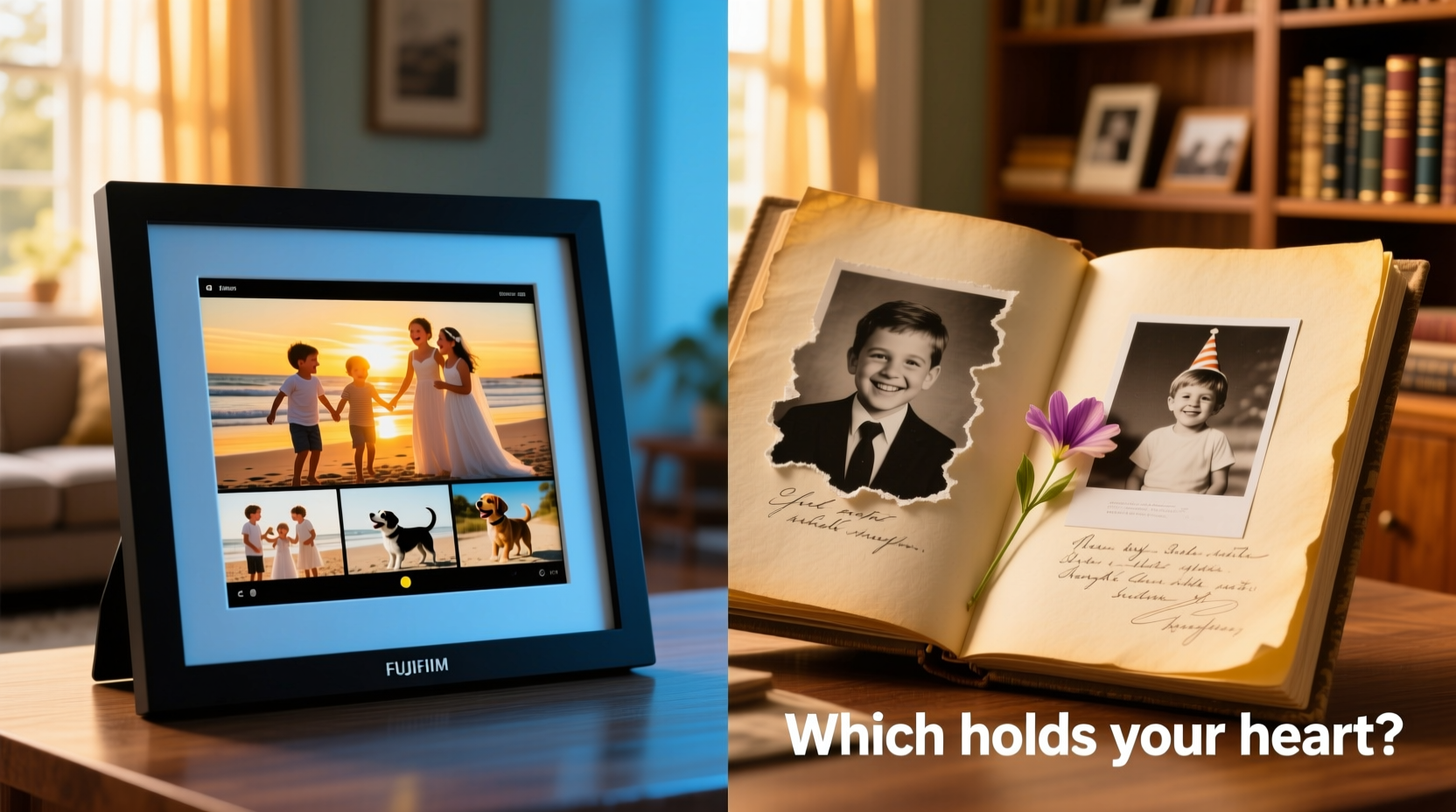
Printed photo albums carry an irreplaceable sensory experience. The weight of the book in your hands, the texture of the pages, the faint smell of archival paper—all contribute to a tactile connection with the past. There’s intentionality in creating a physical album: selecting images, arranging them chronologically or thematically, perhaps even handwriting captions beneath each photograph.
This process slows memory preservation down, making it more deliberate. As photography expert Susan Sontag once observed:
“To collect photographs is to collect the world.” — Susan Sontag, On Photography
For many, that collection feels most authentic when held, not scrolled. A coffee table adorned with a well-designed album invites interaction. Guests naturally pick it up, flip through, pause at milestones—a wedding, a child’s first steps, a sunset from a memorable trip. These moments become shared experiences, not private scrolls on a backlit screen.
However, print albums come with limitations. They degrade over time if not stored properly. Light, humidity, and poor-quality adhesives can fade or damage photos. Updating them requires either buying new albums or carefully inserting additional pages. And unless you're diligent about printing, most of today’s photos live exclusively on phones and hard drives, unseen for years.
Digital Photo Frames: From Gimmick to Design-Forward Decor
Digital photo frames have undergone a quiet revolution. Early models were criticized for grainy displays, awkward interfaces, and a “mall kiosk” aesthetic. Today’s best-in-class frames—such as those from Aura, Skylight, or Nix—feature HD or 4K screens, elegant wooden or metal frames, app-based control, and cloud integration. Some even adjust brightness based on ambient light or allow remote updates from family members across the country.
Far from being inherently tacky, a well-chosen digital frame can blend seamlessly into modern interiors. Mounted on a wall like a piece of art or placed discreetly on a nightstand, these devices function less like gadgets and more like curated galleries. Their ability to display hundreds or thousands of photos means they showcase breadth—birthdays, vacations, everyday moments—that would require dozens of physical albums to replicate.
Yet perception lags behind innovation. Many still associate digital frames with the plastic, blinking LED-lit versions sold at airport gift shops. That stigma contributes to the “tacky” label. But just as smartphones replaced flip phones without losing social acceptance, digital frames are shedding their reputation—one minimalist design at a time.
Tip: Choose a digital frame with a matte screen finish to reduce glare and mimic the non-reflective quality of printed photos.Comparing Key Features: Digital Frame vs. Print Album
| Feature | Digital Photo Frame | Print Album |
|---|---|---|
| Photo Capacity | 500–10,000+ images (depending on storage) | Limited by page count (typically 50–100 photos) |
| Update Frequency | Instant via app, email, or cloud sync | Manual; requires reprinting or adhesive inserts |
| Lifespan of Media | Device lasts 5–10 years; photos preserved digitally | Paper degrades in 10–30 years without proper care |
| Interactivity | Touch controls, remote management, audio support | Tactile browsing, no tech required |
| Aesthetic Flexibility | Modern, customizable appearance; can mimic art frames | Classic, warm presence; limited to physical design |
| Emotional Impact | Dynamic, changing display; may feel impersonal to some | Tangible, intimate; often perceived as more meaningful |
When Digital Frames Work—and When They Don’t
Context matters. A digital frame isn’t inherently tacky, but its presentation can make or break its reception. Consider these scenarios:
- A 7-inch LCD frame with a rainbow border effect and loud chiptune music playing every hour? Likely tacky.
- A 10-inch walnut-framed display showing a slow slideshow of black-and-white family portraits in a dimly lit hallway? Elegant and intentional.
The difference lies in curation and integration. A poorly set-up digital frame screams “look at me,” while a thoughtfully configured one says “remember this.” Just as a cluttered bookshelf undermines the beauty of books, an overloaded digital frame with rapid transitions, flashy effects, and mismatched photos feels chaotic rather than sentimental.
Design authority Emily Henderson, known for her work in residential styling, notes:
“Technology doesn’t have to feel cold. When integrated with purpose—like a digital frame that rotates seasonal family photos—it becomes part of the home’s rhythm, not a distraction.” — Emily Henderson, Interior Stylist
Mini Case Study: The Johnson Family Experiment
The Johnsons, a family of four in Portland, Oregon, inherited a large collection of unprinted digital photos after their parents passed. Rather than commissioning dozens of albums, they invested in two Aura Mason frames—one for the living room, one for the guest bedroom. Each frame was updated monthly with themed slideshows: “Summer 2023 at the Lake,” “Grandma’s Garden Through the Years,” “Kids’ Artwork Archive.”
Visitors consistently commented on how natural the frames felt in the space. One guest remarked, “I didn’t even realize it was digital until you mentioned it.” By disabling animations, using soft transitions, and matching the frame finishes to existing decor, the Johnsons transformed what could have been a gimmicky addition into a cherished storytelling tool.
How to Avoid the ‘Tacky’ Trap: A Checklist
If you’re considering a digital photo frame but want to ensure it enhances rather than detracts from your space, follow this checklist:
- Choose a high-quality frame: Opt for wood, metal, or fabric-wrapped finishes—not plastic.
- Select a matte screen: Reduces glare and mimics the look of printed paper.
- Curate your content: Rotate themes seasonally or by event, don’t autoplay 2,000 vacation pics at once.
- Disable flashy effects: Avoid bounce transitions, zoom-ins, or background music.
- Position thoughtfully: Place at eye level in areas where people linger—entryways, dining rooms, bedrooms.
- Maintain consistency: Match the frame’s color and style to nearby artwork or furniture.
- Update regularly: Keep the content fresh to encourage engagement.
Can You Have Both? The Hybrid Approach
Why choose? Many families now adopt a hybrid model: a beautifully crafted print album for major life events (weddings, births, anniversaries), paired with a digital frame for everyday moments and rotating collections.
This approach balances permanence with flexibility. The album becomes a legacy object—something to pass down, something that survives power outages and software obsolescence. The digital frame acts as a living scrapbook, always current, always accessible.
Consider this timeline for maintaining both:
- Monthly: Update the digital frame with highlights from the past 30 days.
- Quarterly: Select 20–30 standout images to print and store in archival sleeves.
- Annually: Compile printed photos into a yearly album, complete with handwritten notes.
- Every 5 Years: Create a deluxe retrospective album combining digital curation with physical preservation.
This rhythm ensures that nothing is lost to digital decay while honoring the ritual of physical keepsakes.
Frequently Asked Questions
Are digital photo frames outdated?
No. While early models were clunky, modern digital frames are more advanced than ever. With improved screens, smart features, and refined designs, they’ve become viable alternatives to traditional displays—especially for tech-savvy households or long-distance families wanting to share memories remotely.
Do digital frames degrade photos over time?
The screens themselves can suffer from burn-in if static images are displayed for weeks without change. However, most premium frames include pixel-shifting technology and automatic brightness adjustment to prevent damage. The digital files remain intact as long as backups exist. In contrast, printed photos can fade due to UV exposure or poor paper quality—so neither medium is immune to degradation without care.
Is it disrespectful to use a digital frame for memorial photos?
Not necessarily. Many find comfort in seeing loved ones “alive” in motion—smiling, moving, present in daily life. Others prefer the solemnity of a still image in a physical album. The key is intention. If the digital frame is used respectfully—with appropriate pacing, music (or silence), and curation—it can be a dignified tribute.
Conclusion: Tastefulness Is in the Execution
The idea that digital photo frames are inherently tacky is outdated. Like any object, their aesthetic value depends on how they’re chosen, used, and perceived. A plastic, flashing frame in a busy retail setting might feel cheap. But a well-designed, thoughtfully curated digital display can evoke warmth, continuity, and connection—just like a print album.
The real issue isn’t the medium, but the message. Are your photos shared with care? Are they meaningful, well-composed, and respectfully presented? Whether pixels or paper, the emotion behind the image matters far more than the format.
Instead of dismissing digital frames outright, consider how they might complement—not replace—your existing traditions. Embrace evolution without abandoning sentiment. After all, the goal isn’t to preserve photos perfectly, but to keep memories alive in ways that resonate today.
🚀 Ready to rethink your photo display? Try pairing a single digital frame with a new print album this month. See how blending old and new transforms the way you remember.