Walk into any urban café, gym, or streetwear pop-up, and you’ll likely see them—chunky, retro-inspired sneakers with thick soles and bold branding. Known colloquially as \"dad shoes,\" styles like the New Balance 990, Nike Air Monarch, and Adidas Ozweego have surged in popularity over the past decade. But are they truly more comfortable than classic canvas sneakers like Converse Chuck Taylors or Vans Old Skool? Or is their appeal purely aesthetic—a fleeting trend dressed up as function?
The answer isn’t straightforward. While dad shoes often boast advanced cushioning, arch support, and ergonomic design, canvas sneakers offer simplicity, breathability, and cultural longevity. To understand which shoe serves your lifestyle best, it’s essential to examine comfort beyond first impressions—considering biomechanics, daily use, and long-term wear.
The Anatomy of Comfort: What Makes a Shoe Truly Comfortable?
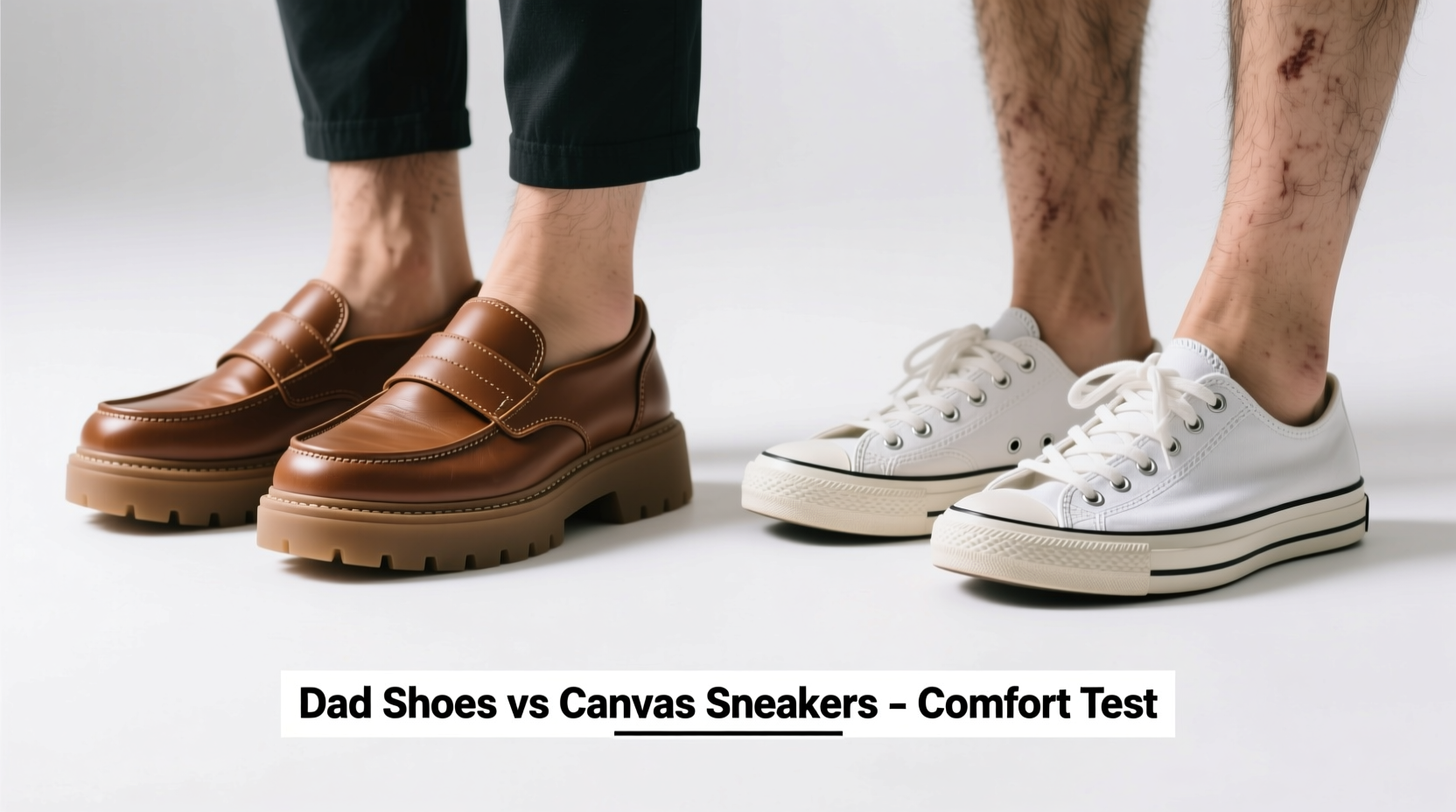
Comfort isn’t just about softness. It’s a combination of fit, support, flexibility, weight, breathability, and shock absorption. A shoe might feel plush at first but fail after two hours on your feet. Conversely, a stiffer shoe may require a break-in period but deliver superior all-day endurance.
Dad shoes typically feature:
- Thick EVA or foam midsoles for impact absorption
- Pronation control and structured heel counters
- Breathable mesh uppers with synthetic overlays
- Wider toe boxes accommodating natural foot splay
Canvas sneakers, by contrast, are minimalist by design:
- Thin rubber soles with minimal cushioning
- Rigid, flat construction offering little arch support
- 100% cotton canvas uppers (less breathable than mesh)
- Narrower fits that may pinch wider feet
From a biomechanical standpoint, dad shoes are engineered for prolonged standing or walking. Their layered cushioning reduces stress on joints, especially the knees and lower back. Canvas sneakers, while lightweight and flexible, lack the structural integrity needed for extended use—particularly on hard surfaces.
“Footwear designed with podiatric principles—like motion control and heel stability—can significantly reduce fatigue during daily activity.” — Dr. Lena Torres, Podiatrist & Gait Specialist
Performance Showdown: Real-World Wear Scenarios
To assess true comfort, consider how each shoe performs across different environments. The ideal sneaker depends not only on anatomy but also on lifestyle.
| Scenario | Dad Shoes | Canvas Sneakers |
|---|---|---|
| Walking 5+ miles | Excellent cushioning; reduced joint strain | High risk of foot fatigue and heel pain |
| Office wear (8-hour day) | Supportive; minimizes swelling | May cause arch collapse over time |
| Gym or light training | Stable platform for lifting and mobility | Lack lateral support; poor traction |
| Casual outings (shopping, dinner) | Functional but bulky; polarizing style | Stylish, lightweight, easy to pair |
| Hot weather | Mixed results—some models trap heat | Breathable but prone to odor retention |
In high-demand situations—commuting, travel, or jobs requiring long periods on your feet—dad shoes consistently outperform canvas alternatives. However, for short-duration social events or fashion-forward styling, canvas sneakers remain a go-to for their sleek profile and effortless cool.
Tip: If you're transitioning from canvas to dad shoes, start with hybrid models like the New Balance 574 or Nike Air Max 90—they balance retro style with modern support.Style vs. Substance: Is the Dad Shoe Trend Overrated?
The resurgence of dad shoes began in the late 2010s, fueled by ironic fashion statements from designers like Balenciaga and Vetements. What started as a satire of outdated athletic footwear quickly became a mainstream phenomenon. Suddenly, orthopedic-looking shoes were seen on runways, influencers, and city sidewalks worldwide.
But unlike many fashion fads, dad shoes brought functional value. Their durability and support made them practical beyond aesthetics. This duality—being both useful and stylish—helped sustain their popularity even as trends shifted.
Still, not all dad shoes are created equal. Some premium models prioritize appearance over ergonomics, using exaggerated proportions without meaningful improvements in comfort. Meanwhile, classic canvas sneakers benefit from decades of refinement and cultural relevance, making them timeless rather than trendy.
A Real Example: Office Worker Turned Weekend Explorer
Take Mark, a 34-year-old graphic designer based in Portland. For years, he wore black Converse to work, drawn to their minimalist look. After developing plantar fasciitis following a cross-country trip, he switched to a pair of Brooks Beast walking shoes—technically not “dad shoes,” but in the same performance category.
Within weeks, his morning heel pain diminished. He later upgraded to the New Balance 990v6, appreciating its polished yet understated design. “I didn’t realize how much my old shoes were hurting me until I stopped wearing them,” he said. “Now I can bike to meetings, stand at my desk, and walk the dog—all without foot fatigue.”
Mark still owns canvas sneakers but reserves them for evenings out. His experience reflects a growing shift: consumers prioritizing health and functionality without sacrificing personal style.
How to Choose the Right Shoe for Your Lifestyle
Selecting between dad shoes and canvas sneakers shouldn't be an either/or decision. Many people benefit from owning both, using each for its strengths. Follow this checklist to make an informed choice:
📋 **Shoe Selection Checklist**- Assess your daily activity level: Do you walk more than 3 miles a day? Opt for supportive dad shoes.
- Check your foot type: Flat feet or overpronation? Look for built-in arch support.
- Consider climate: Hot regions favor breathable materials—choose perforated mesh over solid synthetics.
- Evaluate your wardrobe: Need versatile neutrals? Gray, white, or black dad shoes pair well with jeans and chinos.
- Test before buying: Walk on hard flooring, squat, and simulate stairs to gauge stability.
Remember, comfort is personal. What works for one person may not suit another. Factors like weight, gait pattern, and prior foot injuries play crucial roles.
Frequently Asked Questions
Are dad shoes good for flat feet?
Yes, many dad shoes offer excellent arch support and motion control. Models like the ASICS Gel-Kayano, Saucony Guide, and New Balance 1165 are specifically designed for overpronators and flat-footed individuals.
Can I wear canvas sneakers every day?
You can, but not without trade-offs. Daily wear increases the risk of foot strain, especially if you spend significant time standing or walking. Rotate them with supportive footwear to avoid long-term issues like plantar fasciitis or metatarsalgia.
Do dad shoes look uncool now that everyone wears them?
Trends ebb and flow, but functionality endures. While some may view dad shoes as passé due to oversaturation, others appreciate their utility. Focus on fit and quality—well-maintained, clean dad shoes never truly go out of style.
Final Verdict: Function Meets Fashion—Choose Wisely
Dad shoes aren’t just a trend—they’re a response to real consumer needs. As society becomes more aware of posture, mobility, and workplace ergonomics, footwear that supports the body gains legitimacy. Compared to traditional canvas sneakers, dad shoes generally offer superior cushioning, stability, and durability, making them the better choice for active lifestyles.
That said, canvas sneakers hold cultural significance and unmatched versatility in casual fashion. They’re ideal for low-impact settings and express a laid-back aesthetic that chunky runners can’t replicate.
The smart approach? Build a rotation. Use dad shoes when your feet need protection. Reach for canvas when style and simplicity matter most. By understanding the strengths of each, you gain both comfort and confidence—one step at a time.
🚀 Ready to upgrade your footwear game? Audit your current sneaker collection today. Replace worn-out pairs with options that support your movement, not just your outfit. Share your favorite comfort-first picks in the comments!








