A well-decorated shelf does more than hold objects—it tells a story. Whether it’s in your living room, bedroom, or home office, shelves are functional art spaces waiting to be curated. Done right, they elevate a room’s aesthetic, reflect personal taste, and create visual interest. But cluttered, mismatched, or overly sparse arrangements can make even the most stylish room feel disjointed. The key lies in thoughtful composition: balancing form and function, mixing textures and heights, and editing with intention.
Start with a Clear Vision and Edit Ruthlessly
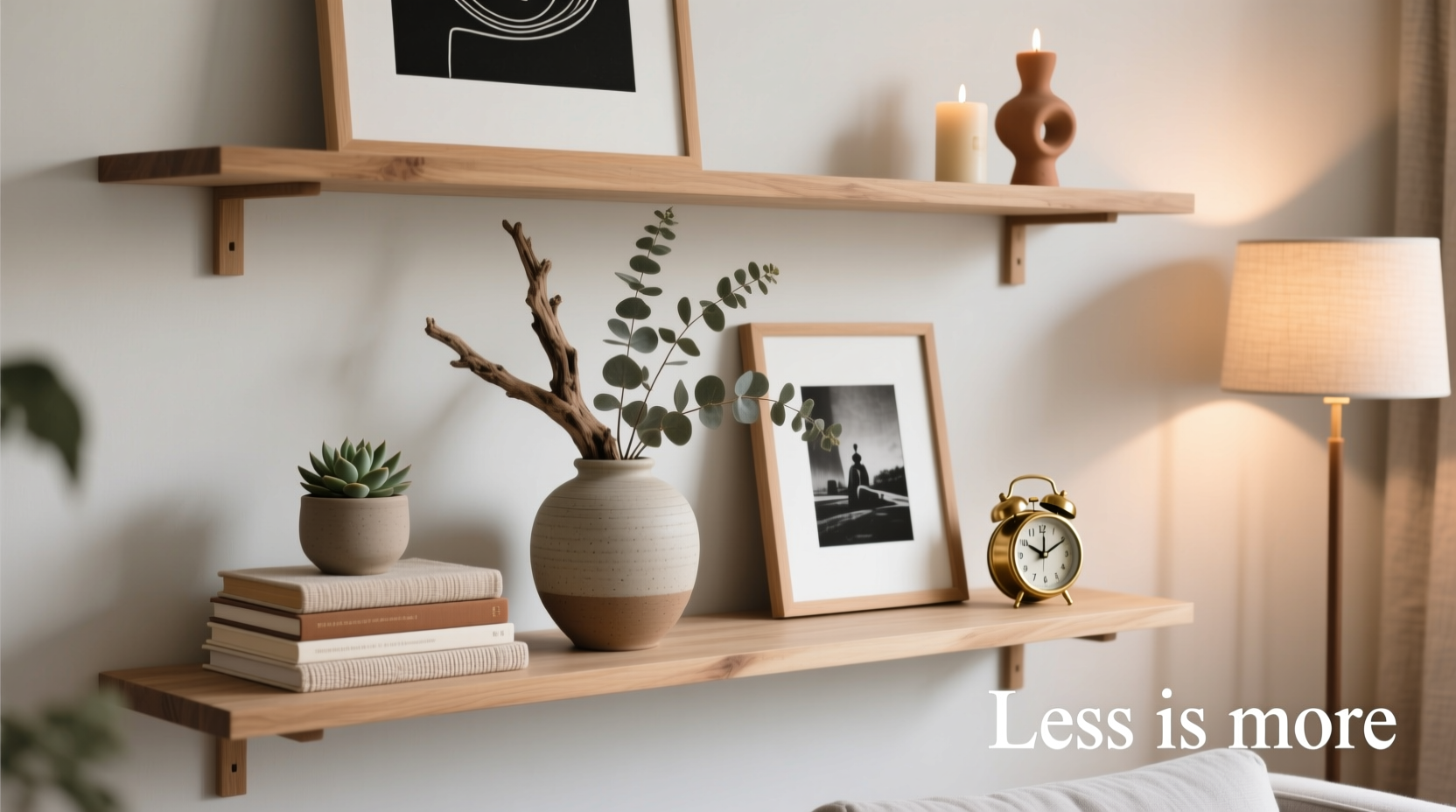
Before placing a single object on your shelf, consider its purpose. Is this shelf meant to display cherished memories? Showcase your book collection? Highlight decorative accessories? Defining the shelf’s role helps guide your choices. Once you’ve decided, begin by removing everything and cleaning the surface. Then, lay out potential items on a nearby table.
Be selective. A common mistake is overcrowding. Instead of filling every inch, aim for breathing room. As interior designer Sarah Barnard notes:
“Negative space is just as important as the objects themselves. It allows each piece to shine and gives the eye a place to rest.” — Sarah Barnard, Sustainable Interior Designer
Ask yourself: Does this item add beauty, meaning, or function? If not, set it aside. You’ll likely find that less truly is more.
Tip: Use a tray to group small items like candles, perfume bottles, or trinkets. This creates cohesion and prevents visual chaos.Apply the Rule of Threes (and Variations)
The rule of threes is a classic design principle: grouping objects in odd numbers—especially three—creates visual harmony. This works because asymmetry feels more natural and dynamic than perfect symmetry. Try arranging items in varying heights: tall, medium, short. For example, pair a tall vase with a medium-sized ceramic bowl and a short framed photo.
You can also apply variations:
- Triangles: Arrange three objects to form an invisible triangle, anchoring the group.
- Layers: Place a smaller object in front of a taller one to add depth.
- Clusters: Group similar items (like books or ceramics) in sets of three across multiple shelves.
This approach keeps the eye moving while maintaining balance. Avoid lining up all objects at the same height—it reads as static and uninspired.
Use Books Strategically
Books are among the most versatile shelf decor items. They provide color, texture, and height variation. But stacking them spine-out all the time can feel impersonal. Try these techniques:
- Face-out display: Turn select books so their covers show. Choose ones with vibrant artwork or meaningful titles.
- Stack horizontally: Create a base for a sculpture or plant by stacking two or three books flat.
- Mix orientations: Combine vertical and horizontal stacks for rhythm.
- Use as risers: Elevate small decor items on top of stacked books to add dimension.
Consider using bookends sparingly—ornate ones can dominate. Opt for understated metal or wood styles, or use a heavy decorative object instead.
Balance Texture, Color, and Material
A visually engaging shelf combines different materials to create tactile contrast. Think about pairing:
- Matte ceramics with glossy vases
- Woven baskets with smooth glass
- Wooden figures with metallic accents
- Framed art with fabric-covered boxes
Color should be intentional. A monochromatic scheme (e.g., all white, gray, or earth tones) feels serene and modern. For boldness, introduce one or two accent colors through a book cover, small painting, or decorative object. Too many competing hues create noise.
| Material | Effect | Best Paired With |
|---|---|---|
| Wood | Warmth, natural texture | Ceramics, linen, greenery |
| Brass/Metal | Luxury, reflection | Glass, marble, black frames |
| Concrete | Modern, industrial edge | White ceramics, succulents |
| Textiles (linen, wool) | Softness, coziness | Wood, paper, muted tones |
A Real-Life Shelf Makeover: From Cluttered to Curated
Take the case of Maya, a freelance writer who struggled with her living room bookshelf. Originally, it was crammed with books, old awards, random knickknacks, and outdated electronics. “It felt like a storage unit,” she said. After a consultation with a local stylist, she followed a simple process:
- Removed everything and dusted the shelves.
- Sorted items into categories: keep, donate, relocate.
- Selected only meaningful pieces: two travel souvenirs, a framed family photo, a favorite novel, and a handmade pottery mug.
- Added a trailing pothos in a terracotta pot and stacked two art books horizontally to support a small candle.
- Left 30% of the space empty for visual relief.
The result? A shelf that felt personal, calm, and intentional. “I didn’t realize how much stress a messy shelf caused until I fixed it,” Maya shared. “Now people always compliment it.”
Step-by-Step Guide to Styling Your Shelf
Follow this sequence for consistently strong results:
- Clear and clean: Remove all items and wipe down the shelf.
- Choose a theme or mood: Minimalist, cozy, eclectic, vintage, etc.
- Select anchor pieces: Larger items like a lamp, plant, or artwork that draw attention.
- Add layers: Use books, boxes, or stands to vary height.
- Incorporate personal touches: Photos, heirlooms, or handmade items.
- Introduce texture and color: Through materials and small accents.
- Edit and step back: Remove anything that doesn’t belong. View from across the room.
- Maintain regularly: Dust weekly and re-evaluate seasonally.
Do’s and Don’ts of Shelf Styling
| Do’s | Don’ts |
|---|---|
| Vary heights and depths | Line up all objects at the same level |
| Leave negative space | Fill every inch of the shelf |
| Group similar items together | Scatter small objects randomly |
| Use trays to corral small items | Allow loose clutter to accumulate |
| Rotate decor seasonally | Forget to update or refresh displays |
Frequently Asked Questions
How do I style a shelf in a small space?
In compact areas, prioritize verticality and light-colored objects. Use mirrors or glass elements to reflect light. Keep decor minimal—two to three thoughtfully chosen items per shelf are often enough. Floating shelves work especially well in tight rooms.
Can I mix decor styles on one shelf?
Yes, but with intention. Mixing modern and rustic, for example, can create depth. The key is unifying elements—such as consistent color tones, repeated shapes, or material continuity (like wood appearing in multiple pieces). Avoid clashing styles without a connecting thread.
How often should I change my shelf decor?
There’s no strict rule, but refreshing every 3–6 months keeps the space feeling alive. Seasonal changes—adding warm textiles in fall or fresh greenery in spring—are natural opportunities to update. Listen to your instincts; if it feels stale, it’s time to edit.
Final Thoughts: Make It Yours
Great shelf styling isn’t about perfection—it’s about expression. The most stunning shelves aren’t those filled with expensive items, but those that feel authentic. Let your personality shine through. Display that quirky souvenir, the dog-eared poetry book, or the child’s drawing held up with a magnet. These details tell your story.
With a few foundational principles—balance, contrast, editing, and intention—you can turn any shelf from overlooked to outstanding. Start today: take one shelf, clear it, and rebuild it with care. The impact might surprise you.
🚀 Ready to transform your space? Pick one shelf tonight and give it a thoughtful refresh. Share your before-and-after in the comments—we’d love to see your creativity in action!








