For pet owners, managing loose fur on floors, carpets, and furniture is a daily challenge. No matter how well-groomed your dog or cat may be, shedding is inevitable. This makes choosing the right vacuum cleaner not just about convenience—it's about maintaining a clean, allergen-reduced home. Two of the most popular options today are cordless vacuums and upright cleaners. But when it comes to tackling stubborn pet hair, which one truly performs better?
The answer isn’t always straightforward. While both types have evolved significantly in recent years, their design, power delivery, cleaning reach, and usability differ in ways that directly impact their effectiveness on pet hair. This article breaks down the key factors—suction strength, brush roll technology, maneuverability, filtration, and maintenance—to help you make an informed decision based on real-world performance.
Suction Power and Motor Performance
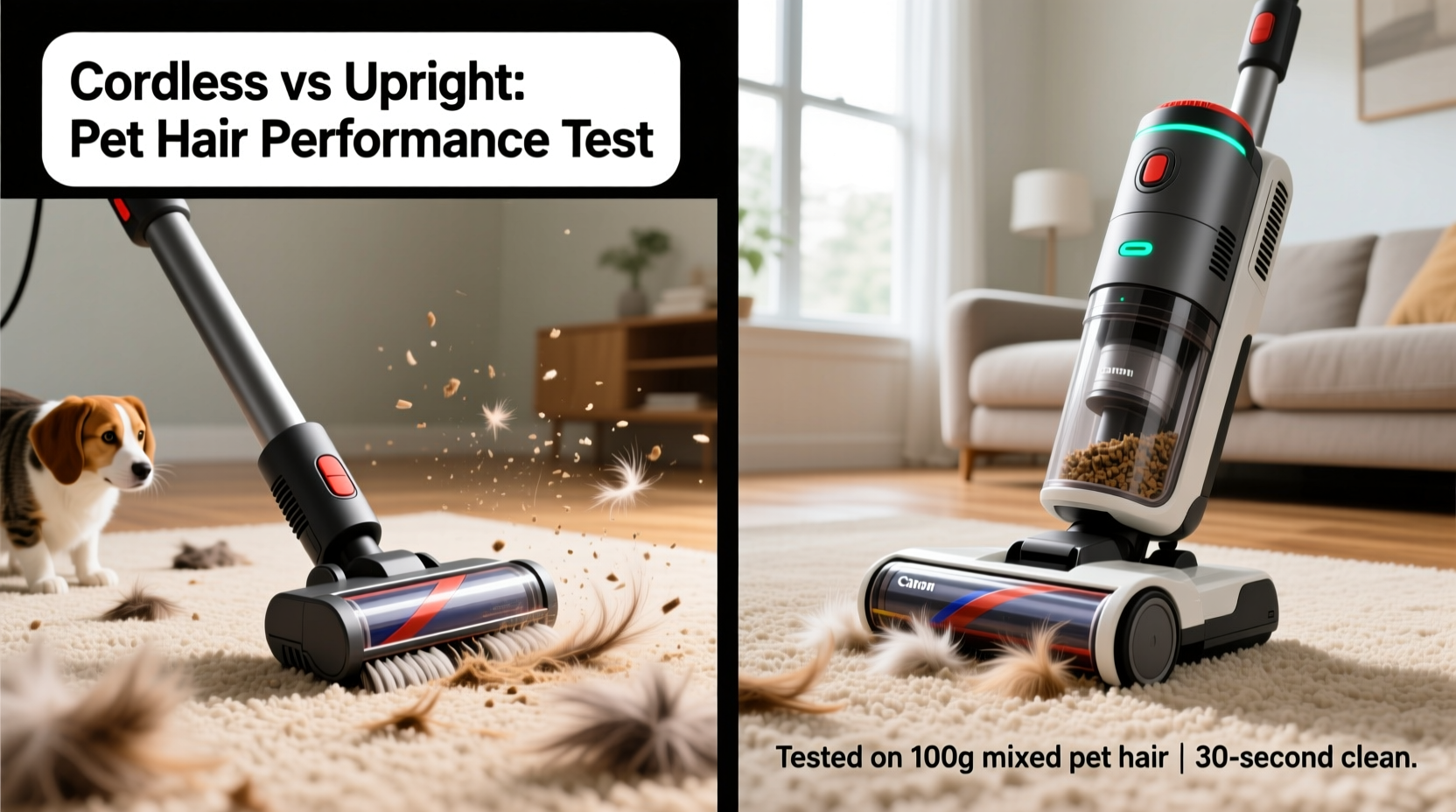
Suction is the backbone of any vacuum’s ability to lift embedded pet hair from carpet fibers and hard floors. Upright vacuums traditionally house larger motors, allowing them to generate higher airflow (measured in cubic feet per minute, or CFM) and stronger suction (measured in air watts). Many high-end upright models deliver 100+ air watts, making them highly effective at pulling deeply trapped pet hair from medium-pile carpets.
Cordless vacuums, while improving rapidly, still face limitations due to battery-powered motors. Most premium cordless stick vacuums range between 70–120 air watts, but only achieve peak suction in “boost” mode, which drains the battery quickly—often within 5–10 minutes. Standard mode may not provide enough sustained power for thick carpeting where pet hair accumulates.
“While cordless vacuums offer unmatched convenience, they still lag behind uprights in consistent deep-cleaning performance on carpets—especially with heavy pet shedding.” — Dr. Linda Park, Home Appliance Research Institute
However, for homes with mostly hard flooring or low-pile rugs, cordless vacuums can perform admirably. Their lightweight design allows for quick daily pickups, reducing the chance of hair buildup before it becomes problematic.
Brush Roll Design and Hair-Lifting Capability
The brush roll—or beater bar—is critical in dislodging pet hair woven into carpet fibers. Upright vacuums typically feature wider, motorized brush rolls with stiff bristles or rubber fins designed to agitate carpet pile and loosen debris. Many include tangle-free or anti-hair wrap technology, such as dual counter-rotating brushes or specialized comb systems, which prevent long pet hair from wrapping around the roller.
Cordless vacuums often use smaller, detachable brush heads. While some high-end models now incorporate anti-tangle features (e.g., LG’s Hair Navi or Dyson’s Tangle-Free Turbine), many still struggle with clumping, especially with long-haired pets like Golden Retrievers or Persians. Hair can wrap tightly around the axle, requiring frequent manual cleaning.
Tip: Look for vacuums with self-cleaning brush rolls or removable heads that allow quick hair removal. Clean the brush roll weekly to maintain optimal performance.Another consideration is floor type adaptability. Uprights often come with height adjustments to optimize brush contact across different carpet thicknesses. Cordless models usually auto-adjust or use soft rollers for hard floors, but may lack the same depth control for plush carpeting.
Maneuverability and Cleaning Coverage
This is where cordless vacuums shine. Their lightweight construction and swivel steering make them ideal for navigating tight spaces under furniture, stairs, and around pet beds—common hotspots for fur accumulation. You can easily carry them from room to room without wrestling with cords or heavy units.
In contrast, upright vacuums are bulkier and less agile. Maneuvering around obstacles requires lifting or tilting the machine, which can be cumbersome. However, their wide cleaning path (typically 10–12 inches) means fewer passes are needed to cover large areas, making them faster for whole-room cleaning.
If your pet spends time in multiple rooms or sheds heavily on area rugs, an upright might save time during deep cleans. But for spot cleaning after playtime or grooming, a cordless vacuum offers unmatched responsiveness.
| Feature | Cordless Vacuum | Upright Cleaner |
|---|---|---|
| Weight | 5–8 lbs | 12–18 lbs |
| Cleaning Path Width | 8–10 inches | 10–12 inches |
| Battery/Runtime | 20–60 mins (varies by mode) | Unlimited (corded) |
| Pet Hair Pickup (Carpet) | Good (low-pile), Fair (high-pile) | Excellent |
| Pet Hair Pickup (Hard Floor) | Excellent | Good |
| Stairs/Furniture Access | Excellent | Fair (requires attachments) |
Filtration and Allergen Control
Pet hair isn’t the only concern—dander, dust mites, and allergens travel with it. A vacuum’s ability to trap these particles rather than recirculate them is crucial for households with allergies.
Most modern uprights come with sealed HEPA filtration systems, capturing 99.97% of particles as small as 0.3 microns. This makes them particularly effective in reducing airborne allergens stirred up during cleaning.
Many cordless vacuums also advertise HEPA-level filtration, but due to compact design, some have micro-filters that require frequent washing or replacement. Additionally, the cyclonic separation systems in cordless models can lose efficiency as bins fill, reducing suction and filtration over time.
For allergy-prone households, upright cleaners generally offer more reliable, consistent air quality protection—especially when used weekly.
Maintenance and Long-Term Usability
Both vacuum types require regular upkeep, but the nature of maintenance differs. Cordless vacuums demand disciplined battery care. Lithium-ion batteries degrade over time, especially if left fully charged or drained completely. After 2–3 years, runtime and power may noticeably decline, impacting pet hair pickup performance.
Uprights, being corded, don’t face battery degradation. However, they often require belt replacements (every 6–12 months with heavy use), filter cleaning, and occasional brush roll maintenance. Dust bags in bagged models need regular changing, adding ongoing cost.
Emptying the dustbin is another factor. Cordless models typically have smaller bins (0.2–0.6 liters), requiring more frequent emptying—especially during heavy shedding seasons. Uprights offer larger capacities (up to 1 liter), reducing interruptions during cleaning.
Tip: Empty your vacuum bin after each use when dealing with pet hair to prevent clogs and maintain suction.Mini Case Study: The Thompson Family’s Experience
The Thompsons own two Labrador Retrievers and live in a 1,800 sq ft home with a mix of hardwood floors and wall-to-wall carpeting. Initially, they purchased a premium cordless vacuum for its sleek design and ease of use. It worked well for daily touch-ups on hardwood and light carpet areas.
But after six months, they noticed persistent hair buildup in their living room carpet, especially near the dogs’ favorite napping spots. Despite weekly deep cleans, the vacuum struggled to extract deeply embedded fur. They switched to a HEPA-equipped upright with a tangle-free brush roll and immediately saw improvement. Within one session, the upright removed a visible layer of hair the cordless had missed.
They now use both: the cordless for daily maintenance and the upright for bi-weekly deep cleans. “It’s the combination that keeps our home truly fur-free,” says Sarah Thompson.
Step-by-Step Guide: Choosing the Right Vacuum for Pet Hair
- Evaluate Your Flooring Mix: If over 50% is carpet, prioritize an upright. For hard floors, a cordless may suffice.
- Assess Pet Shedding Level: Heavy shedders (e.g., Huskies, Maine Coons) benefit more from uprights’ deep-cleaning power.
- Test Maneuverability Needs: Do you clean stairs, furniture, or tight corners frequently? Cordless wins here.
- Check Filtration Standards: Look for true HEPA filters if allergies are a concern.
- Review Maintenance Requirements: Consider how often you’re willing to clean filters, unclog brush rolls, or replace parts.
- Determine Budget and Longevity: Uprights often last longer; cordless models may need replacing every 3–5 years due to battery wear.
Expert Checklist: What to Look for in a Pet Hair Vacuum
- ✅ Strong suction (100+ air watts preferred)
- ✅ Motorized brush roll with anti-tangle technology
- ✅ Sealed HEPA filtration system
- ✅ Wide cleaning path (for efficiency)
- ✅ Easy-to-empty dustbin or bag
- ✅ Lightweight and maneuverable (especially for cordless)
- ✅ Attachments for upholstery, stairs, and crevices
- ✅ Washable or replaceable filters
Frequently Asked Questions
Can cordless vacuums handle long pet hair?
Some can, especially models with tangle-free brush heads. However, long hair tends to wrap around rollers more easily in cordless vacuums, requiring frequent cleaning. High-end brands like Dyson, Samsung Jet, and LG CordZero have improved in this area, but they still aren’t as consistently effective as uprights for heavy, long-haired shedding.
Do upright vacuums work on hard floors?
Yes, but with caveats. Many uprights have settings or brush roll shutoffs for hard surfaces to prevent scattering debris. Without this feature, they may push fine hair around instead of picking it up. Always check for a bare floor mode before purchasing.
Is it worth buying both a cordless and an upright vacuum?
For many pet owners, yes. A cordless vacuum excels at quick cleanups and accessing hard-to-reach areas, while an upright provides thorough, deep cleaning on carpets. Using both creates a comprehensive cleaning routine: daily touch-ups with the cordless and weekly deep cleans with the upright.
Final Verdict: Which Is More Efficient for Pet Hair?
When it comes to raw efficiency in removing pet hair—especially from carpet—the upright cleaner is the superior choice. Its powerful motor, robust brush roll, and consistent suction deliver deeper cleaning results that cordless models simply can’t match over time. For homes with significant carpeting and heavy-shedding pets, an upright should be the foundation of your cleaning strategy.
That said, cordless vacuums are invaluable for immediacy and accessibility. Their ability to go wherever pet hair falls—on sofas, car seats, or between kitchen tiles—makes them essential companions. They’re ideal for daily maintenance, preventing hair from settling deeply in the first place.
The most effective approach isn’t choosing one over the other, but leveraging both. Use a high-performance upright for weekly deep cleans, and keep a reliable cordless vacuum handy for spot cleaning throughout the week. This dual-system method maximizes efficiency, reduces allergens, and keeps your home visibly cleaner—no matter how much your pet sheds.
🚀 Ready to tackle pet hair more effectively? Assess your home’s layout, pet habits, and cleaning goals. Then choose the right tool—or combination of tools—to stay ahead of the fur. Share your experience or ask questions in the comments below!