
When choosing window coverings for your home, the decision between cordless and corded blinds goes beyond aesthetics. Safety, usability, and long-term convenience play critical roles—especially in households with young children or pets. Corded blinds have been a standard for decades, but growing awareness around entanglement risks has shifted demand toward cordless alternatives. Yet, many homeowners wonder: are cordless blinds truly safer? And more importantly, are they harder to operate than their corded counterparts?
This guide breaks down the key differences between cordless and corded blinds, evaluates their safety features, and examines real-world usability. You’ll learn what industry experts recommend, discover practical tips for selecting the right option, and gain clarity on how each system performs over time.
Safety First: Why Blind Cords Pose a Risk
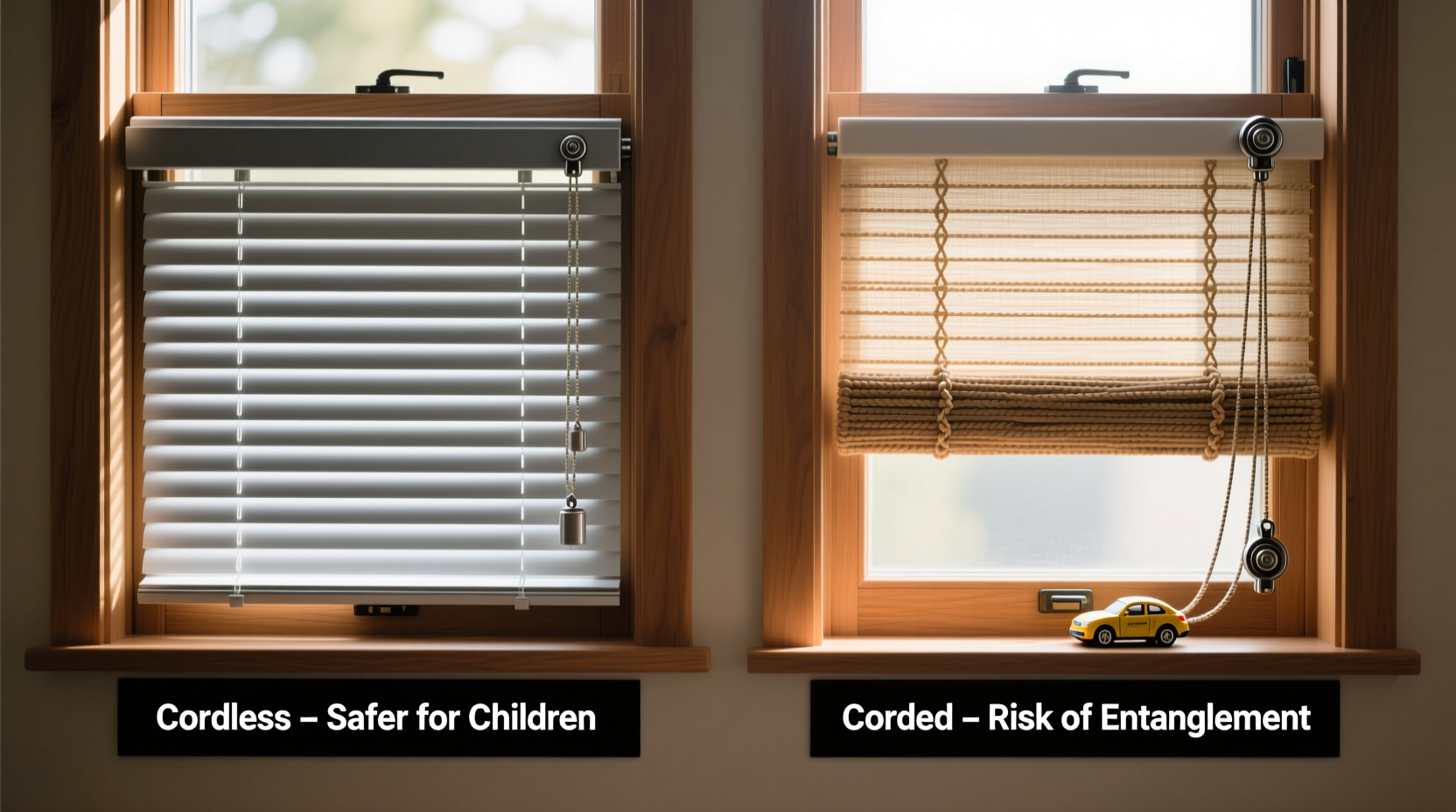
The primary reason cordless blinds have gained popularity is safety. Traditional corded blinds use looped lift cords that hang down from the headrail, creating a potential strangulation hazard. According to the U.S. Consumer Product Safety Commission (CPSC), window covering cords are among the top five hidden dangers in homes for children under 5. Between 2009 and 2021, over 400 child fatalities were linked to window blind cords.
The danger lies in the loop mechanism. If a child’s neck becomes caught in the cord loop, it can tighten automatically as they struggle, leading to tragic outcomes in just seconds. Even older children exploring or playing near windows may not understand the risk until it’s too late.
“Every year, we see preventable injuries from blind cords. The safest choice for any home with young children is cordless or cord-safe designs.” — Dr. Linda Nguyen, Pediatric Safety Specialist at Nationwide Children’s Hospital
Cordless blinds eliminate this risk entirely by removing dangling cords. Instead, they rely on internal spring mechanisms or bottom-raising systems that allow users to adjust height with gentle pressure. This design change significantly reduces the chance of entanglement while maintaining functionality.
How Cordless Blinds Work: Operation and Usability
A common concern about cordless blinds is whether they’re harder to operate than traditional models. The short answer: no—not if they’re well-designed. Modern cordless blinds use either tension-based lifting systems or motorized controls, both of which offer smooth, intuitive operation.
In manual cordless blinds, you typically raise or lower the shade by gently pulling up or pushing down on the bottom rail. An internal spring or clutch mechanism holds the position once adjusted. Some models feature tilt wands instead of cords to control slat angles, further reducing hazards.
While this method requires slightly more hand strength than pulling a cord, especially on larger or heavier blinds, most users adapt quickly. For individuals with limited mobility or arthritis, however, the added resistance might be a consideration.
Tip: Look for cordless blinds labeled “easy-rise” or “soft-lift,” which incorporate low-tension mechanisms ideal for seniors or children.Motorized Cordless Options: The Ultimate Ease
For those seeking maximum convenience, motorized cordless blinds provide hands-free control via remote, smartphone app, or voice assistants like Alexa or Google Assistant. These systems eliminate physical effort altogether and are particularly useful for hard-to-reach windows such as skylights or double-hung units.
Though more expensive upfront, motorized options often pay off in long-term comfort and accessibility. They also integrate seamlessly into smart home ecosystems, allowing automated schedules based on sunlight or time of day.
Comparing Features: Cordless vs Corded Blinds
To help you make an informed decision, here's a detailed comparison of cordless and corded blinds across key categories:
| Feature | Cordless Blinds | Corded Blinds |
|---|---|---|
| Safety | No dangling cords; ideal for homes with kids or pets | Potential strangulation risk due to exposed looped cords |
| Operation Effort | Moderate push/pull force required; varies by size/weight | Light pull on cord; easier for some users |
| Child Accessibility | Can be operated safely by older children with supervision | Not recommended for child-accessible areas |
| Maintenance | Fewer moving parts; less wear over time | Cords can fray, tangle, or break; require periodic checks |
| Aesthetic Cleanliness | Minimalist look; no visible cords | Cords may clutter appearance unless neatly wound |
| Cost | Generally higher base price; motorized versions cost more | Typically more affordable; widely available |
| Smart Home Integration | Available in motorized variants with app/voice control | Limited compatibility unless retrofitted |
Real-World Example: A Family’s Switch to Cordless
The Thompson family lived in a two-story suburban home with three young children. Their living room featured large bay windows covered with traditional corded wood blinds. While functional, the dangling cords became a constant source of anxiety after their toddler began climbing furniture near the window seat.
After attending a local parenting seminar on home safety, they learned about CPSC guidelines recommending cordless window treatments for all accessible windows. Concerned, they contacted a window treatment specialist who assessed their space and recommended replacing the corded blinds with custom cordless cellular shades.
The new installation was seamless. The parents appreciated the clean look and peace of mind, while the children could now play near the window without restriction. Although adjusting the height took slight practice, within days everyone adapted. Six months later, Mrs. Thompson reported, “I don’t miss the cords at all. It feels like we finally removed a silent danger from our home.”
Expert Recommendations and Industry Standards
Organizations such as the Window Covering Safety Council (WCSC) and the American Academy of Pediatrics (AAP) strongly advocate for cordless window coverings in homes where children live or visit. Since 2018, major retailers including IKEA, Target, and Lowe’s have phased out the sale of non-compliant corded blinds in favor of inherently safer designs.
The WCSC promotes the “Best for Kids” label—a certification indicating that a product meets strict safety standards, including no accessible cords, inner cord stops, or external tie-downs. When shopping for blinds, look for this logo to ensure compliance.
“The goal isn’t just to reduce accidents—it’s to eliminate the hazard before it exists. Cordless is the future of window coverings.” — Mark Rivera, Executive Director, Window Covering Safety Council
Even in homes without children, cordless blinds offer benefits. Pets, especially cats and birds, can become entangled in cords. Additionally, cords degrade over time, increasing the likelihood of malfunctions or breakage that could lead to injury during repair attempts.
Choosing the Right Option: A Step-by-Step Guide
Selecting between cordless and corded blinds shouldn’t be arbitrary. Follow these steps to make a confident, informed decision:
- Evaluate Room Usage: Identify rooms where children or pets spend time. Prioritize cordless options in nurseries, playrooms, and ground-floor bedrooms.
- Measure Window Size and Height: Larger or taller windows may benefit from motorized cordless systems to reduce manual effort.
- Assess User Needs: Consider elderly residents or those with limited dexterity. Cordless push-up systems vary in resistance—request samples before purchasing.
- Check for Certification Labels: Ensure products carry the “Best for Kids” seal or meet ANSI/WCMA A100.1 safety standards.
- Budget Planning: While cordless blinds cost more initially, factor in long-term value: improved safety, durability, and potential insurance discounts for child-safe homes.
- Explore Smart Features: If convenience is a priority, invest in motorized cordless blinds compatible with your existing smart home setup.
- Professional Installation vs DIY: Complex systems, especially motorized ones, often perform better when professionally installed.
Frequently Asked Questions
Are cordless blinds really safer than corded ones?
Yes. Cordless blinds eliminate the primary hazard—exposed looped cords—which are responsible for numerous child fatalities. With no cords to grab or become entangled in, they are widely regarded as the safest option for homes with young children or pets.
Do cordless blinds require more effort to operate?
Slightly, depending on the model and size. Manual cordless blinds use internal springs that require gentle upward or downward pressure on the bottom rail. Most users find them easy to adjust after a brief adjustment period. Motorized versions remove physical effort entirely.
Can I retrofit my existing corded blinds to make them safe?
You can install cord tension devices, cleats, or wand tilt upgrades to reduce risk, but these are temporary fixes. Retrofitting doesn’t eliminate cords completely and may still pose hazards. The CPSC recommends replacing older corded blinds with certified cordless models whenever possible.
Action Plan: Making Your Home Safer Today
If you're still using corded blinds in accessible areas, now is the time to act. Start by conducting a quick home audit: walk through each room and identify windows with exposed cords. Focus first on bedrooms, nurseries, and living spaces where children or pets are present.
Contact a reputable window treatment provider to explore cordless replacement options. Many companies offer free in-home consultations and financing plans to ease the transition. If immediate replacement isn’t feasible, immediately install cord cleats to keep cords pulled tight and out of reach—this simple step can reduce risk significantly.
Tip: Anchor all cords to the wall using manufacturer-approved cleats—place them at least 5 feet above the floor to stay out of children’s reach.Final Thoughts: Safety Shouldn’t Be Optional
The debate between cordless and corded blinds isn’t just about convenience—it’s about responsibility. While corded blinds remain functional and cost-effective, their inherent safety risks make them increasingly outdated, especially in modern family homes. Cordless blinds offer a smarter, cleaner, and fundamentally safer alternative without sacrificing performance.
Advancements in materials and engineering mean today’s cordless options are easier to operate than ever. Whether you choose manual push-up systems or fully automated smart blinds, you’re investing in both comfort and protection.
As safety standards evolve and consumer awareness grows, cordless window coverings are becoming the norm rather than the exception. Make the switch not because it’s trendy, but because it’s the right thing to do for your family’s well-being.
🚀 Ready to upgrade your home’s safety? Schedule a consultation with a certified window treatment expert today and take the first step toward a cord-free, worry-free living space.








