For households with pets and allergy sufferers, choosing the right vacuum cleaner isn’t just about convenience—it’s a health decision. Pet dander, fur, tracked-in dirt, and dust mites are constant challenges that demand effective cleaning. The debate between corded and cordless vacuums has never been more relevant. While cordless models offer unmatched mobility, corded vacuums deliver consistent power. Understanding the strengths and limitations of each is essential for maintaining a clean, healthy home environment.
Power and Suction: The Core Difference
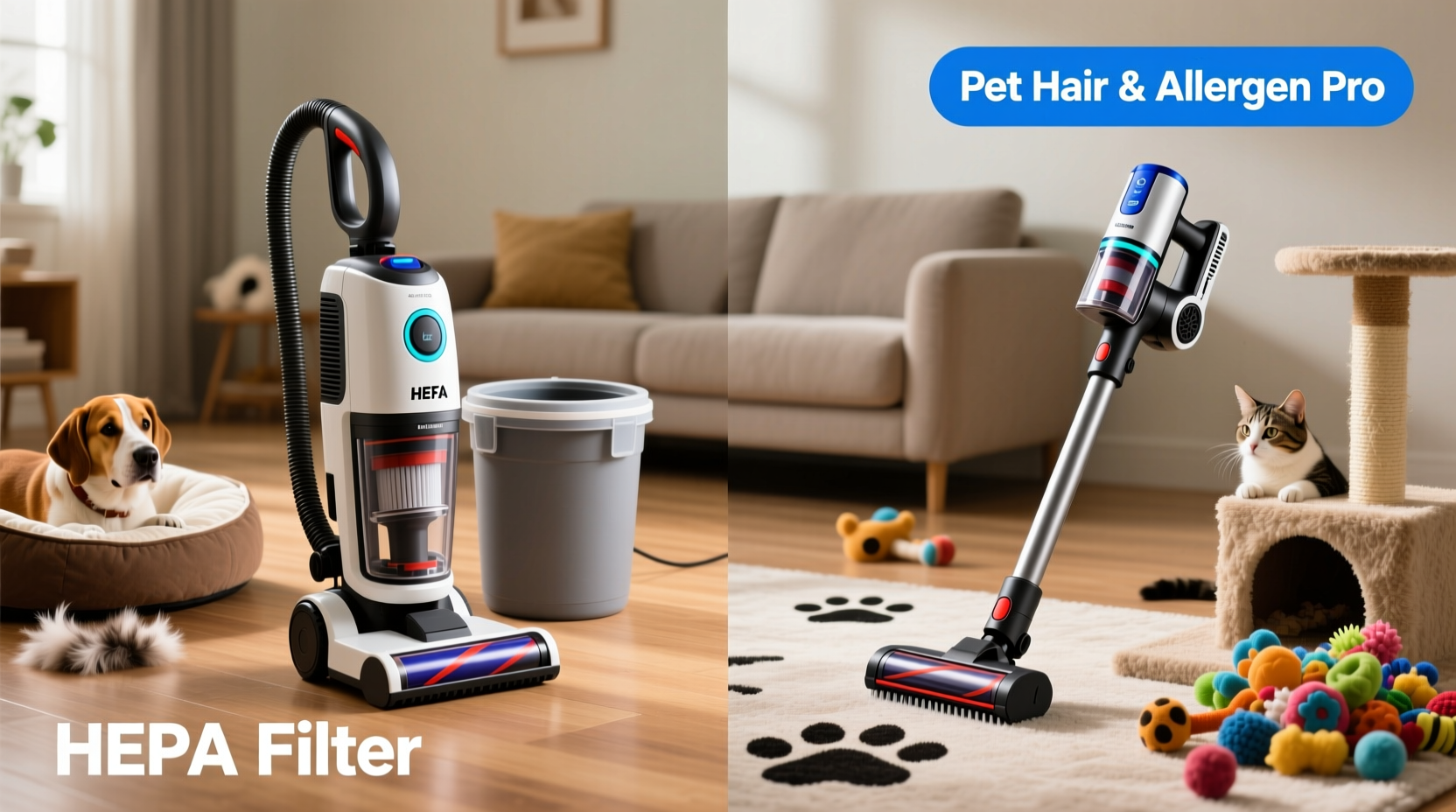
The most significant distinction between corded and cordless vacuums lies in their power delivery. Corded models plug directly into an electrical outlet, allowing them to draw continuous energy. This translates into higher, sustained suction power—critical when lifting embedded pet hair from carpets or removing fine allergens like pollen and dust mite debris from upholstery.
Cordless vacuums, powered by rechargeable lithium-ion batteries, have made impressive strides in performance. However, even high-end models experience a gradual drop in suction as the battery drains. For homes with multiple pets or layered flooring (carpet to hardwood transitions), this fluctuation can impact cleaning consistency.
“Suction power directly correlates with allergen removal efficiency. A vacuum that maintains peak airflow over time will capture more microscopic particles.” — Dr. Lena Patel, Indoor Air Quality Researcher, National Environmental Health Institute
Many cordless vacuums now advertise “max” or “turbo” modes to compensate, but these settings drastically reduce runtime—sometimes to under 10 minutes. In contrast, corded vacuums operate at full capacity indefinitely, making them ideal for deep-cleaning large areas or heavily soiled zones near pet feeding or sleeping areas.
Tip: If you choose a cordless model, look for one with a brushless motor and variable suction settings to balance power and battery life.Battery Life vs. Unlimited Runtime
Battery limitations define the practical use of cordless vacuums. Most standard models offer 20–40 minutes of runtime on eco mode, dropping to 8–12 minutes in high-power settings. For a small apartment with one pet, this may suffice. But in larger homes with multiple shedding animals, it often means interrupting cleaning to recharge—a frustrating bottleneck.
Corded vacuums eliminate this concern entirely. With no battery to drain, they can run continuously. This makes them better suited for thorough, whole-home cleaning sessions, especially when tackling baseboards, stairs, and under furniture where pet hair accumulates.
However, cordless models excel in quick cleanup scenarios. A sudden spill, tracked-in mud, or post-grooming fur explosion can be addressed immediately without hunting for an outlet or dragging a cord across rooms. Their lightweight design also makes them easier to carry up stairs or maneuver around tight spaces.
Real Example: The Multi-Pet Household Dilemma
Sarah Thompson, a dog trainer in Portland, lives in a 2,200-square-foot home with two Labrador Retrievers and a cat. She initially switched to a premium cordless stick vacuum for its sleek design and portability. Within months, she noticed her seasonal allergies worsening despite daily cleaning.
After consulting an allergist, she learned that her vacuum wasn’t capturing fine dander effectively. She returned to a corded upright model with a HEPA filter and sealed system. Allergy symptoms decreased within three weeks. “I still use the cordless for quick pickups,” she says, “but for real allergen control, I need the power and filtration of my old-school machine.”
Filtration and Allergen Containment
For allergy sufferers, how a vacuum handles captured particles matters as much as suction. High-Efficiency Particulate Air (HEPA) filters are considered the gold standard, trapping 99.97% of particles as small as 0.3 microns—including pet dander, mold spores, and dust mite fragments.
Corded vacuums are more likely to feature true HEPA systems with sealed airflow paths, ensuring that dirty air doesn’t leak back into the room. Many upright and canister models are designed with multi-stage filtration: pre-motor filters, post-motor HEPA filters, and sometimes activated carbon layers to neutralize pet odors.
Cordless models vary widely. While some high-end brands include HEPA-grade filters, others use “HEPA-like” or “HEPA-style” media that don’t meet the same rigorous standards. Additionally, frequent emptying of dust bins—common with cordless handheld designs—can release allergens back into the air if not done carefully.
| Feature | Corded Vacuums | Cordless Vacuums |
|---|---|---|
| Typical Suction Power | High, consistent (150+ AW) | Moderate to high, declines with battery |
| Average Runtime | Unlimited (cord-dependent) | 15–60 minutes |
| HEPA Filter Availability | Widely available, often true HEPA | Select models only; check specs |
| Weight & Maneuverability | Heavier, less portable | Lightweight, easy to carry |
| Ideal For | Large homes, deep cleaning, severe allergies | Small spaces, quick cleanups, light shedding |
Practical Considerations for Pet Owners
Pet ownership introduces unique demands: frequent messes, stubborn odors, and the need for rapid response. Here’s how each vacuum type holds up in real-world pet scenarios:
- Shedding Management: Corded vacuums with motorized brush rolls handle thick pet hair better, especially on carpets. They’re less prone to clogging and maintain tangle-free operation longer.
- Accident Cleanup: Cordless vacuums allow faster deployment for liquid spills or tracked-in waste—but only if designed for wet/dry use. Most standard cordless models are strictly for dry debris.
- Stair and Upholstery Cleaning: Lightweight cordless models are easier to carry and use on stairs and furniture. However, corded vacuums with long hoses and specialized attachments often provide superior reach and sustained suction on fabric surfaces.
- Durability: Corded vacuums typically have longer lifespans (8–12 years) due to fewer electronic components and replaceable parts. Cordless models may degrade after 3–5 years as battery capacity diminishes.
Step-by-Step Guide: Choosing the Right Vacuum for Your Home
- Assess Your Space: Measure your home’s square footage. Over 1,800 sq ft? A corded or dual-battery cordless system may be necessary.
- Evaluate Pet Activity Zones: Identify high-shedding areas (e.g., pet beds, couches). These require powerful, consistent suction.
- Check Flooring Types: Carpeted homes benefit from strong agitation and suction—favoring corded models. Hardwood and tile users may find cordless sufficient.
- Review Allergy Symptoms: If anyone suffers from asthma or pet allergies, prioritize true HEPA filtration and sealed systems.
- Test Mobility Needs: Do you clean daily in short bursts? Cordless wins. Do you deep-clean weekly? Corded provides endurance.
- Compare Long-Term Costs: Factor in replacement batteries (~$80–$150), filter replacements, and expected lifespan.
Hybrid Strategy: Best of Both Worlds
Many pet owners find success using both types strategically. A corded vacuum serves as the primary tool for weekly deep cleans, while a cordless model handles daily touch-ups. This approach maximizes efficiency without sacrificing performance.
For example, use the corded upright every Sunday to clean carpets, baseboards, and under furniture. Keep the cordless stick vacuum charged in the kitchen or mudroom for immediate response to paw prints, litter scatter, or post-walk dirt.
This dual-system method is increasingly common in homes with active pets and allergy concerns. It combines reliability with convenience, ensuring that no mess goes unattended while maintaining high standards for air quality.
Checklist: What to Look for in a Pet- and Allergy-Friendly Vacuum
- ✅ True HEPA filter with sealed system
- ✅ Motorized brush roll designed for pet hair (tangle-free technology preferred)
- ✅ Easy-to-empty dustbin or bag system (minimizes allergen exposure)
- ✅ Suction power of at least 120 air watts (AW) for cordless, 150+ for corded
- ✅ Washable filters (reduces long-term costs)
- ✅ Accessories: crevice tool, upholstery brush, turbo brush for stairs
- ✅ Low noise level (under 75 dB) if pets are sound-sensitive
FAQ
Can cordless vacuums effectively remove pet dander?
Yes, but only if they have a true HEPA filter and sufficient suction. Many budget models lack the airflow needed to pull dander from deep within fibers. Check independent lab tests or AHAM (Association of Home Appliance Manufacturers) ratings for verification.
Do corded vacuums pose a tripping hazard with pets around?
Potentially, yes. Active pets may knock over the vacuum or get tangled in the cord. To minimize risk, clean one room at a time, keep pets in another area during use, and consider retractable cord systems for quicker storage.
Are bagged vacuums better for allergies than bagless?
Bagged models often provide superior allergen containment because the entire dust compartment is sealed and disposed of intact. Bagless vacuums require emptying the bin, which can aerosolize particles unless done outdoors or with a hygienic eject system.
Final Recommendations
If you live in a large home with multiple shedding pets and allergy sufferers, a corded vacuum with a HEPA filter and robust motor remains the most reliable choice. Its consistent power and advanced filtration directly contribute to improved indoor air quality.
If space is limited, your pet sheds minimally, and you value speed and convenience, a high-end cordless model with true HEPA and strong suction can meet your needs—especially when paired with a secondary deep-cleaning strategy.
Ultimately, the best vacuum is the one you’ll use consistently. For pet owners, that means balancing performance, ease of access, and health considerations. Don’t let marketing claims about “powerful cordless tech” override your household’s actual cleaning demands. Test models if possible, read verified owner reviews, and prioritize features that support long-term wellness over short-term convenience.
“The right vacuum isn’t the shiniest or quietest—it’s the one that removes the most allergens with the least effort over time.” — Michael Tran, Certified Asthma & Allergy Educator (AAFA)🚀 Ready to breathe easier? Reassess your current vacuum’s performance this week. Track how often you clean, what messes you miss, and how you feel afterward. Use this insight to choose a machine that truly supports your home’s health.









