
Humidifiers are essential tools for maintaining comfortable indoor air quality, especially during dry winter months. For families with infants or pets, choosing the right type of humidifier isn’t just about comfort—it’s a critical safety decision. Cold air and warm mist humidifiers both add moisture to the air, but they work differently and come with distinct risks and benefits. Understanding these differences can help parents and pet owners make informed choices that protect their most vulnerable loved ones.
How Cold Air and Warm Mist Humidifiers Work
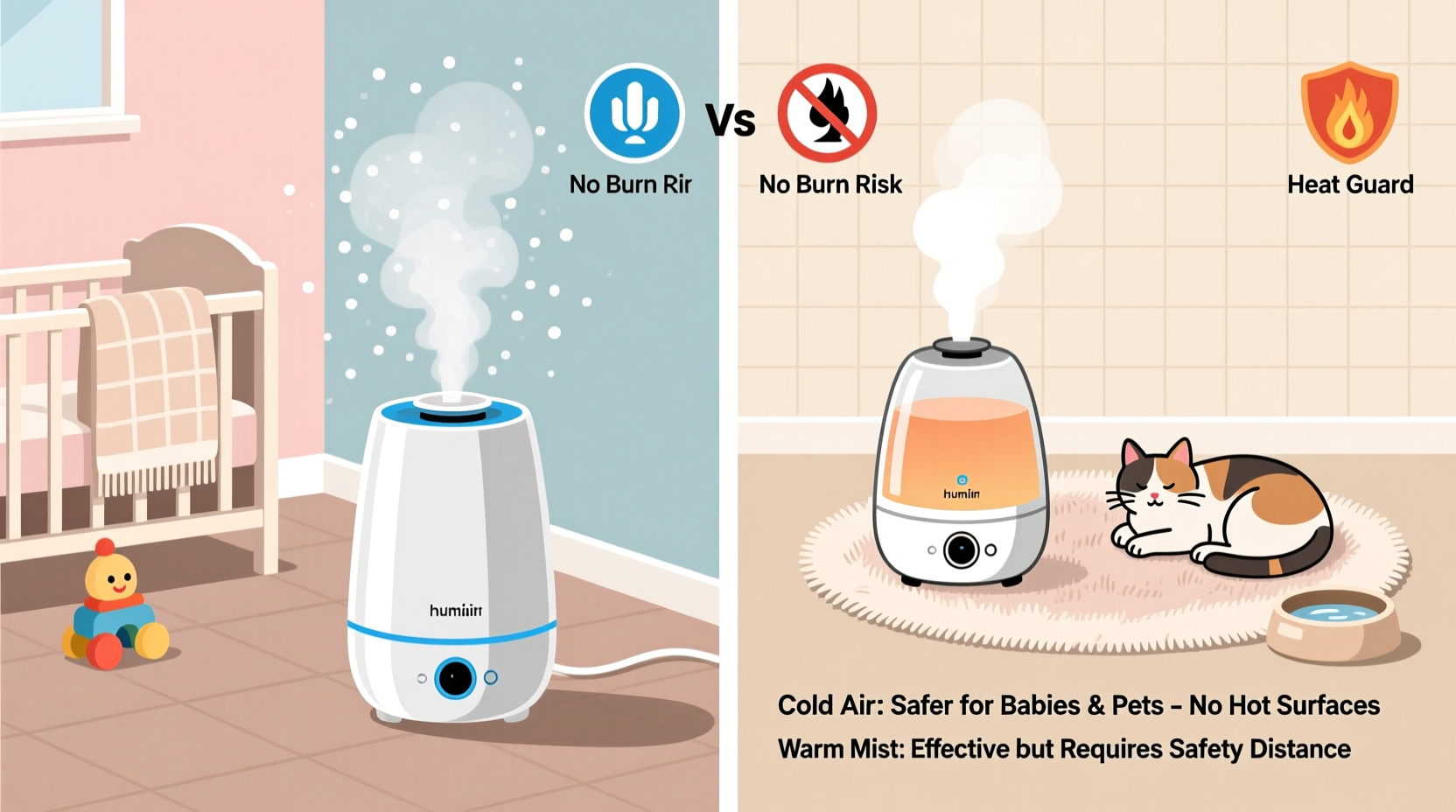
Cold air humidifiers, also known as ultrasonic or evaporative models, use a fan to blow air through a moist wick filter or across a water surface where ultrasonic vibrations create a fine mist. This mist is dispersed at room temperature, making it cool to the touch. These units do not heat water and typically operate quietly, making them popular in nurseries and bedrooms.
Warm mist humidifiers, on the other hand, boil water internally to produce steam, which is then cooled slightly before being released into the air. Because they use heat, they naturally kill many bacteria and mold spores during operation. The visible vapor they emit can be comforting in colder rooms, but the heating element introduces potential burn hazards.
The fundamental difference—temperature of output—shapes everything from safety profiles to maintenance needs and energy consumption.
Tip: Always place any humidifier at least 3 feet away from beds and out of reach of children and pets to reduce risk of spills or burns.Safety Concerns for Babies: Burn Risks and Air Quality
Babies have delicate skin and developing respiratory systems, making them more sensitive to environmental factors. When evaluating humidifier safety for infants, two primary concerns arise: physical injury and airborne contaminants.
Warm mist humidifiers pose a higher risk of accidental burns. A curious toddler crawling toward the device or an active older child knocking it over could result in contact with hot surfaces or scalding steam. Even after shutdown, the internal components remain hot for some time. The Consumer Product Safety Commission (CPSC) has reported cases of burns in young children linked to steam humidifiers placed within reach.
In contrast, cold air humidifiers eliminate this thermal risk entirely. However, they introduce another concern: white dust and microbial dispersion. Ultrasonic models, especially when used with tap water, can aerosolize minerals and any microorganisms present in the tank. If not cleaned regularly, these particles can be inhaled by infants, potentially aggravating asthma or allergies.
“Infants breathe faster than adults and are closer to the ground, where humidity and particle concentration can be higher. Any humidifier used in a nursery must be clean and positioned safely.” — Dr. Lena Patel, Pediatric Pulmonologist
Pet Safety: What Owners Need to Know
Pets, particularly cats and small dogs, are naturally curious and may investigate a humming or steaming device. Warm mist humidifiers present a clear danger if knocked over. Boiling water spillage can cause severe burns, and even the exterior casing can become hot enough to injure paws or noses.
Cold air humidifiers are generally safer in homes with pets, but vigilance is still required. Pets drinking from the water tank or mist reservoir can ingest stagnant water harboring bacteria like *Pseudomonas* or mold. Additionally, excessive humidity from poorly maintained units can encourage mold growth in carpets or bedding, which affects all household members, including animals with sensitive respiratory systems.
Evaporative humidifiers—cold air models with built-in wicks—tend to be lower risk because the wick acts as a filter, reducing mineral and microbial dispersal. They’re often recommended for multi-pet households due to their self-regulating humidity output and lower contamination potential.
Comparative Safety and Performance: Cold Air vs Warm Mist
| Feature | Cold Air Humidifier | Warm Mist Humidifier |
|---|---|---|
| Burn Risk | None – emits room-temperature mist | High – boiling water and hot surfaces |
| Maintenance Needs | Frequent cleaning required; mineral buildup common | Less frequent tank cleaning; boiling reduces bacteria |
| Airborne Contaminants | Possible white dust and microbes if not cleaned | Lower microbial risk due to boiling process |
| Noise Level | Low to moderate (fan or ultrasonic hum) | Quiet (no fan, only gentle hiss) |
| Energy Use | Low | Higher (requires heating element) |
| Best For | Large rooms, daytime use, pet-friendly spaces | Nighttime use, smaller rooms, germ-sensitive environments |
This comparison highlights that while warm mist units offer cleaner mist due to boiling, their safety drawbacks often outweigh benefits in homes with babies or pets. Cold air models are physically safer but demand stricter hygiene routines.
Mini Case Study: A Family’s Experience in Choosing the Right Humidifier
The Thompson family lives in Colorado, where winter air routinely drops below 20% humidity. With a 6-month-old baby and two cats, they needed relief from dry skin and static—but wanted to avoid risks. Initially, they purchased a warm mist humidifier for the nursery, drawn by its quiet operation and promise of “germ-free” steam.
After two weeks, their daughter developed mild nasal congestion. Upon inspection, they realized the unit was placed too close to the crib, and the constant warmth was creating a damp microclimate. More alarmingly, their cat once batted at the steam vent, nearly tipping the unit. Alarmed, they consulted their pediatrician, who advised switching to a cool mist model placed well out of reach.
They replaced it with an evaporative cold air humidifier, using distilled water and cleaning the filter weekly. Within days, the baby’s breathing improved, and the home felt comfortably moist without excess heat or risk. The cats showed no interest in the new unit, which ran silently throughout the night.
Their experience underscores a key truth: perceived benefits must be weighed against real-world safety and practicality.
Actionable Tips for Safe Humidifier Use Around Babies and Pets
Tip: Use distilled or demineralized water in ultrasonic humidifiers to minimize white dust and mineral inhalation.- Elevate the unit: Place the humidifier on a sturdy table or shelf, never on the floor where pets or crawling babies can access it.
- Use a hygrometer: Maintain indoor humidity between 30% and 50%. Excess moisture encourages mold and dust mites.
- Clean daily: Empty, rinse, and dry the tank every day. Perform a deep clean with vinegar or manufacturer-recommended solution weekly.
- Choose the right location: Avoid placing near walls or furniture that can absorb moisture and develop mold.
- Supervise initial use: Watch how pets react to the sound and mist. Some animals may avoid the area, while others might investigate too closely.
Step-by-Step Guide to Safe Humidifier Maintenance
- Unplug the unit and disassemble the water tank and any removable parts.
- Empty standing water and rinse the tank with clean water to remove residue.
- Prepare a cleaning solution: Mix one part white vinegar with two parts water, or use a manufacturer-approved cleaner.
- Soak removable components for 20–30 minutes to loosen mineral deposits and biofilm.
- Scrub gently with a soft brush (an old toothbrush works well) to clean crevices and the base.
- Rinse thoroughly with clean water to remove all traces of vinegar or cleaner.
- Air-dry completely before reassembling to prevent bacterial growth.
- Refill with distilled water and restart the unit.
Following this routine weekly prevents the buildup of harmful organisms and ensures consistent, safe performance—especially critical when babies or pets are nearby.
FAQ: Common Questions About Humidifier Safety
Can I leave a humidifier on all night in my baby’s room?
Yes, but only if it’s a cool mist model placed safely out of reach and monitored for proper humidity levels. Use a hygrometer to ensure the room stays between 30% and 50% humidity. Over-humidification can promote mold and allergens.
Are essential oils safe to use in humidifiers with pets?
No. Many essential oils, especially tea tree, eucalyptus, and citrus oils, are toxic to cats and dogs when inhaled or ingested. Most humidifier manufacturers also advise against adding oils, as they can damage internal components and increase respiratory irritation.
Do warm mist humidifiers kill germs effectively?
Yes, the boiling process kills most bacteria and mold in the water. However, this doesn’t eliminate the risk of recontamination if the tank is not cleaned regularly or if contaminated water is added after boiling. The benefit must be balanced against burn risks.
Expert Insight: What Pediatricians and Veterinarians Recommend
“For infants under one year, we strongly recommend cool mist humidifiers—specifically evaporative types—because they combine safety with effective moisture delivery. Avoid anything with a heating element in a baby’s room.” — Dr. Amir Shah, Children’s Health Institute
“Pets don’t understand danger the way humans do. A warm mist humidifier is like a mini radiator with boiling water inside. In a multi-species household, cold air units are simply the smarter, safer choice.” — Dr. Rebecca Lin, Veterinary Wellness Specialist
Final Recommendations: Which Humidifier Is Safer?
When safety for babies and pets is the top priority, cold air humidifiers—particularly evaporative models—are the superior choice. They eliminate burn risks, operate efficiently, and, with proper maintenance, deliver clean moisture without spreading contaminants. While warm mist humidifiers offer quieter operation and inherent germ reduction, their thermal hazards make them unsuitable for environments where infants or animals are present.
The ideal solution combines the right technology with responsible use: select a cool mist evaporative humidifier, use distilled water, maintain strict cleaning habits, and monitor humidity levels. This approach supports respiratory health without compromising safety.
💬 Have you switched humidifiers after a safety scare? Share your story in the comments—your experience could help another parent or pet owner make a safer choice today.








