Every year, as families gather to decorate their homes for the holidays, a quiet but serious risk lingers in the corner of the living room: the Christmas tree. Whether it’s freshly cut from a farm or stored in a box since last December, the festive centerpiece can become a fire hazard under the wrong conditions. With conflicting advice circulating online—some claiming real trees are inherently dangerous, others arguing that artificial trees pose equal or greater risks—it’s time to examine the facts. Are real Christmas trees more dangerous than artificial ones when it comes to fire safety? The answer isn’t as simple as a yes or no.
The Reality of Christmas Tree Fires
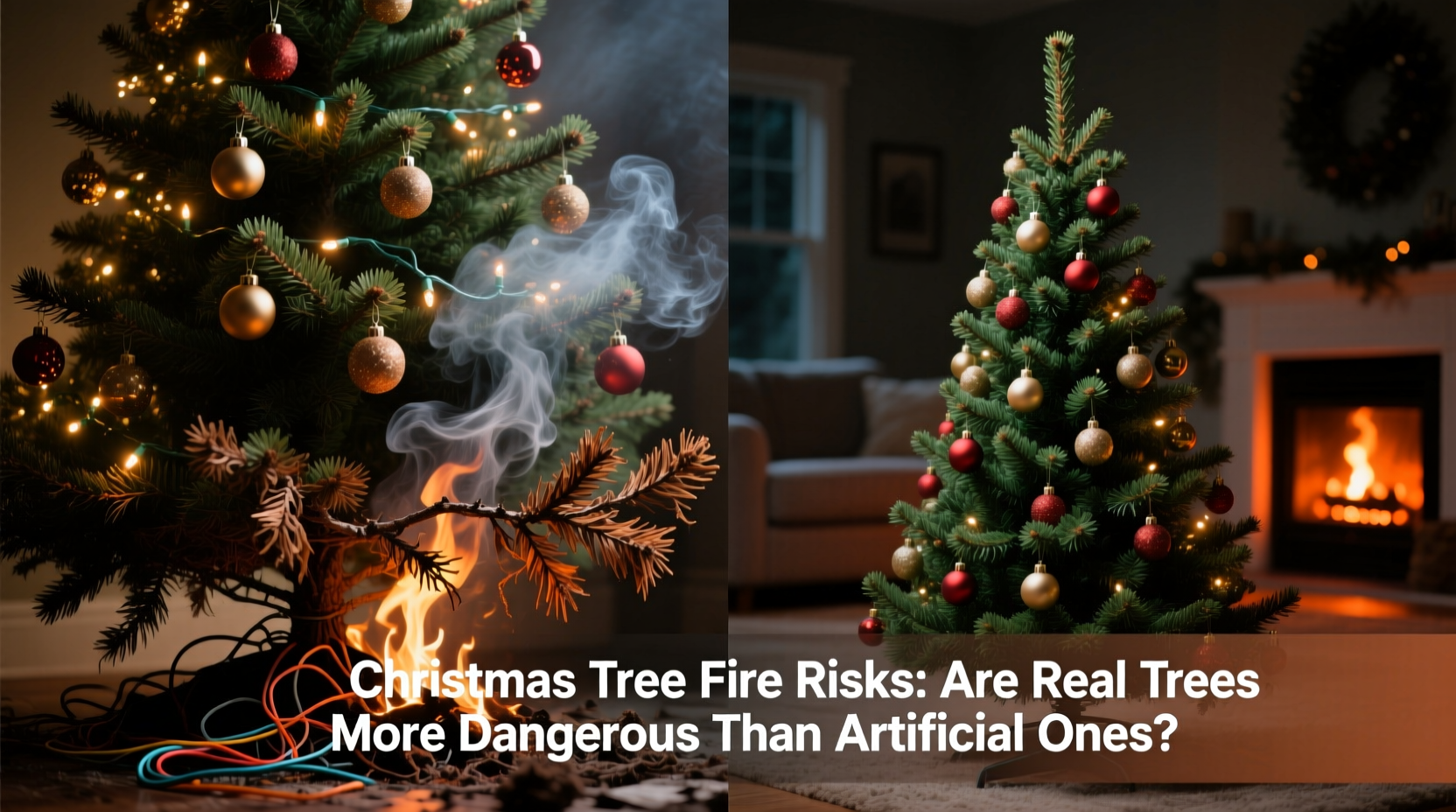
According to the National Fire Protection Association (NFPA), between 2017 and 2021, U.S. fire departments responded to an average of 160 home fires per year that began with a Christmas tree. While this number may seem small in the context of millions of households decorating trees annually, the consequences are disproportionately severe. These fires caused an average of four civilian deaths, 14 injuries, and $10 million in direct property damage each year. What makes these statistics alarming is not just the frequency, but the intensity—Christmas tree fires burn rapidly and are difficult to control once ignited.
The primary cause of ignition? Electrical issues. Over half of Christmas tree fires start due to problems with lights, wiring, or decorative electrical components. However, the type of tree—real or artificial—plays a significant role in how quickly flames spread and how much toxic smoke is produced.
“While both real and artificial trees can contribute to fire risk, the condition of the tree and how it's maintained matter far more than the material alone.” — Dr. John Drengenberg, Director of Consumer Safety, Underwriters Laboratories (UL)
Real Trees: Drying Out Is the Real Danger
A freshly cut natural tree is not inherently flammable. In fact, a well-watered pine, fir, or spruce has high moisture content and resists ignition. The danger arises when the tree dries out. As days pass without adequate watering, needles desiccate, sap thickens, and the entire structure becomes a bundle of kindling. A dry real tree can go from smoldering to fully engulfed in flames in under 30 seconds.
In controlled burn tests conducted by UL, a dry natural tree exposed to a small flame ignited fully within 20 seconds. Flames reached the ceiling in less than a minute. By contrast, a properly watered tree resisted ignition significantly longer and burned at a slower rate when it did catch fire.
Tip: Make a fresh cut at the base of your real tree before placing it in the stand—this helps it absorb water more efficiently.Key Risk Factors for Real Trees
- Lack of watering: Forgetting to refill the stand daily drastically increases flammability.
- Proximity to heat sources: Placing the tree near radiators, fireplaces, or space heaters accelerates drying.
- Overloaded electrical circuits: Using too many light strands or outdated, damaged lights raises fire risk.
- Extended display time: Trees displayed for more than four weeks are significantly drier and more hazardous.
Artificial Trees: Not Flame-Proof, Just Flame-Resistant
Many consumers believe artificial trees are safer because they don’t dry out. While it’s true they don’t require watering, most are made from polyvinyl chloride (PVC) or other petroleum-based plastics—materials that are combustible and release toxic fumes when burned. Although modern artificial trees sold in the U.S. must meet flammability standards set by the Consumer Product Safety Commission (CPSC), “flame-resistant” does not mean “fireproof.”
In UL testing, artificial trees treated with flame retardants still ignited when exposed to sustained heat or open flames, such as candles or malfunctioning lights. Once burning, synthetic materials produce dense, black smoke containing hydrogen chloride and other hazardous chemicals. This smoke is particularly dangerous in enclosed spaces, reducing visibility and increasing the risk of smoke inhalation.
Hidden Risks of Artificial Trees
- Age and wear: Older artificial trees may have degraded coatings, making them more flammable.
- Poor storage: Storing trees in damp garages or attics promotes mold and material breakdown.
- Non-certified products: Imported trees from unregulated markets may not meet U.S. safety standards.
- Metal frames: Some older models contain wire frames that can overheat if lights short-circuit.
Comparing the Risks: Real vs. Artificial Trees
To understand which tree type poses a greater fire risk, it’s essential to compare not just materials, but behavior, maintenance, and real-world conditions. The following table summarizes key differences based on NFPA data, UL research, and fire department reports.
| Factor | Real Tree | Artificial Tree |
|---|---|---|
| Ignition Source | Mostly electrical faults, candles | Electrical faults, candles, nearby heat |
| Time to Full Ignition (dry/unwatered) | Under 30 seconds | 1–2 minutes |
| Smoke Toxicity | Moderate (wood smoke) | High (toxic gases from PVC) |
| Water Dependency | Critical—must be watered daily | None |
| Lifespan & Reuse | One season (typically) | Multiple years, but degrades over time |
| Common Misuse | Forgotten watering, placement near heater | Using damaged lights, storing improperly |
| Safety Certification Required? | No | Yes (in U.S., CPSC standards apply) |
While real trees ignite faster when dry, artificial trees introduce different hazards—especially regarding air quality during a fire. Neither option is risk-free, but the nature of the danger differs.
Step-by-Step Guide to a Safer Holiday Tree
Regardless of which tree you choose, proactive safety measures dramatically reduce fire risk. Follow this timeline to ensure your tree remains a symbol of joy—not danger.
- Week 1: Selection & Setup
- For real trees: Choose one with flexible needles and a sticky trunk—signs of freshness.
- For artificial trees: Inspect for frayed wires, broken parts, or strong chemical odors.
- Make a fresh ¼-inch cut at the base before placing in the stand.
- Day 1: Watering & Placement
- Place the tree at least 3 feet away from heat sources.
- Fill the stand with water immediately—most trees drink a gallon in the first 24 hours.
- Use only lights certified by UL, CSA, or ETL. Avoid mixing old and new light sets.
- Daily: Maintenance
- Check water levels every day. Never let the stand go dry.
- Feel the tree for dryness. If needles fall easily or snap crisply, the tree is too dry—remove it.
- Weekly: Inspection
- Check all electrical cords for warmth, fraying, or damage.
- Ensure outlets aren’t overloaded—no more than three light strands connected end-to-end.
- After the Holidays: Removal
- Remove real trees from the home within four weeks of setup.
- Follow local recycling guidelines—do not leave dried trees in garages or against the house.
- Store artificial trees in a cool, dry place in breathable containers (not plastic bags).
Mini Case Study: A Close Call in Ohio
In December 2022, a family in Columbus, Ohio, experienced a harrowing incident when their real Christmas tree caught fire. They had purchased the tree two weeks prior but failed to refill the water stand consistently due to travel. On a cold evening, they turned on the tree lights and left the room. Within minutes, a faulty bulb sparked near dry lower branches. The fire spread rapidly, filling the living room with smoke before the family’s hallway smoke alarm activated.
They evacuated safely, but firefighters reported the tree was fully engulfed within 45 seconds of ignition. The home suffered $42,000 in damage. Investigators concluded that consistent watering could have prevented the disaster. The family now uses an artificial tree—but only after retrofitting it with new, certified LED lights and installing additional smoke detectors.
This case underscores a critical point: human behavior, not tree type alone, determines safety outcomes.
Frequently Asked Questions
Is it safer to use LED lights on my tree?
Yes. LED lights generate significantly less heat than incandescent bulbs, reducing the risk of igniting nearby materials. They also consume less energy and are less likely to overload circuits. Always check for certification labels and avoid using lights with cracked sockets or exposed wires.
Can I leave my tree lights on overnight?
No. The NFPA strongly advises turning off all tree lights when leaving the house or going to sleep. Even with modern safety features, electrical malfunctions can occur unexpectedly. Timers are a smart solution—they allow automatic shut-off while maintaining ambiance during waking hours.
How long can I keep a real tree in my home?
The general recommendation is no more than four weeks. After that, even with regular watering, trees begin to dry out significantly. If you notice excessive needle drop, brittle branches, or a strong sap odor fading, remove the tree immediately.
Expert Insight: What Fire Departments Recommend
Fire departments across the U.S. run annual holiday safety campaigns emphasizing vigilance around Christmas trees. According to Battalion Chief Linda Kimball of the Boston Fire Department:
“We respond to preventable tragedies every December. The difference between a joyful holiday and a devastating loss often comes down to one thing: whether the tree was watered or unplugged. It’s not about real versus fake—it’s about responsibility.” — Battalion Chief Linda Kimball, Boston Fire Department
Fire professionals stress that public awareness has improved, but complacency remains a threat. Many people assume modern trees and lights are “safe enough,” neglecting basic precautions.
Final Checklist for a Fire-Safe Tree
Before you plug in the lights, go through this essential checklist:
- ✅ Tree is at least 3 feet from heat sources
- ✅ Stand is filled with water (real tree)
- ✅ Lights are certified and undamaged
- ✅ No more than three light strands are linked
- ✅ Smoke alarms are installed and tested
- ✅ Lights are turned off when unattended or asleep
- ✅ Exit paths are clear of decorations
- ✅ Emergency numbers are posted and accessible
Conclusion: Safety Starts With You
The debate over whether real or artificial Christmas trees are more dangerous misses the bigger picture. Both types can contribute to fires under improper conditions. The real determinant of safety is not the tree’s origin—but the care it receives. A well-maintained real tree is safer than a neglected artificial one, and vice versa.
With thoughtful choices, daily attention, and respect for fire risks, you can enjoy a beautiful, traditional holiday display without compromising safety. This season, make prevention part of your tradition. Check your lights, fill the water stand, and stay vigilant. Your tree should light up the room with joy—not flames.
💬 Have a holiday safety tip or story to share? Join the conversation—your experience could help another family avoid a tragedy this Christmas.








