Christmas sweater culture has evolved from ironic party prop to legitimate fashion statement—and the divide between “ugly vintage” and “trendy minimalist” designs reflects deeper shifts in how we express identity, values, and intention during the holidays. One camp embraces chaotic joy: tinsel-embellished reindeer, neon pom-poms, and hand-knitted chaos passed down through generations. The other favors quiet sophistication: oatmeal cashmere, tonal embroidery, and clean silhouettes that transition seamlessly from office holiday parties to New Year’s Eve dinners. Neither is inherently “better.” But choosing between them—especially when gifting, curating a capsule wardrobe, or navigating workplace dress codes—requires more than aesthetic preference. It demands an understanding of craftsmanship, cultural resonance, longevity, and even environmental impact.
The Origins and Cultural Weight of Ugly Vintage Sweaters
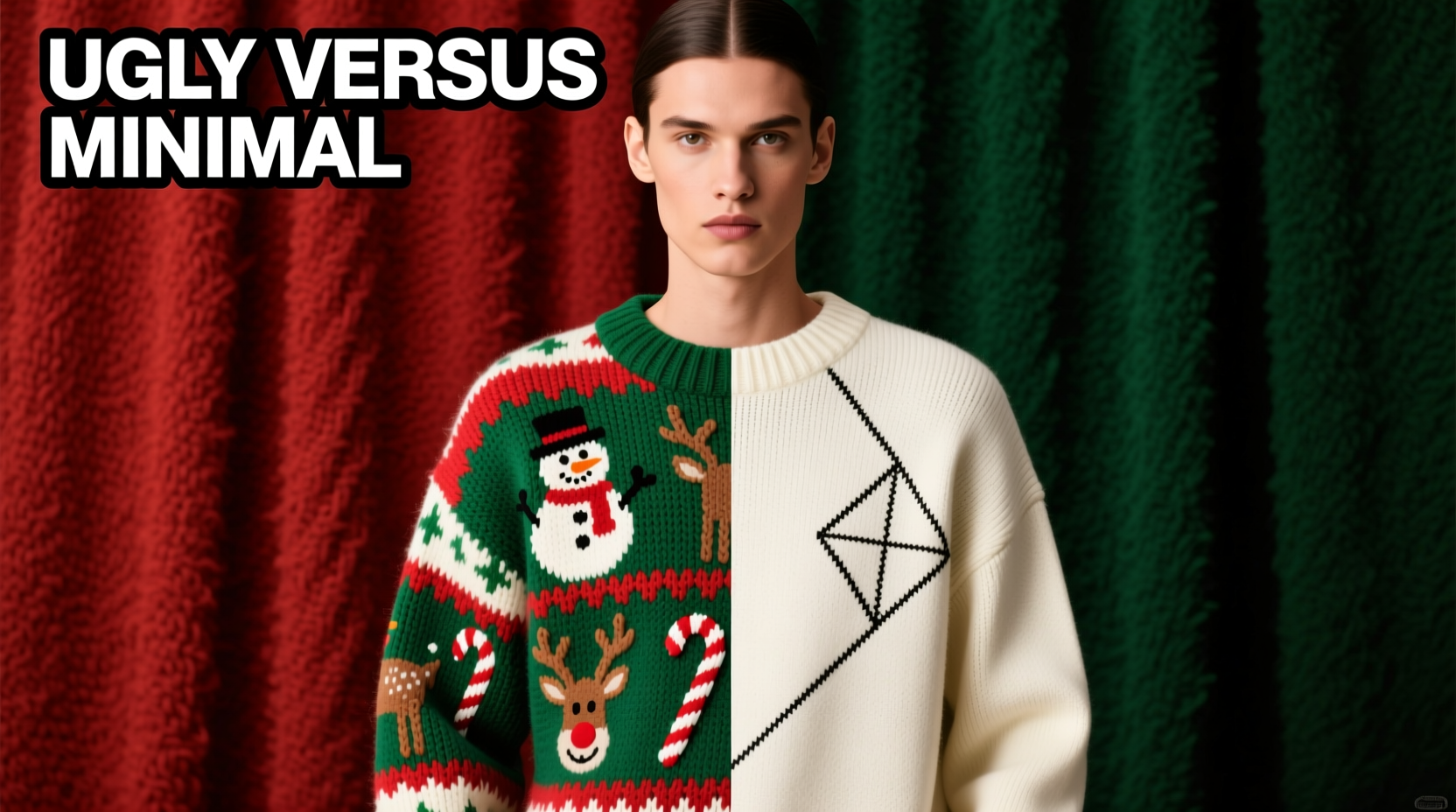
“Ugly” is a misnomer—and always has been. What we now call “ugly vintage” Christmas sweaters emerged in earnest during the 1950s and 1960s, fueled by postwar prosperity, mass-market knitting patterns, and the rise of department-store holiday catalogs. These were not ironic garments at inception. They were expressions of domestic pride, seasonal celebration, and accessible creativity. A woman might spend weeks knitting a sweater for her husband featuring a three-dimensional snowman with yarn-carved buttons—or a child’s cardigan adorned with sequined candy canes and felt holly berries. By the 1980s, machine-knitted versions flooded malls: polyester blends, bold color blocking, and motifs like dancing elves, talking snowmen, and literal light-up bulbs powered by AA batteries.
What gives these pieces enduring power isn’t just nostalgia—it’s authenticity. Each wrinkle, faded thread, or slightly mismatched stitch tells a story of use, repair, and intergenerational exchange. Vintage collectors don’t seek perfection; they value evidence of life lived in the garment. As textile historian Dr. Lena Park observes:
“An ‘ugly’ vintage sweater is rarely accidental—it’s intentional exuberance. Its perceived flaws are often markers of craftsmanship, regional tradition, or personal narrative. Dismissing it as kitsch ignores its role as vernacular design, preserved in wool and love.” — Dr. Lena Park, Curator of American Folk Textiles, Cooper Hewitt Smithsonian Design Museum
This authenticity translates into modern appeal: studies show 68% of consumers aged 25–44 actively seek out vintage clothing for its uniqueness and lower carbon footprint compared to fast-fashion alternatives. A 1972 Fair Isle sweater from Scotland, for example, carries less embodied energy than five new acrylic sweaters produced this year.
Trendy Minimalist Sweaters: Quiet Luxury Meets Holiday Restraint
Minimalist Christmas sweaters entered mainstream consciousness around 2015, accelerated by Scandinavian design blogs, slow-fashion advocacy, and the rise of “quiet luxury” aesthetics. These pieces reject visual noise in favor of subtle seasonal cues: a single embroidered sprig of rosemary on the left cuff, a faint jacquard pattern of overlapping pine boughs, or a hemline subtly shaped like a snowdrift. Materials matter deeply—undyed merino wool, organic cotton blends, and recycled cashmere dominate high-end iterations. Fit follows contemporary tailoring principles: relaxed but structured, cropped or boxy, never baggy.
Unlike their vintage counterparts, minimalist sweaters prioritize versatility. A charcoal crewneck with tonal silver-thread snowflakes works equally well under a blazer for a client dinner or layered over a turtleneck for a cozy brunch. Their success lies in restraint—not absence of meaning, but distillation of it. Designers like Mara Hoffman and Eileen Fisher have released holiday collections where the only “Christmas” element is the timing of the launch; the garments themselves could anchor a winter wardrobe year after year.
Tip: When shopping for a minimalist holiday sweater, check the care label first. Garments labeled “dry clean only” often contain delicate fibers or finishes that compromise long-term wearability—opt instead for machine-washable merino or Pima cotton blends.Style Showdown: Practical Wearability Compared
Choosing between ugly vintage and trendy minimalist isn’t just about taste—it’s about context, maintenance, and social signaling. To clarify trade-offs, here’s a side-by-side comparison grounded in real-world usage:
| Factor | Ugly Vintage Sweater | Trendy Minimalist Sweater |
|---|---|---|
| Initial Cost | $12–$45 (thrift/vintage shop); $80–$220 (curated vintage resale) | $140–$395 (ethical brands); $65–$110 (mid-tier sustainable lines) |
| Lifespan | 15–40+ years (if repaired and stored properly) | 7–12 years (with rotation and gentle care) |
| Styling Flexibility | High for themed events; low for professional or mixed-casual settings | Very high—transitions across work, travel, and social settings |
| Maintenance Effort | Moderate to high (hand-wash recommended; fragile embellishments require stabilization) | Low (machine wash cold, lay flat; minimal pilling) |
| Sustainability Profile | Excellent (reuses existing materials; zero new resource extraction) | Good to very good (depends on brand transparency; often uses recycled or regenerative fibers) |
| Emotional Resonance | Strong—evokes shared laughter, family rituals, generational continuity | Subtle—conveys intentionality, self-awareness, and understated confidence |
Note the nuance: “low styling flexibility” for vintage doesn’t mean inflexibility—it means intentionality. Wearing a 1968 sweater with a giant glittering Santa on the chest signals participation in a specific cultural ritual. It’s costume-as-connection, not costume-as-irony. Meanwhile, the minimalist sweater’s strength lies in its refusal to shout—making it ideal for environments where overt festivity might feel incongruous, such as healthcare, education, or creative studios with diverse holiday observances.
A Real-World Case Study: The Office Holiday Party Divide
In December 2023, marketing director Priya Mehta hosted her team’s annual holiday gathering at a converted warehouse venue in Portland. She encouraged “festive attire”—no strict dress code, but clear expectations of professionalism and inclusivity. Of her 22-person team, 14 wore some form of Christmas sweater. Their choices revealed a telling split:
- 7 team members chose vintage pieces: a 1970s Norwegian fisherman-style sweater with red-and-green geometric patterns (found at a local thrift store for $18), a hand-knit 1980s cable-knit with oversized wooden buttons (inherited from a grandmother), and a polyester turtleneck with holographic snowflakes (bought at a vintage pop-up). All reported feeling “instantly at ease,” citing immediate conversations sparked by sweater origins (“Where did you find that?” “My mom made this!”).
- 7 others selected minimalist designs: two wore oatmeal merino crewnecks with barely-there gold-thread stars near the collar; three chose charcoal V-necks with tonal jacquard snowflake motifs; two opted for black cashmere blends with a single embroidered white fir branch on the left shoulder. These individuals noted higher comfort during long evening hours, fewer requests for photos (reducing performance fatigue), and greater ease transitioning into post-event networking.
Priya observed no hierarchy in enjoyment—but she did notice behavioral differences. Vintage-wearers clustered near the photo booth and playlist station; minimalist-wearers gravitated toward quieter corners and deep conversation. Neither group judged the other. Instead, the diversity of expression became part of the event’s warmth. “It wasn’t about who wore what,” Priya reflected later. “It was about how each choice gave people permission to show up authentically—whether that meant joyful absurdity or calm presence.”
How to Choose (and Style) Your Sweater With Intention
Selecting a Christmas sweater shouldn’t hinge solely on trend cycles or peer pressure. It’s a values-based decision—one best guided by clarity about your lifestyle, ethics, and emotional needs this season. Follow this practical, step-by-step framework:
- Assess your primary holiday contexts. List the top 3–5 settings where you’ll wear the sweater (e.g., “family dinner,” “client-facing Zoom meeting,” “neighbor’s cookie exchange”). Rank each by importance and formality.
- Evaluate your maintenance capacity. Be honest: Do you have time and tools for hand-washing? Will you store it properly (acid-free tissue, folded—not hung)? If not, vintage may create more stress than joy.
- Define your sustainability priority. If reducing consumption is non-negotiable, vintage wins automatically. If supporting ethical production matters more, research brands’ certifications (GOTS, Fair Trade, B Corp) before buying new.
- Test emotional resonance. Try both styles on. Which makes you stand taller? Which invites connection without demanding explanation? Your body knows before your brain does.
- Commit to stewardship—not just ownership. Whether vintage or new, plan for its afterlife: learn basic darning, invest in cedar blocks for moth prevention, and document its story (a note in the pocket: “Worn at Maya’s 2024 birthday party, mended Jan 2025”).
Frequently Asked Questions
Can I mix ugly vintage and minimalist elements in one outfit?
Absolutely—and it’s increasingly common among stylist-forward wearers. Pair a bold vintage sweater with sleek, minimalist trousers and minimalist footwear (e.g., black leather loafers or clean white sneakers). The contrast creates visual interest while grounding the look in modern proportion. Avoid adding other busy patterns or textures—let the sweater be the sole focal point.
Are minimalist Christmas sweaters culturally appropriative if they borrow Nordic or Alpine motifs?
Context and credit matter. Traditional motifs like Norwegian Selbu mittens or Swiss cowbell embroidery carry deep cultural significance. Ethical minimalist brands collaborate directly with artisans, pay fair royalties, and name the origin community. Red flags include vague terms like “Scandi-inspired” without attribution, or mass-produced interpretations stripped of historical meaning. When in doubt, choose abstract or botanical motifs—or support makers who transparently honor source traditions.
How do I repair a vintage sweater without diminishing its value?
Value in vintage clothing is tied to authenticity—not perfection. Small, visible repairs using matching yarn and traditional techniques (like duplicate stitch or Swiss darning) often enhance provenance. Avoid glue, iron-on patches, or synthetic threads. Document repairs with a dated tag inside the seam. As textile conservator Javier Ruiz advises: “A well-repaired sweater tells two stories: the original making and the ongoing care. That duality is where true value lives.”
Conclusion: Wear What Honors Your Season
The “ugly vintage vs. trendy minimalist” debate misses the point. This isn’t a competition—it’s a spectrum of meaningful expression. A 1950s sweater with fraying cuffs holds decades of laughter in its stitches. A 2024 minimalist turtleneck carries the quiet confidence of someone who chooses depth over distraction. Both reflect care—just directed toward different things: one toward memory and collective joy, the other toward self-respect and material integrity.
Your holiday wardrobe doesn’t need to resolve this tension. It can hold both. Rotate them. Gift one to a friend who cherishes nostalgia, another to someone who values timeless simplicity. Mend the vintage one with patience, rotate the minimalist one with intention. Let your sweater be less about what it looks like—and more about what it allows you to feel, share, and become during this fleeting, luminous season.
💬 Your turn: Did you inherit a sweater that tells a family story? Discover a minimalist brand that changed how you think about holiday dressing? Share your experience—and the lesson it taught you—in the comments. Let’s build a richer, kinder conversation about what festive really means.








