The holiday season triggers a unique alchemy of memory, emotion, and sound. As December arrives, homes fill with familiar carols, department stores echo with jingle bells, and streaming platforms push festive radio stations to the forefront. But not all holiday listening experiences are created equal. While algorithmic radio offers convenience, hand-curated Christmas music playlists often deliver a deeper, more enduring emotional impact—particularly when it comes to activating and sustaining nostalgic dopamine. This article examines why intentional curation outperforms automated selection in preserving the psychological warmth of the season.
The Science of Nostalgia and Holiday Music
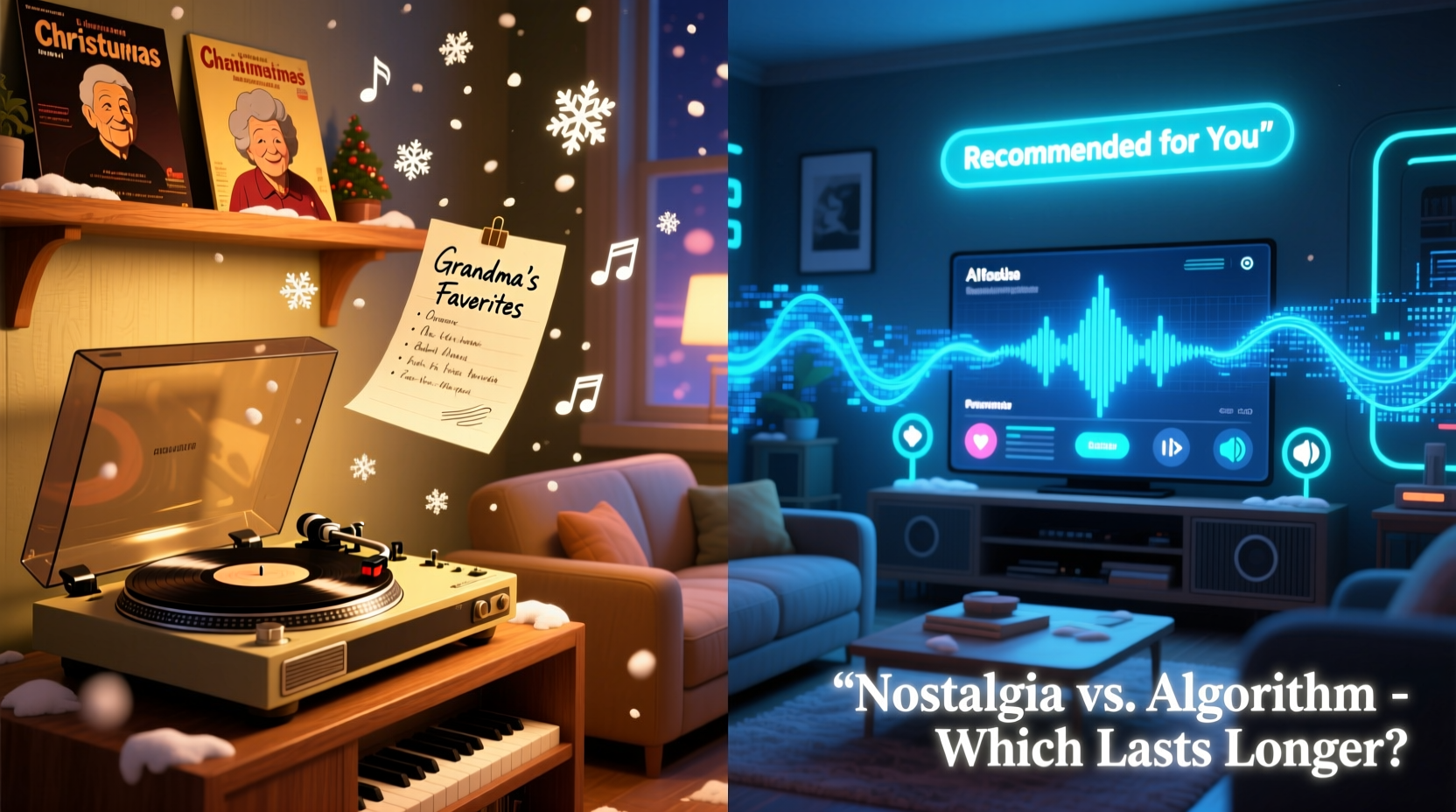
Nostalgia is not merely sentimental reminiscing—it’s a neurologically potent experience. When we hear a song tied to a past holiday moment—a family gathering, a childhood snowfall, or a first love during Christmas break—the brain activates regions associated with memory (the hippocampus), reward (the nucleus accumbens), and emotion (the amygdala). The result is a surge of dopamine, the neurotransmitter linked to pleasure and motivation.
A 2020 study published in Memory & Cognition found that music-evoked nostalgia increases feelings of social connectedness and self-continuity. During the holidays, this effect is amplified. Familiar songs serve as auditory time capsules, transporting listeners back to emotionally rich moments. However, not every version of \"Jingle Bell Rock\" delivers the same punch. The context, sequencing, and personal relevance of each track determine the depth of the response.
“Music doesn’t just remind us of the past—it reactivates the emotional texture of those moments. The right sequence can feel like stepping into a memory.” — Dr. Lena Torres, Cognitive Neuroscientist, University of Edinburgh
How Algorithmic Radio Works—and Where It Falls Short
Streaming services like Spotify, Apple Music, and Amazon Music rely on algorithms to generate holiday radio stations such as “Holiday Hits,” “Christmas Classics,” or “Festive Vibes.” These systems analyze user behavior, popularity metrics, genre tags, and collaborative filtering to predict what listeners might enjoy.
While efficient, these algorithms prioritize broad appeal over personal significance. They often play high-rotation tracks—Bing Crosby’s “White Christmas,” Mariah Carey’s “All I Want for Christmas Is You,” or Trans-Siberian Orchestra’s “Carol of the Bells”—regardless of whether they resonate with an individual’s history. Worse, they may insert modern pop covers or mismatched genres (e.g., jazz renditions of “Santa Baby” between classic rock anthems), disrupting emotional continuity.
Additionally, algorithmic radio lacks narrative flow. It treats songs as isolated units rather than components of a larger emotional arc. The absence of intentionality means listeners rarely experience the cumulative build-up of sentiment that characterizes meaningful holiday traditions.
Tip: If you rely solely on algorithmic radio, you're likely missing the subtle emotional layers that only personalized sequencing can provide.The Power of Curated Playlists: Memory, Flow, and Control
A hand-curated Christmas playlist is more than a collection of songs—it’s a story told in sound. Whether built over years or assembled for a specific occasion, a curated list reflects deliberate choices: the opening track sets the tone, mid-playlist selections evoke core memories, and closing songs offer resolution or reflection.
Consider the difference between hearing “Have Yourself a Merry Little Christmas” randomly inserted by an algorithm versus placing it at the end of a playlist after gradually building emotional intensity through classics like “O Holy Night” and “Silent Night.” In the latter case, the song lands with greater weight, triggering a stronger dopamine release due to contextual priming.
Curated playlists also allow for generational layering. A parent might include the vinyl recording of “Rudolph the Red-Nosed Reindeer” they played every year while decorating the tree with their own parents, followed by a live version sung by their child’s school choir. These juxtapositions create micro-narratives that algorithms cannot replicate.
Mini Case Study: The Johnson Family Playlist
The Johnsons of Minneapolis began building a shared Christmas playlist in 2015. Each November, family members submit one song that holds personal meaning—whether it’s the tune playing during a memorable snowstorm, a lullaby sung to a newborn, or a quirky favorite from a holiday trip.
Over eight years, the playlist has grown to 78 tracks. What started as a fun tradition now serves as an annual ritual: on Christmas Eve, they gather around the fireplace, dim the lights, and listen start-to-finish. Multiple family members report tears, laughter, and spontaneous reminiscing—especially when lesser-known tracks appear, like the 2018 recording of Grandma humming “Silver Bells” while baking cookies.
When asked why they don’t just use Spotify’s “Ultimate Holiday” station, 16-year-old Mia Johnson said, “That one plays the same songs everyone hears at the mall. Ours feels like home.”
Comparative Analysis: Curation vs. Algorithm
| Factor | Curated Playlist | Algorithmic Radio |
|---|---|---|
| Personal Relevance | High – based on lived experience and emotional memory | Low – based on aggregate trends and general preferences |
| Emotional Arc | Intentional progression from light to deep sentiment | Random or popularity-driven order |
| Dopamine Sustainability | Prolonged due to anticipation, recognition, and narrative buildup | Short bursts tied to hit songs; fades quickly |
| Surprise Factor | Controlled—nostalgic surprises enhance engagement | Unpredictable—may disrupt mood with irrelevant tracks |
| Long-Term Engagement | Increases yearly as memories accumulate | Remains static; listener often tunes out after weeks |
Building a Dopamine-Sustaining Playlist: A Step-by-Step Guide
Creating a playlist that maximizes nostalgic dopamine isn’t about collecting the most popular songs. It’s about crafting an emotional journey. Follow this timeline to build a lasting holiday soundtrack.
- Reflect (November 1–7): Set aside time to journal memories tied to past Christmases. Note specific songs, moments, people, and locations.
- Gather Tracks (November 8–14): Search your library or streaming service for songs connected to those memories. Include rare versions, live recordings, or home videos converted to audio.
- Sequence with Intention (November 15–18): Arrange tracks to mirror emotional pacing—start upbeat, move toward reverence or introspection, then close with warmth or hope. Avoid clustering similar tempos.
- Add Personal Touches (November 19–21): Insert short voice notes (e.g., “This is Dad singing in 2009”) or ambient sounds (crackling fire, sleigh bells) between songs if supported by your platform.
- Test and Refine (November 22–25): Listen in full, ideally in a quiet setting. Adjust order based on emotional impact. Remove any track that feels “off,” even if it’s a classic.
- Share and Repeat (Annually): Share the playlist with loved ones. Invite contributions. Update it each year to preserve evolving traditions.
Checklist: Optimize Your Playlist for Nostalgic Impact
- ✅ Include at least 3 songs tied to specific personal memories
- ✅ Limit mainstream hits to no more than 30% of total tracks
- ✅ Sequence for emotional rhythm, not alphabetical or chronological order
- ✅ Balance vocal and instrumental pieces to prevent fatigue
- ✅ Exclude songs with negative associations, even if culturally iconic
- ✅ Name the playlist meaningfully (e.g., “Our First Christmas Together” instead of “Xmas Jams”)
- ✅ Archive older versions annually to track emotional evolution
Expert Insight: Why Algorithms Can’t Replicate Human Curation
Dr. Arjun Patel, a behavioral psychologist specializing in music and memory, explains: “Algorithms optimize for engagement metrics—skip rates, repeat plays, shares. But nostalgia isn’t measured in clicks. It’s rooted in specificity: the crackle in your grandfather’s voice on a 1980s recording, the off-key harmony your sister always sings. These imperfections are data noise to an algorithm but emotional gold to a human.”
“The most powerful playlists aren’t the most popular—they’re the ones that make you whisper, ‘I forgot how much this meant to me.’ No algorithm knows what you never told it.” — Dr. Arjun Patel, Behavioral Psychologist
Frequently Asked Questions
Can algorithmic radio ever trigger strong nostalgia?
Yes, but inconsistently. If a service has extensive user history and precise tagging (e.g., “childhood Christmas,” “family road trips”), it may surface relevant tracks. However, without explicit input, it defaults to mass-market selections that lack personal depth.
How long should a nostalgic Christmas playlist be?
Optimal length is 60–90 minutes—the duration of a typical holiday activity like decorating, dinner prep, or gift wrapping. Longer playlists risk emotional dilution. Quality of association matters more than quantity of songs.
Should I update my playlist every year?
Yes—but thoughtfully. Add new tracks that reflect current memories, but preserve core songs that anchor the experience. Consider maintaining a “master” version and annual snapshots to honor evolving traditions.
Conclusion: Choose Intention Over Automation
In an age of instant access and endless choice, the most valuable holiday soundtracks are not the ones generated by machines, but those shaped by memory, care, and human intention. While algorithmic radio offers convenience, it cannot replicate the emotional architecture of a well-curated playlist—one that unfolds like a remembered evening by the fire, each song a flicker of light in the mind’s eye.
The dopamine released by nostalgic music isn’t fleeting when it’s nurtured through repetition, sequencing, and personal meaning. A curated playlist grows richer over time, becoming a living archive of who we were, who we’ve loved, and what the season has meant across the years.
🚀 This December, don’t just press play on a generic stream. Build a playlist that tells your story. Share it. Revisit it. Let it become part of your legacy. The most powerful holiday magic isn’t in the speakers—it’s in the memories you choose to keep alive.








