In a small apartment, every inch counts—especially during the holidays. The festive season calls for warmth, cheer, and sparkle, but traditional decorations like bulky trees or tangled garlands can overwhelm compact living spaces. Christmas lighting remains one of the most effective ways to create holiday ambiance, yet choosing between string lights and light projectors demands careful consideration. Both options promise brightness and charm, but they deliver in vastly different ways. For urban dwellers in studios or one-bedroom units, the goal isn’t just decoration—it’s maximizing visual impact while minimizing physical footprint. This guide dives into the practical realities of each lighting method, helping you decide which option brings more magic without sacrificing space.
The Space Dilemma: Why Lighting Choice Matters in Small Apartments
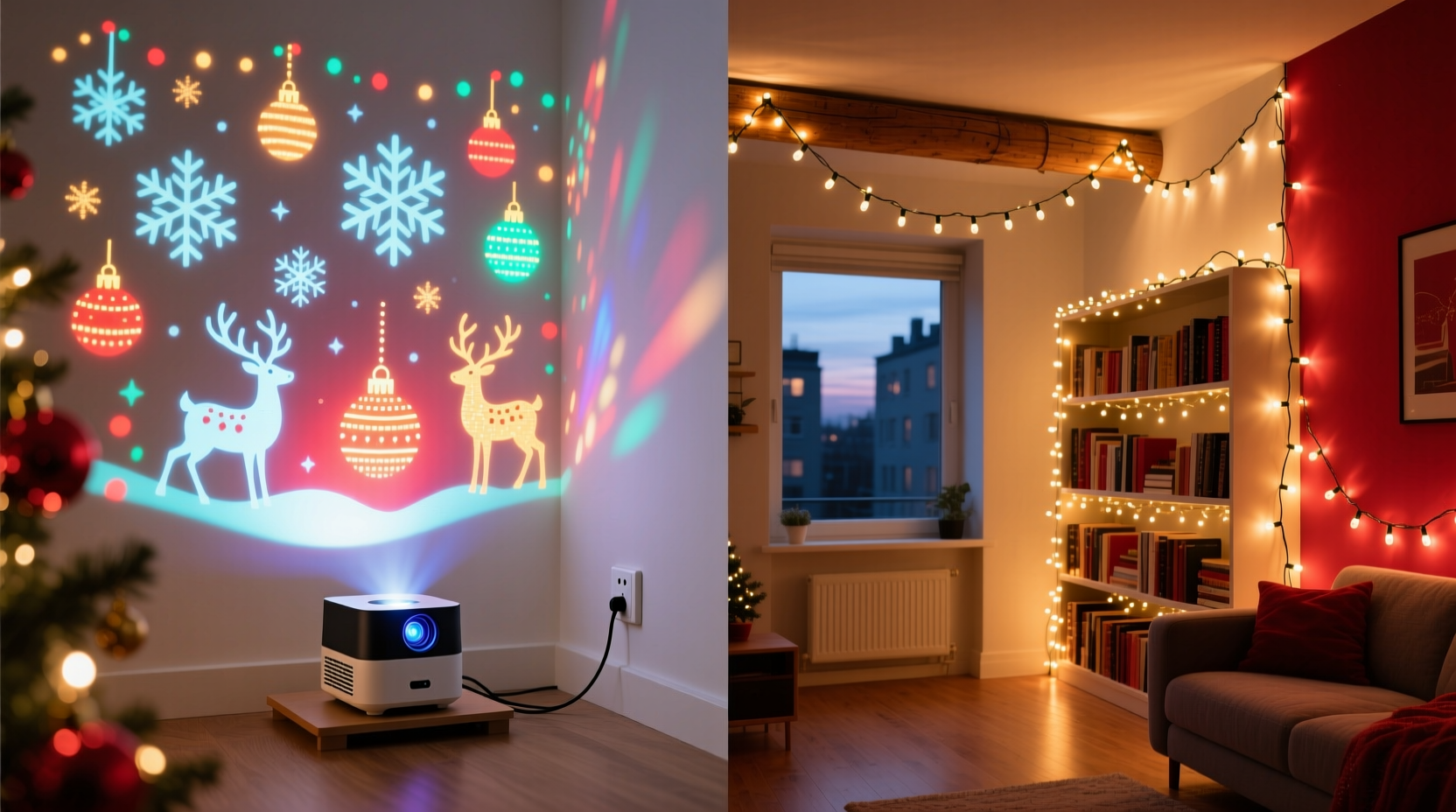
Living in a small apartment means balancing aesthetics with functionality. A single coffee table might double as a workspace, dining area, and entertainment center. In such environments, permanent or semi-permanent installations are impractical. Holiday decor must be easy to set up, safe, and ideally reversible. Traditional string lights, while beloved, require outlets, extension cords, hooks, and surface space. They can pose tripping hazards near beds or sofas and may interfere with daily routines. Moreover, tangled wires and fragile bulbs increase maintenance effort, especially when storage space is already limited.
Light projectors, by contrast, operate from a single plug-in point and cast illumination across walls or ceilings using concentrated beams. They eliminate the need for physical placement along surfaces, railings, or windowsills. This makes them inherently less intrusive. However, their effectiveness depends on room layout, wall color, ambient light levels, and projector quality. Understanding these variables is key to making an informed decision.
Tip: Always test projector placement at night—daylight can mask visibility issues that become apparent after dark.String Lights: Tradition, Texture, and Tangibility
String lights have long been synonymous with holiday cheer. Their soft glow mimics candlelight, creating intimacy and nostalgia. Available in warm white, cool white, multicolor, and even programmable RGB variants, they offer customization for any mood. For small apartments, micro LED strings (often battery-powered) are particularly useful—they can wrap picture frames, drape over shelves, or outline mirrors without drawing attention to cords.
One major advantage of string lights is their three-dimensional presence. Unlike projected images, they occupy physical space, allowing shadows and depth that enhance realism. When placed behind sheer curtains or woven through indoor plants, they generate a layered effect that feels immersive. Additionally, many models now include timers, remote controls, and app integration, reducing manual adjustments.
However, drawbacks remain. Even slim strands require anchoring. Adhesive clips help, but repeated use can damage paint or leave residue. Over time, individual bulbs may fail, requiring tedious troubleshooting. And while some sets are designed for outdoor use, indoor-only versions lack durability against moisture or temperature shifts—important if your apartment has drafty windows or seasonal humidity changes.
“Physical lights engage multiple senses—they’re not just seen but felt. The subtle warmth and texture contribute to emotional comfort during winter months.” — Dr. Lena Patel, Environmental Psychologist
Light Projectors: Innovation, Efficiency, and Instant Ambiance
Christmas light projectors represent a modern alternative. These compact devices use high-lumen LEDs and rotating lenses to scatter thousands of pinpoint lights across walls and ceilings. Most cover areas up to 700 square feet, transforming blank surfaces into starry skies or snow-covered landscapes. Setup takes minutes: plug in, aim, and adjust focus. No hanging, no tangles, no risk of knocking over displays.
For renters or those avoiding wall modifications, projectors are ideal. They’re also safer around pets and children—no exposed wires or hot bulbs. Many models include interchangeable discs or digital patterns (snowfall, falling stars, icicles), enabling variety without additional purchases. Some even sync with music or operate on schedules, enhancing automation.
Yet limitations exist. Projected light lacks depth; it appears flat compared to tangible bulbs. On dark or textured walls, clarity diminishes. Ambient light from lamps or TVs can wash out effects, requiring dimmer conditions. Also, consistent power is essential—unlike battery-operated strings, most projectors rely solely on outlets. If your layout lacks accessible sockets near windows or balconies, extension cords may still be needed, undermining the “cord-free” benefit.
Real Example: A Studio Apartment Transformation
Maria, a graphic designer in Brooklyn, lives in a 450-square-foot studio where floor space is reserved for her bed, desk, and fold-out kitchenette. Each year, she struggled with how to decorate without cluttering her workflow. In 2022, she tried miniature string lights around her window frame—charming, but they interfered with opening the sash and required daily unplugging due to timer malfunctions.
Last holiday season, she invested in a dual-head Christmas light projector. She positioned it on her fire escape (weatherproof model) and aimed both beams inward—one onto the ceiling, one onto the far wall. Overnight, her entire room transformed into a winter wonderland. The effect was visible from her bed, desk, and couch, creating immersion without occupying any interior space. She kept a single strand of warm-white LEDs inside for close-up ambiance, but relied on the projector for primary visual impact. Cleanup took under two minutes: unplug, wipe down, store in its box.
Her experience underscores a growing trend—hybrid solutions that combine minimal physical elements with expansive projected effects.
Comparison: Key Factors for Decision-Making
| Factor | String Lights | Light Projector |
|---|---|---|
| Space Usage | High – requires surface/wall attachment | Low – single footprint, no mounting |
| Installation Time | 15–45 minutes (depending on length) | 5–10 minutes |
| Brightness Control | Limited (dimmer switches or bulb count) | Adjustable focus, intensity, pattern speed |
| Safety | Moderate (wires, heat from older models) | High (cool operation, no trip hazards) |
| Customization | Color, length, arrangement flexibility | Pattern variety, motion effects, multi-head options |
| Durability | Varies – prone to breakage if mishandled | Generally robust, fewer moving parts |
| Ideal For | Close-range viewing, intimate settings | Whole-room transformation, exterior projection |
Step-by-Step Guide: Choosing and Installing the Right Option
- Evaluate Your Layout: Measure available outlet locations, wall colors, and natural light exposure. North-facing rooms with dark walls favor projectors; bright, open layouts may dilute their effect.
- Determine Primary Viewing Areas: Identify where you spend most time—bed, sofa, dining nook. Ensure either string placement or projector beam targets these zones.
- Assess Power Access: Confirm proximity to outlets. Battery-powered strings offer flexibility; projectors usually require direct plug-in unless equipped with USB power banks.
- Test Before Committing: Rent or borrow both types for a weekend trial. Observe how each affects mood, perceived space, and usability.
- Install Safely: Use adhesive mounts rated for weight if hanging strings. For projectors, secure placement on stable ground or balcony rail—avoid edges.
- Set Automation: Program timers or smart plugs to turn lights on at dusk and off at bedtime, conserving energy and maintaining consistency.
- Store Properly Post-Holiday: Coil strings carefully to prevent kinks. Keep projectors in original boxes with lenses covered to avoid dust buildup.
Hybrid Approach: Best of Both Worlds
Many design experts recommend combining both technologies strategically. Use a projector for broad coverage—turning ceilings into constellations or walls into snowy forests—while supplementing with subtle string lighting near personal spaces. A few draped strands behind a TV, above a headboard, or along a bookshelf add tactile warmth that projections cannot replicate.
This layered technique leverages the strengths of each: projectors handle scale and spectacle, strings provide intimacy and detail. It’s especially effective in open-plan studios where zoning matters. By defining areas visually—one corner glowing with stars, another framed in golden lights—you create psychological separation without physical barriers.
Checklist: Maximizing Impact in Small Spaces
- ☐ Choose warm-white tones for coziness; avoid harsh blue-white unless balanced with warmer sources
- ☐ Prioritize cord management—use clips, sleeves, or baseboard routing to hide wires
- ☐ Aim projectors at light-colored, smooth walls for clearest results
- ☐ Limit overlapping light sources to prevent visual clutter
- ☐ Use timers or smart plugs to automate on/off cycles
- ☐ Consider rental-friendly installation methods (adhesives, freestanding bases)
- ☐ Clean lenses and wipe down string housings before storage
Frequently Asked Questions
Can I use a Christmas light projector indoors?
Yes, many models are designed specifically for indoor use. Just ensure adequate ventilation and avoid pointing directly at reflective surfaces like mirrors, which can amplify glare. Indoor projectors often have lower lumens than outdoor versions, making them better suited for controlled lighting environments.
Do string lights consume more electricity than projectors?
Modern LED string lights are highly efficient—typically using 4–10 watts per 100 bulbs. Most projectors range from 15–30 watts depending on lumen output. While projectors draw slightly more power, the difference is negligible over a month. Both are cost-effective compared to incandescent alternatives.
Are light projectors worth it for very small apartments?
They can be exceptionally effective. Because they create the illusion of space by illuminating large surfaces, projectors make rooms feel larger and more dynamic. In studios under 500 sq ft, this perceptual expansion adds significant value. Just ensure your walls aren’t too dark or textured, which can reduce visibility.
Final Recommendation: Match Solution to Lifestyle
The choice between Christmas light projectors and string lights ultimately hinges on lifestyle priorities. If you value ease, speed, and non-invasive setup, a projector delivers impressive results with minimal effort. It’s ideal for renters, frequent movers, or anyone who dislikes untangling wires year after year. On the other hand, if you cherish tradition, craftsmanship, and hands-on decorating, string lights offer irreplaceable charm and sensory richness.
For maximum impact in minimal space, consider starting with a projector as your foundation and adding a few tasteful strands for depth. This hybrid strategy respects spatial constraints while delivering full emotional resonance. As urban living continues to emphasize efficiency and multifunctionality, smart lighting choices will define not just how we celebrate—but how we live well within our limits.
🚀 Ready to transform your small space this holiday season? Try a projector this year—or refine your string setup with better placement and automation. Share your results, tips, or favorite products in the comments below and inspire others to celebrate smarter.