
The holiday season brings joy, connection, and—increasingly—a logistical challenge: managing who you’ve bought for, what you’ve spent, and whether Aunt Linda’s reindeer sweater has actually been shipped. For years, the go-to solution was a trusty spreadsheet—color-coded rows, conditional formatting, and all. But as mobile technology evolves, dedicated Christmas gift tracker apps are emerging as serious contenders. The question now isn’t just about convenience—it’s about reliability. Are these digital tools finally trustworthy enough to replace the humble spreadsheet?
This shift reflects broader changes in how we manage personal tasks. Just as calendars moved from paper planners to Google Calendar, and grocery lists migrated from fridge magnets to smartphone apps, gifting is undergoing its own digital transformation. But unlike scheduling or shopping, gift tracking involves emotional stakes, budget sensitivity, and family dynamics. That raises the bar for what “reliable” really means.
The Rise of Digital Gift Tracking
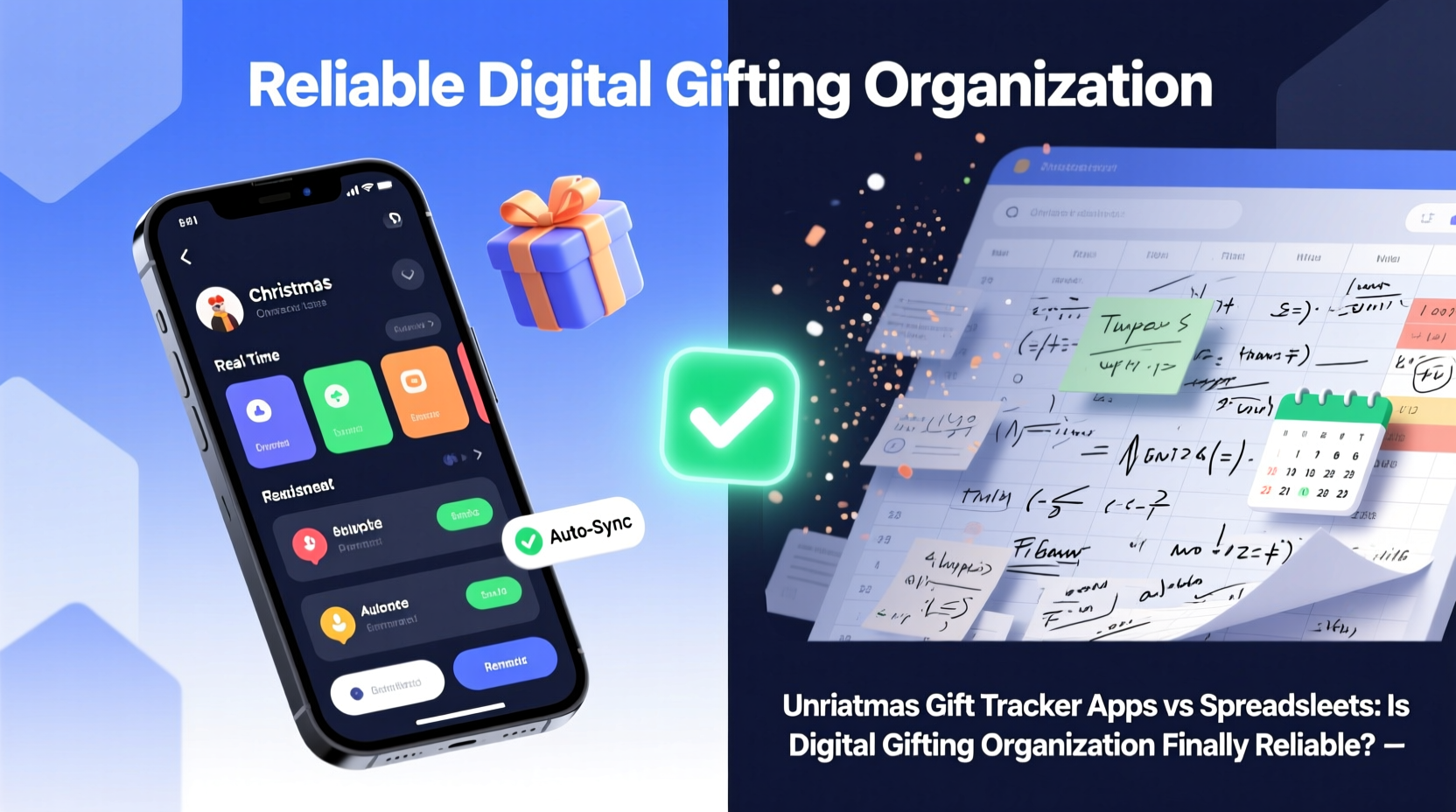
Gift tracking used to be analog by necessity. A notepad by the door, a folded list in a coat pocket, or a shared Excel file among siblings were common methods. Spreadsheets became popular because they offered structure: columns for names, budgets, purchase status, and notes. They could be sorted, filtered, and saved for next year. For tech-savvy households, this was peak organization.
But limitations quickly surfaced. Spreadsheets require manual updates, consistent naming conventions, and access to software like Excel or Google Sheets. Sharing them across devices often led to version confusion—“Did you see the updated one I sent Tuesday?”—and collaboration wasn’t seamless.
In response, developers launched specialized gift tracker apps. These promise intuitive interfaces, automatic reminders, cloud syncing, and even integration with e-commerce platforms. Apps like Giftster, Santa’s Magic List, and Wrappily now dominate app store searches during November and December. Their marketing emphasizes ease, privacy, and peace of mind. But do they deliver?
Spreadsheets: Still the Gold Standard?
Despite the rise of apps, many users remain loyal to spreadsheets. Their appeal lies in control and flexibility. You decide the layout, the formulas, the sharing method. Need to calculate total spending per person? Add a SUMIF function. Want to flag overdue purchases? Use conditional formatting. No permissions or logins required—just file access.
Google Sheets has elevated this further with real-time collaboration, comment threads, and mobile accessibility. Families can edit the same document from different locations, with changes appearing instantly. It’s free, platform-agnostic, and integrates with other Google services like Calendar and Drive.
Yet, spreadsheets demand effort. Setting up an effective template takes time. Maintaining consistency across users is challenging. And while powerful, they lack native reminders or purchase tracking features. You won’t get a push notification saying, “You haven’t bought for your cousin in three weeks.”
Tip: If using a spreadsheet, create a master template with protected headers and pre-formatted cells to reduce errors during seasonal chaos.App Advantages: Automation, Alerts, and Ease of Use
Dedicated gift tracker apps excel where spreadsheets fall short: user experience and automation. Most offer clean, visual dashboards that display gifting progress at a glance. Instead of scanning rows, users see color-coded circles—green for completed, yellow for pending, red for overdue.
Key features commonly found in modern apps include:
- Push notifications for upcoming deadlines
- Wishlist integration (e.g., pulling Amazon wishlists)
- Budget tracking with automatic spend calculations
- Photo attachments for gift ideas
- Family sharing with permission controls
- Offline access and cross-device sync
Some apps, like GiftLift, even allow users to scan receipts to auto-populate purchase records. Others integrate with iMessage or WhatsApp to share updates without switching apps. This level of polish makes them appealing to non-technical users who might find spreadsheets intimidating.
“Families today expect tools that work seamlessly across devices and require minimal setup. The best gift trackers feel invisible—they just work.” — Daniel Park, UX Designer at HolidayTech Labs
Comparing Reliability: A Side-by-Side Analysis
Reliability isn’t just about uptime or data security—it encompasses accuracy, consistency, ease of correction, and long-term usability. To assess which method performs better, consider the following factors:
| Feature | Spreadsheets (Google Sheets/Excel) | Dedicated Gift Tracker Apps |
|---|---|---|
| Setup Time | High (requires template creation) | Low (pre-built templates) |
| Learning Curve | Moderate to high | Low |
| Real-Time Collaboration | Yes (with internet) | Yes (built-in) |
| Automated Reminders | No (without add-ons) | Yes |
| Data Portability | High (exportable formats) | Variable (depends on app) |
| Long-Term Archiving | Excellent (easy to save yearly copies) | Poor (apps may shut down) |
| Cost | Free (basic use) | Freemium (ads or $2–$5/year) |
| Privacy Control | Full control over data | Depends on developer policy |
The table reveals a trade-off: apps win on usability and immediacy, while spreadsheets offer greater longevity and ownership. One major concern with apps is sustainability. If a small developer shuts down after a few seasons, your multi-year gift history vanishes. With spreadsheets, you retain full control.
A Real-World Example: The Thompson Family Transition
The Thompsons, a family of six across three cities, used a shared Google Sheet for over a decade. Each year, they’d copy the previous year’s file, update names and budgets, and assign colors to each member. It worked—but only if everyone remembered to check it.
In 2022, their daughter introduced them to Giftster. At first, the parents resisted. “We don’t need another app,” said Mark, the eldest. But after missing two gift exchanges due to forgotten emails, they relented.
By 2023, the entire family used the app. Automatic reminders ensured no one was overlooked. The ability to attach photos of potential gifts reduced duplicate purchases. Most importantly, the central dashboard made it easy for Mark to see who still needed attention—without opening a spreadsheet and filtering columns.
Still, they kept a backup: a simplified summary exported monthly to Google Sheets. “It’s our safety net,” said his wife, Lisa. “If the app disappears, we’re not starting from zero.”
Step-by-Step: Choosing Your Gifting System
Deciding between apps and spreadsheets shouldn’t be arbitrary. Follow this process to select the right tool for your needs:
- Assess your group size and tech literacy. Larger families with mixed tech skills benefit from simple apps. Small, tech-savvy groups may prefer customizable spreadsheets.
- Determine collaboration needs. Do multiple people need to edit simultaneously? Apps handle this more intuitively.
- Evaluate budget complexity. If tracking tight limits per person, look for apps with real-time spend counters or use spreadsheets with formulas.
- Consider long-term value. Will you reuse this system next year? Spreadsheets are easier to archive and adapt.
- Test both options. Run a parallel trial: track half your list in an app, half in a sheet. Compare effort versus results.
- Implement safeguards. Even if using an app, export key data monthly. Treat digital tools as dynamic but not permanent.
Common Pitfalls to Avoid
Regardless of tool choice, mistakes happen. Here’s what to watch for:
- Over-reliance on automation. An app reminder doesn’t guarantee delivery. Double-check shipping dates.
- Ignoring privacy settings. Ensure shared links to spreadsheets aren’t publicly accessible. Review app permissions.
- Skipping backups. Cloud services can fail. Download annual copies locally or to external drives.
- Feature bloat. Some apps encourage excessive wishlist entries, leading to decision fatigue. Stick to essentials.
FAQ: Your Top Questions Answered
Can I switch from a spreadsheet to an app mid-season?
Yes, but plan carefully. Export your current list into CSV format and import it if supported. Otherwise, manually enter key data. Start early to avoid last-minute stress.
Are gift tracker apps safe for sensitive data?
Most reputable apps use encryption and do not sell user data. However, avoid entering credit card details or passwords. Use strong, unique login credentials and enable two-factor authentication if available.
What if my app stops working or gets discontinued?
This is a real risk with niche apps. Always maintain a secondary record—either a simplified spreadsheet or a printed list. Export your data quarterly during the season.
Final Verdict: Is Digital Gifting Organization Finally Reliable?
The answer is nuanced: yes, but with caveats. Modern gift tracker apps have matured significantly. They are now intuitive, stable, and genuinely helpful for reducing holiday stress. For many households, especially those with less technical confidence, they represent a clear upgrade over spreadsheets.
However, “reliable” doesn’t mean “permanent.” Apps depend on ongoing maintenance by developers, server stability, and continued funding. Spreadsheets, while less flashy, offer unmatched durability and independence. They are immune to shutdowns and fully under your control.
The smartest approach may be hybrid: use an app for its real-time benefits during the active season, but treat it as a living document—not your sole source of truth. Complement it with periodic exports to a secure, well-organized spreadsheet. This way, you gain the best of both worlds: convenience now, and continuity later.
“The most reliable system isn’t the fanciest app or the most complex spreadsheet—it’s the one you’ll actually use consistently.” — Dr. Lena Choi, Behavioral Productivity Researcher, Stanford University
Your Next Step: Organize with Confidence
This holiday season, take a moment to evaluate how you track gifts. If you’re still juggling sticky notes or drowning in email threads, it’s time for an upgrade. Try a gift tracker app for its simplicity and alerts. Or refine your spreadsheet with better formatting and shared access. Better yet, combine both for resilience.
Organization isn’t about perfection—it’s about peace of mind. Whether through pixels or pivot tables, the goal remains the same: to focus less on logistics and more on what truly matters—the people you’re celebrating.
🚀 Ready to simplify your holidays? Pick one tool this week, set it up, and invite your family to join. Small steps now prevent gifting chaos later.