Choosing between Castile soap and regular body wash isn’t just a matter of preference—it can significantly impact your skin’s health. As natural skincare gains popularity, many are turning to Castile soap for its simplicity and plant-based ingredients. But a common concern lingers: is it too drying for daily use? The answer isn’t straightforward and depends on your skin type, how you use it, and what alternatives you compare it to. This article breaks down the science, compares formulations, and offers practical guidance so you can make an informed decision without compromising your skin’s moisture balance.
Understanding Castile Soap: Origins and Composition
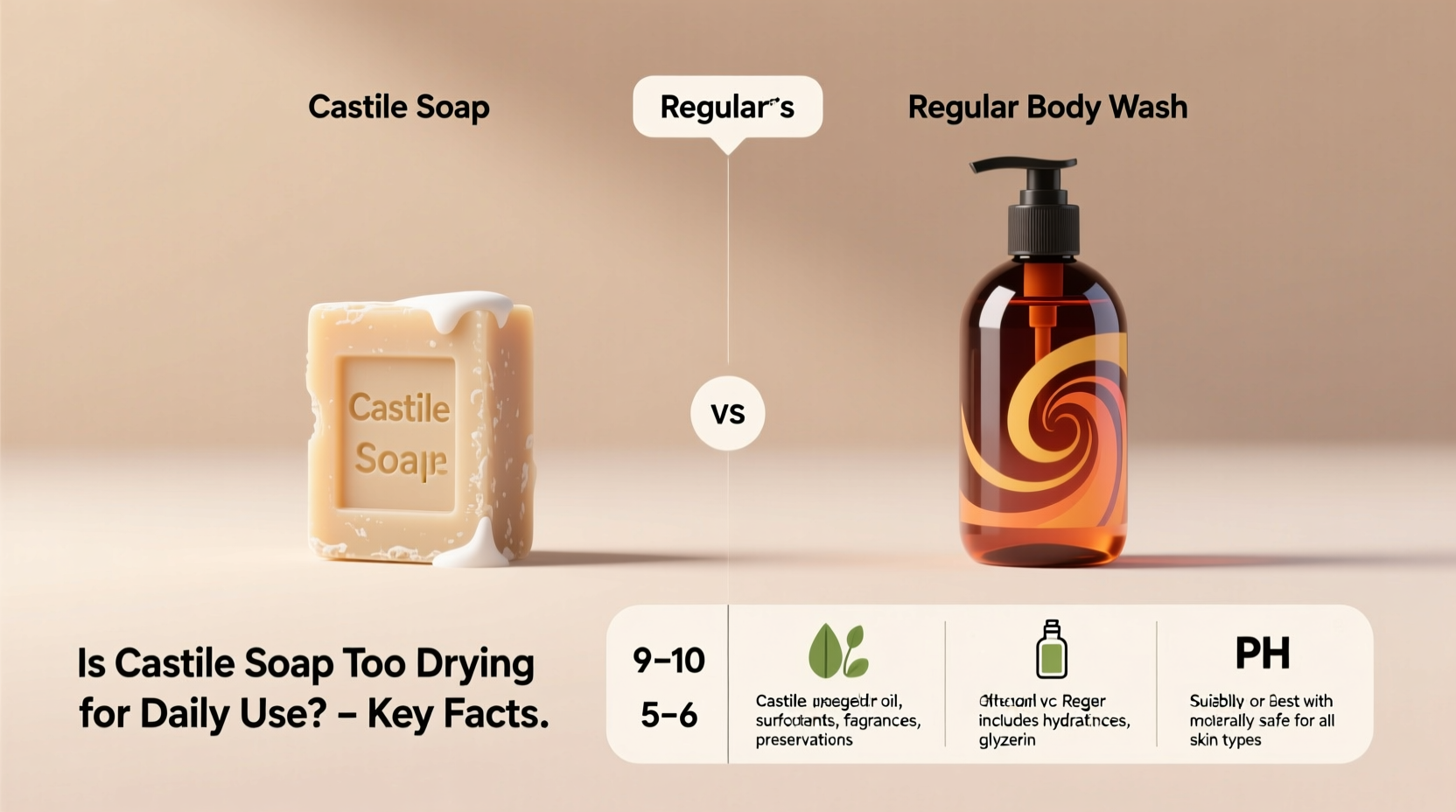
Originating in Spain centuries ago, traditional Castile soap was made from 100% olive oil and sodium hydroxide (lye). Today’s versions, like the widely known Dr. Bronner’s, often blend olive oil with other plant oils such as coconut, hemp, or jojoba. These modern iterations retain the core principle: minimal, natural ingredients free from synthetic additives.
Unlike most commercial body washes, Castile soap contains no parabens, sulfates, artificial fragrances, or preservatives. Its cleansing power comes from saponified oils—fats chemically transformed into soap through a process called saponification. Because it’s highly concentrated, it must be diluted before use on the body.
The absence of emollients and humectants—common in conventional body washes—raises concerns about dryness. While this purity appeals to those avoiding toxins, it may not suit everyone, especially individuals with sensitive or dry skin.
Tip: Always dilute liquid Castile soap with water—typically 1 part soap to 3–5 parts water—to reduce its alkalinity and minimize irritation.How Regular Body Wash Works: Formulation and Function
Most commercial body washes are formulated with surfactants like sodium lauryl sulfate (SLS) or sodium laureth sulfate (SLES), which create rich lather and effectively lift dirt and oil. However, these foaming agents can strip the skin’s natural sebum, leading to dryness or irritation, especially with frequent use.
What sets regular body wash apart is its inclusion of moisturizing agents. Glycerin, shea butter, ceramides, and hyaluronic acid are commonly added to counteract the drying effects of cleansers. Many also include pH-balancing ingredients to maintain the skin’s slightly acidic mantle (around pH 5.5), which helps protect against bacteria and environmental stressors.
While convenient and often luxurious-feeling, some body washes contain synthetic fragrances and preservatives that may trigger sensitivities. For people seeking cleaner labels, this raises concerns about long-term exposure—even if the product feels hydrating in the short term.
Comparing Moisture Impact: Castile vs Conventional Cleansers
The key difference lies in pH and lipid content. Castile soap typically has a high pH, ranging from 9 to 10, which disrupts the skin’s natural acidity. In contrast, most body washes are engineered to stay close to the skin’s pH of 5.5, preserving the acid mantle and reducing transepidermal water loss.
Additionally, Castile soap lacks built-in moisturizers. While olive oil is inherently nourishing, once saponified, its ability to hydrate diminishes. Coconut oil, though effective at cleansing, can be comedogenic and overly stripping when used in high concentrations. Without post-wash moisturization, skin can feel tight and dehydrated after using Castile soap—especially in low-humidity environments or during winter months.
Regular body washes, particularly those labeled “for dry skin” or “moisturizing,” often include occlusive and humectant ingredients that actively replenish moisture. They’re designed for daily use across a wide range of skin types, including sensitive and eczema-prone skin.
“Cleansers should clean without compromising the skin barrier. High-pH soaps like Castile can disrupt this balance, especially with repeated use.” — Dr. Lena Torres, Dermatologist and Skincare Researcher
Is Castile Soap Too Drying for Daily Use?
The answer depends on three factors: your skin type, climate, and routine.
- Oily or acne-prone skin: May tolerate Castile soap better due to its deep-cleaning properties. The lack of residue can prevent clogged pores.
- Dry or sensitive skin: Likely to experience tightness, flaking, or irritation—particularly if used daily without follow-up moisturizer.
- Normal/combination skin: Can use diluted Castile soap occasionally, but daily use may still lead to gradual dryness over time.
Environmental conditions also play a role. In humid climates, the drying effect may be less noticeable. In arid or cold weather, even oily skin can become dehydrated, making Castile soap riskier for everyday application.
Furthermore, frequency matters. Using it every other day or limiting it to less-sensitive areas (like arms and legs) reduces exposure while retaining benefits. Overuse—especially undiluted—can compromise the skin barrier, increasing susceptibility to irritation and infection.
Real-Life Example: A Case Study
Sophie, a 34-year-old teacher in Colorado, switched to Castile soap to avoid synthetic chemicals. Initially, her skin felt “cleaner than ever.” But within two weeks, her arms and torso became itchy and flaky, especially in the dry winter air. She consulted a dermatologist who explained that the high pH of the soap was disrupting her skin’s protective layer. After switching to a pH-balanced body wash and applying moisturizer immediately after showers, her symptoms resolved. She now uses diluted Castile soap only on her feet and back once a week, reserving gentler cleansers for daily use.
Best Practices for Using Castile Soap Safely
If you’re committed to using Castile soap, smart techniques can mitigate dryness and support skin health. Follow this step-by-step guide to integrate it safely into your routine:
- Dilute properly: Mix one capful of liquid Castile soap with 3–5 parts water in a reusable bottle. This reduces concentration and minimizes pH shock.
- Lather gently: Apply with hands or a soft cloth. Avoid scrubbing, which increases irritation.
- Rinse thoroughly: Residue can linger and continue to affect the skin’s pH.
- Limit frequency: Use 2–3 times per week instead of daily, especially if you have dry or sensitive skin.
- Moisturize immediately: Apply a natural oil (like jojoba or almond) or fragrance-free lotion within 60 seconds of drying off to lock in hydration.
- Spot test first: Try on a small area (inner forearm) for 3–5 days to assess tolerance.
Comparison Table: Castile Soap vs Regular Body Wash
| Feature | Castile Soap | Regular Body Wash |
|---|---|---|
| pH Level | 9–10 (alkaline) | 5–6 (skin-neutral) |
| Key Ingredients | Olive, coconut, hemp oils; potassium hydroxide | Sulfates, glycerin, fragrance, preservatives |
| Natural/Fragrance-Free Options | Widely available | Limited; check labels carefully |
| Maintains Skin Barrier | Poor (due to high pH) | Good (if pH-balanced) |
| Moisturizing Properties | Low (requires external moisturizer) | High (contains humectants/occlusives) |
| Best For | Oily skin, occasional use, eco-conscious users | Daily use, dry/sensitive skin, barrier support |
| Drying Risk (Daily Use) | High | Low to moderate (depends on formula) |
Frequently Asked Questions
Can I use Castile soap every day if I have oily skin?
Yes, but with caution. Oily skin may handle Castile soap better than dry skin, but daily use can still lead to overproduction of oil as the skin tries to compensate for lost moisture. Dilute it well, limit contact time, and always follow with a light, non-comedogenic moisturizer to maintain balance.
Does adding oil to Castile soap make it less drying?
Adding carrier oils (like sweet almond or jojoba) to your diluted Castile soap mix can improve slip and add a small degree of emollience. However, oils don’t fully neutralize the high pH. They help more with sensory experience than structural skin protection. For real hydration, focus on post-wash moisturizing.
Is baby wash a better alternative to both?
Baby washes are often gentler, with lower pH and fewer irritants, making them suitable for sensitive adult skin too. Many are tear-free and hypoallergenic. If you’re looking for a middle ground—gentle yet effective—a fragrance-free baby wash can be a viable daily option, especially for facial or intimate areas.
Checklist: Choosing the Right Cleanser for Your Skin
- ✅ Assess your skin type: dry, oily, combination, sensitive?
- ✅ Check the pH: aim for 5.5–6 for daily body washes
- ✅ Read labels: avoid sulfates, parabens, and synthetic fragrances if sensitive
- ✅ Test new products: patch test on a small area first
- ✅ Pair with moisturizer: especially critical when using alkaline soaps
- ✅ Adjust seasonally: switch to richer formulas in winter
- ✅ Limit frequency: consider alternating cleansers based on need
Final Thoughts and Recommendations
Castile soap is not inherently bad—but it’s not ideal for daily full-body use for most people. Its high pH and lack of built-in moisturizers make it potentially drying, especially when used without proper precautions. It shines as an occasional cleanser, a household multi-use product, or a choice for those prioritizing ingredient transparency over immediate comfort.
Regular body wash, despite its synthetic components, is often better suited for daily hygiene because it supports the skin’s natural barrier. Advances in formulation mean many options now combine effectiveness with gentleness, offering clean labels without sacrificing performance.
The goal isn’t to choose one over the other rigidly, but to match your cleanser to your skin’s needs. Rotate products if necessary. Use Castile soap strategically—for deep cleaning or specific areas—and rely on pH-balanced body washes for everyday care.
💬 Your skin is unique—what works for others may not work for you. Experiment mindfully, listen to your skin’s signals, and share your experience in the comments to help others navigate this common skincare dilemma.








