Christmas lights bring soft glows, gentle rhythm, and quiet magic—qualities that align surprisingly well with the sensory needs of infants and toddlers. Yet in a space where safety is non-negotiable and developmental wellness is paramount, decorative lighting demands far more scrutiny than in a living room or hallway. Parents often hesitate: Is it worth the risk? Can those twinkling strings coexist with sleep routines, crib safety standards, and evolving motor skills? The answer isn’t a simple yes or no—it’s a carefully calibrated *yes, if*. This article cuts through seasonal sentimentality and offers grounded, evidence-informed guidance for integrating Christmas lights into a nursery without compromising safety, sleep hygiene, or developmental support.
Why Soft Light Matters in Early Development
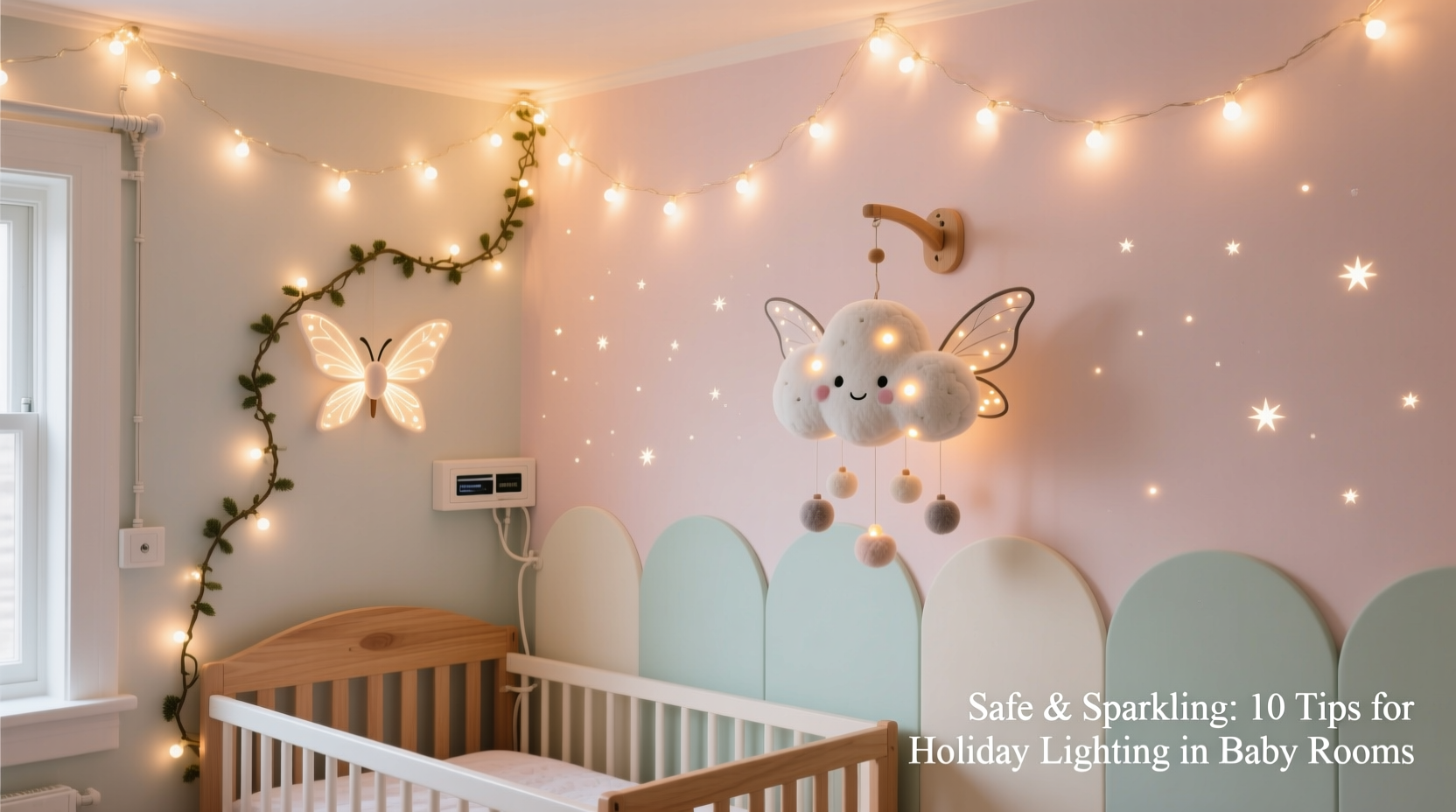
Infants’ visual systems mature rapidly in the first six months. At birth, they see only high-contrast patterns and blurred shapes; by 3–4 months, they begin distinguishing colors and tracking slow movement. Crucially, their circadian rhythms—the internal clocks regulating sleep-wake cycles—are still forming. Exposure to bright, blue-rich light (especially after sunset) suppresses melatonin, delaying sleep onset and fragmenting rest. This is why pediatric sleep specialists emphasize “dim, warm, and consistent” ambient lighting in nurseries—not just at night, but throughout evening hours.
Well-chosen Christmas lights can support this goal. LED micro-lights with color temperatures under 2700K emit a candle-like amber glow that minimally disrupts melatonin production. Unlike overhead fixtures or smartphone screens, these low-intensity sources provide visual interest without overstimulation—offering gentle visual tracking practice for developing eyes while preserving the calm atmosphere essential for restorative sleep.
Tip: Prioritize lights labeled “warm white” (2200K–2700K) over “cool white” or “daylight” (5000K+). Even small differences in color temperature significantly affect melatonin suppression in infants.Safety First: Non-Negotiable Electrical & Physical Standards
The U.S. Consumer Product Safety Commission (CPSC) reports an average of 13,000 home fire injuries annually linked to holiday lighting—many involving improper use near flammable materials or outdated wiring. In a nursery, risks multiply: cords within reach, proximity to bedding or curtains, and limited adult supervision during naps or overnight hours demand rigorous safeguards.
Start with certification. Only use lights bearing the UL (Underwriters Laboratories) or ETL mark—specifically UL 588 (for seasonal decorative lighting) or UL 2202 (for LED-specific safety). Avoid dollar-store or unbranded strings lacking third-party verification. Look for “indoor use only” labels—and never assume outdoor-rated lights are safer indoors; their heavier insulation and higher voltage tolerances may increase heat retention in confined spaces.
Physical placement is equally critical. The American Academy of Pediatrics (AAP) advises keeping all cords, plugs, and light strings at least 3 feet from cribs, bassinets, play mats, and changing tables. Never drape lights over crib rails, attach them to mobiles, or coil them beneath blankets—even if unplugged. A baby’s emerging grasp reflex (peaking at 4–6 months) makes dangling wires irresistible and potentially hazardous.
“Infants explore the world through touch, mouthing, and pulling. Anything within arm’s reach—including corded lights—must be either inaccessible or engineered to withstand tensile force, heat, and saliva exposure.” — Dr. Lena Torres, Pediatric Occupational Therapist and Safe Sleep Consultant, Boston Children’s Hospital
Design Principles That Support Sleep & Development
Decorative lighting in a nursery serves dual purposes: aesthetic warmth and functional support. The most effective installations reinforce—not undermine—established sleep architecture and sensory regulation. Three core principles guide intentional design:
- Layered Dimming: Combine ambient (ceiling), task (nursery chair lamp), and accent (Christmas lights) layers. Use a smart dimmer switch or plug-in dimmer module to lower light intensity to 10–20% brightness—enough for visual comfort but below melatonin-disrupting thresholds.
- Fixed, Non-Moving Placement: Avoid flashing, chasing, or color-changing modes. Research from the Journal of Clinical Sleep Medicine shows rhythmic light changes—even subtle ones—activate the brain’s alerting system in children under two, increasing nighttime awakenings by up to 37%.
- Strategic Distance & Diffusion: Mount lights on walls, behind furniture (e.g., behind a bookshelf), or inside opaque glass jars—not on shelves within reach or directly above the crib. Use frosted bulb covers or sheer fabric wraps to soften glare and eliminate pinpoint brightness.
| Design Element | Safe & Effective Approach | Avoid |
|---|---|---|
| Brightness Control | Dual-mode lights with manual dimmer switch or smart plug with adjustable output | Single-brightness strings without dimming capability |
| Placement Height | Walls above 6 feet, ceiling perimeters, or behind tall furniture | Within 36 inches of crib rail, floor-level stringing, or draped over furniture edges |
| Bulb Type | Encapsulated LED micro-bulbs (no exposed filaments or sharp edges) | Traditional incandescent bulbs (excess heat), exposed-wire strings, or glass bulbs |
| Power Source | UL-listed low-voltage transformer (12V DC) or battery-operated with auto-shutoff | Direct AC plug-in without surge protection or thermal cutoff |
| Maintenance | Monthly inspection for fraying, loose sockets, or overheating | Leaving lights up year-round or using damaged strings “just for now” |
Real-World Implementation: A Case Study from Portland, OR
When Maya R., a neonatal nurse and mother of twins, renovated her nursery for the holidays, she wanted ambiance without anxiety. Her sons were 5 months old—mobile, curious, and beginning to pull to stand. She rejected traditional garlands and opted instead for a custom solution: 24 feet of UL-listed, 2700K LED micro-string lights mounted vertically along the wall behind a floating oak shelf (72 inches high), spaced 18 inches apart. She routed the cord through a rigid PVC conduit painted to match the wall, then connected it to a smart plug programmed to dim to 15% brightness at 6:30 p.m. and power off automatically at 11 p.m.
She added diffusion by placing matte-white ceramic vases filled with dried eucalyptus and cotton stems in front of each light cluster—softening the glow while adding natural texture. Over three weeks, she tracked sleep logs: average nighttime awakenings dropped from 3.2 to 1.8 per night, and both babies began self-soothing more readily during brief arousals. Crucially, neither infant attempted to grab the lights—because they weren’t within visual or physical reach, and the glow was steady, not attention-grabbing.
Maya’s success wasn’t accidental. It reflected deliberate adherence to AAP safe sleep guidelines, CPSC electrical standards, and neurodevelopmental best practices—all woven into a cohesive, livable design.
A Step-by-Step Installation Protocol
Follow this verified sequence before powering on any lights in a nursery:
- Evaluate the space: Measure distances from crib, changing table, and play area. Identify anchor points >6 feet high and away from airflow vents or heating sources.
- Select certified hardware: Choose UL/ETL-listed, warm-white LED strings with built-in thermal fuses and insulated copper wiring (not aluminum).
- Test before mounting: Plug lights into a GFCI-protected outlet and run for 15 minutes. Check for excessive warmth at sockets, flickering, or buzzing sounds.
- Mount securely: Use adhesive-backed hooks rated for 5x the string’s weight—or screw-in anchors into wall studs. Never rely on tape, tacks, or suction cups.
- Route and conceal cords: Run cords through raceways or conduit; secure with low-profile cable clips every 12 inches. Keep all connections elevated and out of walkways.
- Install controls: Connect to a timer or smart plug with dimming. Set default brightness to ≤20% and schedule automatic shutoff no later than 11 p.m.
- Final safety sweep: Crawl the room at baby height. Remove anything within 36 inches of sleeping or sitting zones. Verify no cord ends hang freely.
FAQ: Addressing Common Parent Concerns
Can battery-operated Christmas lights be safer than plug-in versions?
Not inherently. While battery lights eliminate cord hazards, many use lithium coin-cell batteries—a severe ingestion risk if accessible. The AAP reports over 2,800 battery ingestions annually in children under 5, with button batteries causing esophageal burns in as little as 2 hours. If choosing battery lights, select models with screw-secured compartments (not slide-open cases) and mount them out of reach. Always prefer UL-listed rechargeables with built-in overcharge protection over disposable cells.
Do fairy lights cause electromagnetic field (EMF) exposure concerns for infants?
LED Christmas lights produce negligible EMF—far below international safety limits (ICNIRP) and orders of magnitude lower than Wi-Fi routers or baby monitors. A 2022 study published in Environmental Health Perspectives measured fields within 12 inches of 15 popular LED string brands and found average exposures of 0.02–0.08 µT (microtesla), compared to the 100 µT public exposure limit. No credible evidence links these levels to developmental harm. Focus instead on proven risks: heat, entanglement, and sleep disruption.
How long can I safely leave lights up in the nursery?
Maximum four weeks—ideally aligned with the traditional Advent season (late November through early January). Prolonged use increases wear on wiring, raises dust accumulation on bulbs (a fire hazard), and desensitizes infants to the calming effect. Rotate lighting themes seasonally: swap Christmas strings for soft-glow star projectors in February or fiber-optic cloud panels in spring. Consistency in routine matters more than constant decoration.
Conclusion: Light With Intention, Not Just Decoration
Christmas lights in a nursery aren’t about nostalgia or tradition alone—they’re a design decision with physiological consequences. When selected with rigor, installed with precision, and operated with discipline, they become quiet allies: supporting melatonin rhythms, offering gentle visual stimulation, and weaving warmth into the earliest chapters of your child’s life. But they demand more than aesthetic judgment. They require understanding infant neurology, respecting electrical safety codes, and honoring the sacred simplicity of a restful nursery environment.
You don’t need to choose between beauty and safety—or between celebration and calm. You can have both, provided every choice is rooted in evidence, not impulse. Start small: choose one certified string, mount it thoughtfully, dim it generously, and observe how your baby responds. Adjust, refine, and prioritize function over flourish. Because the most meaningful glow in a nursery isn’t emitted by a bulb—it’s reflected in a peacefully sleeping face, breathing deeply in the hush of well-considered light.
💬 Your experience matters. Have you safely used Christmas lights in a nursery? Share your setup, challenges, or lessons learned in the comments—we’ll feature thoughtful insights in our monthly safety roundup.








