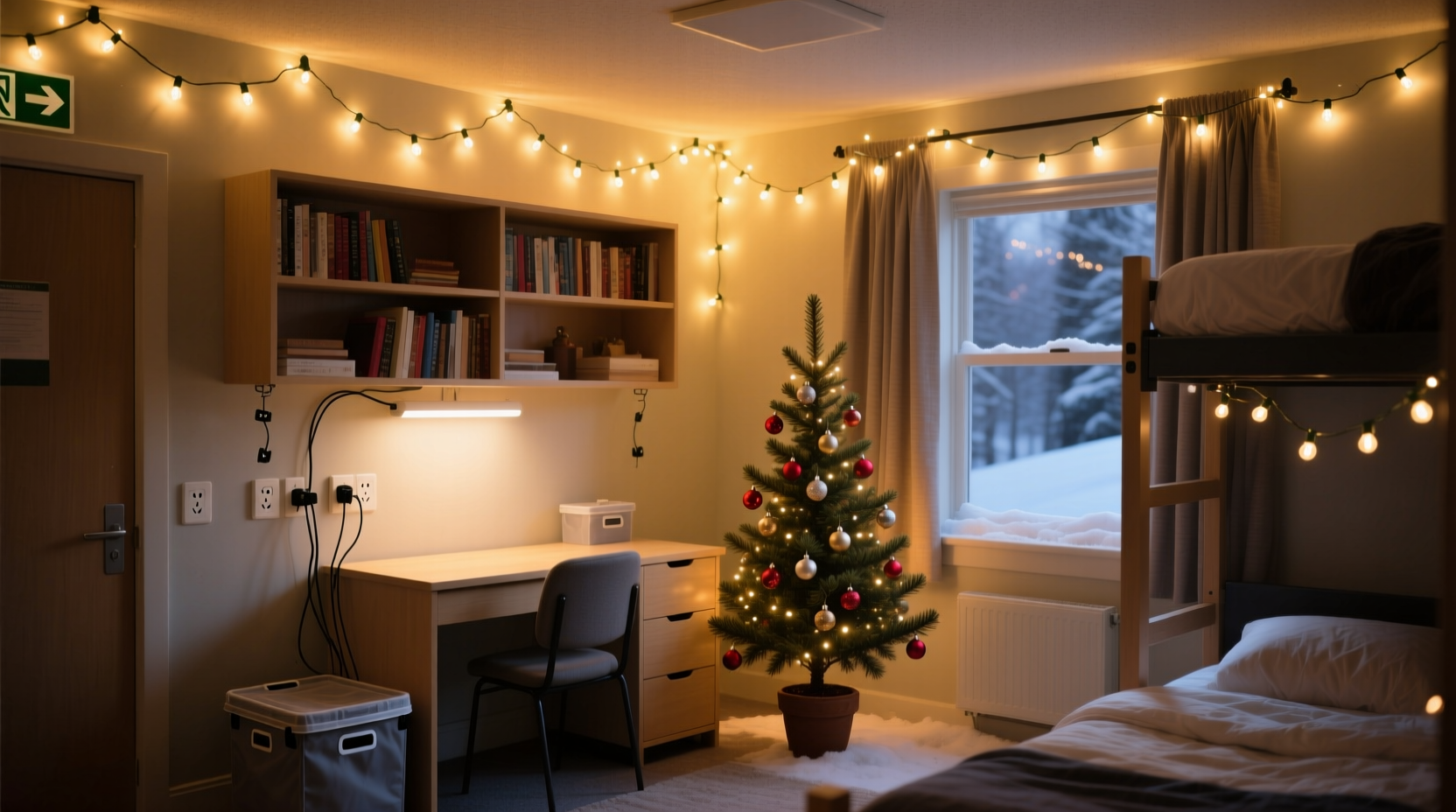
As the holiday season approaches, many college students look forward to bringing festive cheer into their dorm rooms. One of the most popular ways to do this is with Christmas lights—soft strings of glowing bulbs that transform small, sterile spaces into cozy winter retreats. But before you hang that strand across your bunk bed or tape it along the wall, there’s a critical question: Are Christmas lights allowed in dorm rooms?
The short answer is: It depends. While some colleges permit certain types of lights under specific conditions, others ban them outright due to fire safety concerns. The difference often lies in institutional policy, local fire codes, and the type of lighting used. Understanding these nuances isn’t just about compliance—it’s about ensuring your celebration doesn’t end in an evacuation or disciplinary action.
Dorm rooms are high-density living environments where electrical overloads, faulty wiring, and combustible materials can quickly escalate into serious hazards. Fire departments and university housing offices take these risks seriously. That said, safe and compliant decoration is possible—if you know the rules and make smart choices.
Understanding Dorm Fire Safety Regulations
Most college campuses follow fire safety standards set by the National Fire Protection Association (NFPA) and enforced through state or municipal fire codes. These regulations are especially strict in residential buildings like dormitories, which are classified as “Group R-2” occupancies—meaning they house multiple unrelated individuals in sleeping units.
In such settings, any item that increases fire risk—especially those involving electricity or open flames—is scrutinized. Christmas lights fall into this category because:
- They draw continuous power, sometimes for weeks at a time.
- Poor-quality or damaged strands can overheat or spark.
- Improper installation (e.g., tacked into walls, draped over bedding) can lead to ignition sources near flammable materials.
- Older incandescent lights generate significant heat compared to modern LEDs.
According to NFPA 130, Standard for Fixed Guideway Transit and Passenger Rail Systems, while not directly applicable to dorms, similar principles apply: temporary electrical decorations must not compromise egress, overload circuits, or introduce ignition sources. Many universities adopt internal policies based on broader fire code frameworks.
“Any decorative lighting in a residence hall must be LED, UL-listed, and used only as intended. Extension cords cannot be daisy-chained, and devices must be turned off when unattended.” — Campus Fire Safety Officer, University of Massachusetts Amherst Annual Report
Do’s and Don’ts of Using Christmas Lights in Dorms
To help you navigate what’s acceptable, here’s a clear comparison of common practices—some safe, others potentially dangerous or prohibited.
| Do | Don't |
|---|---|
| Use LED string lights labeled “UL-listed” or “ETL-certified” | Use incandescent mini-lights or older strands without certification |
| Plug directly into a wall outlet (not an extension cord) | Daisy-chain multiple light strands together beyond manufacturer limits |
| Turn lights off when leaving the room or sleeping | Leave lights on overnight or during unattended periods |
| Secure with adhesive hooks or clips (non-damaging) | Nail, staple, or tape wires into place |
| Inspect for frayed wires, broken sockets, or loose bulbs | Use damaged or flickering strands |
Many schools explicitly allow battery-operated fairy lights even when plug-in versions are banned. These eliminate fire risk from overheating and circuit strain, making them a popular workaround.
Tip: If your school restricts plug-in lights, opt for remote-controlled, battery-powered LED strings with timers. They create ambiance without plugging into outlets.How to Check Your School’s Specific Policy
University housing rules vary widely—even within the same state. What’s permitted at one campus may be strictly forbidden at another. Here’s how to find out exactly where your school stands:
- Review the official residence life handbook. This document, usually available online, outlines all prohibited items and decoration guidelines. Search for keywords like “holiday lights,” “electrical appliances,” or “decorative lighting.”
- Contact housing services directly. Send a brief email asking whether LED Christmas lights are permitted and under what conditions (e.g., must be unplugged at night).
- Check RA communications. Resident Advisors often send pre-holiday reminders detailing what students can and cannot bring into dorms.
- Look for posted signage. Some dorms display fire safety posters listing banned items near elevators or laundry rooms.
For example:
- Ohio State University: Allows UL-listed LED string lights if plugged directly into the wall and turned off when not in use.
- New York University: Prohibits all string lights, including LED, unless battery-operated and flameless.
- University of Texas at Austin: Permits indoor-use, certified lights but bans extension cords and power strips for decorative purposes.
If the policy is unclear, assume restriction until confirmed otherwise. It’s better to wait than risk fines, forced removal, or disciplinary reports.
A Real Student Experience: When Lights Led to a Warning
Jasmine, a sophomore at a large Midwestern university, decorated her dorm room with two sets of multicolored LED string lights—one behind her headboard, another framing her mirror. She bought them from a major retailer, checked for UL certification, and used adhesive clips instead of nails.
One evening, during a routine fire inspection, a staff member noticed the lights were still on after 11 p.m., despite the building’s “unattended electronics” policy requiring shutdown. Although the lights were safe and properly installed, Jasmine received a formal warning for violating the “lights-off when unattended” rule.
She wasn’t expelled or fined, but the incident prompted her RA to remind all residents about holiday lighting policies. Jasmine adjusted by setting a nightly phone alarm to turn off her lights before bed—and later upgraded to a timer-equipped strand.
Her takeaway? “Just because something seems harmless doesn’t mean it’s fully compliant. Read the rules, then double-check your habits.”
Safer Alternatives to Traditional String Lights
If your dorm prohibits standard Christmas lights—or you want to minimize risk—several creative, code-friendly alternatives exist:
- Battery-powered fairy lights: Often made with thin copper wire and micro-LEDs, these can be safely tucked into mason jars, woven through bulletin boards, or placed on shelves.
- LED flameless candles: Provide warm, flickering light without heat or fire hazard. Many come with automatic timers.
- Light-up decor with built-in batteries: Think illuminated snow globes, reindeer figurines, or holiday signs.
- Fiber optic trees or displays: Small decorative pieces that glow without heating up.
- Smart LED strips (if allowed): Some schools permit peel-and-stick RGB strips if they’re low-voltage and controlled via USB or battery pack.
These options deliver seasonal charm while staying within fire code boundaries. Plus, they’re easier to store, transport, and reinstall each year.
Step-by-Step Guide to Decorating Safely and Compliantly
Follow this five-step process to enjoy holiday lighting in your dorm—without breaking rules or risking safety:
- Research your school’s policy (Week 1). Visit your housing website or contact staff to confirm what types of lights are allowed.
- Select compliant products (Week 2). Purchase only UL/ETL-listed LED lights or battery-operated alternatives. Avoid discount stores selling uncertified imports.
- Plan your setup (Week 3). Sketch where lights will go. Ensure they won’t block exits, cover smoke detectors, or run under rugs/bedding.
- Install safely (Week 4). Use non-damaging mounts (adhesive hooks, clips). Plug into wall outlets only—never power strips. Test for flickering or overheating.
- Maintain vigilance (Ongoing). Turn off lights when asleep or away. Inspect weekly for damage. Remove promptly after the holidays.
This methodical approach ensures you celebrate responsibly while respecting communal safety standards.
FAQ: Common Questions About Christmas Lights in Dorms
Can I use Christmas lights if they’re LED and cool to the touch?
Not necessarily. While LED lights are safer than incandescent ones, many schools still prohibit them due to electrical load and duration of use. Always check your institution’s specific policy—even safe technology may be restricted.
Are fairy lights allowed in dorms?
Battery-operated fairy lights are more likely to be permitted than plug-in versions. However, policies vary. Some schools allow them only if they’re turned off overnight. Confirm with housing staff before use.
What happens if I get caught with banned Christmas lights?
Consequences range from a verbal warning to written disciplinary action, removal of the item, or even fines. In extreme cases—especially with repeated violations or hazardous setups—students may face conduct hearings or loss of housing privileges.
Final Checklist Before You Hang a Single Bulb
- ✅ Reviewed my school’s official holiday decoration policy
- ✅ Chose UL-listed or battery-powered lights only
- ✅ Avoided extension cords and daisy-chaining
- ✅ Planned to turn lights off when unattended
- ✅ Used non-damaging mounting methods
- ✅ Confirmed no obstruction of doors, windows, or detectors
- ✅ Set a reminder to remove lights after January 1
Conclusion: Celebrate Smart, Stay Safe
Holiday spirit belongs in dorm rooms—but so does responsibility. With thoughtful planning, you can enjoy the warmth of Christmas lights without compromising safety or violating fire codes. The key is knowing your school’s rules, choosing the right products, and maintaining good habits throughout the season.
Remember: a festive room shouldn’t come at the cost of someone’s safety. By following guidelines and modeling safe behavior, you contribute to a secure living environment for everyone in your dorm. Whether you go all-out with compliant LEDs or opt for soft-glowing alternatives, your creativity can shine—safely and legally.
💬 Have a dorm decorating tip or policy insight from your campus? Share your experience in the comments to help fellow students celebrate wisely this holiday season!