Decorating a Christmas tree is more than a seasonal chore—it’s an expression of identity, memory, and taste. For many, the ornaments collected over decades carry emotional weight: hand-blown glass from a grandmother’s attic, handmade clay stars from a child’s first holiday, or sleek metallic baubles from a recent design boutique. The question isn’t whether you *can* mix vintage and modern ornaments; it’s how to do so with intention, cohesion, and elegance.
The good news? A harmonious blend of old and new doesn’t just work—it can elevate your tree into a curated piece of art. The key lies in thoughtful curation, not random accumulation. When done right, a mixed-era tree tells a story, balances nostalgia with innovation, and avoids the chaos that often defines “tacky.”
Understanding the Aesthetic Tension
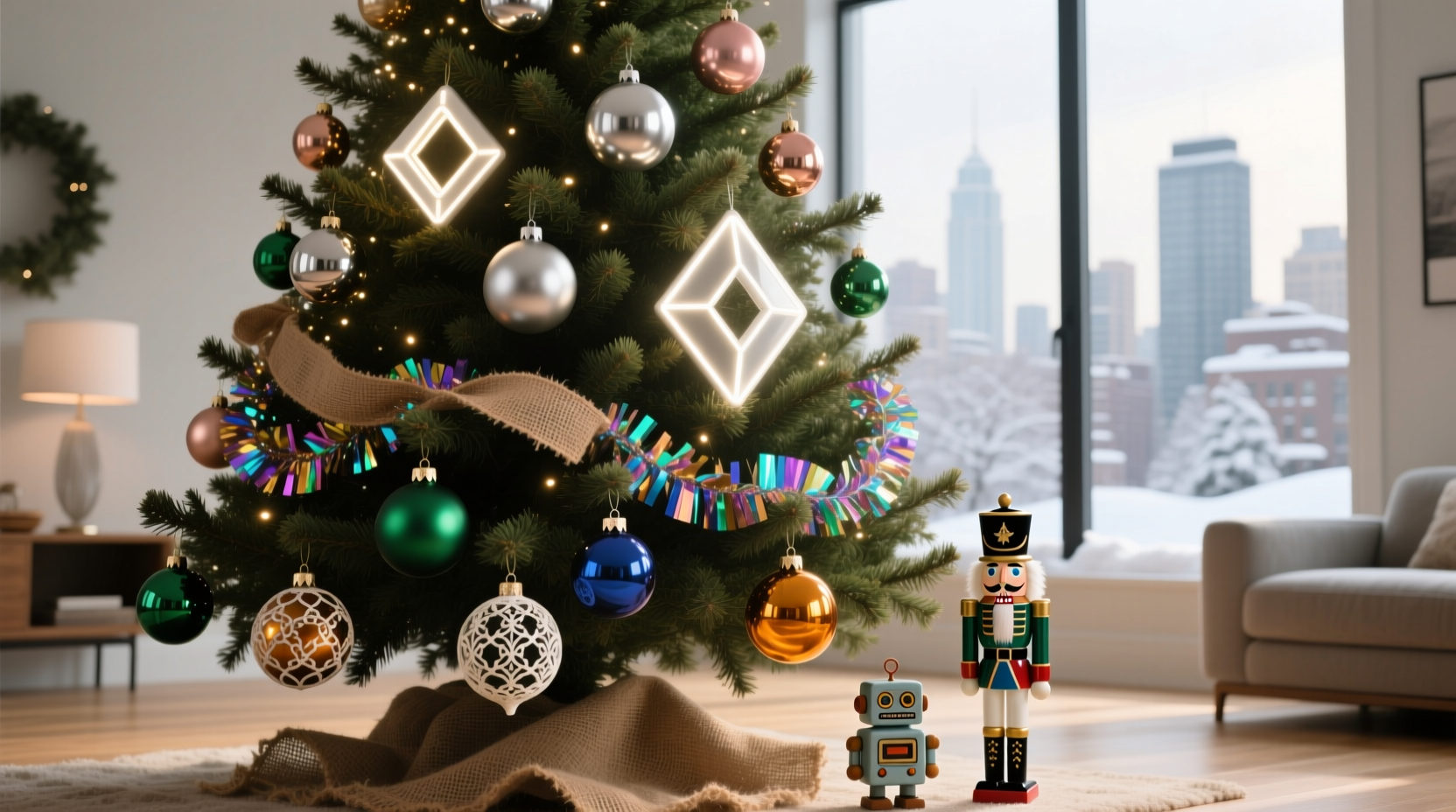
Vintage ornaments often feature intricate craftsmanship—hand-painted details, delicate filigree, or iridescent finishes—that reflect the styles of their time. Mid-century ornaments might be bold in color and geometric, while Victorian-inspired ones lean toward ornate metalwork and deep jewel tones. Modern ornaments, by contrast, tend to emphasize minimalism, symmetry, and materials like acrylic, matte metals, or sustainable wood.
When these elements collide without strategy, the result can feel disjointed—a visual tug-of-war between eras. But when balanced with purpose, the contrast becomes compelling. The warmth of vintage pieces grounds the cool precision of modern design, creating depth and dimension.
“Mixing eras on a tree is like curating an art gallery—each piece should speak to the others, not shout over them.” — Lila Montgomery, Interior Stylist & Holiday Design Consultant
The danger of “tacky” arises not from combining old and new, but from overcrowding, clashing color schemes, or neglecting a unifying thread. Avoid this by treating your tree as a cohesive composition, not a storage bin for sentimental clutter.
Creating Visual Harmony: The Unifying Principles
To blend vintage and modern ornaments successfully, focus on three core principles: color palette, texture balance, and spatial distribution.
1. Anchor with a Consistent Color Story
A shared color scheme is the most powerful tool for unifying disparate styles. Choose 3–4 dominant colors and use them across both vintage and modern pieces. For example:
- Classic Elegance: Deep red, forest green, cream, and gold.
- Modern Rustic: Sage, charcoal, ivory, and copper.
- Monochrome Glam: Black, white, silver, and crystal.
Even if one ornament is 1950s ceramic and another is a 2023 laser-cut acrylic sphere, they’ll feel connected if they share the same hue or finish (e.g., matte vs. glossy).
Tip: Use spray paint to subtly update older ornaments. A light coat of matte black or brushed gold can modernize a dated piece without losing its charm.2. Balance Texture and Scale
Vintage ornaments often have rich textures—crackled glaze, tinsel, or embroidered fabric—while modern ones may be smooth, reflective, or geometric. Distribute these intentionally.
Avoid clustering all textured pieces in one area. Instead, intersperse them. Place a large modern sphere next to a cluster of small vintage birds. Let a glossy red ball sit beside a frosted glass teardrop. This creates rhythm and prevents visual fatigue.
3. Distribute Ornaments with Intention
Trees become cluttered when ornaments are dumped rather than placed. Use a mental grid: top, middle, bottom, front, back. Ensure heavier or bolder pieces are evenly spaced, especially at eye level.
Consider the tree’s silhouette. A full, bushy tree can handle more variety. A slim, pencil-style tree benefits from restraint—fewer, larger ornaments with clear spacing.
Step-by-Step Guide to Mixing Eras with Style
Follow this sequence to build a tree that honors both past and present:
- Start with lighting. Use warm white or soft gold lights to create a neutral base. Avoid multicolored or blinking lights—they compete with ornament detail.
- Add garland or ribbon sparingly. A single strand of velvet ribbon or natural twine ties the look together without overwhelming.
- Place largest ornaments first. These act as anchors. Mix vintage and modern sizes evenly across the tree.
- Distribute mid-sized pieces. Alternate styles: one vintage bell, one modern cube, one heirloom figurine.
- Fill gaps with small accents. Tiny vintage stars or minimalist modern dots add sparkle without crowding.
- Step back and assess. View the tree from multiple angles. Remove any ornament that feels redundant or disruptive.
- Highlight focal points. Use one or two statement pieces—like a handcrafted angel or sculptural modern form—as centerpieces.
This method ensures balance and prevents haphazard layering. It also gives sentimental pieces room to breathe, making them feel cherished, not buried.
Do’s and Don’ts: A Practical Table
| Do | Don’t |
|---|---|
| Use a consistent color palette across eras | Mix too many competing colors |
| Balance glossy and matte finishes | Overload on shiny or glitter-heavy pieces |
| Space out large or bold ornaments | Cluster all vintage or all modern items together |
| Edit ruthlessly—less is more | Hang every ornament you own |
| Use lighting as a unifying layer | Rely on colored or flashing lights as decor |
A Real Example: The Brooklyn Brownstone Tree
In a historic Brooklyn brownstone, interior designer Naomi Reed faced a challenge: her client had inherited 1920s European glass ornaments—fragile, colorful, and highly detailed—but wanted a clean, contemporary living space. The solution wasn’t to hide the vintage pieces, but to frame them within a modern context.
Naomi chose a slim, pre-lit silver aluminum tree—undoubtedly modern—to contrast the ornate ornaments. She painted the wall behind it matte charcoal, making both old and new pop. Then, she selected only 28 ornaments: 14 vintage glass shapes and 14 custom-made matte black geometric forms.
The placement followed a strict diagonal pattern—alternating styles every 6 inches. Warm LED lights wrapped tightly added glow without distraction. The result? A tree that felt curated, personal, and timeless. Guests assumed it was styled by a professional decorator, not a family heirloom mishmash.
This case illustrates a crucial point: constraint breeds sophistication. By limiting quantity and focusing on quality, Naomi transformed potential clutter into a design statement.
Checklist: Your Vintage-Modern Tree Plan
Before hanging a single ornament, run through this checklist:
- ☐ Define a 3–4 color palette
- ☐ Sort ornaments into vintage and modern piles
- ☐ Select 1–2 statement pieces (one from each era)
- ☐ Choose a lighting style (warm white recommended)
- ☐ Decide on garland—or skip it for minimalism
- ☐ Set a maximum number of ornaments (e.g., 30–50 for a 6-foot tree)
- ☐ Lay out placements on a table before hanging
- ☐ Step back every 10 minutes to assess balance
- ☐ Remove at least 3 ornaments after final hang
- ☐ Photograph the tree from multiple angles to check symmetry
This process transforms decoration from impulse to intention. It also protects against sentimentality overriding aesthetics—because even beloved ornaments deserve the right context.
Expert Insight: Knowing When to Edit
One of the hardest parts of mixing eras is letting go. Not every ornament needs to be displayed every year. Preservation and rotation are part of respectful curation.
“You don’t wear every sweater in your closet at once. Why hang every ornament? Rotate them seasonally. Store some with care. That way, each piece feels special, not standard.” — Marcus Tran, Curator of Decorative Arts, New York Design Alliance
Tran recommends keeping a “tree journal”—a simple notebook or digital album tracking which ornaments were used each year. This helps ensure favorites aren’t neglected, while preventing overuse of fragile vintage items. It also makes next year’s setup faster and more intentional.
Frequently Asked Questions
Can I mix mid-century vintage with ultra-modern designs?
Absolutely. Mid-century ornaments—often bold in shape and color—pair well with current minimalist trends. Use a shared color (like mustard yellow or teal) to bridge the gap. Avoid pairing too many busy patterns; let the forms speak for themselves.
What if my vintage ornaments are damaged?
Slight wear adds character, but broken pieces should be repaired or retired. Wrap cracked glass in soft cloth and store safely. Consider framing a particularly meaningful damaged ornament as wall art instead.
How do I keep kids or pets from breaking vintage ornaments?
Place fragile vintage pieces higher on the tree, out of reach. Use lower branches for durable modern ornaments or DIY kid-made crafts. Alternatively, designate one “sentimental tree” in a quiet room and a “family fun tree” in the living area.
Conclusion: A Tree That Tells Your Story
Mixing vintage and modern ornaments isn’t just acceptable—it’s an opportunity. It allows your tree to reflect a life lived across time, honoring tradition while embracing change. The goal isn’t perfection, but authenticity.
With a clear color scheme, disciplined editing, and strategic placement, your tree can be both nostalgic and fresh, sentimental and stylish. Avoid tackiness not by avoiding contrast, but by mastering cohesion. Let each ornament earn its place.
As the holidays remind us, beauty often lives in the blend—in the way old carols sound new when sung by young voices, or how a grandmother’s recipe tastes better with a modern twist. Your tree can be that harmony. Choose thoughtfully. Hang with care. And let it stand not just as decoration, but as legacy.
💬 What’s your favorite way to blend old and new on your tree? Share your tips, stories, or photos in the comments—let’s inspire each other to decorate with meaning.








