Every January, millions of households face the same quiet dilemma: what to do with the dried, fragrant remains of their real Christmas tree. While municipal pickup or mulching services are common, many eco-conscious gardeners wonder whether those crisp, resinous pine needles can join their backyard compost pile. The short answer is yes — but not without caveats. Pine needles aren’t “compostable” in the casual sense like banana peels or coffee grounds. Their physical structure, chemical composition, and decomposition behavior demand intentionality. This isn’t a matter of tossing branches into a bin and forgetting them. It’s about understanding lignin, managing acidity, balancing carbon-to-nitrogen ratios, and adjusting expectations for timeline. In this article, we’ll cut through the myths — including the persistent idea that pine needles “poison” soil or “kill” compost — and deliver field-tested, science-informed guidance for turning holiday evergreens into fertile, functional humus.
Why Pine Needles Are Different — and Why That Matters
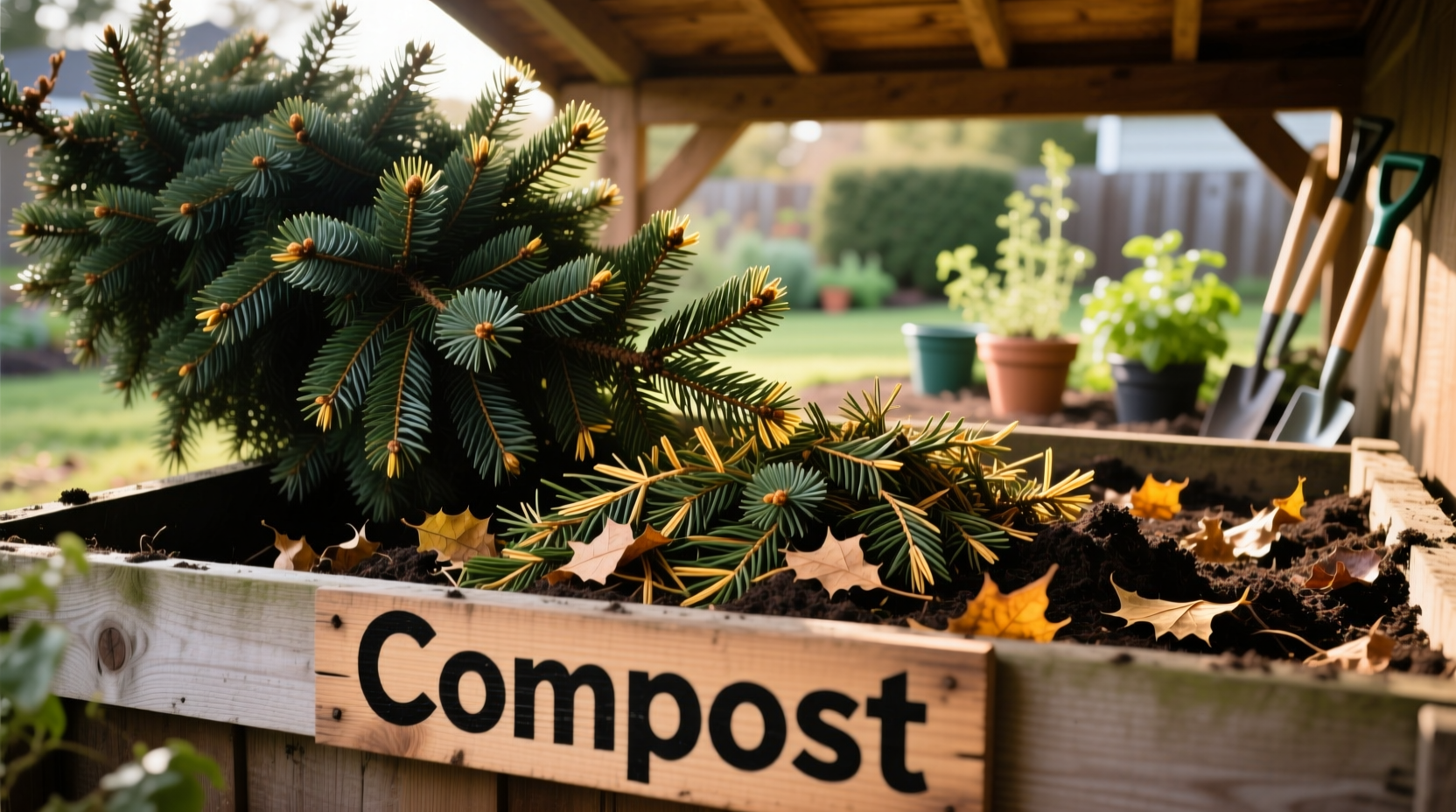
Pine needles (technically *foliage*, not true needles) belong to a botanical group known as coniferous litter — slow-decomposing, waxy, and rich in lignin and tannins. Unlike deciduous leaves, which break down in weeks to months, pine needles contain up to 35% lignin by dry weight — a complex polymer that resists microbial digestion. They also feature a thick, waxy cuticle that repels water and limits oxygen diffusion, further slowing decay. Crucially, fresh pine needles have a pH between 3.2 and 3.8 — highly acidic — but this acidity is *not* permanent or soil-altering in compost. As microbes metabolize organic acids and tannins during decomposition, the pH naturally rises toward neutral (6.5–7.5) over time. What matters most isn’t initial acidity, but structural resilience and nitrogen immobilization.
When added in large volumes without balancing inputs, pine needles can temporarily tie up available nitrogen as decomposers work to break down their tough cellulose-lignin matrix. This doesn’t mean they “steal” nitrogen permanently — just that the process requires more time and complementary “green” materials to stay biologically active. Understanding this dynamic transforms pine needle composting from a gamble into a predictable, manageable practice.
Tip: Never add whole, unshredded pine boughs directly to an active hot compost pile — they’ll mat, block airflow, and stall decomposition. Always shred or chop first.Step-by-Step: Turning Your Tree Into Compost (Not a Brick)
- Remove all non-organic materials: Strip off tinsel, ornaments, lights, wire stands, flocking, and synthetic garlands. Even trace glitter or plastic-coated ribbon will persist in finished compost and contaminate garden beds.
- Shred aggressively: Use a chipper-shredder if possible. If not, cut boughs into 1–2 inch pieces with loppers or heavy-duty pruners. Needle clusters should separate easily; avoid adding intact 6-inch sprigs.
- Pre-soak (optional but recommended): Soak shredded material in water for 24–48 hours. This rehydrates dried tissue, breaks surface wax, and jumpstarts microbial colonization. Drain well before layering — soggy piles compact and suffocate.
- Layer strategically: Alternate 2-inch layers of pine material with 2-inch layers of high-nitrogen “greens”: fresh grass clippings, vegetable scraps, coffee grounds, or aged manure. Avoid using only pine — aim for no more than 20–25% of total volume in any single layer.
- Aerate weekly: Turn the pile thoroughly every 5–7 days for the first 3–4 weeks. This reintroduces oxygen, distributes moisture, and prevents anaerobic pockets. After month one, turn every 10–14 days until thermophilic activity slows.
- Maintain moisture: Keep the pile damp like a wrung-out sponge — not dripping, not dusty. Pine material absorbs water readily; check depth with a hand probe or trowel.
Do’s and Don’ts of Pine Needle Composting
| Do | Don’t |
|---|---|
| Shred needles and small twigs before adding | Add whole branches or uncut boughs |
| Mix pine material with at least 3 parts nitrogen-rich greens | Compost pine needles alone or in >30% concentration |
| Turn the pile regularly to maintain aerobic conditions | Let pine-heavy piles sit untouched for months |
| Use finished compost only after full maturation (6–12 months) | Apply partially decomposed pine material directly to seedlings or acid-sensitive plants |
| Store excess shredded pine in breathable burlap sacks for later use as bulking agent | Bag pine debris in plastic — it will mold or ferment anaerobically |
Real-World Example: How a Community Garden Solved Its Pine Problem
In Portland, Oregon, the 2-acre Hawthorne Community Garden received over 120 donated Christmas trees each January — nearly two tons of conifer biomass. For years, volunteers tried composting whole trunks and boughs in static windrows. By March, piles were cold, matted, and emitting faint sour odors. Nothing broke down past the outer 4 inches. In 2022, Master Composter Lia Chen redesigned the protocol: she secured access to a commercial chipper, mandated pre-soaking, introduced a strict 1:4 pine-to-grass-clipping ratio, and trained volunteers to monitor temperature with long-stem thermometers. Within eight weeks, internal pile temps hit 140°F consistently. By late June, the first batch of dark, crumbly compost — tested at pH 6.8 and rich in earthworm castings — was screened and distributed to members. Crucially, soil tests across 30 raised beds showed *no* measurable pH drop after application. As Chen noted in her quarterly report: “The pine didn’t change our soil chemistry — it changed our discipline. Once we treated it like a structural ingredient, not waste, it became an asset.”
Expert Insight: What Soil Scientists Say About Pine in Compost
“Pine needles are among the most misunderstood compost ingredients. Their reputation for ‘acidifying’ soil stems from outdated observations of forest floor duff — where needles accumulate over decades under low-oxygen, low-microbial conditions. In a well-managed, aerated compost system, acidity neutralizes rapidly. What matters far more is particle size and C:N balance. Shredded pine is excellent bulking material — it creates pore space, improves airflow, and contributes stable carbon. Just don’t skip the greens.” — Dr. Arjun Mehta, Senior Soil Microbiologist, Rodale Institute
FAQ: Your Pine Composting Questions, Answered
Will pine needle compost make my garden soil too acidic?
No — not if the compost is fully matured. While fresh needles are acidic, the composting process neutralizes pH through microbial metabolism and buffering by calcium, potassium, and other minerals present in food scraps, manure, or soil amendments. University of Vermont Extension soil testing of 120 home compost batches containing 15–25% pine material showed final pH ranging from 6.4 to 7.1 — well within optimal range for vegetables, flowers, and shrubs.
Can I use pine compost for seed starting or potting mixes?
Only if fully finished and screened. Immature pine compost retains coarse, fibrous fragments that impede root penetration and water retention. Mature pine-enriched compost (aged ≥9 months, dark brown, earthy-smelling, passes through ¼-inch screen) works exceptionally well in potting blends — its structure improves drainage while retaining nutrients. Mix at 20–30% volume with peat-free coir and worm castings for best results.
What if I don’t have a chipper or shredder?
You can still compost responsibly — but adjust expectations. Hand-chop boughs as finely as possible, then mix 1 part pine with 5 parts greens in a covered bin (e.g., tumbler or aerated static pile). Add a shovelful of finished compost or garden soil to inoculate with microbes. Expect 8–14 months for full breakdown — longer than shredded material, but reliable. Avoid open heaps, as unshredded pine dries out and forms impenetrable mats.
When to Use Pine Compost — and When to Hold Off
Finished pine compost shines in specific applications — and falters in others. Its high lignin content yields humus with exceptional water-holding capacity and long-term soil structure benefits. It’s ideal for amending sandy soils, mulching around established acid-tolerant perennials (azaleas, blueberries, rhododendrons), and building no-dig lasagna beds. However, avoid applying it to newly seeded lawns, shallow-rooted annuals like lettuce or radishes, or transplants in early spring — residual tannins (even in mature compost) can mildly inhibit germination in sensitive species. Wait until soil temperatures consistently exceed 55°F and seedlings have developed true leaves before top-dressing.
Also note: pine compost does not replace nitrogen fertilizer. While it slowly releases nutrients, its NPK profile is low (typically ~0.5-0.2-0.3). Use it as a soil conditioner and organic matter booster — not a primary nutrient source. Pair it with composted manure, alfalfa meal, or fish emulsion for balanced fertility.
Three Practical Tips to Accelerate Pine Breakdown
- Boost microbial diversity: Add a handful of finished compost, garden soil, or vermicompost to each layer. Diverse microbes — especially white-rot fungi like Trametes versicolor — excel at lignin degradation.
- Incorporate biochar (1–2% by volume): Its porous structure hosts beneficial bacteria and stabilizes nitrogen, reducing immobilization. Research from Cornell’s Waste Management Institute shows biochar-amended pine piles reach maturity 30% faster.
- Monitor temperature religiously: A healthy pine-inclusive pile should sustain 130–150°F for 7–10 consecutive days. If temps stall below 110°F after week two, add more greens, water, and turn immediately — insufficient nitrogen is almost always the culprit.
Conclusion: From Holiday Relic to Garden Gold
Your real Christmas tree isn’t waste — it’s woody potential. Those resilient pine needles, often dismissed as composting liabilities, become powerful allies when handled with knowledge and care. They’re not a shortcut; they’re an invitation to deepen your understanding of decomposition ecology — to appreciate how lignin feeds fungi, how tannins transform into humic substances, and how patience reshapes perception. You won’t get instant results, but you will gain richer soil, better water retention, and a quieter conscience knowing your holiday tradition closes its loop meaningfully. Start small this year: shred one branch, layer it thoughtfully, turn with intention, and watch biology do its quiet, relentless work. In six months, you’ll hold black gold forged from fragrance and memory — proof that even the most stubborn natural materials yield to attention, balance, and time.
💬 Have you successfully composted Christmas tree pine needles? Share your ratio, timeline, or biggest lesson in the comments — your experience could help someone else turn their holiday remnant into garden abundance.








