Choosing between a bullet journal and a pre-printed planner isn't just about aesthetics or convenience—it's about sustainability. The real question isn't which one looks better on Instagram, but which system you'll actually use consistently over time. Many people start the year with elaborate spreads and color-coded tabs, only to abandon their planners by March. The key to lasting productivity lies not in the tool itself, but in how well it aligns with your personality, workflow, and daily habits.
This comparison dives deep into both systems—not to declare a universal winner, but to help you identify which method is more likely to become a permanent part of your routine. Whether you're drawn to the blank canvas of a dot-grid notebook or the comforting structure of a dated weekly layout, understanding the strengths and limitations of each can make all the difference in long-term adherence.
The Core Philosophy Behind Each System
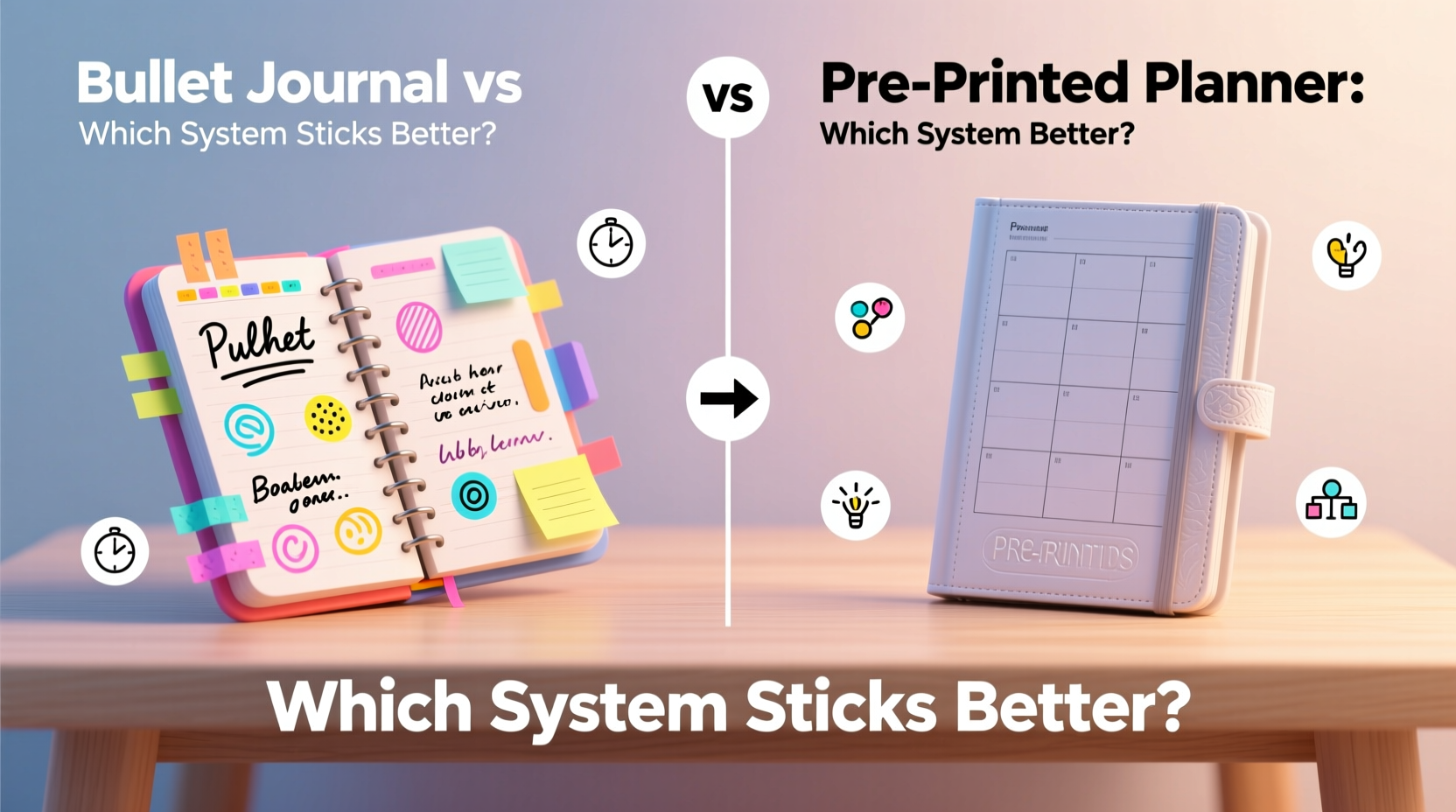
A bullet journal operates on minimalism and intentionality. Created by designer Ryder Carroll, it’s built around rapid logging—short, symbolic entries that capture tasks, events, and notes efficiently. Its power lies in customization: users design their own layouts, index pages, collections, and trackers based on current needs. There’s no prescribed format beyond the core modules (future log, monthly log, daily log), allowing for total creative freedom.
In contrast, a pre-printed planner offers structure out of the box. These planners come with fixed layouts—daily, weekly, or monthly spreads—often including designated spaces for goals, habits, appointments, and priorities. They’re designed for immediacy: open the book, start writing, and go. Brands like Passion Planner, Erin Condren, and Moleskine tailor these to specific lifestyles, from corporate professionals to busy parents.
The philosophical divide is clear: one emphasizes adaptability; the other, consistency. But when it comes to sticking with a system, philosophy must meet practicality.
Flexibility vs. Structure: Who Benefits Where?
Flexibility is the hallmark of the bullet journal. Because every page is self-designed, the system evolves with your life. Need a new habit tracker? Add one. Transitioning jobs? Create a career goal collection. Dealing with a health issue? Build a symptom log. This responsiveness makes bullet journals ideal for people whose routines shift frequently or who thrive on creativity.
However, this same flexibility demands effort. Designing spreads takes time. Maintaining an index requires discipline. For someone already overwhelmed, the blank page can feel paralyzing rather than empowering. As productivity expert Tiago Forte observes:
“Tools that require upfront investment often fail not because they’re ineffective, but because they demand too much cognitive load at the wrong time.” — Tiago Forte, Building a Second Brain
Pre-printed planners reduce that load significantly. With everything laid out in advance, there’s less decision fatigue. You don’t need to ask, “How should I structure my week?”—it’s already done. This lowers the barrier to entry, making it easier to maintain consistency, especially during stressful or chaotic periods.
Yet, rigidity can be a drawback. If your schedule doesn’t match the planner’s layout, you may end up forcing square pegs into round holes. A rigid hourly breakdown might not suit someone with project-based work. A Sunday-to-Saturday week may clash with a Monday-start job. And if your goals change mid-year, you can’t easily reconfigure the pages.
Tip: If you love customizing but struggle with consistency, consider a hybrid approach—use a pre-printed planner as your base and incorporate bullet journal-style collections in a separate notebook.Comparative Analysis: Key Factors That Impact Long-Term Use
| Factor | Bullet Journal | Pre-Printed Planner |
|---|---|---|
| Setup Time | High – Requires initial learning curve and design time | Low – Ready to use immediately |
| Customization | Unlimited – Full control over layout and content | Limited – Fixed format with minor personalization |
| Maintenance Effort | Moderate to High – Index updates, migration, redesigns | Low – Turn the page and write |
| Portability | High – Choose any size or brand of notebook | Variable – Often bulkier due to added features |
| Cost Over Time | Lower – One notebook lasts months or years | Higher – Typically replaced annually |
| Longevity of Use | Depends on user commitment and skill level | Often abandoned if too rigid or irrelevant |
The table reveals a trade-off: bullet journals offer greater long-term value and adaptability but require higher initial investment. Pre-printed planners lower friction early on but may lose relevance as life changes. The system that \"sticks better\" depends on where you fall on the spectrum of routine stability versus creative engagement.
A Real-World Example: Two Professionals, Two Paths
Consider Sarah and James, both marketing managers with similar workloads.
Sarah thrives on routine. Her days follow a predictable rhythm: team meetings Tuesdays and Thursdays, client calls on Mondays, content planning every Friday. She values clarity and dislikes spending time organizing her organizer. After trying a bullet journal for three weeks—and feeling frustrated by having to redraw weekly spreads—she switched to a pre-printed vertical weekly planner. The consistent layout helped her block time efficiently, and she’s used the same brand for two years without burnout.
James, on the other hand, works on diverse campaigns with shifting deadlines. His responsibilities change quarterly, and he often juggles personal development goals alongside work projects. He found pre-printed planners too restrictive—he couldn’t track sprints, brainstorm ideas, or monitor side hobbies within their rigid formats. After adopting a bullet journal, he created custom dashboards for KPIs, mood tracking, and reading logs. While it took him a month to refine his system, he now uses it religiously, migrating and refining pages each month.
Their experiences underscore a crucial insight: the best planner isn’t the most beautiful or popular one—it’s the one that fits your cognitive style and lifestyle rhythm.
Building a System That Lasts: A Step-by-Step Guide
Instead of choosing blindly, follow this process to determine which system will stick for you:
- Assess Your Routine Stability – Is your schedule consistent or fluid? If you have recurring weekly patterns, a pre-printed planner may serve you well. If your tasks vary widely, lean toward bullet journaling.
- Evaluate Your Design Tolerance – Are you willing to spend 30 minutes setting up a spread, or do you want to open and write instantly? High design tolerance favors bullet journals; low tolerance favors pre-printed options.
- Test Both for Two Weeks – Dedicate one week to each system. Use them for real planning—scheduling, task management, note-taking. Note which felt easier to maintain and which left you feeling more in control.
- Review Pain Points – Did you skip entries because setup was tedious? Did you ignore sections because they didn’t fit your needs? Identify friction points objectively.
- Commit or Hybridize – Based on your trial, choose one—or combine elements. For example, use a pre-printed planner for daily logistics and a small bullet journal for goal tracking and brain dumps.
This method prioritizes evidence over preference, increasing the likelihood of long-term adoption.
Common Pitfalls That Cause Systems to Fail
Both systems fail not because they’re flawed, but because users misalign them with their reality. Common mistakes include:
- Over-customizing too early – Spending hours on aesthetic spreads before mastering basic functionality leads to burnout.
- Ignoring actual usage patterns – Using a daily log when you only check your planner weekly sets you up for failure.
- Buying into hype – Choosing a planner because it’s popular on Pinterest, not because it suits your needs.
- Failing to migrate or reflect – In bullet journals, skipping monthly reviews causes clutter and disengagement.
- Keeping a planner that no longer fits – Holding onto a yearly planner even after your job or priorities change.
FAQ: Answering the Most Pressing Questions
Can I switch from a pre-printed planner to a bullet journal later?
Absolutely. Many people start with a structured planner to build the habit of daily planning, then transition to a bullet journal once they understand their tracking needs. The skills transfer well—what you learn about time blocking, task prioritization, and reflection applies to both systems.
Which is better for ADHD or executive function challenges?
There’s no one-size-fits-all answer, but many with ADHD prefer pre-printed planners for their external structure. Predictable layouts reduce decision fatigue and provide visual cues. However, some respond better to the tactile, creative process of bullet journaling, which can increase engagement. The key is minimizing friction—choose whichever requires fewer mental hoops to use daily.
Do bullet journals really save money?
Yes, over time. A single Leuchtturm1917 (180 pages) costs around $20 and can last 6–12 months depending on usage. In contrast, premium pre-printed planners often cost $40–$70 annually. Even factoring in pens and accessories, bullet journals are typically more economical in the long run.
Final Recommendation: Match the Tool to the User, Not the Trend
The bullet journal vs pre-printed planner debate misses the point. Neither system is inherently superior. What matters is alignment. A beautifully illustrated bullet journal abandoned in April is less effective than a simple lined planner used faithfully for 12 months.
If you crave freedom, enjoy designing systems, and have variable routines, the bullet journal’s adaptability will likely serve you better. But if you value simplicity, respond well to structure, and want to minimize setup time, a pre-printed planner gives you a stronger foundation for consistency.
Ultimately, the system that sticks is the one you use—not the one you admire from afar. Productivity isn’t about perfection; it’s about persistence. Choose the tool that reduces resistance, supports your natural rhythms, and makes it slightly easier to show up for yourself each day.
💬 Ready to find your perfect planning match? Try a two-week experiment with both systems and share your experience. Your journey might help someone else finally stick with theirs.








