The holiday season brings warmth, tradition, and the unmistakable scent of pine—especially when a Christmas tree takes center stage in the living room. But as families gather around their decorated trees, an often-overlooked factor comes into play: indoor air quality. With growing awareness about environmental health, many are asking whether artificial or real Christmas trees have a lesser impact on the air they breathe indoors. The answer isn’t as simple as nostalgia versus convenience—it involves chemistry, biology, and long-term exposure.
Indoor air can be two to five times more polluted than outdoor air, according to the U.S. Environmental Protection Agency (EPA). During winter, homes are sealed tightly against the cold, trapping airborne particles and volatile organic compounds (VOCs) inside. A Christmas tree—whether plastic or natural—can contribute to this buildup in ways most people never consider. This article breaks down the science behind both types of trees, compares their effects on air quality, and offers practical guidance for making a healthier choice.
Chemical Emissions: What’s Really Lurking in Your Artificial Tree?
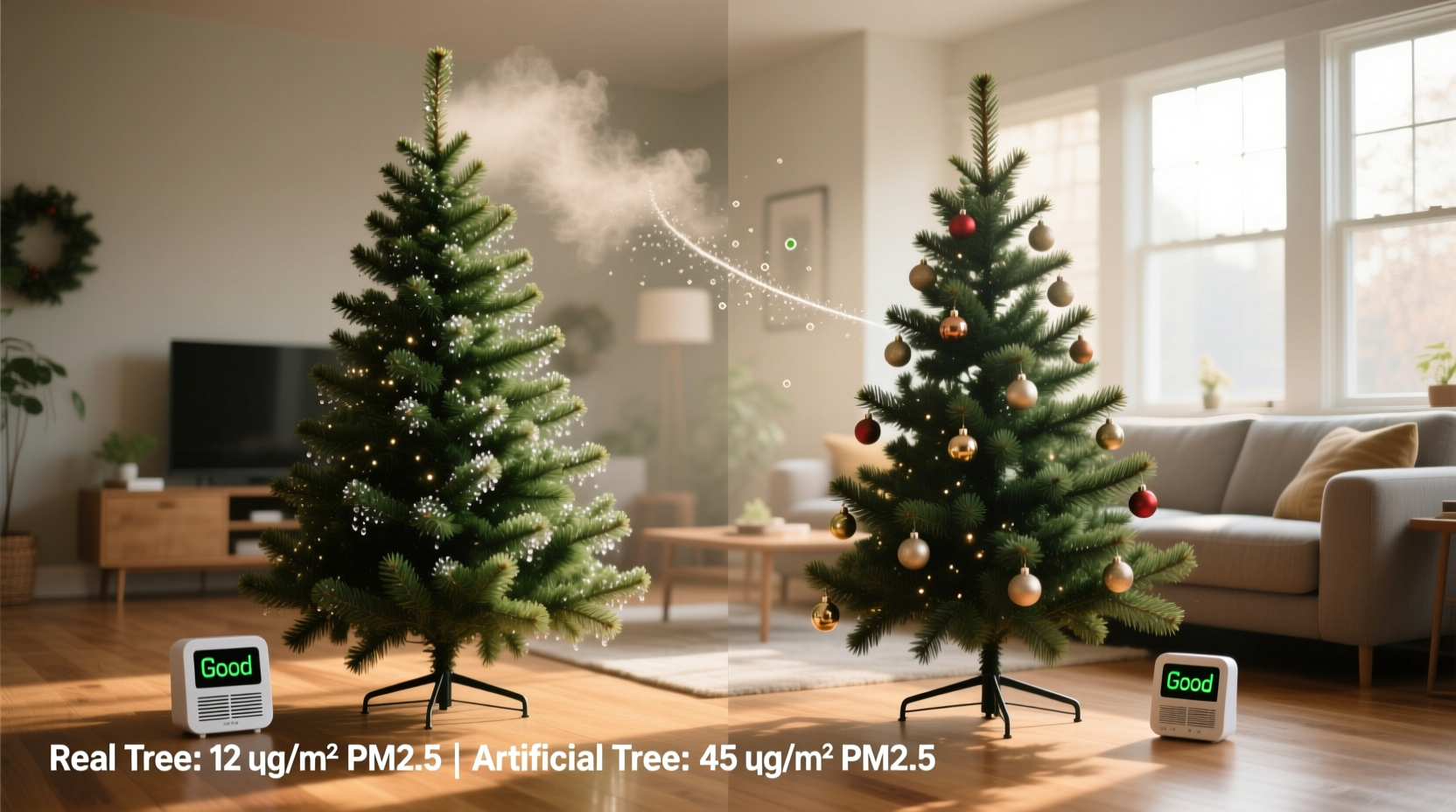
Artificial Christmas trees are typically made from polyvinyl chloride (PVC), a synthetic plastic known for its durability and low cost. While convenient, PVC carries hidden health risks. When manufactured, it requires additives like phthalates (used to soften the plastic) and lead (used as a stabilizer), both of which can off-gas over time. Off-gassing refers to the release of chemicals into the air as vapors—a process that accelerates when materials are exposed to heat or sunlight.
A 2004 study by the University of Georgia found that new artificial trees can emit significant levels of total volatile organic compounds (TVOCs) for up to two weeks after being unpacked. These emissions include benzene, formaldehyde, and other irritants linked to respiratory issues, headaches, and allergic reactions. Even older trees continue to emit trace amounts, especially if stored in garages or attics where temperature fluctuations increase chemical volatility.
Tip: If using an artificial tree, unpack it in a well-ventilated area (like a garage) and let it air out for 24–48 hours before bringing it indoors.Moreover, dust accumulation on artificial trees between seasons introduces another hazard. Dust mites, mold spores, and pet dander cling to the branches and can be redistributed into the air once the tree is assembled. Unless cleaned thoroughly before use, these contaminants become part of your home's breathing space.
Natural Scents and Biological Factors: The Real Tree Air Quality Profile
Real Christmas trees, usually species like fir, spruce, or pine, bring with them a complex biological profile. Their fresh aroma comes from terpenes—organic compounds released by coniferous trees. While pleasant, some terpenes like alpha-pinene and limonene can react with ozone in indoor environments to form secondary pollutants such as formaldehyde and ultrafine particles.
However, research suggests that under normal household conditions, the concentration of these byproducts remains well below harmful thresholds. In fact, a 2017 study published in Atmospheric Environment concluded that the contribution of real Christmas trees to indoor formaldehyde levels was negligible compared to other common sources like pressed wood furniture or cleaning products.
Where real trees do pose a risk is in allergy potential. Pollen residues, mold spores (particularly from the genus Cladosporium), and sap proteins can trigger symptoms in sensitive individuals. A 2011 study from the State University of New York found that indoor placement of a live tree increased airborne mold counts significantly within days—sometimes doubling them. For people with asthma or seasonal allergies, this could mean worsened congestion, sneezing, or breathing difficulties.
“While real trees are biologically active and may carry allergens, their overall chemical footprint is far lower than that of PVC-based artificial alternatives.” — Dr. Lena Peterson, Indoor Air Quality Specialist, Cleveland Clinic
Comparative Analysis: Real vs Artificial Trees and Indoor Air Impact
| Factor | Real Christmas Tree | Artificial Christmas Tree |
|---|---|---|
| VOC Emissions | Low; primarily natural terpenes with minimal reactivity | High initially; includes formaldehyde, benzene, phthalates |
| Allergen Risk | Moderate to high due to mold, pollen, sap | Low unless dusty or improperly stored |
| Dust Accumulation | Minimal (disposed annually) | High (builds up over years if not cleaned) |
| Lifespan & Reuse | Single season | 5–10+ years |
| Environmental Footprint | Biodegradable; supports sustainable forestry | Non-recyclable; petroleum-based; landfill persistence |
| Off-Gassing Duration | Negligible beyond first few days | Up to two weeks for new trees; residual over time |
This comparison reveals a trade-off: real trees introduce biological variables but lack toxic synthetic emissions, while artificial trees avoid allergens but contribute chemical pollution. Neither option is universally “safe,” but understanding your household’s specific needs helps determine the best fit.
Step-by-Step Guide to Minimizing Tree-Related Air Pollution
No matter which type of tree you choose, proactive steps can reduce its impact on indoor air quality. Follow this timeline to prepare and maintain a healthier holiday environment.
- Week Before Setup: Clean storage containers and inspect tree for dust or damage. For artificial trees, wipe down branches with a damp microfiber cloth.
- Day of Assembly: Unpack the tree in a garage or outdoor space. Allow it to air out for at least one full day before decorating.
- First 48 Hours Indoors: Maximize ventilation. Open windows periodically, even briefly, to flush out accumulated VOCs or mold spores.
- During Display Period: Use a HEPA air purifier near the tree to capture airborne particles. Monitor humidity (ideal range: 30–50%) to discourage mold growth.
- After Holiday Season: Disassemble promptly. For artificial trees, clean thoroughly, let dry completely, and store in a sealed, breathable container away from heat sources.
Real-Life Scenario: The Johnson Family’s Allergy Awakening
The Johnsons in Portland, Oregon, had used the same artificial tree for eight years. Every December, their youngest daughter developed persistent coughing and itchy eyes. They blamed cold weather—until a visit from a relative who worked in environmental medicine prompted them to reconsider.
After testing revealed elevated phthalate levels in their living room during the holidays, they switched to a freshly cut local fir tree—but took precautions. They rinsed the tree outdoors before bringing it inside, placed a HEPA filter nearby, and limited display time to two weeks. Surprisingly, allergy symptoms decreased. The culprit wasn’t pollen, but years of accumulated dust and chemical off-gassing from their aging PVC tree.
Their experience highlights a key insight: long-term use of artificial trees without proper maintenance can silently degrade indoor air quality. Meanwhile, short-term use of real trees, when managed carefully, may present fewer cumulative risks.
Expert Recommendations and Sustainable Trade-offs
From an air quality perspective, experts generally favor real trees—with caveats. “If you’re concerned about chemical exposure, especially for children or those with respiratory conditions, a real tree is the cleaner choice in terms of synthetic pollutants,” says Dr. Arjun Mehta, an environmental health scientist at Harvard T.H. Chan School of Public Health.
However, sustainability must also be considered. Artificial trees are often marketed as eco-friendly because they’re reused. But a 2009 life cycle assessment by PE International found that an artificial tree must be used for at least 20 years to offset its higher carbon footprint compared to buying a real tree annually. Most households keep artificial trees for only six to nine years.
Additionally, real Christmas trees are typically grown on farms specifically for harvest, absorbing CO₂ during growth and supporting rural economies. After disposal, they can be mulched or recycled—many municipalities offer chipping programs. In contrast, artificial trees end up in landfills, where they persist for centuries.
Checklist: Choosing the Healthiest Tree for Your Home
- ✅ Assess household health concerns: asthma, allergies, or chemical sensitivities?
- ✅ For real trees: Rinse off visible dirt and shake out loose needles before setup.
- ✅ For artificial trees: Air out in a ventilated space for 24–48 hours before decorating.
- ✅ Clean artificial trees annually with a damp cloth before use.
- ✅ Place a HEPA air purifier near the tree to reduce airborne particles.
- ✅ Avoid placing trees near heat sources (vents, radiators) that accelerate off-gassing.
- ✅ Limit display duration—remove the tree within four weeks to minimize exposure.
- ✅ Recycle real trees properly; dispose of artificial ones through e-waste or special programs if available.
Frequently Asked Questions
Can a real Christmas tree make me sick?
For most people, no. However, individuals with mold allergies may experience symptoms due to mold spores carried on the tree. Rinsing the tree before bringing it indoors and using an air purifier can significantly reduce this risk.
Do artificial trees release toxic fumes?
New artificial trees made from PVC can emit volatile organic compounds (VOCs), including phthalates and formaldehyde, especially during the first few days. These emissions decrease over time but can still affect sensitive individuals. Proper airing and cleaning help mitigate exposure.
Which type of tree has a smaller environmental impact?
Real trees generally have a lower environmental impact when responsibly sourced and recycled. Artificial trees require petroleum-based production and generate long-term waste. To match the environmental benefit of a real tree, an artificial one must be reused for at least 15–20 years.
Conclusion: Making a Conscious Choice for Healthier Holidays
The debate between artificial and real Christmas trees isn't just about tradition or convenience—it's about what you're willing to breathe in your own home. While artificial trees promise reuse and longevity, their chemical composition poses measurable risks to indoor air quality. Real trees, though biologically active, introduce fewer synthetic toxins and offer a more natural, biodegradable alternative.
Ultimately, the \"better\" choice depends on your household’s health priorities, how long you plan to keep an artificial tree, and whether you take steps to minimize pollution from either option. By understanding the invisible factors at play—from VOCs to mold spores—you gain control over your indoor environment during one of the most intimate times of the year.
💬 What kind of Christmas tree does your family use—and have you noticed any effects on air quality? Share your experience in the comments to help others make informed, healthier choices this holiday season.








