As holiday seasons grow smarter, so do our decorations. Voice-activated Christmas lights—once a novelty—are now common in homes across the country. With a simple command to Alexa, Google Assistant, or Siri, you can turn on twinkling strands, adjust brightness, or cycle through color themes without lifting a finger. But as convenience increases, so do questions about digital privacy. Are these festive gadgets truly practical, or are they quietly compromising your home’s security?
The appeal is undeniable: effortless control, customizable displays, and integration with existing smart home ecosystems. Yet every connected device introduces potential vulnerabilities. For many consumers, the decision isn’t simply about aesthetics or ease—it’s about balancing modern convenience with personal privacy.
The Rise of Smart Holiday Lighting
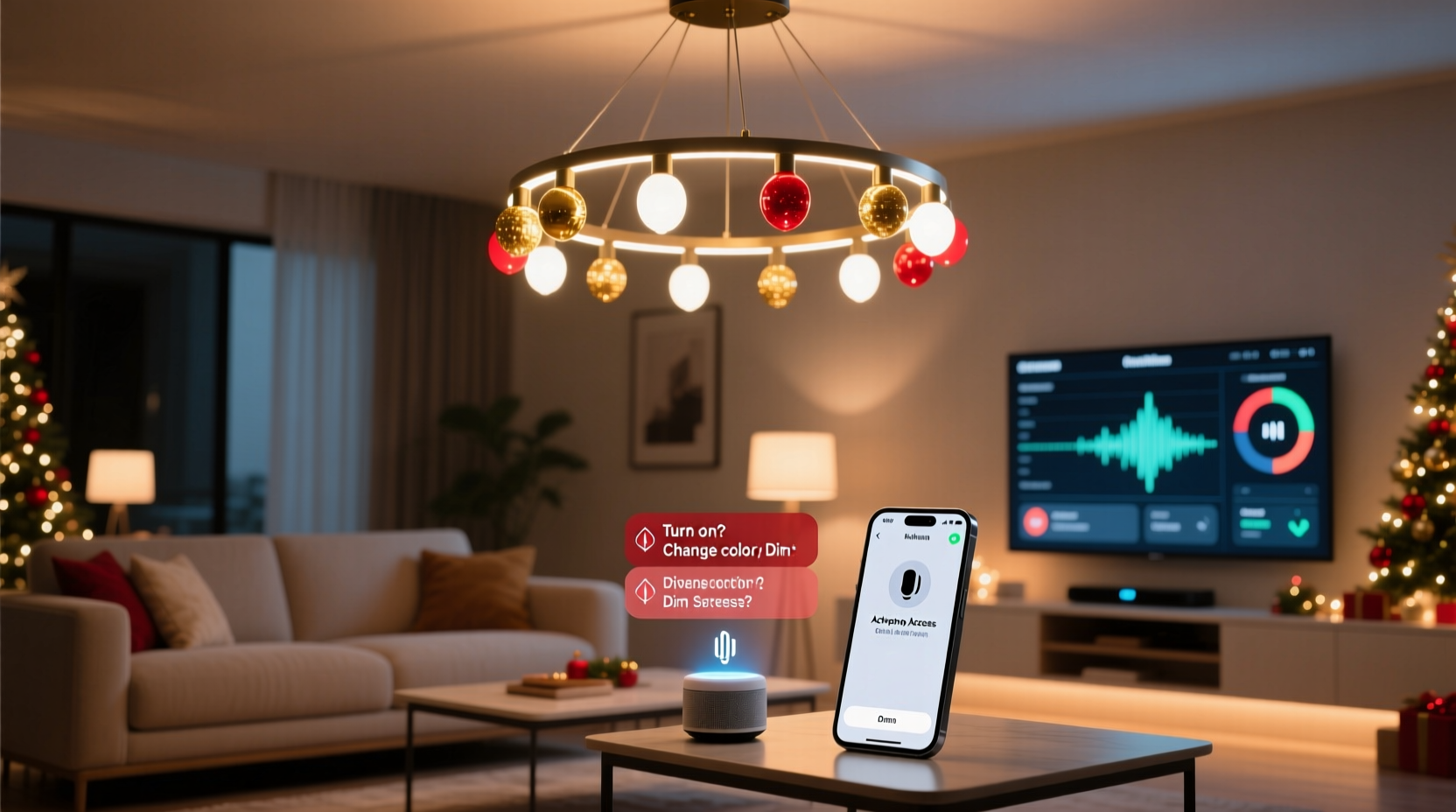
Voice-activated Christmas lights are part of a broader trend toward smart home automation. These lights connect to Wi-Fi networks and pair with virtual assistants, allowing users to control them using spoken commands. Most models support platforms like Amazon Echo, Google Nest, and Apple HomeKit, enabling seamless interaction with other smart devices such as thermostats, doorbells, and speakers.
Modern versions go beyond simple on/off functions. You can schedule lighting routines (e.g., “Turn on at 5 PM daily”), dim brightness for ambiance, sync colors with music, or even set motion-activated effects. Some high-end systems allow outdoor light choreography synced to holiday playlists—all controllable by voice.
Manufacturers market these features as time-saving and energy-efficient. After all, forgetting to turn off your display overnight is no longer an issue when you can shut everything down from bed—or while vacationing miles away.
Tip: Always update firmware on smart lights regularly; manufacturers often release patches to fix security flaws.Practical Benefits of Voice Control
Despite skepticism, there are tangible advantages to using voice-activated Christmas lights—especially for certain households.
- Accessibility: Seniors or individuals with mobility issues benefit greatly from hands-free operation. Turning on outdoor lights without stepping onto icy walkways reduces fall risks.
- Convenience: Parents juggling holiday preparations appreciate being able to toggle lights while cooking, wrapping gifts, or managing children.
- Customization: Users can create themed scenes—“Santa Mode” with red-and-green pulsing, “Winter Wonderland” with cool white waves—and switch between them instantly.
- Energy Management: Timers and remote shutoffs help prevent unnecessary power usage, reducing electricity bills over extended holiday periods.
- Integration: When linked to smart home hubs, lights can respond to broader automation rules—like turning on when someone rings the doorbell or detecting motion at night.
In homes already equipped with smart speakers and IoT devices, adding voice-controlled lights feels like a natural extension rather than a disruptive change. The learning curve is minimal, setup is typically app-based and guided, and most systems require only a standard outlet and stable internet connection.
Privacy and Security Risks: What You’re Exposing
Every smart device that listens for voice commands also collects data. While companies claim audio is anonymized and encrypted, breaches happen—and trust is fragile.
Voice assistants process requests either locally or in the cloud. In cloud processing, your command—“Hey Google, turn on the tree lights”—is recorded, sent to servers, analyzed, and acted upon. Even if deleted automatically after a few months, that snippet exists somewhere in a data pipeline. If your account is compromised, hackers could potentially access voice history or manipulate smart devices.
“Any always-listening device expands your attack surface. A hacked smart light might not steal passwords directly, but it can be a gateway to your network.” — Daniel Park, Cybersecurity Analyst at NetShield Labs
Worse still, poorly secured devices can become entry points for botnet attacks. In 2013, a well-publicized incident involved hackers accessing a smart refrigerator to send spam emails. Today, thousands of unpatched IoT devices—including decorative lights—are exploited annually in distributed denial-of-service (DDoS) campaigns.
Additionally, third-party apps used to configure lights may request excessive permissions—access to location, contacts, or microphone—even when unnecessary. Some budget brands lack transparent privacy policies or end-to-end encryption, making user data vulnerable during transmission.
Real Example: The Overlooked Backdoor
In December 2022, a Minnesota family noticed their living room lights flashing erratically late at night. Upon checking their Google Home app, they discovered unfamiliar login attempts originating from another state. Their voice-activated string lights were connected through an outdated Android app that hadn’t received updates in over a year. Though the lights themselves weren't malicious, the associated app had a known vulnerability that allowed unauthorized access to their Wi-Fi network.
It took customer support two days to reset the system and isolate the device. No financial data was stolen, but the experience prompted the family to disconnect all non-essential smart decor. As one member said, “We wanted magic, not malware.”
Comparing Practicality vs. Risk: A Balanced View
To assess whether voice-activated Christmas lights are worth the trade-off, consider both functionality and exposure. The following table outlines key factors across different user profiles.
| User Type | Practical Benefit | Privacy Risk Level | Recommended? |
|---|---|---|---|
| Families with young kids | High – Easy control during busy routines | Moderate – Risk increases with multiple connected toys/devices | Yes, with strong network security |
| Seniors / mobility-limited | Very High – Eliminates physical strain | Low-Moderate – Lower tech literacy may delay threat detection | Yes, especially indoor-only setups |
| Tech enthusiasts | High – Enjoys customization and automation | Moderate – More devices increase complexity and monitoring needs | Yes, with proactive maintenance |
| Privacy-focused individuals | Low – Prefers manual control | High – Unwilling to accept any data collection | No, opt for timer switches instead |
| Renters / temporary setups | Moderate – Easy installation/removal | Variable – Depends on router security at rental property | Use cautiously; avoid permanent integrations |
The verdict depends heavily on context. For some, the convenience outweighs the risk—particularly when proper safeguards are in place. For others, especially those prioritizing digital minimalism or handling sensitive information at home, even minor surveillance feels unacceptable.
How to Use Voice-Activated Lights Safely: A Step-by-Step Guide
If you choose to embrace smart holiday lighting, follow this sequence to minimize exposure while maximizing utility.
- Purchase from Reputable Brands: Stick to well-known manufacturers like Philips Hue, LIFX, or GE Brightspeed. Avoid no-name brands sold exclusively on discount marketplaces.
- Set Up on a Guest Network: Create a separate Wi-Fi network for all smart decor. This isolates lights from primary devices like laptops and phones.
- Update Firmware Immediately: After connecting, check the companion app for available updates. Enable automatic updates if possible.
- Review App Permissions: Disable unnecessary access (e.g., location tracking) and revoke microphone permissions when not actively configuring.
- Use Strong Authentication: Enable two-factor authentication (2FA) on your smart home accounts (Google, Amazon, etc.). Never reuse passwords.
- Schedule Off-Hours: Program lights to disable overnight or when no one is home. Reduces window of vulnerability.
- Disconnect After Holidays: Unplug or disable smart lights once festivities end. Removes them from your network entirely until next season.
FAQ: Common Questions About Voice-Activated Christmas Lights
Do voice-activated lights record everything I say?
No—not constantly. Most devices use a “wake word” system (e.g., “Alexa,” “Hey Google”) that activates recording only after detection. However, false triggers can occur, leading to unintended recordings. You can review and delete voice history in your assistant’s settings.
Can someone else control my lights remotely?
Only if they have access to your smart home account. This is why securing your login credentials is critical. Avoid sharing account details, even with family members. Instead, grant limited guest access through the app if needed.
Are there non-connected alternatives that offer similar convenience?
Yes. Smart plugs paired with traditional lights can provide app- or voice-based control without embedding intelligence into the lights themselves. Alternatively, use programmable timers for automated on/off cycles without internet connectivity.
Checklist: Is Your Smart Lighting Setup Secure?
- ✅ Purchased from a trusted brand with ongoing software support
- ✅ Connected to a guest or isolated Wi-Fi network
- ✅ Firmware updated before first use
- ✅ Two-factor authentication enabled on main smart home account
- ✅ Microphone and location permissions reviewed and minimized
- ✅ Scheduled shutdown times configured
- ✅ Plan in place to disconnect after January 6 (Epiphany)
Conclusion: Convenience with Caution
Voice-activated Christmas lights are neither inherently dangerous nor universally essential. They represent a modern compromise—one that offers genuine improvements in accessibility and ease but demands vigilance in return. For many households, especially those already immersed in smart technology, the benefits justify careful adoption.
But convenience should never come at the cost of unchecked surveillance. By treating each new device as a potential weak link in your digital ecosystem, you can enjoy the glow of holiday cheer without dimming your privacy standards.
Technology evolves faster than regulations can keep up. As consumers, we must remain informed, selective, and proactive. Whether you decide to go fully voice-controlled or stick to classic plug-in sets, make your choice intentional—not impulsive.
💬 What’s your take? Do you use voice-activated Christmas lights, or have privacy concerns kept you away? Share your experience and help others navigate this glowing dilemma.








