
For families juggling the daily chaos of children and pets, cleaning often feels like a never-ending battle. Crumbs on the floor by breakfast, muddy paw prints after a rainstorm, and stray Cheerios under the couch—these are just part of the routine. In this environment, the idea of a robot vacuum quietly maintaining cleanliness between deep cleans is undeniably appealing. But is it truly worth the investment? The answer depends on your home’s layout, lifestyle, and expectations. When evaluated honestly, robot vacuums can be not just convenient but genuinely transformative in homes with high foot traffic from both paws and little feet.
The Reality of Mess in Active Households
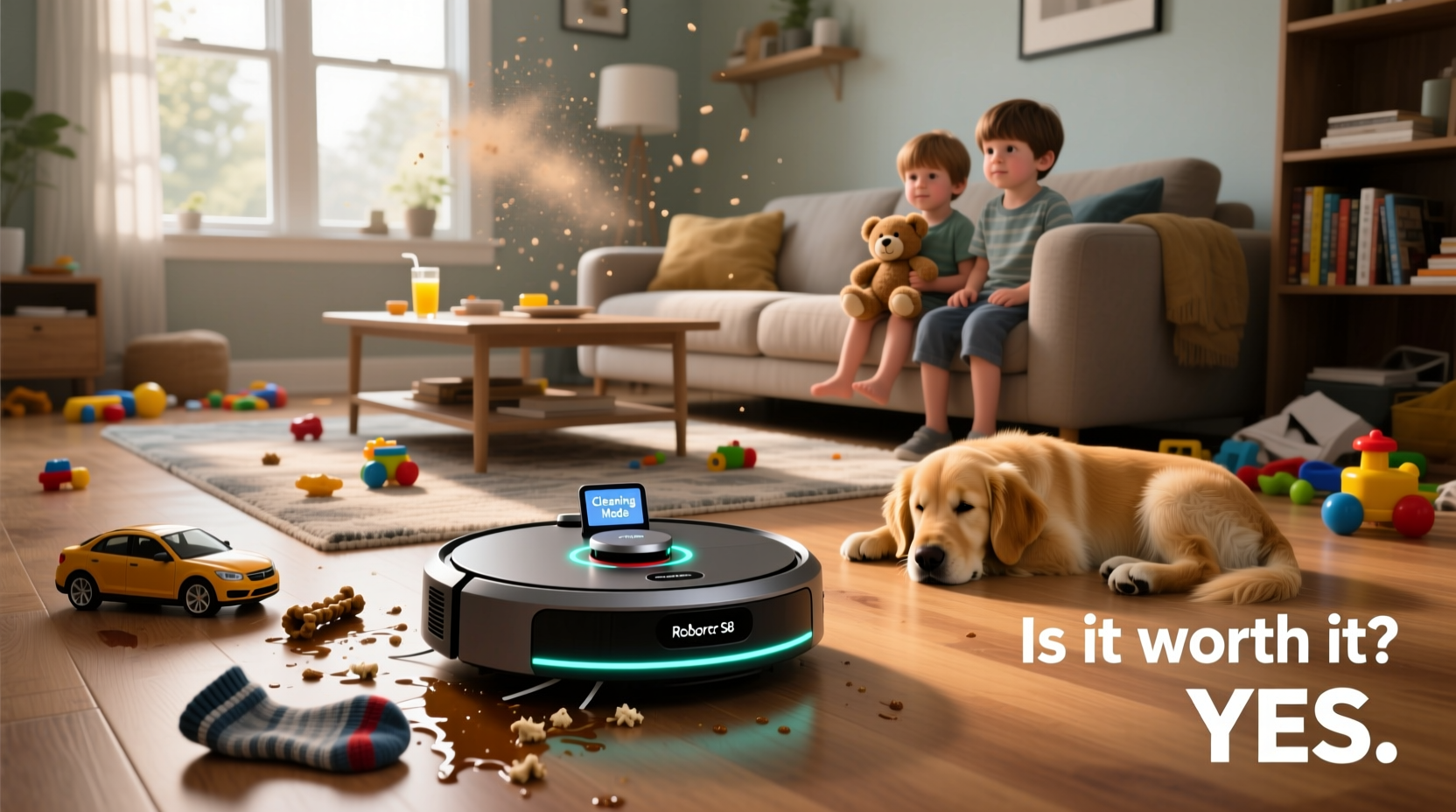
Families with young children and pets face unique cleaning challenges. Kids drop food, spill drinks, and track in dirt from playtime. Dogs and cats shed fur, bring in pollen or mud, and occasionally leave behind accidents. Traditional vacuuming may happen once or twice a week, but debris accumulates daily. This constant influx means floors rarely stay clean for long, leading to more frequent cleaning demands.
Robot vacuums operate on a different model: consistency over intensity. Instead of deep-cleaning every weekend, they perform light, automated sweeps daily. Over time, this reduces the buildup of dust, dander, and debris. For allergy sufferers—common among both kids and pet owners—this can mean fewer triggers and better indoor air quality.
Tip: Run your robot vacuum daily during peak mess times (e.g., back-to-school or puppy season) to maintain baseline cleanliness.How Robot Vacuums Handle Pet Hair and Kid-Related Debris
Pet hair is one of the toughest challenges for any vacuum. It clings to carpets, wraps around brushes, and clogs filters. High-quality robot vacuums now come with tangle-free brush rolls specifically designed to resist hair wrapping. Brands like iRobot (Roomba), Roborock, and Ecovacs have models with rubber extractors that pull hair away cleanly instead of tangling it.
When it comes to kid-related messes—crackers, cereal, sand, spilled juice—robot vacuums equipped with strong suction (measured in Pa or airflow) can handle most dry debris effectively. However, they are not designed for wet spills. Attempting to vacuum liquids can damage motors and void warranties. Some newer hybrid models include mopping functions, but even these are best suited for light damp mopping, not soaking up puddles.
One major advantage in homes with kids is automation. Parents don’t need to remember to vacuum—the robot does it automatically while they’re at work, helping the kids with homework, or managing dinner. This hands-off approach makes maintenance feasible even during hectic schedules.
“Families with pets and children benefit most from consistent cleaning cycles. A robot vacuum isn’t a replacement for deep cleaning, but it dramatically reduces the frequency of manual vacuuming.” — Dr. Laura Simmons, Indoor Air Quality Researcher, Healthy Home Institute
Key Features to Look for in a Pet- and Kid-Friendly Robot Vacuum
Not all robot vacuums are created equal. To get real value in a busy household, focus on features that enhance durability, efficiency, and ease of use.
| Feature | Why It Matters | Recommended Specs |
|---|---|---|
| Suction Power | Critical for lifting embedded pet hair and fine dust from carpets and crevices | 2,000 Pa or higher |
| Tangle-Free Brush Roll | Prevents hair from wrapping around the roller, reducing maintenance | Rubber extractors or dual rubber brushes |
| Dustbin Capacity | Larger bins reduce how often you need to empty them—important with daily use | 500 ml or larger |
| Smart Mapping & Navigation | Ensures complete coverage and avoids obstacles like toys or pet bowls | Lidar or vSLAM with room recognition |
| Self-Emptying Dock | Empties the bin automatically into a sealed bag lasting weeks | Available on premium models (e.g., Roomba j7+, Roborock S8) |
| Allergen Filtration | Traps fine particles and pet dander; essential for allergy-prone households | True HEPA filter |
Avoid budget models under $200 unless your space is very small and mostly hard flooring. These often lack navigation intelligence, get stuck frequently, and require constant supervision—defeating the purpose of automation.
Real-Life Example: The Martinez Family
The Martinez family lives in a three-bedroom suburban home with two children (ages 4 and 6), a golden retriever, and a cat. Before buying a robot vacuum, they vacuumed manually every Saturday, but by midweek, the floors were visibly dusty with scattered kibble and fur bunnies in corners.
They invested in a Roborock Q5+ with a self-emptying dock. They scheduled it to run Monday through Friday at 1 PM, after school pickup and before homework time. Within two weeks, they noticed less visible debris and fewer allergy symptoms in their youngest child, who has mild asthma.
“We still do a manual vacuum once a month for deep carpet cleaning,” says Maria Martinez, “but the robot handles 80% of the daily mess. It’s especially great at picking up the dog’s fur before it spreads everywhere.”
They did face early challenges—mainly the robot getting stuck on toy blocks and cords—but implemented a quick nightly tidy-up of high-traffic areas. Now, the system runs smoothly with minimal intervention.
Tip: Create a \"robot-safe zone\" by keeping toys, cords, and small objects off the floor during scheduled cleaning times.Step-by-Step: Setting Up Your Robot Vacuum for Success
Even the best robot vacuum won’t perform well without proper setup. Follow this timeline to maximize its effectiveness in a home with pets and kids.
- Day 1: Unbox and Charge – Fully charge the robot and its dock. Read the manual to understand error codes and maintenance alerts.
- Day 2: First Mapping Run – Let the robot map your home without interference. Remove loose rugs, cords, and small toys. Allow it to complete at least one full pass.
- Day 3: Define Keep-Out Zones – Use the app to set virtual boundaries around pet feeding areas, playpens, or fragile decor. Most modern models allow no-go zones via smartphone control.
- Day 4: Schedule Cleaning Cycles – Program daily or every-other-day runs during low-activity hours (e.g., midday when kids are at school).
- Week 2: Monitor Performance – Check for missed spots, recurring jams, or navigation errors. Adjust furniture placement if needed.
- Ongoing Maintenance – Empty the dustbin weekly (or biweekly if using self-empty dock), clean brushes monthly, and replace filters every 2–3 months.
This structured approach prevents frustration and ensures the robot integrates seamlessly into your routine.
Common Misconceptions About Robot Vacuums
Despite growing popularity, several myths persist about robot vacuums—especially in homes with active lifestyles.
- Myth: They’re just toys with limited power. – While early models were weak, today’s top-tier robots rival upright vacuums in suction and coverage on hard floors and low-pile carpets.
- Myth: They can’t handle stairs or thresholds. – Most can detect drop-offs and avoid falling down stairs. Many handle thresholds up to ¾ inch, though thick carpet transitions may pose issues.
- Myth: They’ll scare pets or kids. – Initial curiosity is common, but most animals and children adapt quickly. Some pets even follow the robot like a moving toy.
- Myth: They replace all cleaning. – No robot vacuum eliminates the need for occasional mopping, spot-cleaning, or furniture moving. They complement, not replace, traditional cleaning.
Checklist: Is a Robot Vacuum Right for Your Home?
Use this checklist to determine if investing in a robot vacuum makes sense for your family.
- ✅ Do you have hard floors or low-to-medium pile carpets?
- ✅ Do pets shed moderately to heavily?
- ✅ Do kids regularly eat or play on the floor?
- ✅ Is your home under 2,500 sq ft with clear pathways?
- ✅ Are you willing to do minor prep (e.g., picking up socks, securing cords)?
- ✅ Can you afford $300–$800 upfront (or financing options)?
- ✅ Do you value time savings over manual labor?
If you answered “yes” to most of these, a robot vacuum is likely a worthwhile investment.
Frequently Asked Questions
Can robot vacuums pick up pet hair effectively?
Yes, especially models with rubberized brush rolls and strong suction. Regular maintenance—like clearing hair from rollers—is essential to keep them working efficiently. Avoid models with bristle brushes if you have long-haired pets.
Are robot vacuums safe around toddlers and pets?
Generally, yes. They’re designed with sensors to stop or reverse when encountering obstacles. However, small infants or curious pets should be supervised initially. Most units are quiet enough not to startle animals.
How often do I need to maintain a robot vacuum?
Weekly tasks include emptying the dustbin and wiping sensors. Monthly, clean the brush roll and check wheels for debris. Filters should be replaced every 2–3 months, and side brushes inspected quarterly. Self-emptying models reduce bin maintenance significantly.
Final Verdict: Are They Worth It?
In homes with pets and kids, robot vacuums are more than a luxury—they’re a practical tool for maintaining hygiene and reducing daily chores. They won’t eliminate the need for occasional deep cleaning, but they drastically cut down on visible mess, allergens, and the mental load of housework.
The initial cost can be steep, but when measured against the cumulative time saved—often 100+ hours per year—and improved home cleanliness, the return on investment becomes clear. Families report lower stress, cleaner environments, and even better sleep due to reduced allergens.
Success depends on choosing the right model and setting realistic expectations. Pair strong hardware with smart habits—like tidying up clutter and scheduling regular runs—and the robot becomes a reliable member of the household team.
💬 Ready to reclaim your floors and your time? Evaluate your home’s needs, pick a model with pet-friendly features, and take the first step toward a cleaner, calmer home. Have questions or experiences to share? Join the conversation below.








