Sitting at a desk for eight or more hours a day takes a toll on the human body—especially the spine. For many office workers, slouching becomes second nature after years of screen-focused work. Enter posture correctors: wearable devices promising to pull shoulders back, straighten the spine, and retrain poor postural habits. But do they actually deliver lasting results, or are they just another short-term fix with questionable long-term value?
The answer isn’t straightforward. While some users report immediate relief and improved awareness, others find them uncomfortable, restrictive, or even counterproductive. To determine whether posture correctors are worth it for desk job professionals, we need to examine their function, benefits, limitations, and how they compare to foundational strategies like ergonomics, strength training, and behavioral change.
How Posture Correctors Work
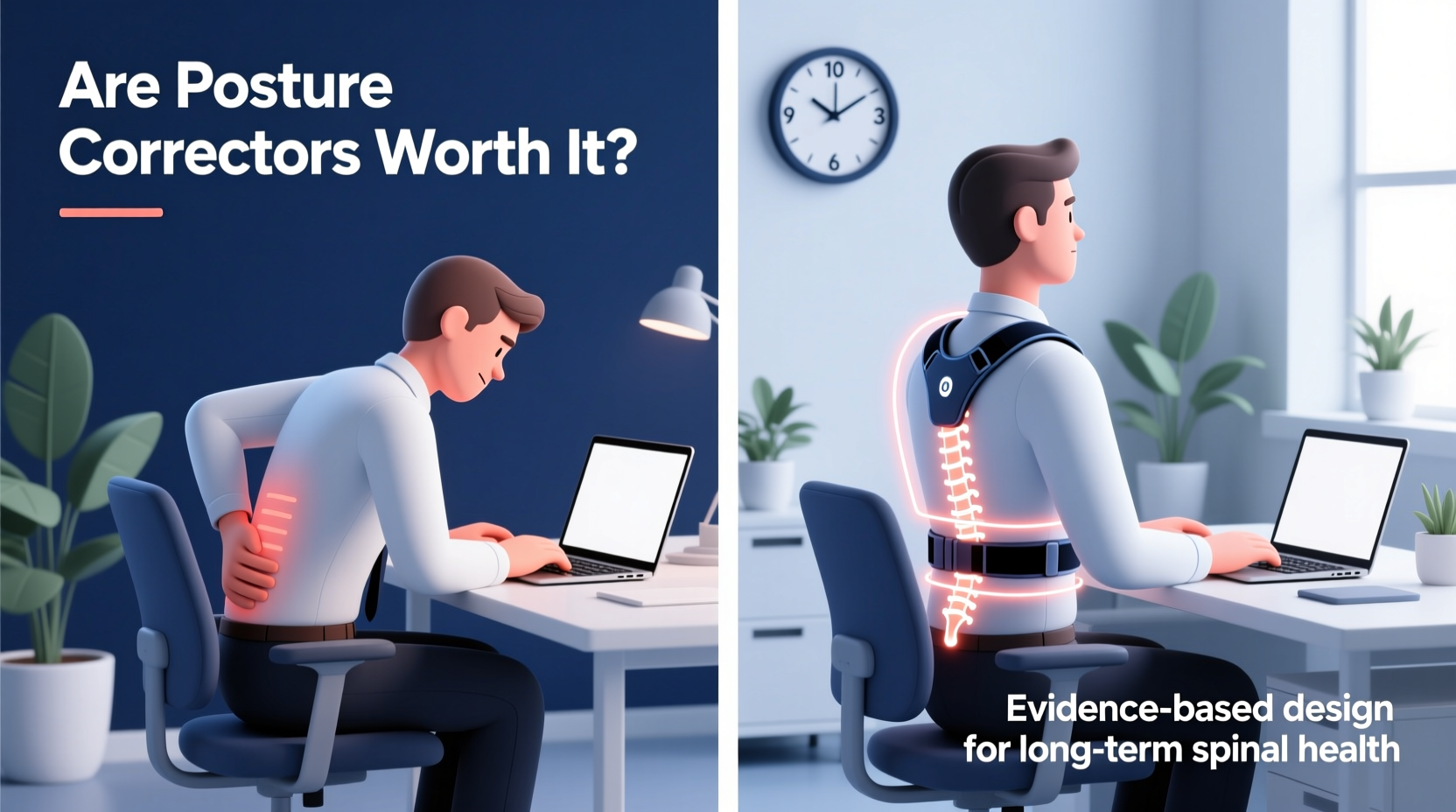
Posture correctors come in various forms—braces, shirts, straps, and electronic wearables—but most share a common design principle: mechanical support that physically restricts forward shoulder rounding and upper back hunching. They typically feature adjustable straps that pull the shoulders into external rotation, mimicking an upright, neutral spine position.
Some models include vibration alerts when slouching is detected, aiming to build postural awareness over time. Others rely purely on passive resistance—forcing the user into better alignment through constant tension across the upper back and chest.
The theory behind these devices is rooted in motor learning: by repeatedly placing the body in the correct alignment, muscles will eventually \"remember\" the position and maintain it without assistance. However, this assumes that poor posture stems primarily from muscular weakness or habit—not structural issues, nerve dysfunction, or deeper biomechanical imbalances.
Tip: If you're using a posture corrector, start with 15–30 minutes per day to avoid muscle fatigue or dependency.Benefits for Desk Workers
For individuals whose jobs involve prolonged sitting, especially in poorly designed workspaces, posture correctors can serve as a temporary aid. Here’s where they may offer tangible benefits:
- Immediate Feedback: Wearable correctors make poor posture physically noticeable. This sensory cue helps break unconscious slouching patterns.
- Pain Reduction: Some users experience reduced neck and upper back discomfort within days of consistent use, particularly if pain was caused by muscle strain from forward head posture.
- Habit Reinforcement: When combined with mindfulness, correctors can help reinforce proper sitting mechanics during critical work periods.
- Ease of Use: Unlike exercise routines or ergonomic overhauls, correctors require minimal effort—just put them on and go.
A 2020 pilot study published in the Journal of Physical Therapy Science found that participants who wore posture braces for four weeks showed measurable improvements in thoracic kyphosis (upper back curvature) and self-reported comfort levels. However, the study noted that gains plateaued after six weeks and regressed once device use stopped.
“Posture correctors can be useful as a sensory reminder, but they should never replace active postural control.” — Dr. Lena Torres, DPT, Board-Certified Orthopedic Specialist
Limitations and Risks
Despite their appeal, posture correctors come with significant caveats—especially when used long-term or without professional guidance.
Muscle Atrophy and Dependency
One major concern is that external support can lead to weakened postural muscles. The trapezius, rhomboids, and deep cervical flexors are designed to stabilize the spine. Relying on a brace may reduce their activation over time, creating a cycle where the body needs more support to maintain basic alignment.
Masking Underlying Issues
Poor posture is often a symptom, not the root cause. Tight pectoral muscles, weak core stability, improper workstation setup, or even vision problems can contribute to slouching. A brace might improve appearance temporarily but won't resolve these deeper issues.
Discomfort and Poor Fit
Many users abandon correctors due to discomfort. Straps digging into the shoulders, restricted breathing, or skin irritation are common complaints. Ill-fitting models can also create new imbalances—pulling too hard on one side or encouraging hyperextension of the lower back.
Lack of Long-Term Evidence
There is limited high-quality research supporting the long-term efficacy of posture correctors. Most studies are small, short-term, or funded by manufacturers. Without robust clinical evidence, claims about permanent postural retraining remain speculative.
| Aspect | Posture Corrector | Natural Postural Training |
|---|---|---|
| Onset of Results | Immediate (mechanical correction) | Gradual (weeks to months) |
| Durability of Results | Low (regresses after discontinuation) | High (muscular adaptation) |
| Risk of Dependency | High | None |
| Cost Over Time | $30–$150 (device purchase) | Minimal (bodyweight exercises) |
| Integration with Daily Life | Moderate (wearable limitation) | High (habit-based) |
Real-World Example: Sarah’s Experience
Sarah, a 34-year-old project manager, began experiencing chronic neck stiffness and headaches after transitioning to full-time remote work. Her home office consisted of a dining chair and a laptop on a stack of books. After researching solutions, she purchased a popular posture brace online.
At first, the change was dramatic. “I could feel my shoulders pulling back,” she said. “It made me aware every time I started to slump.” She wore it for two hours daily during her busiest work blocks and noticed reduced discomfort within a week.
But by week five, she found herself relying on the brace to feel “normal.” Without it, her posture felt worse than before. Concerned, she consulted a physical therapist, who explained that while the device helped raise awareness, it wasn’t strengthening the muscles needed for sustained improvement.
Under professional guidance, Sarah shifted focus to targeted exercises—scapular retractions, chin tucks, and thoracic extensions—and upgraded her workspace with an ergonomic chair and monitor riser. Within three months, she no longer needed the brace and reported greater energy and less fatigue at the end of the day.
Sarah’s story illustrates a key insight: posture correctors can be a helpful starting point, but they’re most effective when part of a broader strategy.
Better Alternatives and Complementary Strategies
If your goal is sustainable postural health, consider these evidence-backed approaches that address the root causes of poor posture:
1. Optimize Your Workspace Ergonomics
Your environment shapes your posture more than any wearable ever could. Key adjustments include:
- Monitor at eye level, about an arm’s length away
- Elbows bent at 90 degrees, wrists neutral
- Feet flat on the floor or footrest
- Lower back supported by lumbar cushion
2. Strengthen Postural Muscles
No device can substitute for strong stabilizers. Incorporate these exercises into your routine:
- Scapular Retractions: Sit tall, squeeze shoulder blades together for 5 seconds, release. Repeat 10 times.
- Chin Tucks: Gently draw chin straight back, creating a “double chin.” Hold 3 seconds. Improves forward head posture.
- Thoracic Extensions: Clasp hands behind head, gently arch upper back over a chair. Counteracts desk hunch.
- Planks and Dead Bugs: Build core stability essential for spinal alignment.
3. Practice Microbreaks Every Hour
Set a timer to stand, stretch, or walk for 2–3 minutes each hour. Even brief movement resets muscle tone and reduces static loading on the spine.
Tip: Use a standing desk or sit-stand converter to alternate positions throughout the day and reduce spinal compression.4. Develop Body Awareness
Practice mindfulness techniques such as yoga or Pilates, which emphasize alignment, breath, and controlled movement. These disciplines train neuromuscular coordination far more effectively than passive bracing.
Actionable Checklist: Building Sustainable Posture Habits
Instead of relying solely on a posture corrector, follow this practical checklist to build long-term resilience:
- ✅ Assess your workstation setup using an ergonomic checklist
- ✅ Perform 5 minutes of posture-focused exercises each morning
- ✅ Take a standing or walking break every 60 minutes
- ✅ Install a reminder app to check your sitting form hourly
- ✅ Invest in supportive seating with lumbar support
- ✅ Consult a physical therapist if you have chronic pain or asymmetry
- ✅ Limit posture corrector use to 30–60 minutes/day, if used at all
Frequently Asked Questions
Can posture correctors fix kyphosis or scoliosis?
No. While mild postural kyphosis (rounded upper back) may improve with behavioral changes, structural conditions like Scheuermann’s kyphosis or scoliosis require medical evaluation and targeted treatment. Posture braces cannot correct bone deformities and may delay necessary care if used as a substitute for diagnosis.
How long should I wear a posture corrector?
If used, limit wear to 15–30 minutes initially, gradually increasing to no more than 2 hours per day. Prolonged use increases the risk of muscle inhibition and dependency. Never wear one while sleeping or during intense physical activity.
Are smart posture correctors better than traditional ones?
Smart devices with sensors and feedback alerts can enhance awareness, but they don’t inherently improve outcomes. Their value depends on how you respond to the feedback. Simply receiving a vibration isn’t enough—you must actively adjust your position and build new habits.
Final Verdict: Are They Worth It?
For desk job professionals, posture correctors can serve as a short-term tool for increasing body awareness and interrupting harmful habits. They are not, however, a standalone solution. At best, they act as a “postural mirror”—revealing misalignment but not correcting it permanently.
Their real value lies in combination with other strategies: ergonomic optimization, targeted exercise, and behavioral discipline. Used mindfully and sparingly, they may help jump-start postural improvement. But when relied upon exclusively, they risk fostering dependency, masking underlying weaknesses, and providing only cosmetic correction.
If you choose to try one, treat it like training wheels—temporary support while you build the strength and awareness to ride on your own.
Conclusion: Take Control of Your Posture
Your posture reflects your relationship with your work environment and daily habits. No strap or brace can override years of sedentary behavior without meaningful change. Instead of seeking quick fixes, invest in sustainable practices: move regularly, strengthen your core, set up an ergonomic workspace, and listen to your body.
Start today. Adjust your screen height. Do three chin tucks. Stand up and stretch. These small actions compound into lasting postural health far more effectively than any device ever could.
🚀 Ready to transform your desk posture? Share your biggest challenge in the comments—or commit to one change you’ll make this week to sit smarter and move better.








