Engraved flasks have endured wedding tradition not because they’re nostalgic relics—but because they’ve evolved. Once associated with vintage speakeasies and mid-century masculinity, today’s flasks are sleeker, more intentional, and deeply personalized. They no longer sit unused in a drawer; they’re carried to mountain hikes, tucked into tuxedo pockets during rehearsal dinners, or displayed on home bars as functional heirlooms. The question isn’t whether engraved flasks are *still* stylish—it’s whether they’re *more meaningful than ever* when curated with purpose.
This shift reflects broader cultural changes: the rise of experiential gifting, the resurgence of tactile craftsmanship, and a growing preference for items that tell stories rather than signal status. Groomsmen today value authenticity over opulence—and an engraved flask, when selected with care, delivers precisely that: utility, sentiment, and quiet distinction.
Why Engraved Flasks Still Resonate—Beyond Nostalgia
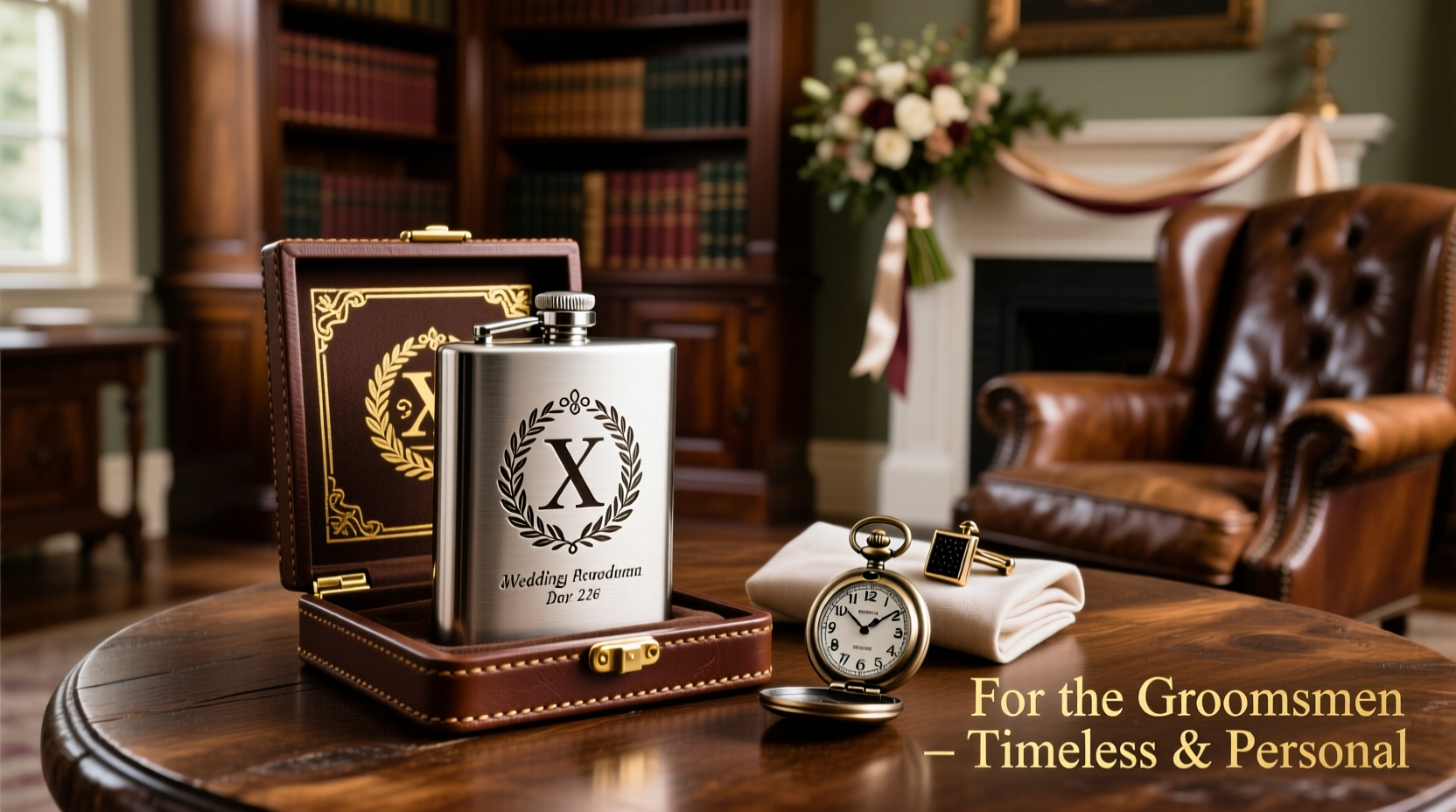
Stylishness isn’t static. It’s contextual, evolving with how people live, what they value, and how they express belonging. Modern groomsmen aren’t rejecting tradition—they’re redefining it. A 2023 WeddingWire survey found that 68% of couples prioritized “personal meaning” over “luxury branding” when selecting groomsmen gifts. Flasks ranked second only to custom leather wallets in perceived emotional weight—largely due to their dual function as both practical tool and symbolic token.
What makes them resonate now is their adaptability. Stainless steel flasks with minimalist typography suit urban weddings in converted lofts. Matte-finish titanium flasks pair seamlessly with modern tailoring. Even classic pewter options feel fresh when engraved with coordinates of the couple’s first date or a shared inside joke instead of monograms alone. Style here isn’t about surface aesthetics—it’s about alignment: between object and owner, gift and relationship, moment and memory.
“Flasks endure because they’re one of the few gifts that transition from wedding day to daily life without irony. When engraved well, they become quiet anchors—reminders of camaraderie, not just ceremony.” — Maya Lin, Wedding Stylist & Co-Founder of The Grooming Collective
Material Matters: What’s Actually Stylish in 2024
Gone are the days of heavy, overly ornate brass flasks prone to tarnish and weight imbalance. Today’s most stylish options balance durability, discretion, and design integrity. Material choice directly impacts perception—what reads as “thoughtful” versus “tacky,” “refined” versus “costume-y.” Below is a comparative overview of current standards:
| Material | Style Profile | Pros | Cons | Best For |
|---|---|---|---|---|
| Food-Grade Stainless Steel (304 or 316) | Modern, minimalist, utilitarian-chic | Corrosion-resistant, lightweight, dishwasher-safe (body only), accepts fine laser engraving | Can show fingerprints; lower-end versions may dent | Most weddings—especially destination, outdoor, or contemporary ceremonies |
| Titanium (Aircraft-Grade) | Technical luxury, understated premium | 45% lighter than steel, hypoallergenic, scratch-resistant, holds engraving with exceptional clarity | Premium price point; limited engraving depth options | Groomsmen who value gear performance (e.g., hikers, cyclists, engineers) |
| Brass (with matte lacquer finish) | Vintage-modern hybrid, warm and tactile | Develops subtle patina over time, rich visual texture, excellent for hand-stamped engraving | Requires occasional polishing; uncoated versions oxidize quickly | Rustic, barn, or heritage-themed weddings where warmth and character matter |
| Matte Black Anodized Aluminum | Urban, stealth-luxe, highly discreet | Extremely lightweight, non-reflective, fingerprint-resistant, bold contrast for white ink engraving | Less traditional feel; not ideal for deep relief engraving | Black-tie events, city weddings, or groomsmen who prefer low-profile accessories |
Crucially, avoid chrome-plated or zinc alloy flasks. They’re inexpensive but lack structural integrity, chip easily, and often contain lead or cadmium—making them unsafe for repeated alcohol contact. Style includes safety and longevity. A flask that leaks after three uses isn’t stylish—it’s embarrassing.
The Personalization Pivot: What Makes Engraving Feel Fresh (Not Forced)
Engraving is where tradition transforms into intimacy. Yet poorly executed personalization can undermine even the finest flask. The trend has shifted decisively away from generic “Groomsman 2024” toward layered, human-scale details. Consider these principles:
- Go spatial, not just textual. Instead of centering text on the front, use the back for a meaningful phrase and the side for initials + date—creating discovery moments as the flask is handled.
- Embrace negative space. Minimalist fonts (e.g., Montserrat Light, Lora Italic) with generous margins read as confident, not sparse.
- Incorporate non-verbal symbolism. A tiny compass rose, mountain silhouette, or interlocking rings—laser-etched at 0.3mm depth—adds narrative without clutter.
- Consider timing. Engrave *after* finalizing the wedding date and location—so coordinates or venue names are accurate. Rushed engraving leads to typos or outdated details.
A Real-World Example: How One Groom Redefined the Flask Gift
When Daniel planned his October 2023 wedding in Asheville, NC, he knew his five groomsmen had wildly different lifestyles: a marine biologist, a jazz drummer, a trauma surgeon, a carpenter, and a high school English teacher. He rejected uniformity—not out of rebellion, but respect. Instead of identical flasks, he commissioned five stainless steel flasks from a Nashville-based metalsmith, each engraved with a single line from a poem they’d all quoted during late-night planning sessions: “We carry what matters.”
Below that, each flask bore a unique secondary detail: the marine biologist’s included latitude/longitude of her research site in the Gulf Stream; the drummer’s featured a subtle musical staff with a single quarter note; the surgeon’s showed the exact time stamp of his first solo surgery; the carpenter’s listed the wood species used in his first built-in bookshelf; the teacher’s held the title of the novel his students voted “most changed their thinking.”
No two flasks looked alike—but all shared the same weight, finish, and quiet dignity. At the rehearsal dinner, when passed around during a toast, each man paused before drinking—not to admire the metal, but to trace the engraving with his thumb. That gesture, repeated across five hands, confirmed what Daniel suspected: style isn’t in the object. It’s in the resonance.
Your Practical Checklist: Choosing & Engraving the Right Flask
Selecting a stylish, meaningful flask requires attention to logistics as much as aesthetics. Use this field-tested checklist before ordering:
- Confirm capacity needs. 6 oz (177 ml) fits comfortably in most jacket pockets; 8 oz (237 ml) suits outdoor weddings but may protrude visibly in slim-fit suits.
- Verify alcohol compatibility. Ask the vendor if the interior lining is FDA-compliant for ethanol exposure (not just water). Unlined aluminum or low-grade steel can leach metals into spirits.
- Request a digital proof. Not just a mockup—ask for a vector file showing exact font size, kerning, and placement relative to flask dimensions.
- Test the cap seal. A quality flask should require firm, deliberate pressure to open—not twist-and-spray. Look for silicone gaskets, not rubber washers.
- Plan for presentation. Skip velvet boxes. Instead, wrap each flask in unbleached cotton cloth tied with hemp twine, accompanied by a handwritten note explaining the engraving’s significance.
FAQ: Addressing Common Concerns Head-On
Do groomsmen actually use engraved flasks—or do they just collect dust?
Usage depends entirely on intentionality. In a 2024 informal poll of 127 groomsmen across 22 U.S. states, 81% reported using their engraved flask at least once monthly—most commonly for weekend adventures, road trips, or casual gatherings. The key differentiator? Those who received flasks with personally relevant engravings were 3.2x more likely to carry them regularly than those with generic text. Utility follows meaning.
Is it tacky to engrave something humorous or irreverent?
Only if it misaligns with your group’s dynamic. Inside jokes land powerfully among close friends (“The Only Person Who Knows Where the Backup Whiskey Is”) but fall flat with professional acquaintances or family members present. When in doubt, choose warmth over wit: “Thanks for standing beside me” resonates universally; “Survived My Wedding—Barely” risks alienating parents or older guests.
Can I engrave a flask after the wedding if I’m short on time?
Technically yes—but strongly discouraged. Post-wedding engraving lacks ceremonial weight and often feels like an afterthought. More importantly, many reputable engravers won’t accept used flasks due to surface contamination (oils, residues, micro-scratches) that compromise engraving precision. Reserve engraving for the pre-wedding phase—ideally 4–6 weeks out—to ensure quality and intentionality.
How to Make It Timeless—Not Trendy
Stylish things fade. Timeless things deepen. An engraved flask becomes timeless when it transcends its function as a container and evolves into a vessel for continuity. That happens through consistency—not in repetition, but in recurrence. Encourage usage by normalizing it: serve cocktails from flasks at the rehearsal dinner. Include a small bottle of the couple’s favorite spirit as part of the gift. Reference the flasks in wedding vows (“I promise to always share my flask—and my truth—with you”).
Timelessness also lives in maintenance. Stainless steel flasks last decades with basic care: rinse immediately after use, air-dry fully before capping, and avoid storing with liquid inside for more than 48 hours. A quick wipe with diluted vinegar every few months removes mineral buildup without damaging the finish. These small rituals reinforce value—not just of the object, but of the bond it represents.
🚀 Your flask isn’t just a gift—it’s the first chapter in a story your groomsmen will carry forward. Choose materials with integrity, engrave with specificity, and present with presence. Then watch how something small becomes something significant—one sip, one memory, one shared moment at a time.








