In Tokyo’s Denenchofu, a quiet neighborhood known for its post-war garden homes and artisanal breweries, a new kind of toast is rising—not with clinking glasses of junmai daiginjo, but with effervescent, alcohol-free pours served in delicate ochoko cups. Across the Pacific, bartenders in Portland and Berlin are reaching for yuzu-infused syrups and house-made shiso tinctures to build layered, low-sugar spritzes that feel both ancient and urgent. The zero-proof movement isn’t just about abstinence; it’s about intentionality, cultural continuity, and sensory sophistication. At its most compelling intersection lies a quiet rivalry between two distinctly Japanese-inspired beverages: alcohol-free sparkling sake and non-alcoholic yuzu spritz. Neither is merely “sake without alcohol” or “lemonade with a Japanese name.” Each represents a different philosophy of translation—how tradition is preserved, adapted, or reimagined when alcohol is removed not as compromise, but as creative catalyst.
What They Are—Beyond the Label
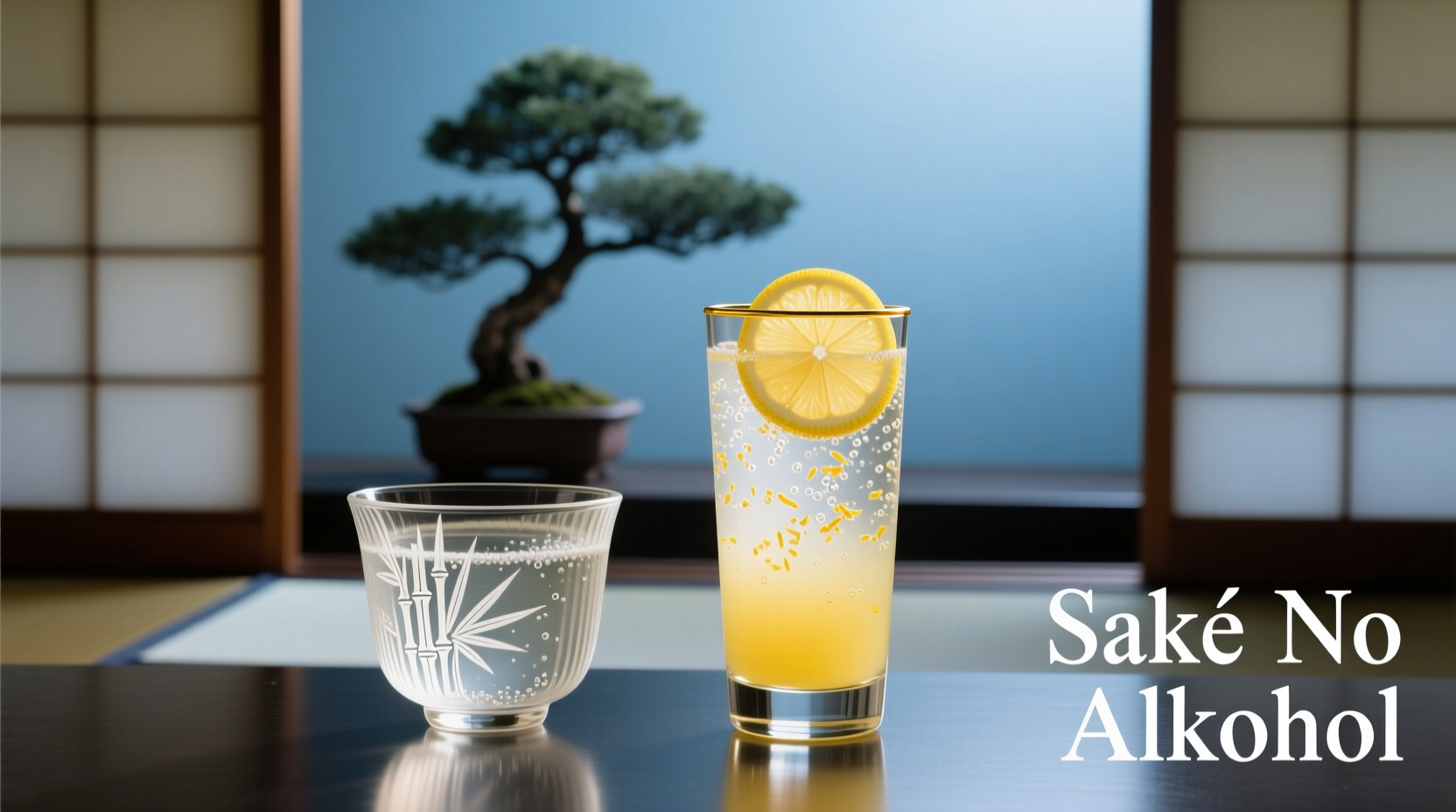
Alcohol-free sparkling sake begins with real sake—typically junmai or honjozo—produced using traditional rice-polishing, koji inoculation, and multiple parallel fermentation. Alcohol is then gently removed via vacuum distillation or reverse osmosis at low temperatures, preserving volatile aromatics like isoamyl acetate (banana), ethyl caproate (apple), and linalool (floral citrus). The result is effervescent, often lightly sweetened with rice syrup or monk fruit, and carbonated to 2.5–3.5 volumes CO₂—mimicking the gentle prickle of a fine crémant. It retains sake’s signature umami backbone, subtle lactic tang, and textural silkiness.
Non-alcoholic yuzu spritz, by contrast, is a constructed beverage—not fermented, but formulated. Authentic versions begin with cold-pressed yuzu juice (Citrus junos), prized for its complex acidity (higher citric acid than lemon, plus tartaric and malic), floral top notes, and distinctive grapefruit-lime-citron triad. This is balanced with shiso leaf infusion, roasted barley tea (mugicha) for depth, a touch of yuzu zest oil for aromatic lift, and minimal sweetness—often from kinako (roasted soybean flour syrup) or date paste. Sparkling water is added last, with deliberate control over bubble size and persistence to avoid washing out delicate citrus volatiles.
The distinction matters: one is a *de-alcoholized tradition*, the other a *tradition-informed creation*. One starts in the kura (brewery); the other, in the bar lab.
Taste, Texture & Serving Logic
Sparkling sake delivers a structured, wine-like experience. Expect a clean, slightly creamy mouthfeel, with bright acidity that leans toward green apple and pear rather than citrus. Its finish is rounded, often with a whisper of steamed rice or toasted almond. It pairs best with dishes that mirror its umami resonance—grilled shiitake, miso-glazed eggplant, or even aged gouda. Serve chilled (6–8°C) in a small white wine glass or ochoko, never over ice—it dulls the effervescence and mutes the koji-derived complexity.
Yuzu spritz is brighter, leaner, and more angular. Its acidity is sharper, more electric—cutting through fat and cleansing the palate with precision. Texture is lighter, airier, with fine, persistent bubbles that lift the citrus oils. It thrives alongside spicy, salty, or fatty foods: takoyaki with bonito flakes, salted edamame, or even smoked salmon on nori crackers. Serve over a single large cube (to minimize dilution) in a highball or coupette, garnished with a twist of yuzu zest—not peel—to release volatile oils without bitterness.
Tip: Never shake sparkling sake—its delicate carbonation and aromatic profile collapse under agitation. For yuzu spritz, however, a brief dry shake (without ice) before adding sparkling water aerates the citrus oils and integrates shiso tannins.How Tradition Informs Modern Mixology—A Side-by-Side Comparison
| Dimension | Alcohol-Free Sparkling Sake | Non-Alcoholic Yuzu Spritz |
|---|---|---|
| Cultural Anchor | Rooted in sake-zukuri (sake brewing) — centuries-old techniques codified in the Edo period; reflects seasonal rice harvests, regional water profiles, and Shinto reverence for fermentation as sacred transformation. | Draws from shokubutsu ryōri (botanical cuisine) and yusō (citrus appreciation) — yuzu has been used in Japanese medicine and ritual since the Heian era; its use in drinks echoes Edo-period chūhai precursors, but reinterpreted without spirits. |
| Mixology Role | Functions as a “spirit substitute” — builds structure in zero-proof cocktails like a non-alcoholic saké martini (with pickled ginger syrup and shiso bitters) or a sparkling saketini (dry-shaken with cucumber and yuzu). | Functions as a “flavor accelerator” — used as a base, modifier, or rinse. Its acidity makes it ideal for balancing rich ingredients (e.g., coconut cream in a yuzu “piña colada”) or adding vibrancy to herbal infusions (e.g., with genmaicha and star anise). |
| Production Integrity | Requires access to authentic sake stock — meaning traceability to specific kura, rice varieties (e.g., Yamada Nishiki), and koji strains. Quality varies widely; inferior versions use neutral grain spirit bases masked with sake flavoring. | Depends entirely on yuzu quality — true cold-pressed juice is rare outside Japan and Korea. Many commercial versions rely on yuzu oil emulsions or blends with lemon/lime; authenticity demands seasonality and cold-press certification. |
| Sustainability Note | Carbon footprint tied to de-alcoholization energy use; premium producers offset via solar-powered kura and spent rice reuse (e.g., as koji for miso). | Yuzu trees require specific microclimates; ethical sourcing supports small farms in Kochi and Tokushima prefectures — where yuzu cultivation is intercropped with mandarin orchards to prevent soil depletion. |
A Real-World Bar Evolution: The Case of Kiku & Co. (Kyoto)
Kiku & Co., a 12-seat zero-proof bar tucked behind Nishiki Market, opened in 2021 with a singular mission: “No abstinence, only amplification.” Owner-chef Rina Tanaka, formerly a sake sommelier at a Michelin-starred kaiseki restaurant, refused to serve “diet versions” of classics. Her first menu featured two foundational drinks: Hoshizora (“Starry Sky”), built on alcohol-free sparkling sake, and Yūzukaze (“Yuzu Breeze”), her yuzu spritz iteration.
Hoshizora begins with sparkling sake from a small kura in Niigata, fermented with local Koshiibuki rice. Tanaka adds a house-made dashi syrup (kombu and dried shiitake), a drop of yuzu zest oil, and serves it in a hand-blown glass shaped like a rice husk. The drink is served without ice, allowing the sake’s subtle umami to unfold across three temperature stages—from crisp chill to room-temperature richness.
Yūzukaze uses cold-pressed yuzu from a fourth-generation farm in Kochi. Tanaka ferments the juice’s pulp with wild yeast for 36 hours to deepen its floral notes, then clarifies it cold. She combines it with roasted barley tea syrup, a pinch of sea salt, and sparkling water dosed precisely at 3.2 volumes CO₂. The result is tart, mineral, and hauntingly fragrant—served over a single frozen yuzu sphere that melts slowly, releasing bursts of cold citrus.
Within six months, both drinks appeared on Bar World’s “Top 10 Zero-Proof Innovations” list. More significantly, Tanaka began receiving inquiries from sake brewers asking how to adapt their processes for non-alcoholic lines—and from yuzu farmers requesting guidance on juice yield optimization for beverage use. Tradition didn’t recede; it expanded.
Expert Insight: When Fermentation Meets Formulation
“Sparkling sake without alcohol is still sake—its soul lives in the koji, the rice, the water. But yuzu spritz? That’s Japanese sensibility applied like a brushstroke: precise, seasonal, deeply respectful of ingredient integrity. One preserves lineage; the other composes anew. Neither is ‘better’—they’re different grammars of the same language.”
— Kenji Sato, Master Brewer (Toji) at Dewazakura Brewery & Adjunct Professor, Tokyo University of Agriculture
Your Practical Guide: Choosing, Serving & Building With Both
Selecting the right option depends on your context—not just taste preference, but intent, audience, and culinary alignment. Follow this step-by-step framework:
- Define the occasion: Is it a ceremonial moment (e.g., wedding toast, New Year celebration)? Prioritize sparkling sake—it carries ritual weight and visual elegance. Is it a midday refreshment or food-pairing companion? Yuzu spritz offers brighter versatility.
- Assess your palate baseline: Do you gravitate toward savory, umami-rich flavors (miso, grilled mushrooms, seaweed)? Sparkling sake will resonate. Do you prefer sharp, clean acidity and aromatic brightness (citrus, herbs, spice)? Yuzu spritz is the natural fit.
- Evaluate pairing needs: Match sparkling sake with dishes that have inherent glutamate (soy-marinated tofu, dashi-based soups, aged cheeses). Match yuzu spritz with high-fat, high-salt, or spicy elements (crispy tempura, kimchi, wasabi peas).
- Check production transparency: For sparkling sake, look for “brewed then dealcoholized” (not “sake flavoring + water”). For yuzu spritz, verify “100% cold-pressed yuzu juice” on the label—not “yuzu flavor” or “yuzu extract.”
- Build thoughtfully: Use sparkling sake as your “spirit” in stirred or shaken zero-proof cocktails (e.g., combine with roasted sesame syrup and black vinegar shrub). Use yuzu spritz as your “acid” and “aromatic” component—replace lemon juice in any spritz, or layer beneath herbal liqueurs like non-alcoholic shochu infusions.
FAQ: Clarifying Common Confusions
Can alcohol-free sparkling sake truly replicate the complexity of full-strength sake?
No—and it shouldn’t try to. Full-strength sake derives structural complexity from ethanol’s solvent properties, which extract and suspend compounds impossible to retain post-dealcoholization. What sparkling sake preserves is the *aromatic fingerprint* and *umami architecture*, not the alcoholic warmth or viscosity. Its value lies in accessibility and intention, not mimicry.
Why not just use regular yuzu juice instead of a pre-mixed spritz?
Because raw yuzu juice is aggressively tart and lacks balance. Traditional yuzu spritz formulations include buffering agents (like roasted barley tea or kinako syrup) and aromatic enhancers (shiso, yuzu zest oil) that transform sharpness into harmony. Using pure juice risks overwhelming bitterness and flat carbonation—unless you’re skilled in pH balancing and emulsion science.
Are both options gluten-free and vegan?
Authentic sparkling sake is naturally gluten-free (rice-based) and vegan (no animal-derived finings used in reputable brands). Most yuzu spritz formulations are also gluten-free and vegan—but verify labels, as some use honey or caramel color derived from barley. Look for certifications: JAS Organic (Japan), Vegan Society UK, or GFCO.
Conclusion: A Toast to Intentional Innovation
Alcohol-free sparkling sake and non-alcoholic yuzu spritz are not competitors—they’re complementary expressions of Japanese craftsmanship responding to a global shift in drinking culture. One honors the kura’s patience, the other celebrates the orchard’s seasonality. One invites contemplation in silence; the other sparks conversation with its vibrant zing. To choose between them isn’t to pick a side—it’s to recognize that tradition doesn’t fossilize; it ferments, adapts, and finds new vessels. Whether you’re a home enthusiast building your first zero-proof bar cart, a chef designing a kaiseki-inspired tasting menu, or a bartender reimagining your cocktail list for a more conscious clientele, these two beverages offer more than refreshment. They offer grammar—rules of respect, balance, and precision—that can elevate any drink, alcoholic or not.
Start with one bottle of certified sparkling sake and one bottle of cold-pressed yuzu spritz. Taste them side by side—neat, at correct temperature, in appropriate glassware. Then experiment: stir sparkling sake with toasted sesame oil and tamari reduction; shake yuzu spritz with matcha powder and oat milk foam. Document what works. Share your discoveries—not as prescriptions, but as invitations. Because the future of Japanese-inspired mixology isn’t written in stone. It’s poured, fizzing, into a glass—and waiting for your hand to lift it.
💬 Which tradition speaks to your palate today? Try both, note your impressions, and share your favorite pairing or riff in the comments—we’ll feature reader innovations in our next deep-dive on zero-proof shochu alternatives.








