
While many assume allergy season ends with fall, millions continue to suffer through winter with sneezing, itchy eyes, and congestion. Unlike seasonal pollen allergies that ease in colder months, indoor allergens thrive when homes are sealed tight against the cold. Understanding why winter allergies flare up—and knowing how to manage them—is essential for maintaining comfort and health during the coldest time of year.
Why Winter Allergies Are Worse Than You Think
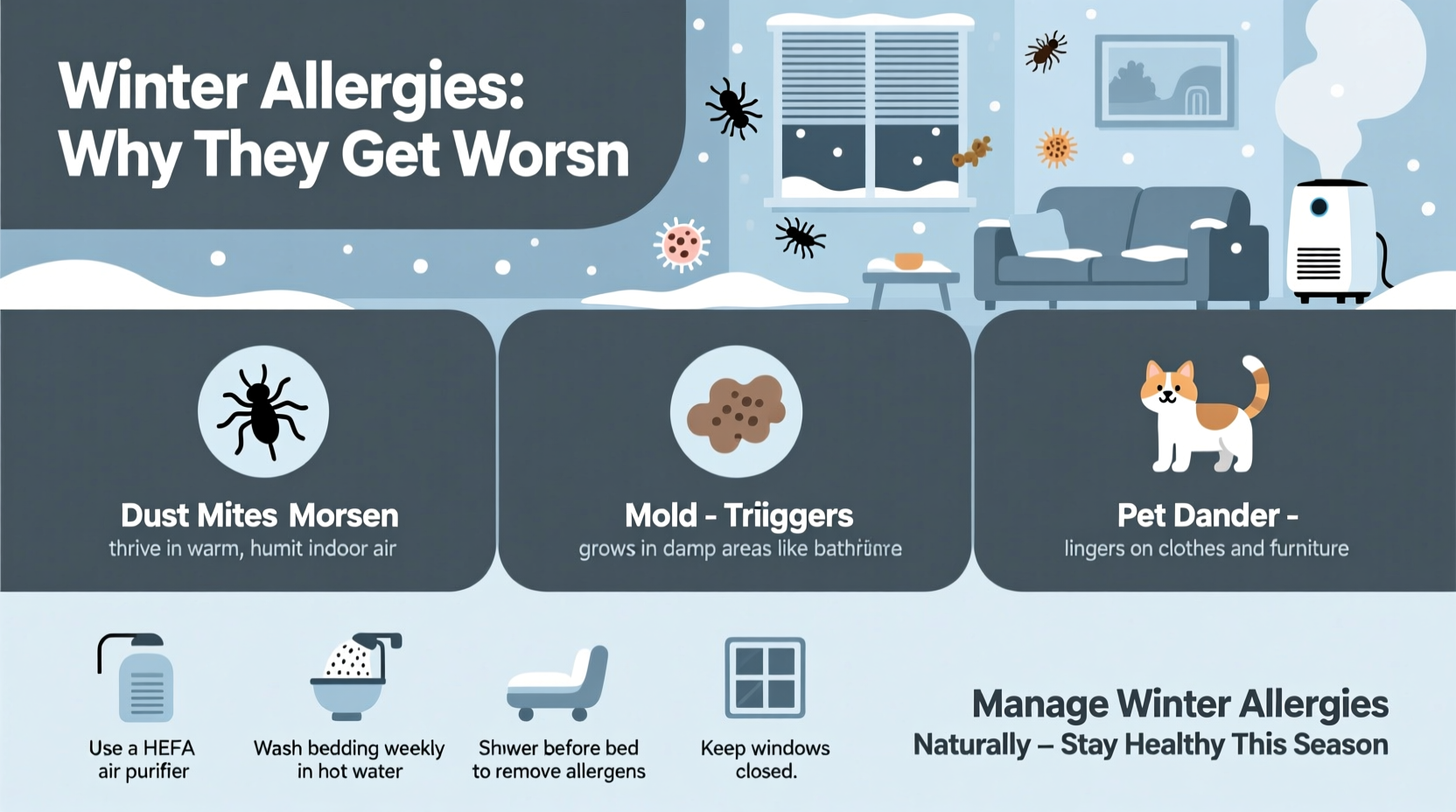
Winter creates a perfect storm for indoor allergens. With windows closed and heating systems running constantly, air circulation drops dramatically. This allows allergens like dust mites, pet dander, mold spores, and even cockroach residue to accumulate in confined spaces. The dry, heated air from furnaces further irritates nasal passages, making symptoms feel more severe.
Additionally, people spend significantly more time indoors during winter—often sharing close quarters with pets, family members, and allergen-laden fabrics such as heavy blankets and winter clothing. These conditions create a sustained exposure environment that can turn mild sensitivities into persistent discomfort.
“Indoor allergen levels can be two to five times higher in winter due to reduced ventilation and increased use of heating systems.” — Dr. Linda Chen, Allergy & Immunology Specialist, Johns Hopkins Medicine
Common Winter Allergens and Their Sources
Unlike spring or summer allergies triggered by outdoor pollens, winter allergies stem primarily from indoor sources. Identifying these triggers is the first step toward effective management.
- Dust mites: Microscopic organisms that feed on dead skin cells. They flourish in warm, humid environments—especially in bedding, upholstered furniture, and carpets.
- Pet dander: Tiny flakes of skin shed by cats, dogs, and other animals. Dander becomes airborne and circulates through HVAC systems, especially when pets spend more time indoors.
- Mold: Often grows in damp areas like basements, bathrooms, and near windows where condensation forms. Indoor heating can create temperature gradients that promote moisture buildup.
- Cockroach allergens: Proteins found in droppings and body parts. Even in clean homes, traces can persist in kitchens and storage areas.
- Heating system debris: Furnace filters collect dust, mold spores, and debris over time. When the heat turns on after months of dormancy, these particles get blown into living spaces.
How to Manage Winter Allergies: A Step-by-Step Guide
Managing winter allergies isn’t about eliminating all allergens—it’s about reducing exposure and minimizing symptom triggers. Follow this practical sequence to improve indoor air quality and reduce allergic reactions.
- Inspect and replace HVAC filters. Use high-efficiency particulate air (HEPA) filters rated MERV 11–13. Change them regularly, especially at the start of the heating season.
- Deep-clean soft surfaces. Wash bedding weekly in hot water (at least 130°F). Vacuum upholstery and carpets using a vacuum with a HEPA filter.
- Control humidity levels. Keep indoor humidity between 30% and 50%. Use a dehumidifier in damp areas and a hygrometer to monitor levels.
- Minimize clutter. Reduce fabric-heavy items like throw pillows, heavy drapes, and unused stuffed animals that trap allergens.
- Bathe pets weekly. Regular bathing reduces dander. Keep pets out of bedrooms if possible to create an allergen-reduced sleep zone.
- Use an air purifier. Place HEPA air purifiers in frequently used rooms, especially bedrooms and living areas.
- Wipe down surfaces daily. Use a damp cloth to trap dust rather than spreading it into the air.
Do’s and Don’ts of Winter Allergy Management
| Do | Don’t |
|---|---|
| Use hypoallergenic pillow and mattress covers | Sleep with windows open during extreme cold |
| Run exhaust fans in bathrooms and kitchens | Allow mold-prone areas to stay wet or unventilated |
| Shower before bed to remove allergens from hair and skin | Overuse scented candles or air fresheners |
| Keep indoor plants away from bedrooms | Place houseplants in high-humidity zones without monitoring for mold |
Real-Life Example: Sarah’s Winter Allergy Turnaround
Sarah, a 34-year-old teacher from Chicago, struggled every winter with constant congestion, fatigue, and postnasal drip. She assumed she had recurring colds until her allergist performed skin testing and discovered sensitivities to dust mites and mold.
After sealing gaps around her bedroom windows, installing a HEPA air purifier, switching to allergen-proof bedding, and cleaning her furnace ducts, Sarah noticed significant improvement within three weeks. She also began showering at night to remove allergens collected during the day. Her energy returned, and she no longer relied on daily antihistamines.
“I didn’t realize my cozy winter routine—like keeping fuzzy blankets on the bed and turning the heat way up—was making things worse,” she said. “Small changes made a big difference.”
Essential Tips for Immediate Relief
Tip: Gargle with warm salt water to soothe throat irritation caused by postnasal drip. Tip: Use a saline nasal rinse daily to flush out allergens and reduce inflammation. Tip: Keep a log of symptoms and potential triggers to identify patterns and discuss them with your doctor.Frequently Asked Questions
Can you develop winter allergies later in life?
Yes. Adults can develop new allergies at any age due to prolonged exposure, changes in immune function, or moving to a new environment with different allergen loads. If you're experiencing new respiratory symptoms each winter, consult an allergist for evaluation.
Is there a difference between a cold and winter allergies?
Yes. Colds often include fever, body aches, and thick yellow mucus, and last 7–10 days. Allergies cause clear runny nose, itchy eyes, and last as long as exposure continues—often weeks or months. Allergy symptoms appear quickly upon exposure and don’t include fever.
Should I take antihistamines every day during winter?
Only under medical guidance. Non-sedating antihistamines like loratadine or cetirizine can be taken daily if needed, but long-term use should be discussed with a healthcare provider. Nasal corticosteroids are often more effective for chronic symptoms.
Conclusion: Take Control of Your Winter Comfort
Winter allergies don’t have to be an unavoidable part of the season. By understanding their causes and implementing consistent, science-backed strategies, you can significantly reduce your symptoms and improve your quality of life. From upgrading air filters to modifying daily habits, small actions add up to meaningful relief.
💬 Ready to breathe easier this winter? Start today by checking your furnace filter and washing your bedding in hot water. Share your own tips or experiences in the comments—your insight could help someone else find relief.








