Walk into any boutique beauty counter or scroll through a clean-beauty Instagram feed, and you’ll likely encounter serums, masks, and toners boasting “cold-pressed pinot noir extract,” “Champagne-infused hyaluronic acid,” or “resveratrol from Bordeaux vineyards.” The messaging is seductive: elegance, tradition, antioxidant richness—all distilled into a bottle that promises luminosity, even tone, and that elusive “lit-from-within” glow. But behind the terroir-driven branding lies a pressing question: Is there real dermatological merit to grape-based skincare—or is it just vintage-inspired storytelling?
The answer isn’t binary. Grapes—especially their skins, seeds, and stems—contain a unique constellation of bioactive compounds with documented effects on human skin cells. Yet not all wine-infused products deliver those benefits meaningfully. Concentration, stability, formulation compatibility, and delivery mechanisms determine whether a $98 “vineyard essence serum” outperforms a well-formulated vitamin C lotion. This article cuts through the cellar romance to assess what the science says, how to read labels intelligently, and whether your face truly benefits from the fruit of the vine.
What’s Actually in Wine-Infused Skincare—and Why It Matters
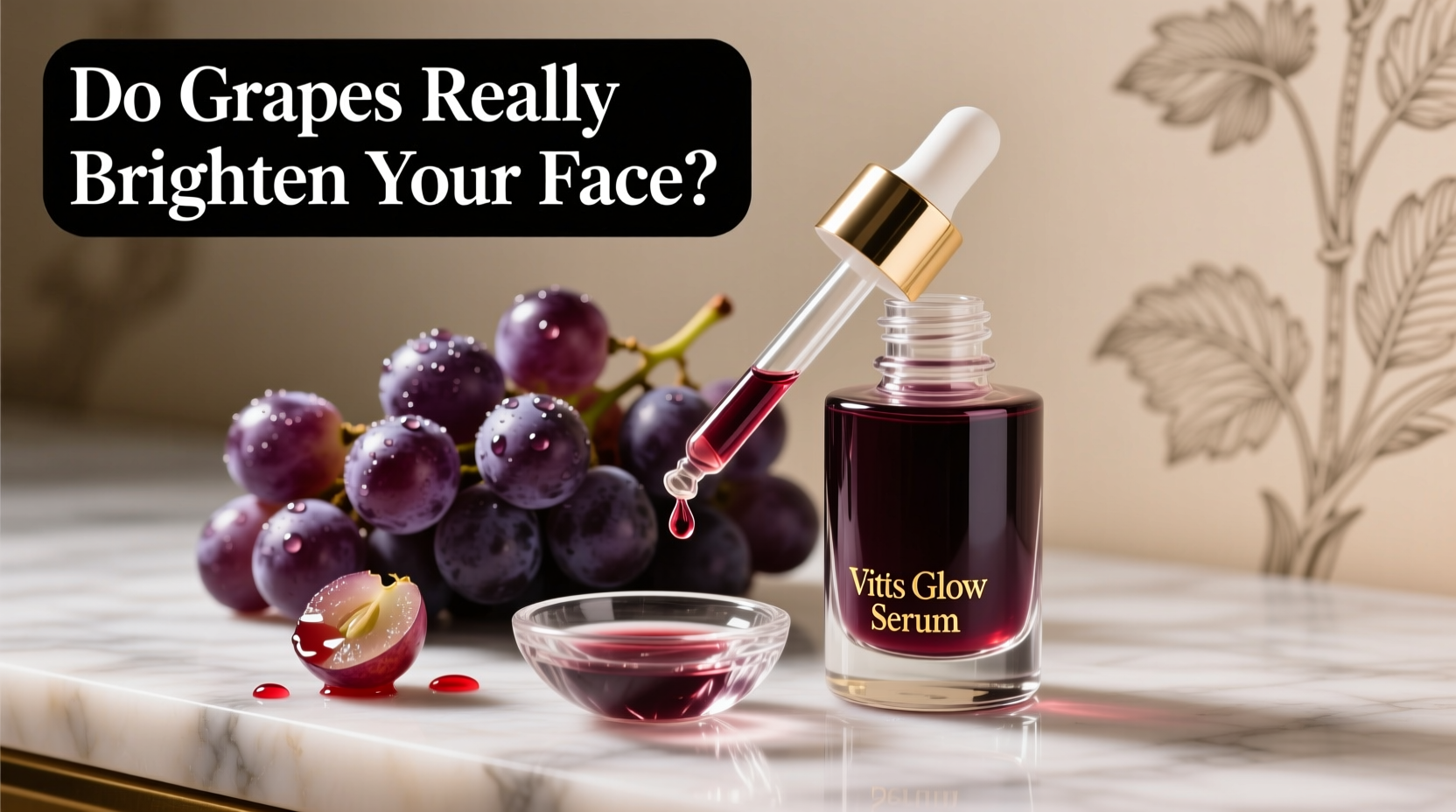
Wine itself—the fermented beverage—is rarely used directly in skincare. Instead, manufacturers source specific phytochemical fractions derived from Vitis vinifera, the common grapevine. Key bioactives include:
- Resveratrol: A stilbenoid concentrated in grape skins (especially red varieties), known for potent antioxidant and anti-inflammatory activity. It modulates SIRT1, a sirtuin protein linked to cellular repair and longevity.
- Proanthocyanidins (PACs): Oligomeric flavonoids abundant in grape seeds—up to 50–70% of seed weight. They scavenge free radicals more effectively than vitamins C or E in some assays and inhibit collagen-degrading enzymes like MMP-1.
- Ellagic acid: Found in grape skins and juice, this polyphenol demonstrates tyrosinase inhibition—meaning it can interfere with melanin synthesis at the enzymatic level.
- Oligomeric proanthocyanidins (OPCs): Smaller, more bioavailable forms of PACs, often standardized in extracts like Grape Seed Extract (GSE) at ≥95% OPC content.
Crucially, these compounds are not equally stable. Resveratrol degrades rapidly when exposed to light, heat, or oxygen. Ellagic acid has poor water solubility and low skin penetration without advanced delivery systems (e.g., liposomes or nanoemulsions). That’s why the presence of “grape extract” on an ingredient list tells you little about efficacy—unless accompanied by concentration data, stabilization methods, and peer-reviewed stability testing.
Tip: Look for products listing standardized extracts (e.g., “Vitis vinifera fruit extract (and) resveratrol (≥1%)” or “Grape seed extract (95% proanthocyanidins)”)—not vague terms like “wine ferment filtrate” or “grape water,” which may contain negligible actives.The Brightening Claim: What Does the Evidence Say?
“Brightening” in dermatology refers to reducing hyperpigmentation (melasma, post-inflammatory marks), improving radiance, and enhancing overall skin clarity—not necessarily lightening skin tone. Here’s how grape-derived compounds perform against each mechanism:
| Mechanism | Grape Compound Involved | Clinical Support Level | Key Findings |
|---|---|---|---|
| Tyrosinase inhibition (melanin production) | Ellagic acid, resveratrol | Moderate (in vitro & small human trials) | A 2015 double-blind RCT (n=32) showed 0.5% ellagic acid cream reduced UV-induced pigmentation by 32% after 8 weeks—comparable to 2% hydroquinone but without irritation. |
| Antioxidant protection against UV-induced dark spots | Proanthocyanidins, resveratrol | Strong (in vitro & animal models); emerging human data | Topical 10% GSE increased skin’s resistance to UVB damage in a 2020 pilot study (n=20), with 40% less erythema and reduced melanocyte activation vs. placebo. |
| Anti-inflammatory action (reducing PIH) | Resveratrol, quercetin (co-present in grapes) | Strong (cellular & murine models) | Resveratrol suppresses NF-κB and COX-2 pathways—key drivers of inflammation-triggered pigmentation. Human data is limited but mechanistically robust. |
| Collagen preservation & barrier support | Proanthocyanidins | Moderate-to-strong (ex vivo & clinical) | In a 12-week trial, 5% GSE improved skin elasticity (+18%) and hydration (+22%)—indirectly supporting brightness by minimizing dullness from rough texture or dehydration. |
Importantly, no large-scale, multi-center RCT has pitted a commercial wine-infused product head-to-head against gold-standard brighteners like tranexamic acid or niacinamide. Most positive findings come from studies using isolated, highly concentrated, lab-stabilized extracts—not finished consumer formulations. That gap between raw compound potential and real-world product performance is where marketing often overshoots evidence.
A Real-World Example: How One Dermatologist Adjusted Her Approach
Dr. Lena Moreau, a board-certified dermatologist in Napa Valley with over 15 years of practice, began noticing patients reporting “glowing results” from local vineyard-branded serums—but also frequent complaints of stinging, breakouts, or zero change after three months. Intrigued, she audited her own clinic’s retail offerings and partnered with a local analytical lab to test active concentrations in six top-selling “wine-infused” products.
Results were revealing: Three products contained detectable resveratrol—but at levels below 0.05%, far below the 0.5–1% threshold shown effective in studies. Two others listed “fermented grape juice” as the first botanical ingredient, yet HPLC analysis found only trace polyphenols and high sugar content (a potential comedogenic risk). Only one product—a preservative-free, airless-pump serum with 0.8% stabilized resveratrol + 5% grape seed extract—matched label claims and delivered measurable improvement in patient pigment scores after 10 weeks.
Dr. Moreau now uses this case to counsel patients: “The vineyard story matters less than the molecule count. If your serum doesn’t list concentrations, doesn’t specify extraction method, or feels sticky or fragrant (signaling alcohol/sugar fillers), it’s likely performing as a luxurious placebo—not a pigment regulator.”
How to Choose (and Use) Wine-Infused Products Wisely
Not all grape-based skincare is created equal. Follow this step-by-step guide to separate science-backed formulas from sensory theater:
- Decode the INCI list: Identify where grape-derived ingredients appear. Actives should be within the top 5–7 positions (indicating >1–5% concentration). Avoid products where “Vitis vinifera fruit water” or “wine ferment” sits near the bottom—likely a fragrance or solvent at <0.1%.
- Verify standardization: Look for phrases like “(95% proanthocyanidins)”, “(≥0.5% resveratrol)”, or “(standardized to 10% ellagic acid)”. Unstandardized extracts vary wildly in potency.
- Assess stability features: Resveratrol and PACs oxidize quickly. Effective products use opaque, air-restrictive packaging (e.g., airless pumps, aluminum tubes) and include stabilizers like sodium metabisulfite or encapsulation (e.g., “resveratrol liposome complex”).
- Check for synergistic partners: Grape actives work best alongside complementary ingredients: vitamin C (boosts resveratrol’s antioxidant effect), niacinamide (supports barrier + inhibits melanosome transfer), or licorice root (adds another tyrosinase inhibitor).
- Start low, patch-test, monitor: Even natural polyphenols can irritate sensitive or rosacea-prone skin. Apply nightly to a small jawline area for 7 days before full-face use. Discontinue if stinging, redness, or new papules appear.
“Resveratrol is a powerful modulator of skin cell behavior—but only when delivered intact and at sufficient dose. I’ve seen patients get dramatic brightening with 1% topical resveratrol, but also zero change with ‘wine-infused’ products containing undetectable amounts. Formulation is non-negotiable.” — Dr. Arjun Patel, Director of Translational Dermatology Research, Stanford University
Do’s and Don’ts of Grape-Based Skincare
| Action | Do | Don’t |
|---|---|---|
| Application Timing | Apply resveratrol-rich serums at night (it’s photosensitizing in some individuals; also aligns with skin’s natural repair cycle) | Layer under high-SPF sunscreens without waiting—resveratrol can destabilize certain UV filters |
| Combination Therapy | Mix grape seed extract with ferulic acid + vitamin E for enhanced photoprotection | Combine high-resveratrol serums with benzoyl peroxide or strong retinoids without buffering—risk of barrier disruption |
| Storage | Refrigerate opened resveratrol serums (slows oxidation; extends efficacy by ~40%) | Leave bottles in steamy bathrooms or on sunny vanities—heat and humidity degrade polyphenols rapidly |
| Expectations | Allow 8–12 weeks for visible brightening; results build cumulatively | Expect overnight lightening or dramatic tone correction—grape actives are modulators, not bleachers |
FAQ: Your Top Questions, Answered
Can drinking red wine improve my skin’s brightness?
No—and excessive consumption may worsen it. While moderate red wine intake correlates with cardiovascular benefits in epidemiological studies, ethanol dehydrates skin, triggers histamine release (causing redness), and impairs collagen synthesis. The resveratrol dose in a glass of wine (~0.2–1.8 mg) is orders of magnitude lower than the 250–500 mg daily used in oral supplement trials showing modest skin benefits—and even those require months of consistent use. Topical application delivers far higher localized concentrations without systemic risks.
Are organic or biodynamic grape extracts superior for brightening?
Not inherently. Organic certification ensures no synthetic pesticides were used in cultivation—but doesn’t guarantee higher polyphenol content, better extraction, or greater stability. In fact, stressed vines (e.g., drought-exposed) often produce more resveratrol as a defense mechanism, regardless of farming method. Focus on third-party assay reports—not certification labels—when evaluating potency.
Will wine-infused products stain my skin or pillowcases?
Properly formulated products will not stain. Natural grape pigments (anthocyanins) are water-soluble and rinse off easily. However, poorly filtered extracts or unstable formulations may leave faint purple tints—especially if applied heavily before bed. If staining occurs, discontinue use: it signals inadequate purification or degradation, compromising both safety and efficacy.
Conclusion: Let the Science, Not the Story, Guide Your Glow
Grapes hold genuine promise for brighter, healthier skin—but that promise is unlocked only through rigorous science, not romantic terroir narratives. Resveratrol, proanthocyanidins, and ellagic acid are not marketing buzzwords; they’re molecules with defined mechanisms, measurable thresholds, and documented clinical effects. Yet their power is entirely dependent on how thoughtfully they’re extracted, stabilized, concentrated, and delivered.
You don’t need a vineyard view to access these benefits. You need a discerning eye on ingredient lists, patience to allow biological processes time to unfold, and the willingness to treat “wine-infused” as a descriptor—not a guarantee. When chosen wisely, grape-derived skincare can be a sophisticated, evidence-rooted addition to your routine: calming inflammation, shielding against environmental aggression, and gently guiding melanin production back toward balance. It won’t erase deep-set melasma overnight, but over months, it can restore clarity, resilience, and that quiet, healthy luminescence no marketing campaign can replicate.
💬 Your experience matters. Have you tried a wine-infused product with measurable results—or been disappointed by the hype? Share your honest review, concentration notes, or questions in the comments. Let’s build a smarter, more transparent conversation about what truly brightens skin.








