Walk into any high-end beauty boutique or scroll through curated skincare feeds, and you’ll likely encounter bottles boasting “French vineyard extracts,” “red wine ferment filtrate,” or “resveratrol-infused renewal serum.” The allure is potent: centuries of winemaking tradition, antioxidant-rich grapes, and the romantic notion that what nourishes fine wine might also nourish skin. But behind the evocative packaging and poetic ingredient names lies a more complex reality—one shaped by biochemistry, formulation science, and clinical rigor. This isn’t about dismissing innovation; it’s about understanding whether wine-derived compounds deliver measurable, reproducible benefits—or simply lend prestige to an otherwise ordinary formula.
The Science Behind the Buzz: What’s Actually in Wine-Based Skincare?
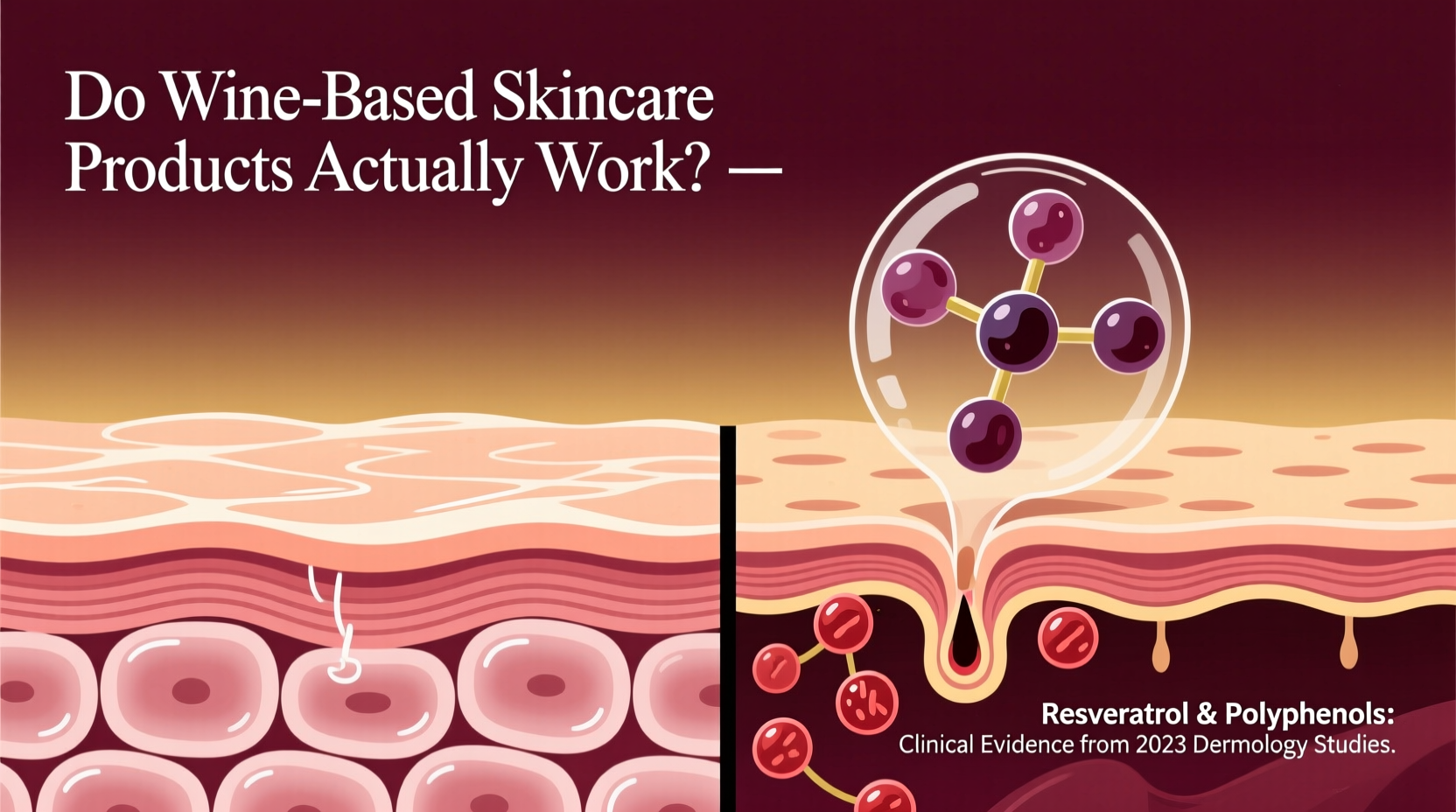
Wine-based skincare rarely contains actual wine (which would spoil, ferment further, or destabilize emulsions). Instead, formulations use standardized botanical extracts derived from grape seeds, skins, stems, or fermented must—the juice before fermentation. Key bioactive compounds include:
- Resveratrol: A stilbenoid polyphenol concentrated in grape skins, especially red varieties. Studied for its antioxidant, anti-inflammatory, and sirtuin-activating properties—mechanisms linked to cellular longevity.
- Proanthocyanidins (PACs): Oligomeric flavonoids abundant in grape seeds. Known for superior free-radical scavenging—up to 20 times more potent than vitamin C and 50 times more than vitamin E in vitro.
- Ellagic acid: Found in grape skins and oak-aged wines, it inhibits UV-induced MMP-1 (collagenase), potentially slowing collagen degradation.
- Wine yeast ferment filtrates: Post-fermentation byproducts containing peptides, amino acids, and organic acids that may support skin barrier function and microbiome balance.
Crucially, concentration and stability matter more than presence. Resveratrol, for example, is notoriously unstable in light and oxygen—and poorly absorbed through intact skin without advanced delivery systems like liposomes or nanoemulsions. A 2021 study in the Journal of Cosmetic Dermatology found that only 3 of 12 commercially available resveratrol serums maintained >80% active compound integrity after 8 weeks of storage at room temperature. Without stabilization, much of the promised benefit never reaches viable epidermal layers.
Tip: Look for products listing “stabilized resveratrol,” “encapsulated grape seed extract,” or “ferment filtrate” (not just “grape extract”)—these indicate intentional formulation for bioavailability, not just marketing.Clinical Evidence: What Does the Data Say?
While lab studies show promise, human trials tell a more nuanced story. A 2020 double-blind, placebo-controlled trial published in Dermatologic Therapy evaluated a 1% resveratrol + 0.5% ferulic acid serum applied twice daily for 12 weeks in 62 adults with mild photodamage. Results showed statistically significant improvement in skin elasticity (+14.3%) and reduction in UV-induced erythema (+22.7%), but no measurable change in wrinkle depth versus placebo. Similarly, a 2022 multicenter study on a grape stem cell extract cream (0.01%) demonstrated improved barrier recovery after tape-stripping—but only in participants with compromised skin, not healthy controls.
Where wine-derived ingredients consistently shine is in supportive roles: enhancing the stability and efficacy of other actives. Research shows proanthocyanidins increase the photostability of vitamin C by 40%, while ellagic acid synergizes with niacinamide to suppress melanin transfer in melanocytes. In practice, this means wine-based ingredients often work best as “co-actives”—not standalone heroes.
“Resveratrol isn’t a retinol replacement. It’s a resilience builder. Think of it as reinforcing the skin’s defense infrastructure—repairing oxidative damage, calming background inflammation, and supporting mitochondrial function in keratinocytes. That creates better conditions for other actives to work.” — Dr. Lena Moreau, Board-Certified Dermatologist and Lead Investigator, European Skin Antioxidant Consortium
Do’s and Don’ts: Using Wine-Based Skincare Effectively
Not all wine-inspired products deliver equal value. The difference between meaningful results and wasted shelf space hinges on formulation integrity, concentration, and realistic expectations. Below is a practical guide grounded in cosmetic chemistry and clinical observation:
| Action | Why It Matters | What to Look For (or Avoid) |
|---|---|---|
| DO pair with sun protection | Resveratrol depletes under UV exposure; its antioxidant effect is most valuable when preventing new damage—not reversing existing photoaging. | Use daily SPF 30+; avoid applying resveratrol-only products during peak sun hours without coverage. |
| DO layer under retinoids or AHAs | Polyphenols reduce irritation caused by exfoliants and retinoids by modulating NF-kB signaling—making them ideal “buffering” agents. | A grape seed extract toner before tretinoin; a resveratrol serum under glycolic acid moisturizer. |
| DON’T expect immediate brightening | Unlike vitamin C or kojic acid, wine polyphenols don’t directly inhibit tyrosinase. Their brightening effect is indirect and gradual—via reduced inflammation and improved microcirculation. | Avoid brands promising “instant radiance” from resveratrol alone; results typically appear after 6–8 weeks of consistent use. |
| DON’T store in clear glass or warm environments | Light and heat accelerate oxidation of polyphenols. Unstable resveratrol converts to inactive resveratrol trans-isomer within days. | Choose amber glass, airless pumps, or opaque tubes. Store in a cool, dark cabinet—not the steamy bathroom. |
| DO prioritize proven delivery | Unencapsulated resveratrol has < 1% skin penetration. Stabilization = efficacy. | Ingredients like “liposomal resveratrol,” “phosphatidylcholine-complexed PACs,” or “biofermented Vitis vinifera extract.” |
A Real-World Example: How One Formulator Refined Her Routine
Sophie L., a 44-year-old esthetician in Napa Valley, began incorporating wine-based products after noticing increased sensitivity and uneven tone following a series of aggressive peels. She started with a popular “vineyard renewal serum” containing 0.5% unencapsulated resveratrol and grape water. After six weeks, she saw no improvement—and her skin felt drier. She consulted a cosmetic chemist who reviewed the INCI list and noted the absence of penetration enhancers and antioxidants to stabilize the resveratrol. Sophie switched to a medical-grade serum with 1% liposomal resveratrol, 0.2% ellagic acid, and sodium hyaluronate. Within four weeks, her post-peel redness decreased noticeably; by week eight, her clients commented on improved “clarity” and reduced reactivity to environmental triggers. Crucially, she didn’t abandon her retinoid—she applied the resveratrol serum first, waited two minutes, then layered her adapalene gel. The polyphenols acted as a physiological buffer—not replacing treatment, but optimizing tolerance and repair.
Your Action Plan: Building a Wine-Informed Skincare Routine
Integrating wine-derived ingredients meaningfully requires intention—not just novelty. Follow this evidence-informed sequence:
- Assess your primary concern: Is it barrier fragility? Persistent redness? Dullness from chronic inflammation? Or are you seeking antioxidant support alongside proven actives like retinoids or vitamin C? Wine-based ingredients excel most in the first three categories.
- Check the vehicle and stability: Scan the ingredient list for stabilizing agents (e.g., ferulic acid, tocopherol, sodium metabisulfite) and delivery systems (e.g., “liposome,” “nanoemulsion,” “phospholipid complex”). Avoid products where resveratrol appears near the end of the list—indicating <0.1% concentration.
- Introduce gradually: Apply every other night for one week, then nightly if no stinging or redness occurs. Unlike retinoids, resveratrol rarely causes purging—but instability can trigger low-grade irritation.
- Layer strategically: Apply wine-based serums *before* thicker treatments (retinoids, peptides, occlusives) but *after* water-based toners. Allow 60–90 seconds for absorption before next step.
- Evaluate at 8 weeks: Track changes using consistent lighting and angles. Look for reduced reactivity to wind/sun, improved evenness in morning complexion, or less frequent “tight-dry” sensation—not dramatic wrinkle reduction.
FAQ: Addressing Common Questions
Can drinking red wine improve my skin?
No—clinical evidence does not support systemic benefits for skin from moderate wine consumption. While resveratrol is absorbed orally, human pharmacokinetic studies show extremely low bioavailability (<1%) due to rapid glucuronidation and sulfation in the liver. A 2019 meta-analysis in Nutrients concluded that dietary resveratrol intake—even up to 1g/day—produced no measurable dermal effects. Topical application remains the only validated route for targeted delivery.
Are wine-based products safe for rosacea or eczema-prone skin?
Yes—with caveats. Polyphenols like proanthocyanidins have documented anti-inflammatory activity in atopic and vascular skin models. However, alcohol-based toners or ferment filtrates with high histamine content may trigger flares in sensitive individuals. Choose alcohol-free, fragrance-free formulations with ≤1% total polyphenol concentration—and patch-test behind the ear for 7 days before facial use.
Do “organic wine extracts” offer superior benefits?
Not inherently. Organic certification relates to farming practices—not compound concentration or stability. A conventionally grown grape seed extract standardized to 95% proanthocyanidins delivers more consistent actives than an organic, non-standardized extract at 10% purity. Focus on standardization percentages and third-party assay reports—not “organic” or “biodynamic” labels alone.
Conclusion: Beyond the Vineyard Romance
Wine-based skincare works—not as a miracle elixir, but as a sophisticated tool rooted in decades of phytochemical research. Its value lies not in replacing foundational actives like sunscreen, retinoids, or barrier-repair ceramides, but in strengthening the skin’s intrinsic resilience: mitigating oxidative stress before it triggers inflammation, supporting mitochondrial efficiency in aging keratinocytes, and creating a biochemical environment where other treatments perform more safely and effectively. The most compelling products don’t lean on terroir storytelling alone—they transparently disclose concentrations, stabilization methods, and peer-reviewed mechanisms. When chosen with scientific literacy and integrated thoughtfully, wine-derived ingredients earn their place on the shelf—not as novelties, but as quiet, competent allies in long-term skin health.
💬 Have you tried wine-based skincare with measurable results—or been disappointed by the hype? Share your experience, ingredient lists, and outcomes in the comments. Real-world insights help us all separate science from seduction.