
For years, Ortho Tri-Cyclen Lo has been a trusted oral contraceptive for millions of women seeking reliable birth control with minimal side effects. Known for its low-dose estrogen formulation, it offered hormonal regulation while reducing the risk of estrogen-related complications. However, many patients have recently found themselves unable to refill prescriptions—Ortho Tri-Cyclen Lo is no longer available under that brand name. This change has left users searching for answers about why it was discontinued and what generic options can effectively replace it.
The discontinuation wasn’t due to safety concerns or FDA action but rather strategic business decisions by the manufacturer. Understanding the reasons behind this shift—and knowing which generics are bioequivalent and accessible—can help users maintain consistent contraception without disruption.
Why Was Ortho Tri-Cyclen Lo Discontinued?
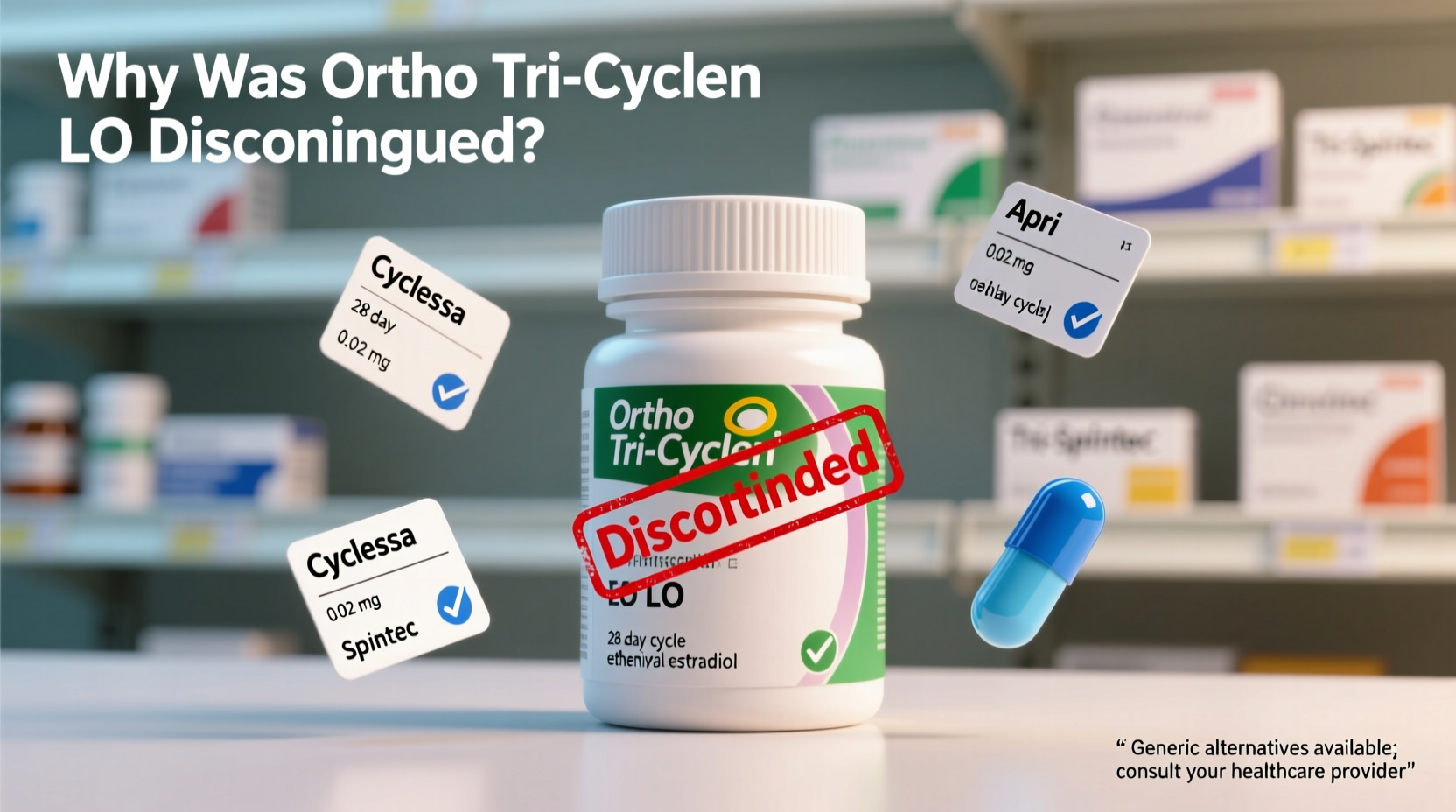
Janssen Pharmaceuticals, a subsidiary of Johnson & Johnson, voluntarily discontinued the brand-name Ortho Tri-Cyclen Lo in the United States. According to the American Society of Health-System Pharmacists (ASHP), the decision was driven by market dynamics and product line streamlining rather than any issues related to efficacy or safety.
The company shifted focus toward newer formulations and combination therapies, including products with updated dosing schedules or additional benefits such as acne reduction. Additionally, the presence of multiple generic versions of norgestimate and ethinyl estradiol—the active ingredients in Ortho Tri-Cyclen Lo—reduced the commercial viability of maintaining the branded version.
“Discontinuations like this are increasingly common in the pharmaceutical industry when generics dominate the market. Patients aren’t losing access—they’re transitioning to equally effective, often more affordable alternatives.” — Dr. Linda Park, Board-Certified Gynecologist and Hormonal Contraception Specialist
It’s important to emphasize: the discontinuation does not mean the medication failed or posed risks. On the contrary, its widespread generic availability is a testament to its proven track record.
Understanding Generic Equivalents
Generic drugs must meet strict FDA standards for bioequivalence, meaning they deliver the same active ingredients in the same amounts, at the same rate, as their brand-name counterparts. In the case of Ortho Tri-Cyclen Lo, the generic version contains:
- Norgestimate: 0.180 mg / 0.215 mg / 0.250 mg (tri-phasic dosing)
- Ethinyl Estradiol: 0.025 mg across all 21 active pills
These generics are labeled as “norgestimate and ethinyl estradiol tablets,” with dosage patterns mirroring the original tri-phasic design. While the inactive ingredients (fillers, binders) may vary slightly between manufacturers, clinical studies show no meaningful difference in performance or side effect profiles.
Tip: When switching from a brand to a generic, monitor your body’s response during the first one to two cycles. Report any unusual symptoms to your healthcare provider.Available Generic Options in the U.S.
Multiple manufacturers produce FDA-approved generics. Availability may vary by pharmacy and insurance plan, but common brands include:
| Generic Manufacturer | Dosage Pattern | Average Cash Price (3-month supply) | Insurance Coverage Likelihood |
|---|---|---|---|
| Teva Pharmaceuticals | 7 x 0.180/0.025, 7 x 0.215/0.025, 7 x 0.250/0.025 | $15–$25 | High |
| Watson (now Allergan) | Same tri-phasic structure | $10–$20 | Very High |
| Mylan | Identical dosing | $12–$18 | High |
| Actavis | Same formulation | $14–$22 | High |
Most major pharmacies—including CVS, Walgreens, and Walmart—carry at least one version of the generic. Many insurance plans cover these generics at Tier 1 (lowest copay), making them more affordable than the former brand.
Step-by-Step Guide to Transitioning Smoothly
Switching from a discontinued brand to a generic doesn’t have to be stressful. Follow this timeline to ensure continuity and confidence:
- Check your prescription status: Contact your pharmacy to confirm if Ortho Tri-Cyclen Lo is still listed. If not, ask whether they automatically substitute with a generic equivalent.
- Consult your provider: Schedule a brief appointment or telehealth visit to verify the generic substitution. Request the exact name: “norgestimate and ethinyl estradiol” with tri-phasic dosing.
- Review the pill pack: Once you receive the generic, compare the dosage schedule. The active pills should follow the same three-phase pattern.
- Track your cycle: Use an app or calendar to note any changes in bleeding patterns, mood, or side effects during the first month.
- Refill on time: Set a reminder to reorder before running out. Most generics come in 1- or 3-month supplies.
Common Concerns and Misconceptions
Some patients worry that generics are less effective or cause more side effects. These concerns are largely unfounded. The FDA requires generics to perform within a 90% to 110% bioavailability range compared to the brand, ensuring therapeutic equivalence.
However, slight differences in fillers or dyes may affect tolerability in sensitive individuals. For example, some users report mild nausea or breakthrough bleeding during the first cycle—but this is also common when starting any new hormonal regimen.
Mini Case Study: Sarah’s Transition Experience
Sarah, a 28-year-old graphic designer, had used Ortho Tri-Cyclen Lo for five years with excellent results—light periods, stable moods, and no weight gain. When her pharmacy informed her the brand was discontinued, she panicked, fearing a return to acne and irregular cycles.
Her OB-GYN prescribed the Teva generic version of norgestimate/ethinyl estradiol. After the first pack, Sarah noticed slightly earlier spotting but no other changes. By the second month, her cycle normalized. Three months later, she reported, “It’s exactly the same—just cheaper. I wish I hadn’t stressed so much.”
Frequently Asked Questions
Is the generic version as effective as Ortho Tri-Cyclen Lo?
Yes. The FDA mandates that generic versions of hormonal contraceptives meet rigorous standards for absorption, consistency, and efficacy. Studies show no significant difference in pregnancy prevention rates between brand and generic formulations.
Can I switch back to a brand-name pill if I don’t like the generic?
You can discuss alternative brands with your doctor. While Ortho Tri-Cyclen Lo is discontinued, similar low-dose tri-phasic pills like Tri-Sprintec or Estrostep Fe remain available. However, they may cost more and offer no clinical advantage over generics.
Will my insurance cover the generic?
In most cases, yes. Norgestimate/ethinyl estradiol generics are widely covered, often with a $0 or low copay under Medicaid and private plans. Check your formulary or ask your pharmacist for details.
Action Plan Checklist
To ensure a seamless transition, use this checklist:
- ☑ Confirm with your pharmacy that Ortho Tri-Cyclen Lo is no longer available
- ☑ Contact your healthcare provider to approve a generic substitution
- ☑ Verify the prescription reads “norgestimate and ethinyl estradiol” with correct tri-phasic dosing
- ☑ Compare the new pill pack layout to your old one
- ☑ Monitor for side effects during the first 1–2 cycles
- ☑ Set up automatic refills to avoid missed doses
Conclusion: Embracing Reliable, Affordable Alternatives
The discontinuation of Ortho Tri-Cyclen Lo marks the end of a brand—but not the end of effective, low-dose contraception. Thanks to robust generic competition, patients now have access to the same high-quality medication at a fraction of the cost. With proper guidance and awareness, transitioning to a generic version is simple, safe, and sustainable.
💬 Your experience matters. Have you switched to a generic birth control? Share your story in the comments to help others navigate this change with confidence.








